Kirjailija
Christian Thomasius
Kirjat ja teokset yhdessä paikassa: 33 kirjaa, julkaisuja vuosilta 1894–2025, suosituimpiin kuuluu Historia Juris Naturalis. Vertaile teosten hintoja ja tarkista saatavuus suomalaisista kirjakaupoista.
33 kirjaa
Kirjojen julkaisuvuodet: 1894–2025.


Tractatio Iuridica de Aequitate Cerebrina L. 2. Cod. de Rescindenda Venditione Eiusque Usu Practico...
Christian Thomasius
Nabu Press
2012
pokkari

Dissertatio Iuridica Inauguralis de Aequitate Cerebrina L. II. C. de Recind. Vendit. Et Eius Usu Practico...
Christian Thomasius
Nabu Press
2012
pokkari

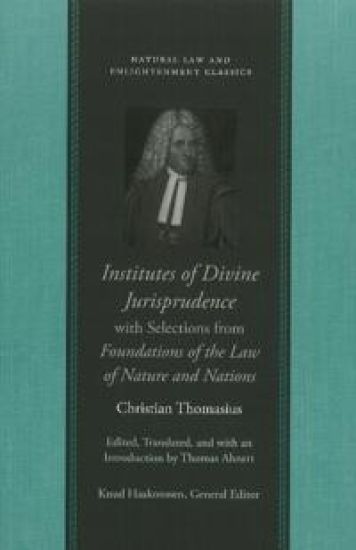
Institutes of Divine Jurisprudence, with Selections from Foundations of the Law of Nature & Nations
Christian Thomasius
Liberty Fund Inc
2011
sidottu
Christian Thomasius's natural jurisprudence is essential to understanding the origins of the Enlightenment in Germany, where his importance was comparable to that of John Locke's in England. First published in 1688, Thomasius's Institutionum jurisprudentiae divinae (Institutes of Divine Jurisprudence) attempted to draw a clear distinction between natural and revealed law and to emphasize that human reason was able to know the precepts of natural law without the aid of Scripture. Thomasius also argued that his orthodox Lutheran opponents had failed to understand this distinction and thereby had confused reason and Scripture. In addition to the Institutes of Divine Jurisprudence, this volume contains significant selections from his Fundamenta juris naturae et gentium (Foundations of the Law of Nature and Nations), published in 1705. In Foundations Thomasius significantly revised the theory he had put forward in the Institutes, and much of the Foundations therefore is a paragraph-by-paragraph commentary on his earlier ideas. These works are a companion to Thomasius's Essays on Church, State, and Politics, and together they provide the first-ever English presentation of this preeminent German thinker.
Institutes of Divine Jurisprudence, with Selections from Foundations of the Law of Nature & Nations
Christian Thomasius
Liberty Fund Inc
2011
nidottu
Christian Thomasius's natural jurisprudence is essential to understanding the origins of the Enlightenment in Germany, where his importance was comparable to that of John Locke's in England. First published in 1688, Thomasius's Institutionum jurisprudentiae divinae (Institutes of Divine Jurisprudence) attempted to draw a clear distinction between natural and revealed law and to emphasize that human reason was able to know the precepts of natural law without the aid of Scripture. Thomasius also argued that his orthodox Lutheran opponents had failed to understand this distinction and thereby had confused reason and Scripture. In addition to the Institutes of Divine Jurisprudence, this volume contains significant selections from his Fundamenta juris naturae et gentium (Foundations of the Law of Nature and Nations), published in 1705. In Foundations Thomasius significantly revised the theory he had put forward in the Institutes, and much of the Foundations therefore is a paragraph-by-paragraph commentary on his earlier ideas. These works are a companion to Thomasius's Essays on Church, State, and Politics, and together they provide the first-ever English presentation of this preeminent German thinker.

Balthasar Gracians, Homme De Cour, Oder
Baltasar Gracian Y Morales; Christian Thomasius
Kessinger Pub
2009
pokkari
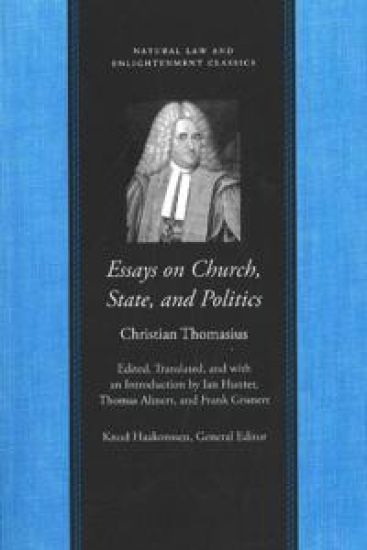
The essays selected here for translation derive largely from Thomasius's work on Staatskirchenrecht, or the political jurisprudence of church law. These works, originating as disputations, theses, and pamphlets, were direct interventions in the unresolved issue of the political role of religion in Brandenburg-Prussia, a state in which a Calvinist dynasty ruled over a largely Lutheran population and nobility as well as a significant Catholic minority. In mandating limited religious toleration within the German states, the provisions of the Peace of Westphalia (1648) also provided the rulers of Brandenburg-Prussia with a way of keeping the powerful Lutheran church in check by guaranteeing a degree of religious freedom to non-Lutherans and thereby detaching the state from the most powerful territorial church. Thomasius's writings on church-state relations, many of them critical of the civil claims made by Lutheran theologians, are a direct response to this state of affairs. At the same time, owing to the depth of intellectual resources at his disposal, these works constitute a major contribution to the broader discussion of the relation between the religious and political spheres.
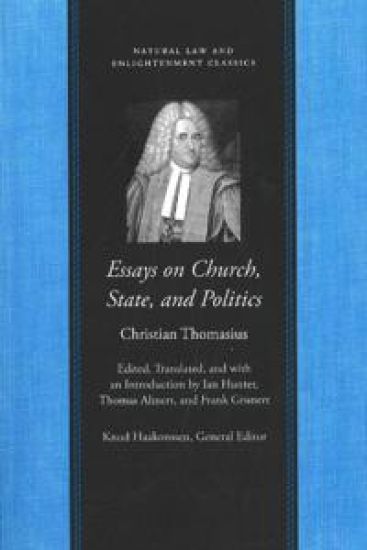
The essays selected here for translation derive largely from Thomasius's work on Staatskirchenrecht, or the political jurisprudence of church law. These works, originating as disputations, theses, and pamphlets, were direct interventions in the unresolved issue of the political role of religion in Brandenburg-Prussia, a state in which a Calvinist dynasty ruled over a largely Lutheran population and nobility as well as a significant Catholic minority. In mandating limited religious toleration within the German states, the provisions of the Peace of Westphalia (1648) also provided the rulers of Brandenburg-Prussia with a way of keeping the powerful Lutheran church in check by guaranteeing a degree of religious freedom to non-Lutherans and thereby detaching the state from the most powerful territorial church. Thomasius's writings on church-state relations, many of them critical of the civil claims made by Lutheran theologians, are a direct response to this state of affairs. At the same time, owing to the depth of intellectual resources at his disposal, these works constitute a major contribution to the broader discussion of the relation between the religious and political spheres.

Freymuethige Lustige Und Ernsthaffte Iedoch Vernunfft =Und Gesetz= Maessige Gedancken Oder Monatsgespraeche
Christian Thomasius
Herbert Cie Lang AG, Buchhandlung Antiquariat
1977
sidottu
Die hier vorgelegten -Monatsgesprache-, die 1690 geschlossen herausgegeben wurden, machen Thomasius zum geistigen Vater des deutschen Journalismus. Diese Ausgabe bietet eine Fulle der grossangelegten Rezensionen zeitgenossischer Romane, besonders fur denjenigen, den speziell das Entstehen einer burgerlichen Literatur interessiert."

Christian Thomasius (1655-1728) gehort neben Grotius und Pufendorf zu den bedeutendsten Vertretern des Naturrechts. Seine Geschichte des Naturrechts ist bis heute ein wertvolles Dokument naturrechtlichen Denkens und eine Fundgrube literaturgeschichtlichen Materials.