
Kirjailija
Christian Wolmar
Kirjat ja teokset yhdessä paikassa: 25 kirjaa, julkaisuja vuosilta 2008–2026, suosituimpiin kuuluu Untitled Christian Wolmar. Vertaile teosten hintoja ja tarkista saatavuus suomalaisista kirjakaupoista.
25 kirjaa
Kirjojen julkaisuvuodet: 2008–2026.
A new and updated edition of the classic history of the British railway, published to coincide with the 200th anniversary of train travel in 2025. The opening of the pioneering Stockton and Darlington railway, the world's first passenger line, in 1825 marked the beginning of the railways' vital role in changing the face of Britain. Fire and Steam celebrates the vision and determination of the ambitious Victorian pioneers who developed this revolutionary transport system and the navvies who cut through the land to enable a country-wide network to emerge. From the early days of steam to electrification, via the railways' magnificent contribution in two world wars, the chequered history of British Rail and the disaster of privatization, Fire and Steam examines the social and economical importance of the railway and how it helped form the Britain of today.
The Rise of the Railway
Christian Wolmar
DORLING KINDERSLEY LTD
2025
sidottu
Halvin toimitettuna 53,00 €
From the first steam trains to the high-speed bullet trains of today, Rise of the Railway tells the hidden stories of railway history – the inspired engineering, technical ingenuity, and sheer determination that forged the world’s railways. Award-winning writer and broadcaster Christian Wolmar reveals how the railways were built not just on bold vision and technical expertise, but also on wild gambles and trial and error – and how the new era of trains brought about sweeping changes in the lives of people around the world. This book details the lives and work of railway pioneers such as George Stephenson and John Stevens, and it explores and maps famous railways such as the Trans-Siberian Railway and the Orient Express. Key technological innovations are explained with in-depth illustrations, while stunning photographs and paintings bring railway history to life on the page. Gripping eyewitness accounts describe the railways of the past through the eyes of people who were there. Packed with colourful stories, technical insights, and beautiful images, Rise of the Railway is the ultimate ride along the rails of history.
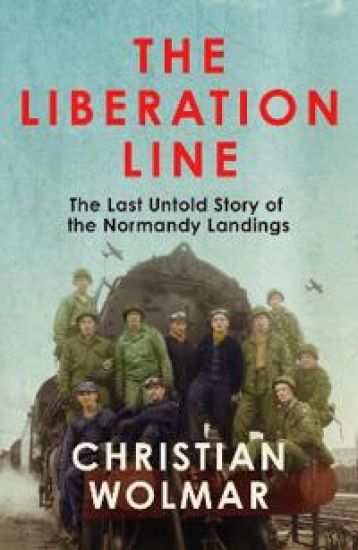
'Highly original' Simon Heffer, Telegraph'Masterful... A gripping tale' Giles MiltonThey certainly were not soldiers, yet they suddenly found themselves in uniform, in a foreign land. But, as locomotive drivers, track-workers, conductors, porters, signalmen and engine cleaners, they knew how to run trains. And their job was to bring them back to life. The Liberation Line tells the thrilling story of the British and American railway engineers who, in the months after D-Day, worked around the clock and in great danger to rebuild the ravaged railways of Europe and keep the Allied forces fuelled as they pushed on into Germany. As territory was taken, these soldier-railroaders were close behind, rebuilding the lines, putting up telegraph wires, replacing bridges and laying track, all the while dodging bullets, shells and booby traps. Tales of extraordinary feats and heroism abound, including how 10,000 men rebuilt a 135-mile-long railway in just three days; the reconstruction of the bridge over the Seine in two weeks while under bombardment; and the use of cigarette lighters as improvised signalling systems. Despite being critical to Allied victory, the role of the railwaymen has been largely forgotten or ignored. In a vivid and gripping narrative, Christian Wolmar brings to life this colourful cast of generals and engineers, without whose extraordinary bravery the liberation of France and invasion of Germany might well have foundered - and the course of history changed.
A new and updated edition of the classic history of the British railway, published to coincide with the 200th anniversary of train travel in 2025. The opening of the pioneering Stockton and Darlington railway, the world's first passenger line, in 1825 marked the beginning of the railways' vital role in changing the face of Britain. Fire and Steam celebrates the vision and determination of the ambitious Victorian pioneers who developed this revolutionary transport system and the navvies who cut through the land to enable a country-wide network to emerge. From the early days of steam to electrification, via the railways' magnificent contribution in two world wars, the chequered history of British Rail and the disaster of privatization, Fire and Steam examines the social and economical importance of the railway and how it helped form the Britain of today.
'Highly original' Simon Heffer, Telegraph'Masterful... A gripping tale' Giles MiltonThey certainly were not soldiers, yet they suddenly found themselves in uniform, in a foreign land. But, as locomotive drivers, track-workers, conductors, porters, signalmen and engine cleaners, they knew how to run trains. And their job was to bring them back to life. The Liberation Line tells the thrilling story of the British and American railway engineers who, in the months after D-Day, worked around the clock and in great danger to rebuild the ravaged railways of Europe and keep the Allied forces fuelled as they pushed on into Germany. As territory was taken, these soldier-railroaders were close behind, rebuilding the lines, putting up telegraph wires, replacing bridges and laying track, all the while dodging bullets, shells and booby traps. Tales of extraordinary feats and heroism abound, including how 10,000 men rebuilt a 135-mile-long railway in just three days; the reconstruction of the bridge over the Seine in two weeks while under bombardment; and the use of cigarette lighters as improvised signalling systems. Despite being critical to Allied victory, the role of the railwaymen has been largely forgotten or ignored. In a vivid and gripping narrative, Christian Wolmar brings to life this colourful cast of generals and engineers, without whose extraordinary bravery the liberation of France and invasion of Germany might well have foundered - and the course of history changed.

The Liberation Line: The Untold Story of How American Engineering and Ingenuity Won World War II
Christian Wolmar
Grand Central Publishing
2024
sidottu
The epic story of the engineers and rail workers who ensured Allied victory in World War Two, published to coincide with the eightieth anniversary of D-Day, by an award-winning expert on trains and transportation They certainly were not soldiers, yet they suddenly found themselves in uniform, in a foreign land. But, as locomotive drivers, track-workers, conductors, porters, signalmen, and engine cleaners, they knew how to run trains. And their job was to bring them back to life. The Liberation Line tells the thrilling story of the British and American railway engineers who, in the months after D-Day, worked around the clock and in great danger to rebuild the ravaged railways of Europe and keep the Allied forces fueled as they pushed on into Germany. As territory was taken, these soldier-railroaders were close behind, rebuilding the lines, putting up telegraph wires, replacing bridges and laying track, all the while dodging bullets, shells, and booby traps. Tales of extraordinary feats and heroism abound, including how 10,000 men rebuilt a 135-mile-long railway in just three days; the reconstruction of the bridge over the Seine in two weeks while under bombardment; and the use of cigarette lighters as improvised signaling systems. Despite being critical to Allied victory, the role of the railway men has been largely forgotten or ignored. In a vivid and gripping narrative, Christian Wolmar brings to life this colorful cast of generals and engineers, without whose extraordinary bravery the liberation of France and invasion of Germany might well have foundered--and the course of history changed.
The authoritative and fascinating history of the rise and fall of the state-owned British Rail'Wolmar's book is impeccably organised and makes a fast, enjoyable read' THE TIMES Literary Supplement________British Rail wasn't how we're asked to remember it . . . From ancient rolling stock to patchy service, stale sandwiches to the wrong kind of snow, British Rail - our last great state-owned organisation to be privatised - has received a terrible press. But after its controversial 1948 creation, British Rail was actually an innovative powerhouse that over five decades transformed the UK, creating one of the fastest regular rail services in the world. Award-winning journalist Christian Wolmar takes us from promise to punchline, exploring British Rail's birth into post-war austerity, the many battles and struggles to evolve what many considered to be a dinosaur, and how, at the height of its success, the service was misunderstood and unfairly maligned, ruthlessly broken up and privatised._______Praise for Christian Wolmar'Wolmar is the high priest of railway studies' Literary Review'The greatest expert on British trains' Guardian'Our most eminent transport journalist' Spectator'If the world's railways have a laureate, it is surely Christian Wolmar' Boston Globe 'Christian Wolmar is in love with the railways. He writes constantly and passionately about them. He is their wisest, most detailed historian and a constant prophet of their rebirth . . . if you love the hum of the wheels and of history, then Christian Wolmar is your man' Observer
From Britain's most popular railway historian, a concise, authoritative and fast-paced telling of how the railways changed the world. The arrival of the railways in the first half of the nineteenth century and their subsequent spread across every one of the world's continents acted as a spur for economic growth and social change on an extraordinary scale. The 'iron road' stimulated innovation in engineering and architecture, enabled people and goods to move around the world more quickly than ever before, and played a critical role in warfare as well as in the social and economic spheres. Christian Wolmar describes the emergence of modern railways in both Britain and the USA in the 1830s, and elsewhere in the following decade. He charts the surge in railway investment plans in Britain in the early 1840s and the ensuing 'railway mania' (which created the backbone of today's railway network), and the unstoppable spread of the railways across Europe, America and Asia. Above all, he assesses the global impact of a technology that, arguably, had the most transformative impact on human society of any before the coming of the Internet, and which, as it approaches two centuries of existence, continues to play a key role in human society in the twenty-first century.'A lucid and engaging account of the far-reaching effects that trains have had upon society' The Railway & Canal Historical Society
'Fascinating' 'Books of the Year', Financial Times'London's twelve great rail termini are the epic survivors of the Victorian age... Wolmar brings them to life with the knowledge of an expert and the panache of a connoisseur.' Simon Jenkins'A wonderful tour, full of vivid incident and surprising detail.' Simon BradleyLondon hosts twelve major railway stations, more than any other city in the world. They range from the grand and palatial, such as King's Cross and Paddington, to the modest and lesser known, such as Fenchurch Street and Cannon Street. These monuments to the age of the train are the hub of London's transport system and their development, decline and recent renewal have determined the history of the capital in many ways. Built between 1836 and 1899 by competing private train companies seeking to outdo one another, the construction of these terminuses caused tremendous upheaval and had a widespread impact on their local surroundings. What were once called 'slums' were demolished, green spaces and cemeteries were concreted over, and vast marshalling yards, engine sheds and carriage depots sprung up in their place. In a compelling and dramatic narrative, Christian Wolmar traces the development of these magnificent cathedrals of steam, provides unique insights into their history, with many entertaining anecdotes, and celebrates the recent transformation of several of these stations into wonderful blends of the old and the new.
Revised and updated edition of Christian Wolmar's classic history of the London Underground, with a new chapter on Crossrail.'I can think of few better ways to while away those elastic periods awaiting the arrival of the next eastbound Circle Line train than by reading [this book].' Tom Fort, Sunday TelegraphSince the Victorian era, London's Underground has played a vital role in the daily life of generations of Londoners. In The Subterranean Railway, Christian Wolmar celebrates the vision and determination of the nineteenth-century pioneers who made the world's first, and still the largest, underground passenger railway: one of the most impressive engineering achievements in history. From the early days of steam to electrification, via the Underground's contribution to twentieth-century industrial design and its role during two world wars, the story comes right up to the present with a new chapter on the sleek and futuristic Crossrail line. The Subterranean Railway reveals London's hidden wonder in all its glory and shows how the railway beneath the streets helped create the city we know today.
Driverless cars are the future – just around the corner. That is what the tech giants, the auto industry and even the government want us to think. But closer inspection reveals that we are much further from that driverless utopia than we are led to believe by newspaper headlines and by the hype from firms with vested interests. In a post-Covid-19 economic environment motor manufacturers now face bigger problems. Christian Wolmar argues that autonomous cars are the wrong solution to the wrong problem. Even if the many technical difficulties that stand in the way of achieving a driverless future can be surmounted, autonomous cars are not the best way to address the problems of congestion and pollution caused by our long obsession with the private car. This entertaining polemic sets out the many technical, legal and moral problems that obstruct the path to a driverless future, and debunks many of the myths around that future's purported benefits.
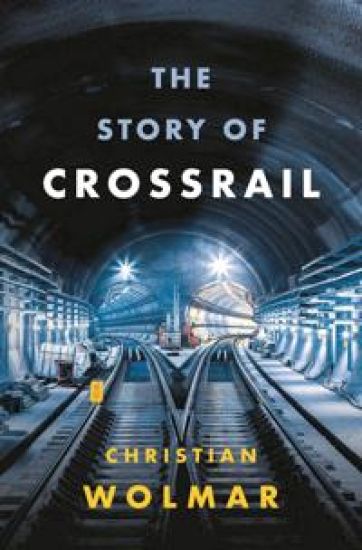
The story of an engineering marvel of the twenty-first century, from Britain's bestselling railway writer. Crossrail, first conceived just after the Second World War in the era of Attlee and Churchill, has cost more than £15bn and is expected to serve 200 million passengers annually. From Reading and Heathrow in the west, the Elizabeth line will extend to Shenfield and Abbey Wood in the east, including 42 kilometres of new tunnels dug under central London. The author sets out the complex and highly political reasons for Crossrail's lengthy gestation, tracing the troubled progress of the concept from the rejection of the first Crossrail bill in the 1990s through the tortuous parliamentary processes that led to the passing of the Crossrail Act of 2008. He also recounts in detail the construction of this astonishing new railway, describing how immense tunnel-boring machines cut through a subterranean world of rock and mud with unparalleled accuracy that ensured none of the buildings overhead were affected. A shrewdly incisive observer of postwar transport policy, Wolmar pays due credit to the remarkable achievement of Crossrail, while analysing in clear-eyed fashion the many setbacks it encountered en route to completion.
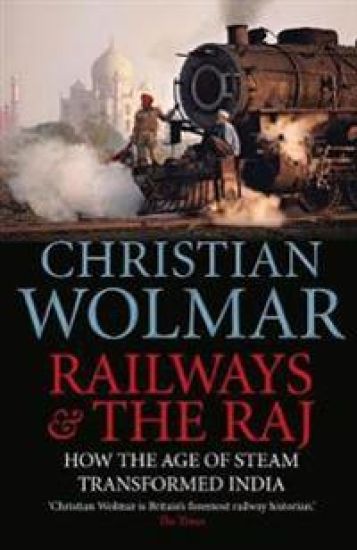
India was the jewel in the crown of the British Empire, an Empire that needed a rail network to facilitate its exploitation and reflect its ambition. But, by building India's railways, Britain radically changed the nation and unwittingly planted the seed of independence. As Indians were made to travel in poor conditions and were barred from the better paid railway jobs a stirring of resentment and nationalist sentiment grew. The Indian Railways network remains one of the largest in the world, serving over 25 million passengers each day. In this expertly told history, Christian Wolmar reveals the full story, from the railway's beginnings to the present day, and examines the chequered role this institution has played in Indian history and the creation of today's modern state.
We all use some form of transport almost every day of our lives. It is one of the most important factors in determining the economic wellbeing of a town or city. And it is also one of the major sources of environmental damage to our planet. Yet, Britain has never had a coherent transport policy. Transport ministers are regarded as insignificant compared with their colleagues in other ministries. Successive governments have failed to get to grips with the twin challenge of getting people around cheaply and safely while safeguarding the environment. In this entertaining polemic, Christian Wolmar, a former national newspaper journalist who has written about transport for over two decades, explains why politicians have never got to grips with the issue, sets out the problems this has caused and points to a few rational solutions.
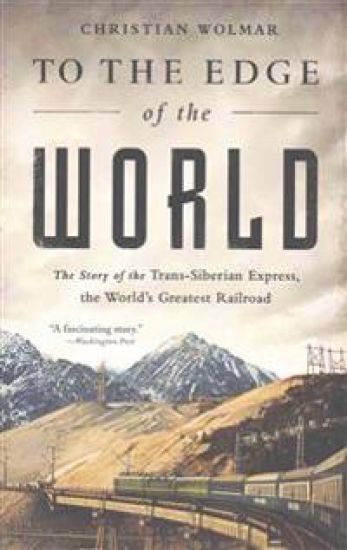
To the Edge of the World: The Story of the Trans-Siberian Express, the World's Greatest Railroad
Christian Wolmar
PublicAffairs
2016
nidottu
To the Edge of the World is an adventure in travel -- full of extraordinary personalities, more than a century of explosive political, economic, and cultural events, and almost inconceivable feats of engineering. Christian Wolmar passionately recounts the improbable origins of the Trans-Siberian railroad, the vital artery for Russian expansion that spans almost 6,000 miles and seven time zones from Moscow to Vladivostok. The world's longest train route took a decade to build -- in the face of punishing climates, rampant disease, scarcity of funds and materials, and widespread corruption. The line sprawls over a treacherous landmass that was previously populated only by disparate tribes and convicts serving out their terms in labor camps -- where men were regularly starved, tortured, or mutilated for minor offenses. Once built, it led to the establishment of new cities and transformed the region's history. Exceeding all expectations, it became, according to Wolmar, "the best thing that ever happened to Siberia." It was not all good news, however. The railroad was the cause of the 1904-1905 Russo-Japanese War, and played a vital -- and at times bloody -- role in the Russian Revolution and the subsequent Civil War. More positively, the Russians were able to resist the Nazi invasion during the Second World War as new routes enabled whole industries to be sent east. Siberia, previously a lost and distant region, became an inextricable part of Russia's cultural identity. And what began as one meandering, single-track line is now, arguably, the world's most important railroad.
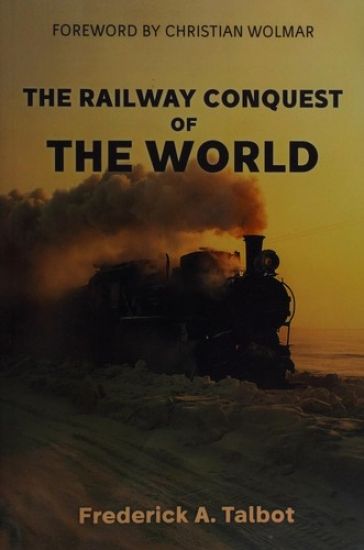
The Railway Conquest of the World
Frederick A. Talbot; Christian Wolmar
Amberley Publishing
2015
nidottu
There is an unfathomable fascination with the romance connected to the construction of great railways, yet little is known of the beginning and growth of the pioneering railways of the world, of the heavy tax that their construction imposed on the ingenuity, skill and resources of their builders. Speeding swiftly along a railway with a road-bed as smooth as an asphalt pavement conveys no impression of the perils and dangers faced, or of the infinite labour extended in the making of that steel line. The Railway Conquest of the World tells this fascinating story. First published in 1911, it considers the most representative, largest and most interesting enterprises between the two poles. Frederick A. Talbot comprehensively writes of some of the most famous railways in the world in this engaging account. With a thought to the creators of the railways themselves, he considers the railway surveyor’s adventurous life and the romance of construction itself before diving in to some of the greatest feats of technological advance: from the railway invasion of Canada to the Holy Railway of Mecca, and from Cecil Rhodes’ dream to the Iron Horse of Australasia.
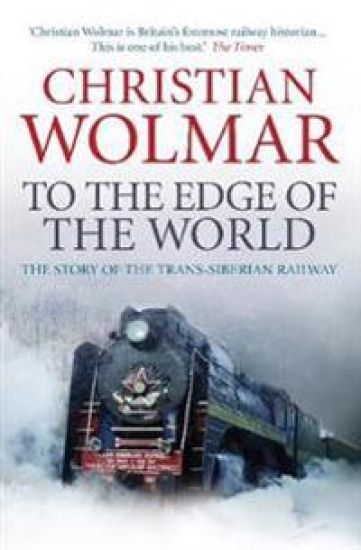
Christian Wolmar expertly tells the story of the Trans-Siberian railway from its conception and construction under Tsar Alexander III, to the northern extension ordered by Brezhnev and its current success as a vital artery. He also explores the crucial role the line played in both the Russian Civil War -Trotsky famously used an armoured carriage as his command post - and the Second World War, during which the railway saved the country from certain defeat. Like the author's previous railway histories, it focuses on the personalities, as well as the political and economic events, that lay behind one of the most extraordinary engineering triumphs of the nineteenth century.

LABYRINTH
Tamsin Dillon; Will Self; Mark Wallinger; Marina Warner; Christian Wolmar
Art / Books
2014
sidottu
London's underground railways are an expression of the spread and diversity of the most international of capitals. Indeed, for many Londoners, the subterranean network is the very essence of the city, its arteries carrying the pulse of urban life from the heart of the metropolis out to its farthest extremities and beyond. How to capture that breadth in one work of art? How to celebrate a single system while also reflecting the millions of lives that it transports every day? That was the challenge facing Turner Prize-winning artist Mark Wallinger. His response was to create a vast, permanent work of public art across the entire network, layered with rich cultural and historical references. In each of the Underground's 270 stations, he placed a uniquely designed labyrinth, an ancient symbol representing spiritual and imaginative voyages akin to the countless circuitous journeys made on the Tube. Labyrinth: A Journey Through London's Underground by Mark Wallinger is a compelling record of this extraordinary project. But more than that, it is also a vivid celebration of the London Underground and of London itself. Striking photographs of all the labyrinths in situ reveal the diverse face and fabric of the network and its users, while fascinating facts about each station and their surrounds bring surprising perspectives to the daily commute. Transport historian Christian Wolmar tells the story of the emergence and development of London's subterranean rail network and the important role it has played in shaping the metropolis and those who live in it. Novelist Will Self responds to Wallinger's piece with a personal reflection that takes us into the depths of memory and through the disorientating effects of urban life; while writer and academic Marina Warner, in conversation with the artist, explores the historic and mythological significance of the labyrinth and places the project in the context of Wallinger's practice. Much more than a document of the creation of a work of art, this book is also a unique portrait of a system that keeps London going, the very lifeblood upon which it depends and thrives.