Kirjojen hintavertailu – 12 859 827 kirjaa ja 27 kauppaa

Kirjailija

Christina Antenhofer

Kirjat ja teokset yhdessä paikassa: 5 kirjaa, julkaisuja vuosilta 2006–2026, suosituimpiin kuuluu Donne Di Potere Nel Rinascimento. Vertaile teosten hintoja ja tarkista saatavuus suomalaisista kirjakaupoista.

5 kirjaa

Kirjojen julkaisuvuodet: 2006–2026.

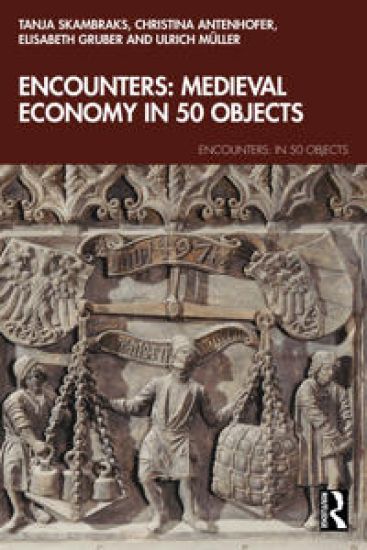
Encounters: Medieval Economy in 50 Objects

Encounters: Medieval Economy in 50 Objects

Tanja Skambraks; Christina Antenhofer; Ulrich Müller; Elisabeth Gruber

TAYLOR FRANCIS LTD
2026
sidottu
Exploring medieval economy through its artifacts, this book presents 50 object biographies that illuminate daily life, economic ethics, production, trade, and finance, offering a tangible perspective on the systems of the long medieval period. Combining the expertise of three historians and an archaeologist, this book bridges abstract theory with the material realities of the past. This volume examines fifty diverse artifacts, including tally sticks, tools, glassware, and coins, to provide a human-centered understanding of the commercial revolution, agricultural innovations, and the emergence of a consumer society between 500 and 1600. The content is organized into five parts, focusing on economic thought, production, distribution, finance, and everyday life. Empowering students to integrate material culture as a crucial primary source, the book reveals the evolving mentalities and innovative practices that shaped medieval economic behaviour and laid the foundations of our modern world. Encounters: Medieval Economy in 50 Objects is written for a broad audience, including undergraduate and postgraduate students in history, archaeology, and art history who are seeking a tangible, source-based approach to medieval economy. It is an essential resource for instructors looking for a modular, object-oriented teaching tool that connects material culture with economic theory, providing a refreshing alternative to traditional text-heavy histories. Museum professionals, heritage specialists, and history enthusiasts will also find its accessible narrative and focus on "object biographies" invaluable for contextualizing collections and understanding how everyday items drove the transition to a modern consumer society.
Encounters: Medieval Economy in 50 Objects

Encounters: Medieval Economy in 50 Objects

Tanja Skambraks; Christina Antenhofer; Ulrich Müller; Elisabeth Gruber

TAYLOR FRANCIS LTD
2026
nidottu
Exploring medieval economy through its artifacts, this book presents 50 object biographies that illuminate daily life, economic ethics, production, trade, and finance, offering a tangible perspective on the systems of the long medieval period. Combining the expertise of three historians and an archaeologist, this book bridges abstract theory with the material realities of the past. This volume examines fifty diverse artifacts, including tally sticks, tools, glassware, and coins, to provide a human-centered understanding of the commercial revolution, agricultural innovations, and the emergence of a consumer society between 500 and 1600. The content is organized into five parts, focusing on economic thought, production, distribution, finance, and everyday life. Empowering students to integrate material culture as a crucial primary source, the book reveals the evolving mentalities and innovative practices that shaped medieval economic behaviour and laid the foundations of our modern world. Encounters: Medieval Economy in 50 Objects is written for a broad audience, including undergraduate and postgraduate students in history, archaeology, and art history who are seeking a tangible, source-based approach to medieval economy. It is an essential resource for instructors looking for a modular, object-oriented teaching tool that connects material culture with economic theory, providing a refreshing alternative to traditional text-heavy histories. Museum professionals, heritage specialists, and history enthusiasts will also find its accessible narrative and focus on "object biographies" invaluable for contextualizing collections and understanding how everyday items drove the transition to a modern consumer society.
Die Familienkiste: Mensch-Objekt-Beziehungen Im Mittelalter Und in Der Renaissance
Ob goldene Kronen, kostbare Reliquien oder wertvolle Gaben es sind Schatze, die paradigmatisch mit dem Mittelalter verbunden werden, wahrend die Moderne als Beginn von Konsumkultur und musealen Sammlungen gilt. An dieser Unterscheidung setzt das Buch an und erzahlt eine andere Geschichte der materiellen Kultur des Mittelalters und der Renaissance, in der nicht die Dinge Kern der Betrachtung sind, sondern ihre Fahigkeiten, Beziehungen zu stiften. Das Bild der Familienkiste fasst dabei die Bedeutung von Objekten fur Individuen wie fur Familien uber Generationen, Zeiten und Raume. Gefragt wird nach Emotionen, Praktiken und Diskursen, die Menschen und Dinge zusammenbringen. Mit dem Blick auf Expertinnen und Experten schreibt das Buch zugleich eine Kulturgeschichte der Verwaltung und eroffnet neue Perspektiven auf Wandel und Kontinuitaten im Umgang mit Dingen bis zur Gegenwart.
Donne Di Potere Nel Rinascimento

Donne Di Potere Nel Rinascimento

Federica Ambrosini; Christina Antenhofer; Letizia Arcangeli

Viella
2008
nidottu
Le protagoniste di questo volume - principesse, sovrane di piccoli Stati autonomi, parenti di papi e cardinali, feudatarie e patrizie - sono tutte molto attive nella societa politica del Rinascimento italiano: organizzano corti e accademie, governano come reggenti, partecipano alla lotta politica, in alcuni casi sono addirittura alla testa di piccoli eserciti. > Donne di potere nel Rinascimento non costituisce tuttavia una raccolta di biografie di donne illustri, bensi la dimostrazione della "normalita" di un nesso tra le donne dell'aristocrazia italiana e il potere. > I contributi qui raccolti mostrano infatti come, nella complessa articolazione dei poteri dell'antico regime, queste gentildonne assunsero - accanto ai loro padri, fratelli, mariti, figli e nipoti - ruoli di rilievo politico all'interno della sfera pubblica. Ma raccontano anche del loro potere informale, legato alla socialita femminile, di un potere "discorsivo", delle "emozioni", come obblighi affettivi, di onore e fedelta, che legavano gli individui di un gruppo, o anche del potere dell'amore. >