Kirjojen hintavertailu – 12 859 828 kirjaa ja 27 kauppaa

Kirjailija

Christina Kullberg

Kirjat ja teokset yhdessä paikassa: 8 kirjaa, julkaisuja vuosilta 2013–2025, suosituimpiin kuuluu Glänta 2 (2025). Vertaile teosten hintoja ja tarkista saatavuus suomalaisista kirjakaupoista.

8 kirjaa

Kirjojen julkaisuvuodet: 2013–2025.

Glänta 2 (2025)

Glänta 2 (2025)

Etel Adnan; Athena Farrokhzad; Agri Ismaïl; Hanna Johansson; Christina Kullberg; Johanna Larsson; Nadia Maghder; Minus Miele; Klas Modin; Isabella Nilsson; Sarah Nuttall; Fredrik Nyberg; Karolina Ramqvist; Julia Ravanis; Johan Sandberg McGuinne; Amer Sarsour; Nioosha Shams; Isak Sundström; Jenny Tunedal

Glänta Produktion
2025
lehtivihko, moniste
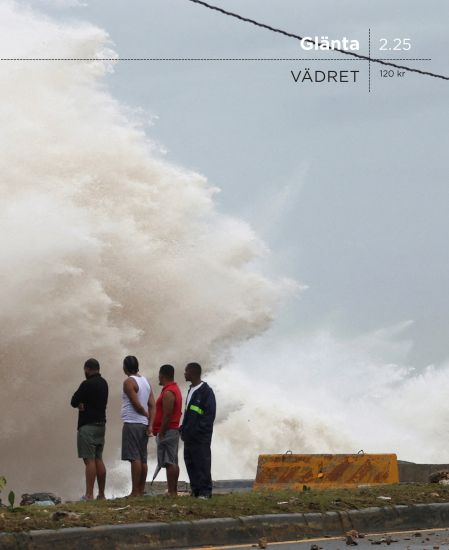
Teorierna om hur vädret på en viss plats påverkar invånarna peakade kanske på 1700-talet, men lever ändå i viss mån kvar i bilden av hur folk från en viss plats är. Så, är det då sant att det nästan alltid regnar i Göteborg? Tja, det regnar i snitt ungefär varannan dag. Nästan exakt lika ofta som i till exempel Stockholm och Malmö. Men visst, det regnar lite mer, lite hårdare de där dagarna i Göteborg, och regnet tar sig liksom på ett annorlunda sätt inpå huden. Det känns som om vädret är emot oss. Världen är emot oss. (ur inledningen till numret)
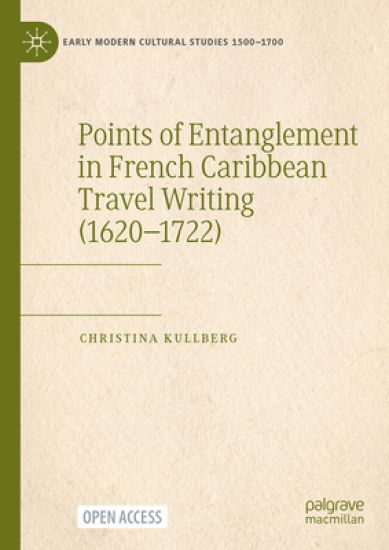
Points of Entanglement in French Caribbean Travel Writing (1620-1722)

Points of Entanglement in French Caribbean Travel Writing (1620-1722)

Christina Kullberg

Springer International Publishing AG
2023
nidottu
This open-access book investigates Francophone Caribbean literature by exploring and analyzing French seventeenth-century travel writings. The book argues for a literary re-examination of the representation of the early colonial Caribbean by proposing theoretical linkages to contemporary Caribbean theories of creolization and archipelagic thinking. Using Édouard Glissant’s notion of points of entanglement, Christina Kullberg claims that the historical, social, and political messiness of the Caribbean seventeenth century make for complex representations and expressions, generating textual instability despite the travelers’ apparent desires to domesticate the islands. Taking a synoptic approach to travel narratives in French from 1620 up to the publication of Labat’s Nouveau voyage aux Isles de l’Amérique in 1722, Kullberg examines textual instances where the islands and the peoples of this period disrupt and unsettle dominant French narratives and enter productively into the construction of knowledge and the representations of the region. Kullberg’s contribution is to read French early modern travels in situ as shaped by the archipelagic geography, its history and social formations in order to interrogate both the construction and the limitations of discourses of power.
Points of Entanglement in French Caribbean Travel Writing (1620-1722)

Points of Entanglement in French Caribbean Travel Writing (1620-1722)

Christina Kullberg

Springer International Publishing AG
2023
sidottu
This open-access book investigates Francophone Caribbean literature by exploring and analyzing French seventeenth-century travel writings. The book argues for a literary re-examination of the representation of the early colonial Caribbean by proposing theoretical linkages to contemporary Caribbean theories of creolization and archipelagic thinking. Using Édouard Glissant’s notion of points of entanglement, Christina Kullberg claims that the historical, social, and political messiness of the Caribbean seventeenth century make for complex representations and expressions, generating textual instability despite the travelers’ apparent desires to domesticate the islands. Taking a synoptic approach to travel narratives in French from 1620 up to the publication of Labat’s Nouveau voyage aux Isles de l’Amérique in 1722, Kullberg examines textual instances where the islands and the peoples of this period disrupt and unsettle dominant French narratives and enter productively into the construction of knowledge and the representations of the region. Kullberg’s contribution is to read French early modern travels in situ as shaped by the archipelagic geography, its history and social formations in order to interrogate both the construction and the limitations of discourses of power.
Lire l'Histoire Générale Des Antilles de J.-B. Du Tertre: Exotisme Et Établissement Français Aux Îles (1625-1671)
Cette tude propose d'examiner les ramifications historiques de l'exotisme partir d'une lecture critique de l'Histoire g n rale des Antilles (1654/1667-71) crite par le missionnaire dominicain, Jean-Baptiste Du Tertre. En proc dant d'une analyse litt raire, notre tude sugg re une reconfiguration de l'exotisme bas e la fois sur la th orisation contemporaine et sur le contexte historique et l'esth tique de l' poque. Notre travail se veut donc la fois th orique en offrant une analyse critique des diff rentes orientations de l'exotisme; et historique, en pr sentant une lecture approfondie d'une oeuvre dont l'importance est consid rable aussi bien pour l'histoire de la litt rature fran aise et antillaise que pour l'histoire de l'anthropologie. cet gard, cette tude fournira aussi une exploration de la toute premi re colonisation fran aise des les et de la mani re dont elle a t repr sent e. This book examines the historical ramifications of the concept of exoticism through a literary analysis of Histoire g n rale des Antilles (1654/1667-71) written by Dominican missionary Jean-Baptiste Du Tertre. The study gives a thorough account of the early French colonization of the islands and the ways in which this violent process of cultural encounters was represented. It argues for the necessity to reconfigure the notion of exoticism, both by revisiting contemporary theorization and by contextualizing it in regard to the history and aesthetics of the times. The study is thus both theoretical, in proceeding by a critical reading of different orientations of exoticism, and historical in offering an in-depth study of an author and a period that have received little attention despite their impact on French Caribbean literature and on the history of anthropology.
Nunnan

Nunnan

Denis Diderot; Christina Kullberg

Bokförlaget Faethon
2019
nidottu
Som sextonåring sätts den känsliga och skarpsinniga Suzanne Simonin mot sin vilja i kloster. Hennes mamma har, visar det sig, offrat henne som bot för sina egna synder. Till en början är det hela uthärdligt, men när den gamla abbedissan dör och Suzanne gör sitt första försök att fly tar helvetet vid: hon misshandlas, förvägras sömn, tvingas äta aska och bära tagelskjorta, hon torteras med rep, hamnar i isolering, svälts, hånas, piskas och utsätts för depraverade närmanden. Desperat söker hon hjälp utifrån, men utsikterna att undkomma förefaller små... Breven där Suzanne redogör för sina erfarenheter formar sig till en roman eller fiktiv biografi. Men de började som ett practical joke. Upplysningsförfattaren, encyklopediredaktören, konstkritikern och kyrkohäcklaren Denis Diderot började 1758 att skriva breven från Suzanne till en av sina vänner för att locka denne till Paris. Men projektet grep författaren, som själv började identifiera sig med Suzanne och hennes utsatthet. Resultatet blev en osande kritik av vettlöst frihetsberövande, hyckleri och maktmissbruk, liksom en indirekt lovsång till människoblivandet. David Sprengels översättning från 1925 återges här i oförvanskad form under redaktion av Jan Stolpe. Christina Kullberg har skrivit efterordet.
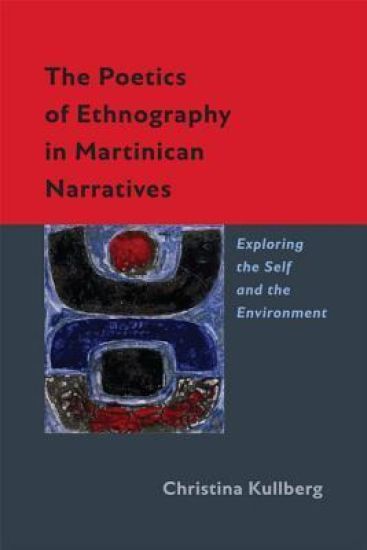
The Poetics of Ethnography in Martinican Narratives

The Poetics of Ethnography in Martinican Narratives

Christina Kullberg

University of Virginia Press
2013
sidottu
Drawing on narratives from Martinique by Aimé Césaire, Édouard Glissant, Ina Césaire, and Patrick Chamoiseau, among others, Christina Kullberg shows how these writers turn to ethnography—even as they critique it—as an exploration and expression of the self. They acknowledge its tradition as a colonial discourse and a study of others, but they also argue for ethnography’s advantage in connecting subjectivity to the outside world. Further, they find that ethnography offers the possibility of capturing within the hybrid culture of the Caribbean an emergent self that nonetheless remains attached to its collective history and environment. Rather than claiming to be able to represent the culture they also feel alienated from, these writers explore the relationships between themselves, the community, and the environment. Although Kullberg’s focus is on Martinique, her work opens up possibilities for intertextual readings and comparative studies of writers from every linguistic region in the Caribbean—not only francophone but also Hispanic and anglophone. In addition, her interdisciplinary approach extends the reach of her work beyond postcolonial and literary studies to anthropology and ecocriticism.
The Poetics of Ethnography in Martinican Narratives

The Poetics of Ethnography in Martinican Narratives

Christina Kullberg

University of Virginia Press
2013
nidottu
Drawing on narratives from Martinique by Aimé Césaire, Édouard Glissant, Ina Césaire, and Patrick Chamoiseau, among others, Christina Kullberg shows how these writers turn to ethnography—even as they critique it—as an exploration and expression of the self. They acknowledge its tradition as a colonial discourse and a study of others, but they also argue for ethnography’s advantage in connecting subjectivity to the outside world. Further, they find that ethnography offers the possibility of capturing within the hybrid culture of the Caribbean an emergent self that nonetheless remains attached to its collective history and environment. Rather than claiming to be able to represent the culture they also feel alienated from, these writers explore the relationships between themselves, the community, and the environment. Although Kullberg’s focus is on Martinique, her work opens up possibilities for intertextual readings and comparative studies of writers from every linguistic region in the Caribbean—not only francophone but also Hispanic and anglophone. In addition, her interdisciplinary approach extends the reach of her work beyond postcolonial and literary studies to anthropology and ecocriticism.