Kirjojen hintavertailu – 12 903 725 kirjaa ja 27 kauppaa

Kirjailija

Christina Lupton

Kirjat ja teokset yhdessä paikassa: 10 kirjaa, julkaisuja vuosilta 2011–2024, suosituimpiin kuuluu British It-Narratives, 1750–1830. Vertaile teosten hintoja ja tarkista saatavuus suomalaisista kirjakaupoista.

10 kirjaa

Kirjojen julkaisuvuodet: 2011–2024.

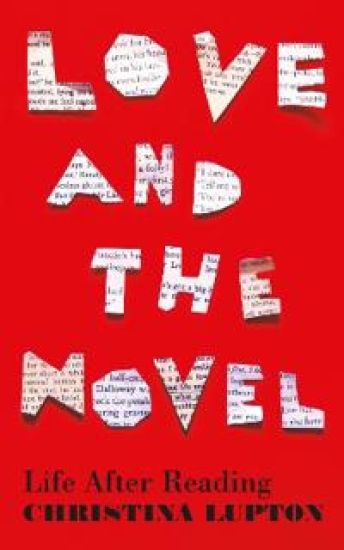
Love and the Novel

Love and the Novel

Christina Lupton

Profile Books Ltd
2024
pokkari
Romantic love was born alongside the novel, and books have been shaping how we experience and think about our most intimate stories ever since. But what do novels give us when our own lives diverge from the usual narrative paths? Christina is a professor used to examining stories with a critical eye; until one day in middle age she finds herself falling in love and leaving her marriage for a romance with another woman. This involves a familiar enough tale, but when her new partner suffers a stroke, Tina begins to reflect on the sorts of love that novels rarely capture. A heady mix of memoir, criticism and storytelling that draws on novels ranging from Pride and Prejudice to Price of Salt, Anna Karenina to Conversations with Friends, to illuminate the ways love and novels work, and show how some types of love, which don't race to a narrative end-point, might be the most important of all.
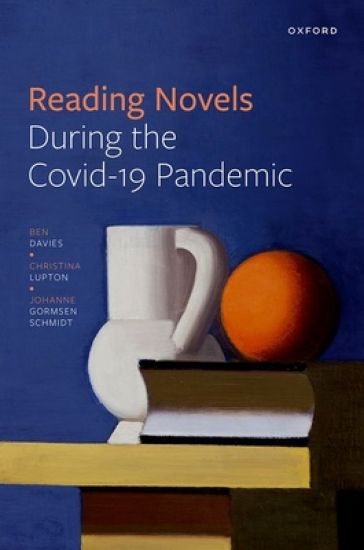
Reading Novels During the Covid-19 Pandemic

Reading Novels During the Covid-19 Pandemic

Ben Davies; Christina Lupton; Johanne Gormsen Schmidt

Oxford University Press
2022
sidottu
Drawing on an ethnographic study of novel readers in Denmark and the UK during the Covid-19 pandemic, this book provides a snapshot of a phenomenal moment in modern history. The ethnographic approach shows what no historical account of books published during the pandemic will be able to capture, namely the movement of readers between new purchases and books long kept in their collections. The book follows readers who have tuned into novels about plague, apocalypse, and racial violence, but also readers whose taste for older novels, and for re-reading novels they knew earlier in their lives, has grown. Alternating between chapters that analyse single texts that were popular (Albert Camus's The Plague, Ali Smith's Summer, Charlotte Brönte's Jane Eyre) and others that describe clusters of, for example, dystopian fiction and nature writing, this work brings out the diverse quality of the Covid-19 bookshelf. Time is of central importance to this study, both in terms of the time of lockdown and the temporality of reading itself within this wider disrupted sense of time. By exploring these varied experiences, this book investigates the larger question of how the consumption of novels depends on and shapes people's experience of non-work time, providing a specific lens through which to examine the phenomenology of reading more generally. This timely work also negotiates debates in the study of reading that distinguish theoretically between critical reading and reading for pleasure, between professional and lay reading. All sides of the sociological and literary debate must be brought to bear in understanding what readers tell us about what novels have meant to them in this complex historical moment.
Love and the Novel

Love and the Novel

Christina Lupton

Profile Books Ltd
2022
sidottu
'It is a clever, well-written book, and I often found myself underlining whole paragraphs as I read. ... wonderfully insightful. ... I've never read accounts of any of these texts that manage to be at once so searching and so wondrously concise, and Lupton made me want to go back to them all' Rachel Cooke, Observer 'Incandescent' Lara Feigel, Guardian 'A subversive, brilliant and beautifully written book about love, play and power in fiction and in the well-read life' - Sarah Moss, author of Summerwater 'A delicious combination of critical thought and passionate personal experience.' - Tanya Shadrick, author of The Cure for Sleep Romantic love was born alongside the novel, and books have been shaping how we experience and think about our most intimate stories ever since. But what do novels give us when our own lives diverge from the usual narrative paths? Christina is a professor used to examining stories with a critical eye; until one day in middle age she finds herself falling in love and leaving her marriage for a romance with another woman. This involves a familiar enough tale, but when her new partner suffers a stroke, Tina begins to reflect on the sorts of love that novels rarely capture. A heady mix of memoir, criticism and storytelling that draws on novels ranging from Pride and Prejudice to Price of Salt, Anna Karenina to Conversations with Friends, to illuminate the ways love and novels work, and show how some types of love, which don't race to a narrative end-point, might be the most important of all.
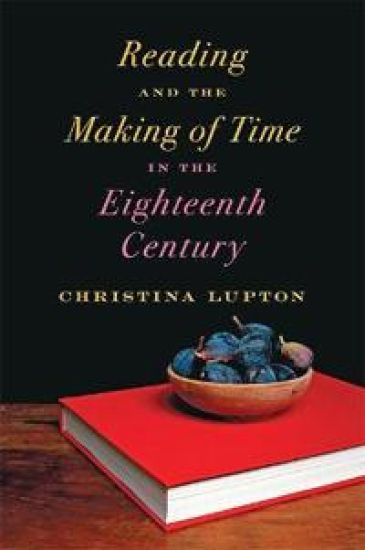
Reading and the Making of Time in the Eighteenth Century

Reading and the Making of Time in the Eighteenth Century

Christina Lupton

Johns Hopkins University Press
2018
sidottu
How did eighteenth-century readers find and make time to read? Books have always posed a problem of time for readers. Becoming widely available in the eighteenth century—when working hours increased and lighter and quicker forms of reading (newspapers, magazines, broadsheets) surged in popularity—the material form of the codex book invited readers to situate themselves creatively in time. Drawing on letters, diaries, reading logs, and a range of eighteenth- and early nineteenth-century novels, Christina Lupton’s Reading and the Making of Time in the Eighteenth Century concretely describes how book-readers of the past carved up, expanded, and anticipated time. Placing canonical works by Elizabeth Inchbald, Henry Fielding, Amelia Opie, and Samuel Richardson alongside those of lesser-known authors and readers, Lupton approaches books as objects that are good at attracting particular forms of attention and paths of return. In contrast to the digital interfaces of our own moment and the ephemeral newspapers and pamphlets read in the 1700s, books are rarely seen as shaping or keeping modern time. However, as Lupton demonstrates, books are often put down and picked up, they are leafed through as well as read sequentially, and they are handed on as objects designed to bridge temporal distances. In showing how discourse itself engages with these material practices, Lupton argues that reading is something to be studied textually as well as historically. Applying modern theorists such as Niklas Luhmann, Bruno Latour, and Bernard Stiegler, Lupton offers a rare phenomenological approach to the study of a concrete historical field. This compelling book stands out for the combination of archival research, smart theoretical inquiry, and autobiographical reflection it brings into play.

British It-Narratives, 1750–1830

British It-Narratives, 1750–1830

Christina Lupton

Pickering Chatto (Publishers) Ltd
2012
muu
It-narratives are prose fictions that take as their central characters animals or inanimate objects. This four-volume reset collection includes numerous examples of narratives in different forms, including short stories, excerpts from novels, periodical fiction and serialized works.
British It-Narratives, 1750–1830, Volume 4

British It-Narratives, 1750–1830, Volume 4

Mark Blackwell; Liz Bellamy; Christina Lupton; Heathe Keenleyside

Routledge
2012
sidottu
It-narratives are prose fictions that take as their central characters animals or inanimate objects. This four-volume reset collection includes numerous examples of narratives in different forms, including short stories, excerpts from novels, periodical fiction and serialized works.
British It-Narratives, 1750-1830, Volume 3

British It-Narratives, 1750-1830, Volume 3

Mark Blackwell; Liz Bellamy; Christina Lupton; Heathe Keenleyside

Routledge
2012
sidottu
It-narratives are prose fictions that take as their central characters animals or inanimate objects. This four-volume reset collection includes numerous examples of narratives in different forms, including short stories, excerpts from novels, periodical fiction and serialized works.
British It-Narratives, 1750–1830, Volume 2

British It-Narratives, 1750–1830, Volume 2

Mark Blackwell; Liz Bellamy; Christina Lupton; Heathe Keenleyside

Routledge
2012
sidottu
It-narratives are prose fictions that take as their central characters animals or inanimate objects. This four-volume reset collection includes numerous examples of narratives in different forms, including short stories, excerpts from novels, periodical fiction and serialized works.
British It-Narratives, 1750–1830, Volume 1

British It-Narratives, 1750–1830, Volume 1

Mark Blackwell; Liz Bellamy; Christina Lupton; Heathe Keenleyside

Routledge
2012
sidottu
It-narratives are prose fictions that take as their central characters animals or inanimate objects. This four-volume reset collection includes numerous examples of narratives in different forms, including short stories, excerpts from novels, periodical fiction and serialized works.
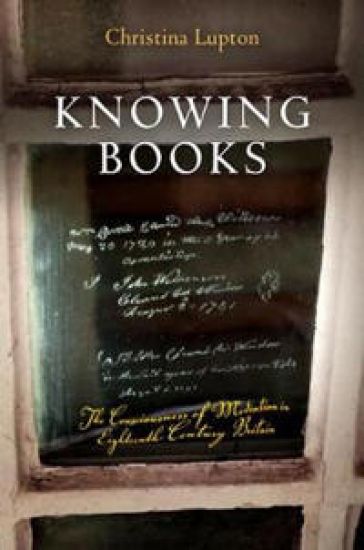
Knowing Books

Knowing Books

Christina Lupton

University of Pennsylvania Press
2011
sidottu
The eighteenth century has long been associated with realism and objective description, modes of representation that deemphasize writing. But in the middle decades of the century, Christina Lupton observes, authors described with surprising candor the material and economic facets of their own texts' production. In Knowing Books Lupton examines a variety of eighteenth-century sources, including sermons, graffiti, philosophical texts, and magazines, which illustrate the range and character of mid-century experiments with words announcing their status as physical objects. Books that "know" their own presence on the page and in the reader's hand become, in Lupton's account, tantalizing objects whose entertainment value competes with that of realist narrative. Knowing Books introduces these mid-eighteenth-century works as part of a long history of self-conscious texts being greeted as fashionable objects. Poststructuralist and Marxist approaches to literature celebrate the consciousness of writing and economic production as belonging to revolutionary understandings of the world, but authors of the period under Lupton's gaze expose the facts of mediation without being revolutionary. On the contrary, their explication of economic and material processes shores up their claim to material autonomy and economic success. Lupton uses media theory and close reading to suggest the desire of eighteenth-century readers to attribute sentience to technologies and objects that entertain them. Rather than a historical study of print technology, Knowing Books offers a humanist interpretation of the will to cede agency to media. This horizon of theoretical engagement makes Knowing Books at once an account of the least studied decades of the eighteenth century and a work of relevance for those interested in new attitudes toward media in the twenty-first.