Kirjojen hintavertailu – 12 903 725 kirjaa ja 27 kauppaa

Kirjailija

Christine Chinkin

Kirjat ja teokset yhdessä paikassa: 9 kirjaa, julkaisuja vuosilta 2007–2024, suosituimpiin kuuluu Gendered Peace through International Law. Vertaile teosten hintoja ja tarkista saatavuus suomalaisista kirjakaupoista.

9 kirjaa

Kirjojen julkaisuvuodet: 2007–2024.

Gendered Peace through International Law

Gendered Peace through International Law

Louise Arimatsu; Christine Chinkin

BLOOMSBURY PUBLISHING PLC
2024
sidottu
Two leading feminist lawyers reflect on gender in international law to set out what a gendered peace might look like and its impact on international law in this open access book. In order to challenge orthodoxies, the book takes an unconventional approach, merging personal reflections, expert essays, and interviews. It throws the disciplinary net wide, drawing on international law, gender studies, international relations and history. The authors, undisputed global leaders in the field, challenge the reader to unlearn international law, in order to relearn it in a way that makes it more fit for purpose in the contemporary world. This seminal work is a clarion call to think about international law in a new and transformative way. The ebook editions of this book are available open access under a CC BY-NC-ND 4.0 licence on bloomsburycollections.com. Open access was funded by the London School of Economics & Political Science. For additional material on Gendered Peace Through International Law visit https://www.bloomsburyonlineresources.com/gendered-peace-through-international-law

Gendered Peace through International Law

Gendered Peace through International Law

Louise Arimatsu; Christine Chinkin

BLOOMSBURY PUBLISHING PLC
2024
nidottu
Two leading feminist lawyers reflect on gender in international law to set out what a gendered peace might look like and its impact on international law in this open access book. In order to challenge orthodoxies, the book takes an unconventional approach, merging personal reflections, expert essays, and interviews. It throws the disciplinary net wide, drawing on international law, gender studies, international relations and history. The authors, undisputed global leaders in the field, challenge the reader to unlearn international law, in order to relearn it in a way that makes it more fit for purpose in the contemporary world. This seminal work is a clarion call to think about international law in a new and transformative way. The ebook editions of this book are available open access under a CC BY-NC-ND 4.0 licence on bloomsburycollections.com. Open access was funded by the London School of Economics & Political Science. For additional material on Gendered Peace Through International Law visit https://www.bloomsburyonlineresources.com/gendered-peace-through-international-law
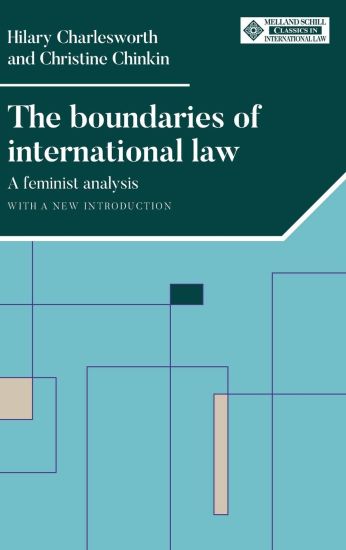
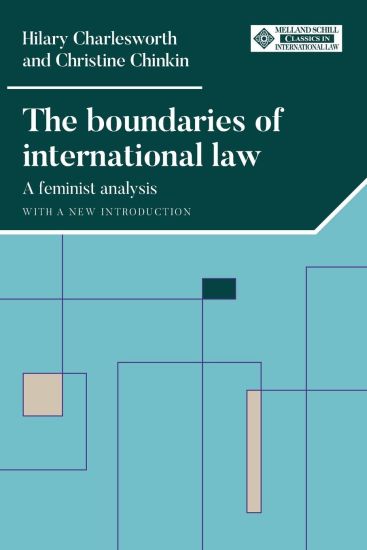
The Boundaries of International Law

The Boundaries of International Law

Hilary Charlesworth; Christine Chinkin

MANCHESTER UNIVERSITY PRESS
2022
sidottu
In the first book-length treatment of the application of feminist theories of international law, Charlesworth and Chinkin argue that the absence of women in the development of international law has produced a narrow and inadequate jurisprudence that has legitimated the unequal position of women worldwide rather than confronting it. The boundaries of international law provides a feminist perspective on the structure, processes and substance of international law, shedding new light on treaty law, the concept of statehood and the right of self-determination, the role of international institutions and the law of human rights. Concluding with a consideration of whether the inclusion of women in the jurisdiction of international war crimes tribunals represents a significant shift in the boundaries of international law, the book encourages a dramatic rethinking of the discipline of international law. With a new introduction that reflects on the profound changes in international law since the book’s first publication in 2000, this provocative volume is essential reading for scholars, practitioners and students alike.
The Boundaries of International Law

The Boundaries of International Law

Hilary Charlesworth; Christine Chinkin

MANCHESTER UNIVERSITY PRESS
2022
nidottu
In the first book-length treatment of the application of feminist theories of international law, Charlesworth and Chinkin argue that the absence of women in the development of international law has produced a narrow and inadequate jurisprudence that has legitimated the unequal position of women worldwide rather than confronting it. The boundaries of international law provides a feminist perspective on the structure, processes and substance of international law, shedding new light on treaty law, the concept of statehood and the right of self-determination, the role of international institutions and the law of human rights. Concluding with a consideration of whether the inclusion of women in the jurisdiction of international war crimes tribunals represents a significant shift in the boundaries of international law, the book encourages a dramatic rethinking of the discipline of international law. With a new introduction that reflects on the profound changes in international law since the book’s first publication in 2000, this provocative volume is essential reading for scholars, practitioners and students alike.
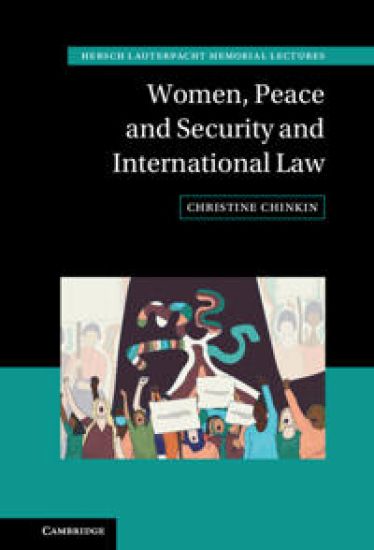
Women, Peace and Security and International Law

Women, Peace and Security and International Law

Christine Chinkin

Cambridge University Press
2022
sidottu
In 2000, the UN Security Council adopted the ground-breaking Resolution 1325 on Women, Peace and Security (WPS) placing women at the centre of the agenda, thanks to years of campaigning. The Resolution recognises the differential impact of armed conflict on women and men, draws attention to the 'inextricable links between gender equality and international peace and security' and stresses the 'important role of women in the prevention and resolution of conflicts and in peace-building'. But what exactly is the WPS agenda and what is its content? What are its implications for peace and for security? And what does it mean for international lawyers? Through the narratives of women's activism and of international law this book seeks to make the WPS agenda better known to international lawyers and to ask whether it is, or could become, an international legal regime that conforms and responds to the realities of women's lives.
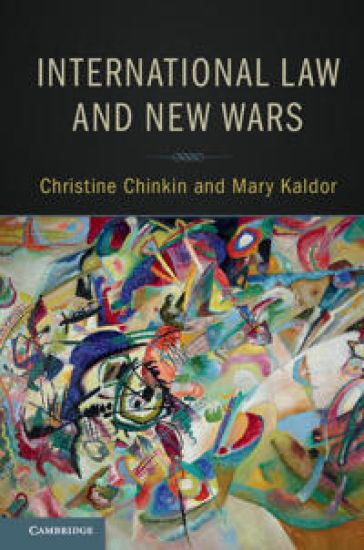
International Law and New Wars

International Law and New Wars

Christine Chinkin; Mary Kaldor

Cambridge University Press
2017
sidottu
International Law and New Wars examines how international law fails to address the contemporary experience of what are known as 'new wars' - instances of armed conflict and violence in places such as Syria, Ukraine, Libya, Mali, the Democratic Republic of Congo and South Sudan. International law, largely constructed in the nineteenth and twentieth centuries, rests to a great extent on the outmoded concept of war drawn from European experience - inter-state clashes involving battles between regular and identifiable armed forces. The book shows how different approaches are associated with different interpretations of international law, and, in some cases, this has dangerously weakened the legal restraints on war established after 1945. It puts forward a practical case for what it defines as second generation human security and the implications this carries for international law.
International Law and New Wars

International Law and New Wars

Christine Chinkin

Cambridge University Press
2017
nidottu
International Law and New Wars examines how international law fails to address the contemporary experience of what are known as 'new wars' - instances of armed conflict and violence in places such as Syria, Ukraine, Libya, Mali, the Democratic Republic of Congo and South Sudan. International law, largely constructed in the nineteenth and twentieth centuries, rests to a great extent on the outmoded concept of war drawn from European experience - inter-state clashes involving battles between regular and identifiable armed forces. The book shows how different approaches are associated with different interpretations of international law, and, in some cases, this has dangerously weakened the legal restraints on war established after 1945. It puts forward a practical case for what it defines as second generation human security and the implications this carries for international law.
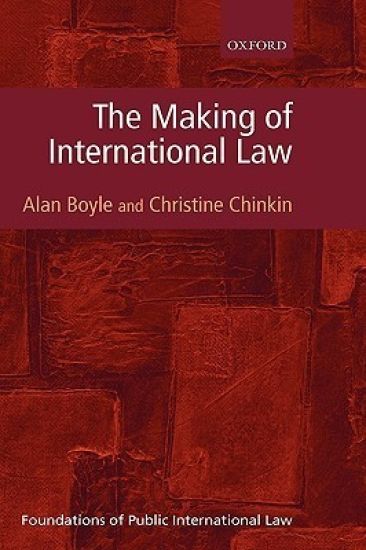
The Making of International Law

The Making of International Law

Alan Boyle; Christine Chinkin

Oxford University Press
2007
sidottu
This is a study of the principal negotiating processes and law-making tools through which contemporary international law is made. It does not seek to give an account of the traditional - and untraditional - sources and theories of international law, but rather to identify the processes, participants and instruments employed in the making of international law. It accordingly examines some of the mechanisms and procedures whereby new rules of law are created or old rules are amended or abrogated. It concentrates on the UN, other international organisations, diplomatic conferences, codification bodies, NGOs, and courts. Every society perceives the need to differentiate between its legal norms and other norms controlling social, economic and political behaviour. But unlike domestic legal systems where this distinction is typically determined by constitutional provisions, the decentralised nature of the international legal system makes this a complex and contested issue. Moreover, contemporary international law is often the product of a subtle and evolving interplay of law-making instruments, both binding and non-binding, and of customary law and general principles. Only in this broader context can the significance of so-called 'soft law' and multilateral treaties be fully appreciated. An important question posed by any examination of international law-making structures is the extent to which we can or should make judgments about their legitimacy and coherence, and if so in what terms. Put simply, a law-making process perceived to be illegitimate or incoherent is more likely to be an ineffective process. From this perspective, the assumption of law-making power by the UN Security Council offers unique advantages of speed and universality, but it also poses a particular challenge to the development of a more open and participatory process observable in other international law-making bodies.
The Making of International Law

The Making of International Law

Alan Boyle; Christine Chinkin

Oxford University Press
2007
nidottu

Halvin toimitettuna 72,80 €

This is a study of the principal negotiating processes and law-making tools through which contemporary international law is made. It does not seek to give an account of the traditional - and untraditional - sources and theories of international law, but rather to identify the processes, participants and instruments employed in the making of international law. It accordingly examines some of the mechanisms and procedures whereby new rules of law are created or old rules are amended or abrogated. It concentrates on the UN, other international organisations, diplomatic conferences, codification bodies, NGOs, and courts. Every society perceives the need to differentiate between its legal norms and other norms controlling social, economic and political behaviour. But unlike domestic legal systems where this distinction is typically determined by constitutional provisions, the decentralised nature of the international legal system makes this a complex and contested issue. Moreover, contemporary international law is often the product of a subtle and evolving interplay of law-making instruments, both binding and non-binding, and of customary law and general principles. Only in this broader context can the significance of so-called 'soft law' and multilateral treaties be fully appreciated. An important question posed by any examination of international law-making structures is the extent to which we can or should make judgments about their legitimacy and coherence, and if so in what terms. Put simply, a law-making process perceived to be illegitimate or incoherent is more likely to be an ineffective process. From this perspective, the assumption of law-making power by the UN Security Council offers unique advantages of speed and universality, but it also poses a particular challenge to the development of a more open and participatory process observable in other international law-making bodies.