Kirjailija
Christine De Pizan
Kirjat ja teokset yhdessä paikassa: 25 kirjaa, julkaisuja vuosilta 1997–2025, suosituimpiin kuuluu Le Livre Des Epitres Du Debat Sur Le Roman de la Rose. Vertaile teosten hintoja ja tarkista saatavuus suomalaisista kirjakaupoista.
25 kirjaa
Kirjojen julkaisuvuodet: 1997–2025.
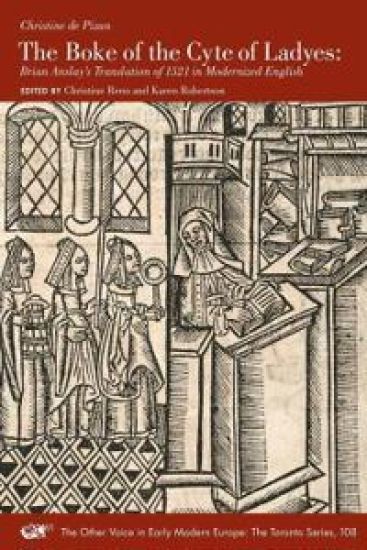
An early Tudor translation of the Cité des dames, a crucial argument written by Christine de Pizan on the importance of women. Christine de Pizan's defense of women against centuries of misogyny, Cité des dames, was the only work of literature translated into English by Brian Anslay, an administrator in the household of King Henry VII. While numerous manuscripts were held in royal and aristocratic libraries, Anslay’s printed translation enabled a broader range of readers to appreciate the arguments for female rule crucial to the reigns of Mary I and Elizabeth I. Anslay’s translation also played a key role in the late-nineteenth-century revival of interest in Christine. This modernization of Anslay’s Tudor English makes his translation accessible to contemporary readers while preserving the rhythms of early Tudor prose. It includes an extensive introduction and notes highlighting both the history of the language and the cultural references embodied in the text.

Le Livre Des Epitres Du Debat Sur Le Roman de la Rose
Christine De Pizan
Classiques Garnier
2022
sidottu
This book contains a translation into modern French of the letters Christine de Pizan wrote in 1401-1402 during the debate on the Roman de la Rose, of which she criticised the misogyny and obscenity. The other pieces of the debate are translated in an appendix.
Le Livre Des Epitres Du Debat Sur Le Roman de la Rose
Christine De Pizan
Classiques Garnier
2022
nidottu
This book contains a translation into modern French of the letters Christine de Pizan wrote in 1401-1402 during the debate on the Roman de la Rose, of which she criticised the misogyny and obscenity. The other pieces of the debate are translated in an appendix.
The first political treatise written by a woman. Christine de Pizan’s The Book of the Body Politic is the first political treatise written by a woman. It not only advises the prince, but nobles, knights, and common people as well. It promotes the ideals of interdependence and social responsibility. Rooted in the mindset of medieval Christendom, The Book of the Body Politic heralds the humanism of the Renaissance, highlighting classical culture and Roman civic virtues. This new edition and translation offers a faithful rendering of Christine de Pizan’s writing, as well as a thorough contextualization of her career as a political writer at the end of the Middle Ages in France. The Book of the Body Politic resounds to this day, urging for the need for probity in public life and the importance of responsibilities and rights.
Originally published in 1993, this book offers a translation of Christine de Pizan's Christine's Vision, as translated by Glenda K. McLeod. One of France's first professionl writers, Christine de Pizan wrote a large and remarkable body of work, distinguished not only for its variety and quality but also for its unusual blend of introspective and public commentary. As Christine's Vision makes clear, Christine sensed the similarities between her fate and France's and felt a close bond with her adopted land.
Originally published in 1984, the three epistolary works of Christine de Pizan, alongside their translation. They are all personal documents from a woman who gave spiritual advice as well as an insight into the real workings of her society.
The Book of the Path of Long Learning
Christine de Pizan
Createspace Independent Publishing Platform
2018
pokkari
Christine de Pizan (1364-1430) is considered France's first professional female author. The Book of the Path of Long Learning is a dream allegory, in which the author undertakes a journey with the Cumaean Sibyl across the earth and through the Celestial spheres. On this journey, she witnesses a debate in the court of Lady Reason about the ideal qualities for world king. It is concluded that such a person must be chosen from the French court, and Christine is appointed as the messenger to deliver the verdict to the French court.
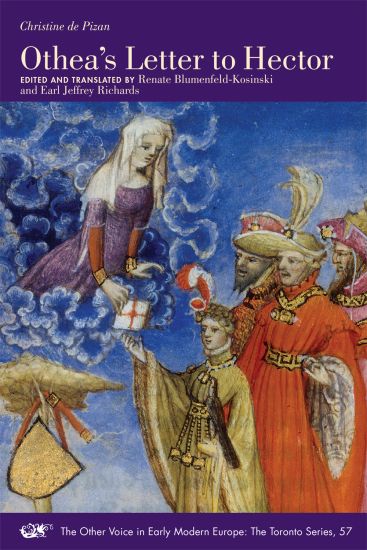
Othea's Letter to Hector
Christine de Pizan; Renate Blumenfeld–kosi; Earl Jeffrey Richard
State University of New York at Binghamton,Medieval Renaissance Texts Studies
2017
nidottu
Othea’s Letter to Hector, one of Christine de Pizan’s most popular works, is at the same time one of her most complex creations. Combining a somewhat Sibylline verse text based on a mythological figure with extensive citation of pagan sapiential authorities, the Bible, and the Church Fathers, it showcases Christine’s extraordinary learning and her innovative approach to didacticism. An appendix provides new insights on her skillful use of patristic sources and creative command of Latin authors.
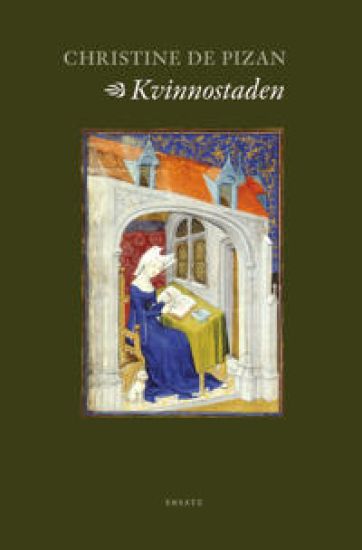
»Hittills har många kloka och rättfärdiga människor berömt kvinnornas verk, utan att kvinnorna själva skrivit en bok om dessa ting. Vad gäller tiden som har gått utan att deras anklagare och belackare har blivit bemötta, säger jag dig bara, att i evigheten har var sak sin tid.« - Christine de Pizan Så har tiden äntligen kommit för den första svenska översättningen av Christine de Pizans Kvinnostaden (1405), ett av senmedeltidens viktigaste litterära verk och en uppgörelse med den tidens kvinnofientliga tanke- och samhällsmönster. Med hjälp av »tre höga fruar« går Christine ut på Litteraturens fält för att grunda Kvinnostaden. Byggstenarna utgörs av historiska och mytologiska kvinnoöden, allt ifrån drottning Semiramis och Jungfru Maria till samtida kvinnor i Christines närhet. Med uppfriskande klarhet analyserar hon sin tids skrankor och formulerar en utopisk vision som fortfarande inte har förlorat sin aktualitet. Översättning Jens Nordenhök, förord Carin Franzén Christine de Pizan (1364-1431) har kallats »den första feministen« och inledde sin bana som professionell författare när hon vid tjugofem års ålder blev änka och ensam måste försörja tre barn och sin mor. Född i Venedig och verksam i Paris.
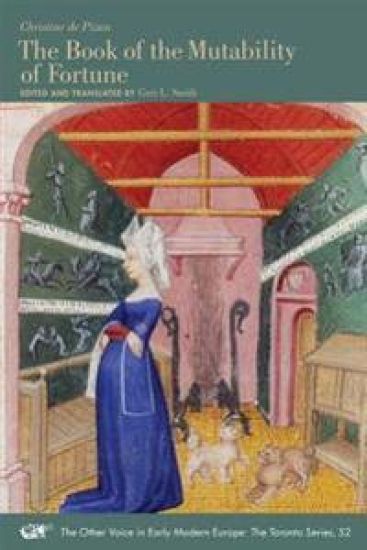
The Book of the Mutability of Fortune
Christine De Pizan; Geri L. Smith
State University of New York at Binghamton,Medieval Renaissance Texts Studies
2017
nidottu
Christine de Pizan (ca. 1364–ca. 1431) has long been recognized as France’s first professional woman of letters, and interest in her voluminous and wide-ranging corpus has been steadily rising for decades. During the tumultuous later years of the Hundred Years’ War, Christine’s lone but strong feminine voice could be heard defending women, expounding the highest ideals for good governance, and lamenting France’s troubled times alongside her own personal trials. In The Mutability of Fortune, Christine fuses world history with autobiography to demonstrate mankind’s subjugation to the ceaselessly changing, and often cruel, whims of Fortune. Now, for the first time, this poem is accessible to an English-speaking audience, further expanding our appreciation of this ground-breaking woman author and her extraordinary body of work.
The Book of the City of Ladies
Christine de Pizan; Natalie Zemon Davis
Persea Books Inc
2013
nidottu
Halvin toimitettuna 19,50 €
Christine de Pizan was born in 1365 in Venice. Her family moved to Paris three years later when her father was appointed court astrologer to King Charles V. Close ties to the royal court and her father's encouragement enabled Christine to obtain a good education, unusual for women of her time. At the age of fifteen, she married a court notary, who also fostered her learning and her literary activities. She was only twenty-five when she was widowed and left without an inheritance. With three children to support, Christine turned to writing to earn her living. From 1390 to 1429, the presumed year of her death, she wrote more than twenty works, nearly all concerned with two themes: the political life of France and the defense of women. The Book of the City of Ladies is Christine de Pizan's most eloquent expression of her feminist beliefs.
Collection Complète Des Mémoires Relatifs À l'Histoire de France. 7 (Éd.1824)
Christine de Pizan
Hachette Livre - BNF
2012
pokkari
Les Conteurs Galants Des Xviie Et Xviiie Siècles. 1, Contes Et Nouvelles En Vers. T 1 (Éd.1894)
Christine de Pizan
Hachette Livre - BNF
2012
pokkari
In 1401, Christine de Pizan (1365-1430?), one of the most renowned and prolific woman writers of the Middle Ages, wrote a letter to the provost of Lille criticizing the highly popular and widely read "Romance of the Rose" for its blatant and unwarranted misogynistic depictions of women. The debate that ensued, over not only the merits of the treatise but also the place of women in society, started Europe on the long path to gender parity. Pizan's criticism sparked a continent-wide discussion that is still alive today in disputes about art and morality, especially the civic responsibility of a writer or artist for the works he or she produces. In "Debate of the 'Romance of the Rose'", David F. Hult collects, along with the debate documents themselves, letters, sermons, and excerpts from other works of Pizan, including one from "City of Ladies" - her major defense of women and their rights - that give context to this debate. Here, Pizan's supporters and detractors are heard alongside her own formidable, protofeminist voice. The resulting volume affords a rare look at the way people read and thought about literature in the period immediately preceding the era of print.