Kirjojen hintavertailu – 12 859 829 kirjaa ja 27 kauppaa

Kirjailija

Christine Hopkins

Kirjat ja teokset yhdessä paikassa: 4 kirjaa, julkaisuja vuosilta 2005–2016, suosituimpiin kuuluu Understanding Primary Mathematics. Vertaile teosten hintoja ja tarkista saatavuus suomalaisista kirjakaupoista.

4 kirjaa

Kirjojen julkaisuvuodet: 2005–2016.

Understanding Primary Mathematics

Understanding Primary Mathematics

Christine Hopkins; Ann Pope; Sandy Pepperell

CRC Press
2016
sidottu
In this textbook, the foundations of mathematics are made explicit and the reader is guided through the background knowledge and understanding that are required for the subject, offering a well-structured overview of the important issues to be considered when learning about mathematics on a Primary QTS course, and a coherent approach to the content to be found in the standards for QTS, the National Curriculum at Key Stages 1 and 2 and the numeracy strategy. The authors aim to help teachers review and restructure the understanding of mathematics gained during their education, progressing from partial memories of a few process to an understanding of why the skills they were taught make sense and how they fit into a coherent mathematics curriculum, arguing that to teach mathematics effectively it is not enough to be able to do the mathematics, you need to understand why you do what you do. Aimed at all teachers of primary mathematics, this book is also likely to be valuable to secondary teachers, parents, administrators and others interested in the foundations of school mathematics. Written for trainee and practicing teachers, this book de-mystifies the primary mathematics UK curriculum and offers a valuable reference for effective mathematicss teaching.
Mathematics in the Primary School

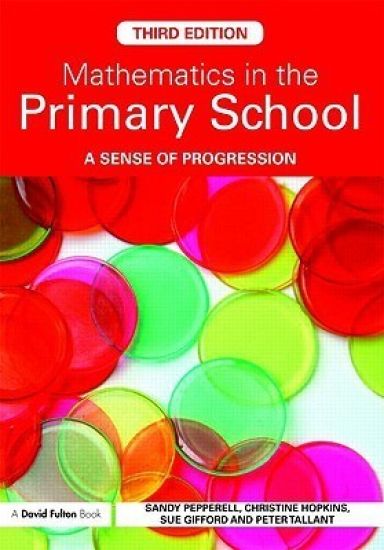
Mathematics in the Primary School

Sandy Pepperell; Christine Hopkins; Sue Gifford; Peter Tallant

Routledge
2009
sidottu
Now in its third edition, Mathematics in the Primary School has been updated to reflect recent mathematics curriculum documentation and revised standards for QTS. Key areas include:The role of talk in learning mathsTeacher questioningDevelopment of children’s reasoningCreative engagement with maths Assessment for learning and self assessment Suggested resources for teachers including ICTProviding a coherent set of principles for teaching primary mathematics across the main topics in the curriculum, the authors explore children’s understanding of key areas of mathematics, at reception, infant and junior levels. Important principles and teaching approaches are identified, including the use of calculators and computers, and there is an emphasis on mental mathematics and problem solving supporting key issues raised by the Williams review (2008). Case studies are used throughout to illustrate how different teaching approaches are put into practice and how children respond to them, and there is advice on planning, organisation and assessment of mathematical learning in the classroom. Emphasising the importance of teachers’ own mathematical knowledge and offering clear guidance and practical advice, this book is essential reading for students, NQTs and practising teachers with a focus on primary mathematics.
Mathematics in the Primary School

Mathematics in the Primary School

Sandy Pepperell; Christine Hopkins; Sue Gifford; Peter Tallant

Routledge
2009
nidottu
Now in its third edition, Mathematics in the Primary School has been updated to reflect recent mathematics curriculum documentation and revised standards for QTS. Key areas include:The role of talk in learning mathsTeacher questioningDevelopment of children’s reasoningCreative engagement with maths Assessment for learning and self assessment Suggested resources for teachers including ICTProviding a coherent set of principles for teaching primary mathematics across the main topics in the curriculum, the authors explore children’s understanding of key areas of mathematics, at reception, infant and junior levels. Important principles and teaching approaches are identified, including the use of calculators and computers, and there is an emphasis on mental mathematics and problem solving supporting key issues raised by the Williams review (2008). Case studies are used throughout to illustrate how different teaching approaches are put into practice and how children respond to them, and there is advice on planning, organisation and assessment of mathematical learning in the classroom. Emphasising the importance of teachers’ own mathematical knowledge and offering clear guidance and practical advice, this book is essential reading for students, NQTs and practising teachers with a focus on primary mathematics.
Understanding Primary Mathematics

Understanding Primary Mathematics

Christine Hopkins; Ann Pope; Sandy Pepperell

David Fulton Publishers Ltd
2005
nidottu
In this textbook, the foundations of mathematics are made explicit and the reader is guided through the background knowledge and understanding that are required for the subject, offering a well-structured overview of the important issues to be considered when learning about mathematics on a Primary QTS course, and a coherent approach to the content to be found in the standards for QTS, the National Curriculum at Key Stages 1 and 2 and the numeracy strategy. The authors aim to help teachers review and restructure the understanding of mathematics gained during their education, progressing from partial memories of a few process to an understanding of why the skills they were taught make sense and how they fit into a coherent mathematics curriculum, arguing that to teach mathematics effectively it is not enough to be able to do the mathematics, you need to understand why you do what you do. Aimed at all teachers of primary mathematics, this book is also likely to be valuable to secondary teachers, parents, administrators and others interested in the foundations of school mathematics. Written for trainee and practicing teachers, this book de-mystifies the primary mathematics UK curriculum and offers a valuable reference for effective mathematicss teaching.