Kirjojen hintavertailu – 12 859 819 kirjaa ja 27 kauppaa

Kirjailija

Christine Hunefeldt

Kirjat ja teokset yhdessä paikassa: 5 kirjaa, julkaisuja vuosilta 1999–2024, suosituimpiin kuuluu Environment and the Law in Amazonia. Vertaile teosten hintoja ja tarkista saatavuus suomalaisista kirjakaupoista.

Nimi esiintyy myös muodoissa: Christine Hünefeldt

5 kirjaa

Kirjojen julkaisuvuodet: 1999–2024.

Paying the Price of Freedom

Paying the Price of Freedom

Christine Hünefeldt

University of California Press
2024
sidottu
Christine Hünefeldt documents in impressive, moving detail the striving and ingenuity, the hard-won triumphs and bitter defeats of slaves who sought liberation in nineteenth-century urban Peru. Drawing on judicial, ecclesiastical, and notarial records—including the testimony of the slaves themselves—she uncovers the various strategies slaves invented to gain their freedom. Hünefeldt pays particular attention to marriage relations and family life. Slaves used their family solidarity as a strategy, while slaveowners used the conflicts within families to prevent manumission. The author's focus on gender relations between slaveowners and slaves, as well as between slaves, is particularly original. Her eye for ethnographic detail and her perceptive reading of the documentary evidence make this book a rich and important contribution to the study of slavery in Latin America. This title is part of UC Press's Voices Revived program, which commemorates University of California Press’s mission to seek out and cultivate the brightest minds and give them voice, reach, and impact. Drawing on a backlist dating to 1893, Voices Revived makes high-quality, peer-reviewed scholarship accessible once again using print-on-demand technology. This title was originally published in 1994.

Environment and the Law in Amazonia

Environment and the Law in Amazonia

James M Cooper; Christine Hunefeldt

Sussex Academic Press
2018
nidottu
Book & CD. There are few topics so large yet so uncovered in the academic literature as the Amazon Basin. Much of the area that connects nine South American states, hundreds of indigenous peoples, dozens of multinational corporations, and the worlds lungs, remains unexplored and demographic density is still low. But development throughout the basin has occurred with a ravaging appetite: loggers have decimated parts of the region with their fishbone patterns of extraction; large-scale agribusiness has moved into a power vacuum; coffee and sugar in earlier times -- soya, ranching, and mining industries in more recent times -- have resulted in significant deforestation, releasing carbon dioxide into the atmosphere; and the booms and busts of traditional commodities like rubber latex, nuts and turtle eggs impact negatively on the social and economic structure of the basin. In the background to these developments there is a resurgence of economic nationalism as countries prepare their futures around a pending crisis over food security and global climate change. Hydrocarbons potentials -- the possibility of oil and gas fields underground in Amazonia -- complicate the situation as indigenous communities, sharecroppers, landless peasants, and others advocate for their respective rights, using ancient methods of protest as well as digital activism through the Internet. This important book sets out how the Amazon Basins indigenous self-determination meets corporate profiteering, where the future of natural resource stewardship is hotly debated, where subsistence living, extreme poverty, and the vagaries of the international commodities markets are revealed. The environment and the law is seen to be at the heart of the intersection of sustainable development and unfair trading practices.
Paying the Price of Freedom

Paying the Price of Freedom

Christine Hünefeldt

University of California Press
2018
pokkari
Christine Hünefeldt documents in impressive, moving detail the striving and ingenuity, the hard-won triumphs and bitter defeats of slaves who sought liberation in nineteenth-century urban Peru. Drawing on judicial, ecclesiastical, and notarial records—including the testimony of the slaves themselves—she uncovers the various strategies slaves invented to gain their freedom. Hünefeldt pays particular attention to marriage relations and family life. Slaves used their family solidarity as a strategy, while slaveowners used the conflicts within families to prevent manumission. The author's focus on gender relations between slaveowners and slaves, as well as between slaves, is particularly original. Her eye for ethnographic detail and her perceptive reading of the documentary evidence make this book a rich and important contribution to the study of slavery in Latin America. This title is part of UC Press's Voices Revived program, which commemorates University of California Press’s mission to seek out and cultivate the brightest minds and give them voice, reach, and impact. Drawing on a backlist dating to 1893, Voices Revived makes high-quality, peer-reviewed scholarship accessible once again using print-on-demand technology. This title was originally published in 1994.

Environment and the Law in Amazonia

Environment and the Law in Amazonia

James M Cooper; Christine Hunefeldt

Sussex Academic Press
2013
sidottu
Book & CD. There are few topics so large yet so uncovered in the academic literature as the Amazon Basin. Much of the area that connects nine South American states, hundreds of indigenous peoples, dozens of multinational corporations, and the worlds lungs, remains unexplored and demographic density is still low. But development throughout the basin has occurred with a ravaging appetite: loggers have decimated parts of the region with their fishbone patterns of extraction; large-scale agribusiness has moved into a power vacuum; coffee and sugar in earlier times -- soya, ranching, and mining industries in more recent times -- have resulted in significant deforestation, releasing carbon dioxide into the atmosphere; and the booms and busts of traditional commodities like rubber latex, nuts and turtle eggs impact negatively on the social and economic structure of the basin. In the background to these developments there is a resurgence of economic nationalism as countries prepare their futures around a pending crisis over food security and global climate change. Hydrocarbons potentials -- the possibility of oil and gas fields underground in Amazonia -- complicate the situation as indigenous communities, sharecroppers, landless peasants, and others advocate for their respective rights, using ancient methods of protest as well as digital activism through the Internet. This important book sets out how the Amazon Basins indigenous self-determination meets corporate profiteering, where the future of natural resource stewardship is hotly debated, where subsistence living, extreme poverty, and the vagaries of the international commodities markets are revealed. The environment and the law is seen to be at the heart of the intersection of sustainable development and unfair trading practices.
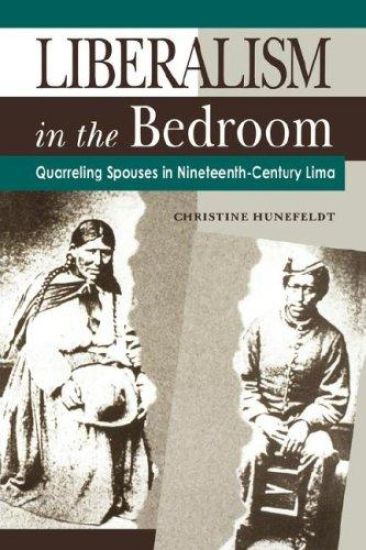
Liberalism in the Bedroom

Liberalism in the Bedroom

Christine Hunefeldt

Pennsylvania State University Press
1999
pokkari
This book tells the story of how ordinary Peruvian men and women experienced their lives, and especially their marriages, in a patriarchal society and how, through the struggles involved in divorce, women tried to defend their rights and in the process helped bring about change in society more broadly. Careful examination of more than one thousand cases of conjugal suits filed in Lima's archbishopric, as well as wills in notarial records, allowed the author to trace over time quarreling spouses' relationships, attitudes, and perceptions of gender, life cycle, race, and class and to study their evolving moral expectations and the varying pace of social change. The history of this marital dialogue reveals the construction of a new terminology, based on liberal ideas imported from England and France, that found its way into domestic life and influenced how conflicts were perceived and resolved. Far from opening doors for women, liberalism maintained women's inferior status but also shifted the ground on which women waged battles for survival. By the end of the nineteenth century, many women had concluded that basic patriarchal and Christian arrangements were a sham, and they sought ways to cope within a system rife with hypocrisy. This book shows how women and children, made destitute by intimate tyranny, challenged this tyranny by finding new means of defense and social support.