

Kirjailija
Christoph Wagner
Kirjat ja teokset yhdessä paikassa: 44 kirjaa, julkaisuja vuosilta 1997–2026, suosituimpiin kuuluu Hilma af Klint: The art of seeing the invisible. Vertaile teosten hintoja ja tarkista saatavuus suomalaisista kirjakaupoista.
44 kirjaa
Kirjojen julkaisuvuodet: 1997–2026.
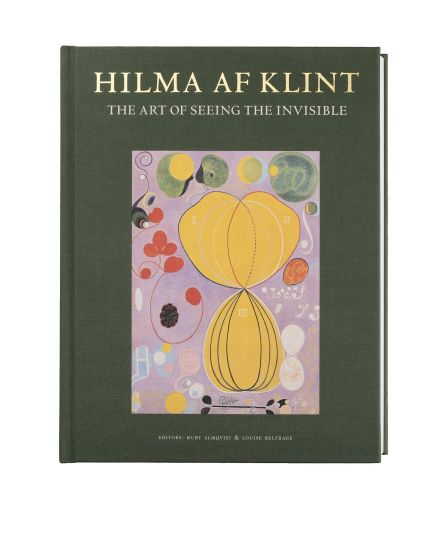
Hilma af Klint: The art of seeing the invisible
Briony Fer; Stephen Kern; Wouter J. Hanegraff; Helmut Zander; Raphael Rosenberg; Marco Pasi; Christoph Wagner; Marty Bax; Tessel M. Bauduin; Victoria Ferentinou; Iris Müller-Westermann
Stolpe Publishing
2021
sidottu
Halvin toimitettuna 37,70 €
In this thorough critical appraisal, 20 specialists on modern art, art history, philosophy and religious studies examine the unique art, the cultural circumstances and art-historical positioning of Swedish abstractionist Hilma af Klint. Topics explored range from early abstract art and the impact of Darwinism to Goethe’s colour theory, as well as the importance of occult religious movements such as theosophy and anthroposophy that influenced the early modernists, and discussions of af Klint’s own personal diary notes and research. The book is based on the seminars that were held in conjunction with the exhibition Hilma af Klint: A Pioneer of Abstraction in 2013. This extremely successful exhibition attracted a record number of visitors to the Moderna Museet in Stockholm, after which it continued to the Hamburger Bahnhof Museum in Berlin and the Louisiana Museum of Modern Art in Denmark.

Registeranmeldungen
Sebastian Berkefeld; Markus Sikora; Christoph Wagner
C.H. Beck
2026
Puolikangassidos
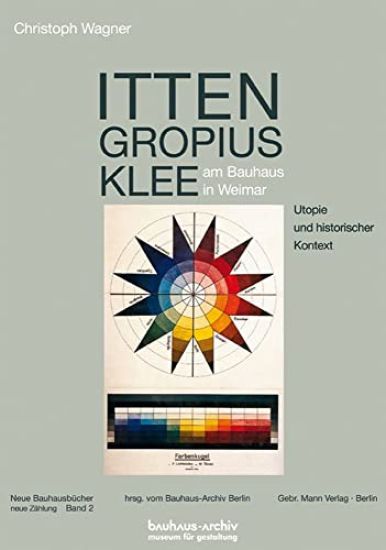
Itten, Gropius, Klee Am Bauhaus in Weimar: Utopie Und Historischer Kontext
Christoph Wagner
Gebruder Mann Verlag
2025
sidottu
Christoph Wagner erarbeitet die Geschichte des Bauhaus' in Weimar (1919-1925) auf der Basis der erstmals vollstandig ausgewerteten kunsttheoretischen Quellen aus dem Weimarer Nachlass von Johannes Itten, darunter das beruhmte 'Tempelherrenhaus-Tagebuch'. Im Zentrum der Darstellung stehen die Beziehungen zwischen Johannes Itten, Walter Gropius, Oskar Schlemmer und Paul Klee. Dies ist ein vollig neuer Ansatzpunkt zum Verstandnis der asthetischen Utopien des Bauhaus': Denn nachdem diese lange Zeit wie gultige Setzungen verhandelt worden waren, erlaubt erst ihre historische Einbettung in geistes-, kultur-, kunst- und mediengeschichtliche Aspekte eine genaue Analyse. Beschrieben werden die Geschichte des Weimarer Bauhaus', die menschlichen Konflikte sowie die kunstlerischen Leitideen, die die Arbeit der Bauhausmeister und ihrer Schuler pragten.

Von ABBA bis ZAPPA
Illja Widmann Stadtmuseum Sindelfingen; Christoph Wagner
Regionalkultur Verlag Gmb
2025
sidottu
Die Organtreuepflicht gegenüber Verbandsmitgliedern im GmbH- und Aktienrecht
Christoph Wagner
Nomos Verlags GmbH
2024
pokkari
Introduction to Credit Risk Modeling
Christian Bluhm; Ludger Overbeck; Christoph Wagner
TAYLOR FRANCIS LTD
2024
nidottu
Halvin toimitettuna 67,20 €
Contains Nearly 100 Pages of New MaterialThe recent financial crisis has shown that credit risk in particular and finance in general remain important fields for the application of mathematical concepts to real-life situations. While continuing to focus on common mathematical approaches to model credit portfolios, Introduction to Credit Risk Modeling, Second Edition presents updates on model developments that have occurred since the publication of the best-selling first edition. New to the Second EditionAn expanded section on techniques for the generation of loss distributionsIntroductory sections on new topics, such as spectral risk measures, an axiomatic approach to capital allocation, and nonhomogeneous Markov chainsUpdated sections on the probability of default, exposure-at-default, loss-given-default, and regulatory capital A new section on multi-period modelsRecent developments in structured creditThe financial crisis illustrated the importance of effectively communicating model outcomes and ensuring that the variation in results is clearly understood by decision makers. The crisis also showed that more modeling and more analysis are superior to only one model. This accessible, self-contained book recommends using a variety of models to shed light on different aspects of the true nature of a credit risk problem, thereby allowing the problem to be viewed from different angles.
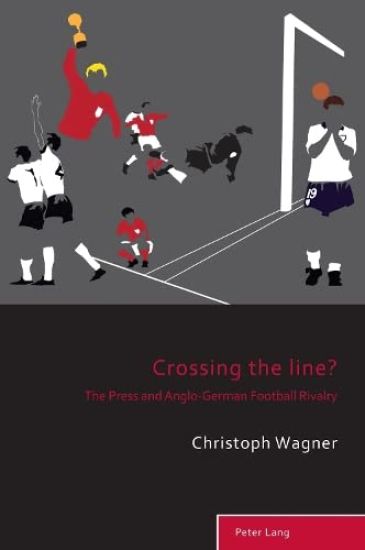
Franz Beckenbauer once observed that, in England, «war correspondents get their say whenever their team plays us.» In Crossing the Line?, Christoph Wagner surveys German football rivalry in the second half of the twentieth century as it was played out on the pitch and in the press. The Second World War undoubtedly cast a long shadow, framing the way in which matches were previewed and reported. The contrasting fortunes of the British and West German economies and British anxieties regarding German unification also impacted on sports coverage. An intense Anglo-German international football rivalry was forged against this backdrop. Newspaper readers often turn to the back page first and first impressions are important. Press coverage helped to shape what the English thought of the Germans and what they thought of themselves. Crossing the Line? – which includes an important chapter on the German media – focuses largely on the part played by English newspapers in generating a simplistic sporting commentary heavily dependent on stereotypes before it overreached itself in the mid-1990s and the German popular press began to hit back. As English football pundits often remind their viewers: «You can never underestimate the Germans».
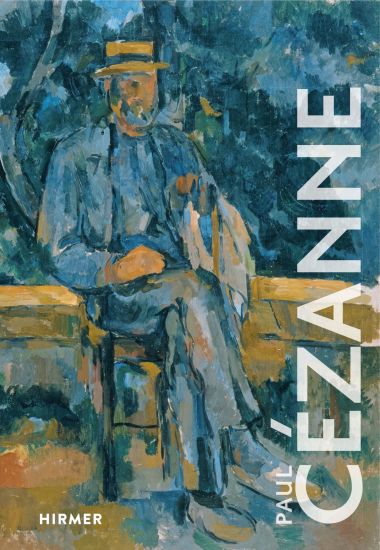
His paintbrush set everything in motion: the landscape of Provence, the colourful still lifes, his portraits and the picturesque coast of southern France. More than any other artist, Paul Cézanne, the “Father of Modernism”, captured the light and the play of colours of the South in his pictures and lent them through his new pictorial language a liveliness and dynamism which continue to fascinate viewers to this day. Paul Cézanne (1839 – 1906) painted the Montagne Sainte-Victoire, a rocky massif near his birthplace Aix-en-Provence, some 80 times. The artist translated the interplay of sunlight and shadow on the constantly changing stone into pictures on the threshold of abstraction. Today they are seen as icons of art history and they underline Cézanne’s reputation as one of the most important pioneers of Classical Modernism. Countless artists, including Matisse, Derain, Picasso, Braque and Léger found inspiration in Cézanne’s ideas on colour modulation and pictorial composition. In this publication the author Christoph Wagner positions Cézanne as an artistic genius who opened up for future generations a completely new view of the world through his paintings and watercolours.
Handelsregisteranmeldungen
Markus Sikora; Christoph Wagner; Sebastian Berkefeld
C.H. BECK
2023
sidottu



Analyse und Entwicklung einer Prozesskette für die Prototypenfertigung auf Grundlage von Industrie 4.0-Paradigmen
Christoph Wagner
GRIN Verlag
2022
nidottu
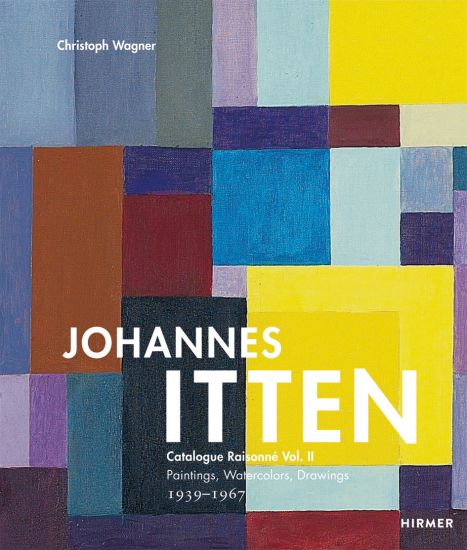
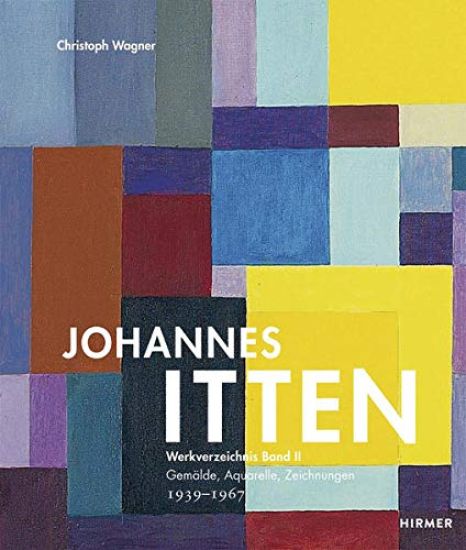
Paintings, graphic works, sculptures, textiles and furniture – Johannes Itten was an unusually versatile artist who during the six decades of his creative career also produced one of the most important works on the theory of colours in the twentieth century. His artistic work is examined here for the first time scientifically on the basis of 120,000 biographical documents and sources and is being expanded in comparison with the catalogue raisonné of 1972 by more than 1,000 works from all creative periods. The three-volume catalogue raisonné includes the latest provenance research, an index of exhibitions and literature and provides for the first time a complete overview of the artistic cosmos of Johannes Itten.
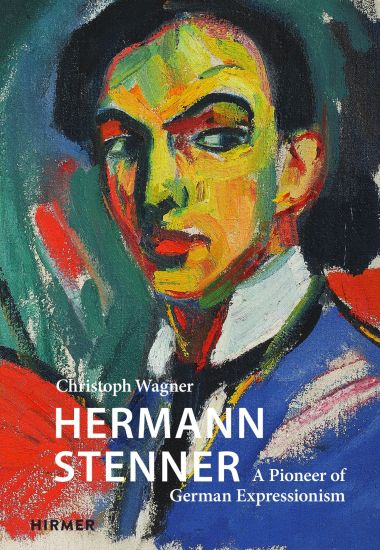
The painter Hermann Stenner (1891–1914) was one of the outstanding talents of the 20th century. It is impressive to note that he achieved his rapid artistic development and distinct pictorial language during just five years of study and creative work. His remarkably extensive oeuvre is being rediscovered today following his death at an early age during the First World War. Stenner was born in Bielefeld and belonged to the circle of Westphalian Expressionists as well as the “Hölzel Circle”. His career began very promisingly. After attending the painting class at the Academy of Fine Arts in Stuttgart, he transferred to Adolf Hölzel and became the latter’s master student in 1912. The following year Stenner was already participating in important exhibitions in Germany and abroad; his works were shown beside those of artists like Egon Schiele and Max Slevogt. In 1914, only a few months before he died in the war, he executed the cycle of wall paintings in the entrance hall of the Werkbund exhibition in Cologne – now destroyed – together with Oskar Schlemmer and Willi Baumeister.
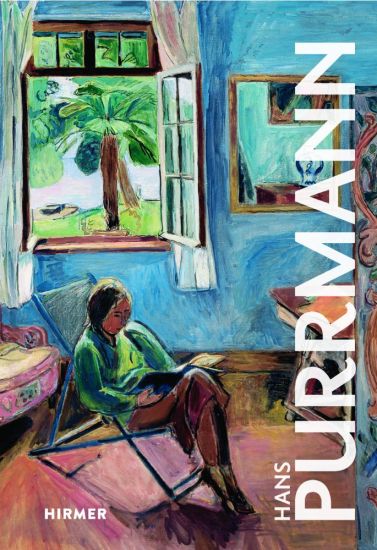
The painter Hans Purrmann (1880–1966) ranks among the most important colourists of twentieth- entury art. Drawing on Henri Matisse and the expressionists, he developed a distinct and acclaimed artistic practice over the course of a life lived in places from Munich to Paris to Berlin to Florence to Switzerland. Part of the secret of Hans Purrmann’s art is that in his work he translated the visible in a very specific and vibrant manner. With irrepressible curiosity, attentiveness and an unerring eye for beauty and the primal and essential, he produced works whose classification as “representational painting” falls short. In fact, his place in art history is one which continues to offer points of departure for modernism [“einen für die Moderne bis heute anschlussfähigen Rang”: in der Kunst ist die Moderne eine abgeschlossene Epoche]: in 1955 Purrmann was included in documenta I in Kassel, and in 1962 he was the subject of a major retrospective at the Haus der Kunst in Munich which was hailed by the press as a sensation. Based on new sources, Christoph Wagner presents the life and work of Hans Purrmann and places the painter as a prominent protagonist within the coordinates of twentieth-century art history.


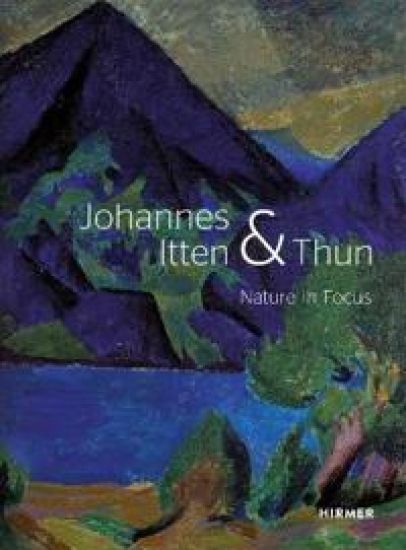
The Bauhaus master Johannes Ittenis one of the prominent protagonists of early Modernism in twentieth-century art. Few people are aware of the close links between his beginnings as an artist and his experience of landscape and nature in the town of Thun and Lake Thun. Johannes Itten gained decisive impulses for the development of his concept of art and his path towards abstraction through various stations and sojourns in Thun and its surroundings. By means of examples of the representations of nature in his early work the publication shows in scholarly depth how Itten discovered his own, very personal and later internationally famous approach to art and painting style and presents his pictorial transformation of natureextending through to the artist’s late works.