Kirjojen hintavertailu – 12 859 824 kirjaa ja 27 kauppaa

Kirjailija

Christophe Demaziere

Kirjat ja teokset yhdessä paikassa: 3 kirjaa, julkaisuja vuosilta 2019–2023, suosituimpiin kuuluu Använd rummet : högskolepedagogiska metoder för aktiva lärosalar. Vertaile teosten hintoja ja tarkista saatavuus suomalaisista kirjakaupoista.

Nimi esiintyy myös muodoissa: Christophe Demazière

3 kirjaa

Kirjojen julkaisuvuodet: 2019–2023.

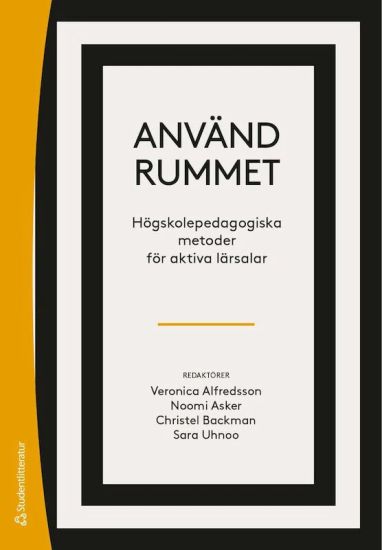
Använd rummet : högskolepedagogiska metoder för aktiva lärosalar

Använd rummet : högskolepedagogiska metoder för aktiva lärosalar

Sara Uhnoo; Christel Backman; Noomi Asker; Veronica Alfredsson; Christine Becker; Christophe Premat; Christopher Holmberg; Claes Holm; Claire Hogarth; Elisabet Malvebo; Eva Holmgren; Eva Berg; Christophe Demaziere; Bengt Malmros; Stellan Petersson; Ann-Sofie Gustafsson; Andreas Nilsson; Anja Malmberg; Anna Olofsson; Annika Svahn-Ekdahl; Arne Wackenhut; Christian Stöhr; Erik Andersson; Hanna Gyllensten; Harshida Patel; Marie-Louise Eriksson; Petter Svensson; Pia Eriksson; Pia Köhlmyr; Rikard Hedlund; Sara Ekström; Stefan Ekman

Studentlitteratur AB
2022
nidottu
Lärare har blivit allt mer medvetna om rummets pedagogiska betydelse och många svenska lärosäten har byggt salar som ger goda förutsättningar för studentaktivitet. Använd rummet är den första högskolepedagogiska boken på svenska om undervisning i Active Learning Classrooms (ALC), hybridsalar, flexsalar och laborativa salar. När lärare använder studentcentrerad och studentaktiv pedagogik i salarna får det positiva effekter på studenters aktivitetsgrad och prestationer. Använd rummet tar upp typiska metoder som kan användas och ger illustrativa och konkreta exempel på läraktiviteter med fokus på vad studenterna gör och varför. Boken presenterar också pedagogiska lärdomar om aktiva lärosalars betydelse för lärare, studenter och lärande, med en stor bredd av lärarerfarenheter från olika lärosäten, undervisningsnivåer och ämnen. Boken ger inspiration och tips till universitetslärare som är nyfikna på att börja använda aktiva lärosalar och till erfarna pedagoger som vill utveckla sin rumsliga kompetens.

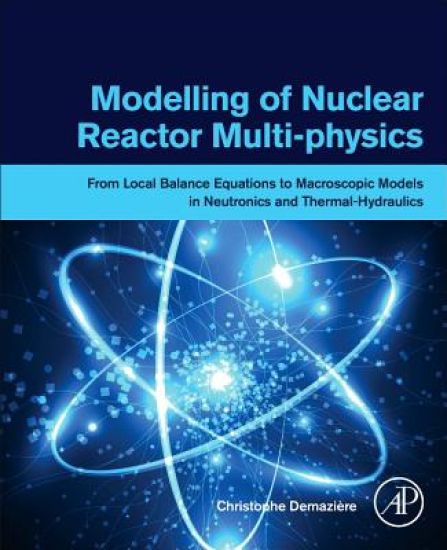
Modelling of Nuclear Reactor Multi-physics

Modelling of Nuclear Reactor Multi-physics

Christophe Demaziere

Academic Press Inc
2019
nidottu
Modelling of Nuclear Reactor Multiphysics: From Local Balance Equations to Macroscopic Models in Neutronics and Thermal-Hydraulics is an accessible guide to the advanced methods used to model nuclear reactor systems. The book addresses the frontier discipline of neutronic/thermal-hydraulic modelling of nuclear reactor cores, presenting the main techniques in a generic manner and for practical reactor calculations. The modelling of nuclear reactor systems is one of the most challenging tasks in complex system modelling, due to the many different scales and intertwined physical phenomena involved. The nuclear industry as well as the research institutes and universities heavily rely on the use of complex numerical codes. All the commercial codes are based on using different numerical tools for resolving the various physical fields, and to some extent the different scales, whereas the latest research platforms attempt to adopt a more integrated approach in resolving multiple scales and fields of physics. The book presents the main algorithms used in such codes for neutronic and thermal-hydraulic modelling, providing the details of the underlying methods, together with their assumptions and limitations. Because of the rapidly expanding use of coupled calculations for performing safety analyses, the analysists should be equally knowledgeable in all fields (i.e. neutron transport, fluid dynamics, heat transfer). The first chapter introduces the book’s subject matter and explains how to use its digital resources and interactive features. The following chapter derives the governing equations for neutron transport, fluid transport, and heat transfer, so that readers not familiar with any of these fields can comprehend the book without difficulty. The book thereafter examines the peculiarities of nuclear reactor systems and provides an overview of the relevant modelling strategies. Computational methods for neutron transport, first at the cell and assembly levels, then at the core level, and for one-/two-phase flow transport and heat transfer are treated in depth in respective chapters. The coupling between neutron transport solvers and thermal-hydraulic solvers for coarse mesh macroscopic models is given particular attention in a dedicated chapter. The final chapter summarizes the main techniques presented in the book and their interrelation, then explores beyond state-of-the-art modelling techniques relying on more integrated approaches.