Kirjojen hintavertailu – 12 903 725 kirjaa ja 27 kauppaa

Kirjailija

Christopher A. Whatley

Kirjat ja teokset yhdessä paikassa: 9 kirjaa, julkaisuja vuosilta 1997–2025, suosituimpiin kuuluu Association and Enlightenment. Vertaile teosten hintoja ja tarkista saatavuus suomalaisista kirjakaupoista.

Nimi esiintyy myös muodoissa: Christopher A Whatley

9 kirjaa

Kirjojen julkaisuvuodet: 1997–2025.

The Triumph of Textiles

The Triumph of Textiles

Christopher A Whatley; Jim Tomlinson

EDINBURGH UNIVERSITY PRESS
2025
nidottu
A fresh account of the remarkable rise of Dundee as a global industrial city and the origins of its later demise. The background to jute, the product most closely associated with Dundee, is investigated in unprecedented depth. The role of flax and linen as foundations for the jute industry is emphasised. The book challenges many perceptions of Dundee. Linen was as important to Dundee before c.1850 as jute was afterwards; the significance of jute pre-1850 has often been exaggerated by historians. Traditionally Dundee's success was attributed to the production of cheap coarse cloth for sacks, bagging etc. Yet many firms manufactured high quality, admiralty grade canvas, and colourful rugs and carpets in imitation of Brussels and other woollen floor coverings. Design was important. So too were enterprising merchants and manufacturers from the early eighteenth century onwards. Although squalor and industrial and social conflict became the norm after the 1870s, prior to that Dundee was relatively buoyant economically, and greatly admired by visitors including those from as far afield as the US. In short, Dundee was one of Scotland's industrial powerhouses a fact too often overlooked.
The Triumph of Textiles

The Triumph of Textiles

Christopher A Whatley; Jim Tomlinson

EDINBURGH UNIVERSITY PRESS
2024
sidottu
A fresh account of the remarkable rise of Dundee as a global industrial city and the origins of its later demise. The background to jute, the product most closely associated with Dundee, is investigated in unprecedented depth. The role of flax and linen as foundations for the jute industry is emphasised. The book challenges many perceptions of Dundee. Linen was as important to Dundee before c.1850 as jute was afterwards; the significance of jute pre-1850 has often been exaggerated by historians. Traditionally Dundee's success was attributed to the production of cheap coarse cloth for sacks, bagging etc. Yet many firms manufactured high quality, admiralty grade canvas, and colourful rugs and carpets in imitation of Brussels and other woollen floor coverings. Design was important. So too were enterprising merchants and manufacturers from the early eighteenth century onwards. Although squalor and industrial and social conflict became the norm after the 1870s, prior to that Dundee was relatively buoyant economically, and greatly admired by visitors including those from as far afield as the US. In short, Dundee was one of Scotland's industrial powerhouses a fact too often overlooked.
Salt

Salt

Christopher A. Whatley; Joanna Hambly

JOHN DONALD PUBLISHERS LTD
2023
nidottu
Salt is a vital commodity. For many centuries it sustained life for Scots as seasoning for a diet dominated by grains (mainly oats), and for preservation of fish and cheese. Sea-salt manufacturing is one of Scotland’s oldest industries, dating to the eleventh century if not earlier. Smoke- and steam-emitting panhouses were once a common sight along the country’s coastline and are reflected in many of Scotland’s placenames. The industry was a high-status activity, with the monarch initially owning salt pans. Salt manufacture was later organised by Scotland’s abbeys and then by landowners who had access to the sea and a nearby supply of coal. As salt was an important source of tax revenue for the government, it was often a cause of conflict (and military action) between Scotland and England. The future of the industry – and the price of salt for consumers – was a major issue during negotiations around the Union of 1707. This book celebrates both the history and the rebirth of the salt industry in Scotland. Although salt manufacturing declined in the nineteenth century and was wound up in the 1950s, in the second decade of the twenty-first century the trade was revived. Scotland’s salt is now a high-prestige, green product that is winning awards and attracting interest across the UK.
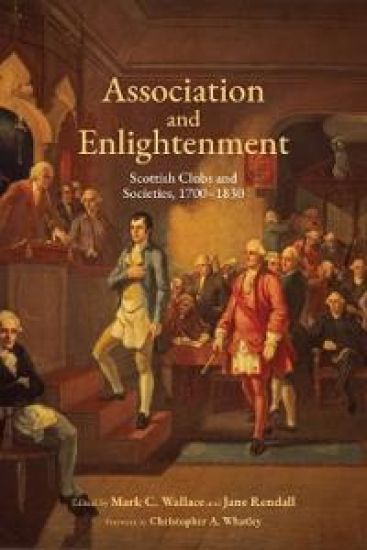
Association and Enlightenment

Association and Enlightenment

Christopher A. Whatley

Rutgers University Press
2020
sidottu
Social clubs as they existed in eighteenth- and early nineteenth-century Scotland were varied: they could be convivial, sporting, or scholarly, or they could be a significant and dynamic social force, committed to improvement and national regeneration as well as to sociability. The essays in this volume examine the complex history of clubs and societies in Scotland from 1700 to 1830. Contributors address attitudes toward associations, their meeting places and rituals, their links with the growth of the professions and with literary culture, and the ways in which they were structured by both class and gender. By widening the context in which clubs and societies are set, the collection offers a new framework for understanding them, bringing together the inheritance of the Scottish past, the unique and cohesive polite culture of the Scottish Enlightenment, and the broader context of associational patterns common to Britain, Ireland, and beyond.
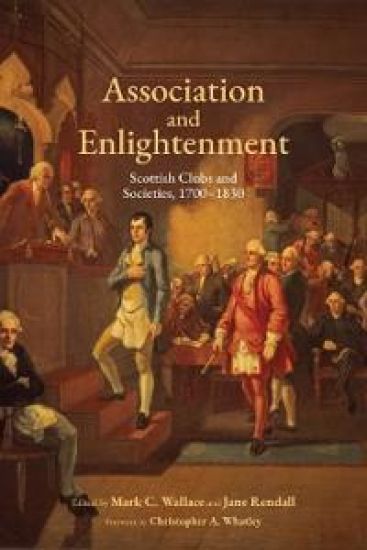
Association and Enlightenment

Association and Enlightenment

Christopher A. Whatley

Rutgers University Press
2020
nidottu
Social clubs as they existed in eighteenth- and early nineteenth-century Scotland were varied: they could be convivial, sporting, or scholarly, or they could be a significant and dynamic social force, committed to improvement and national regeneration as well as to sociability. The essays in this volume examine the complex history of clubs and societies in Scotland from 1700 to 1830. Contributors address attitudes toward associations, their meeting places and rituals, their links with the growth of the professions and with literary culture, and the ways in which they were structured by both class and gender. By widening the context in which clubs and societies are set, the collection offers a new framework for understanding them, bringing together the inheritance of the Scottish past, the unique and cohesive polite culture of the Scottish Enlightenment, and the broader context of associational patterns common to Britain, Ireland, and beyond.
The Scots and the Union

The Scots and the Union

Christopher A Whatley

Edinburgh University Press
2014
nidottu
This book offers key background reading for anyone interested in Scotland's 2014 referendum on independence. This book traces the background to the Treaty of Union of 1707, explains why it happened and assesses its impact on Scottish society, including the bitter struggle with the Jacobites for acceptance of the union in the two decades that followed its inauguration. The first edition was radical in reinterpreting the causes of union, rejecting the widely held notion that the Scots were bought and sold for English gold and instead placing emphasis on the international, dynastic and religious contexts of the union negotiations. This new edition brings the historical debate up to a vigorous present, in which we are once again discussing such issues and opinions, lending historical weight to arguments for and against Union. It is updated in the light of new research. It challenges dominant view that the Scots were 'bought and sold for English gold'. It includes a new chapter that expands the debate into the present. It adds historical dimension to the current debate about the Union. It presents key background reading for anyone interested in 2014 referendum.
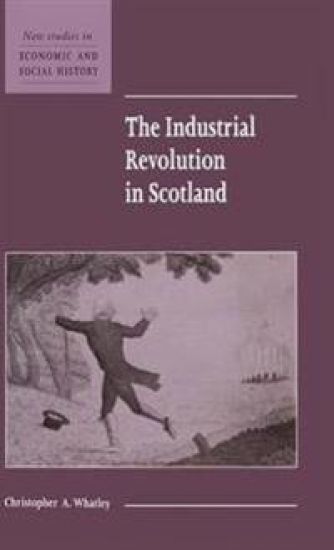
The Industrial Revolution in Scotland

The Industrial Revolution in Scotland

Christopher A. Whatley

Cambridge University Press
1997
sidottu
The Industrial Revolution in Scotland is the first new student text on this subject for more than two decades. While the focus is on Scotland, Dr Whatley's approach is largely comparative and he places the Scottish experience of industrialisation within the context of the debate about the 'British' Industrial Revolution. Unusually, Dr Whatley's study encompasses the whole of Scotland and assesses the nature and impact of early industrialisation in the woollen manufacturing towns of the Borders and in Dundee, the Scottish centre of linen production. He also examines the Highlands and Islands, upon which industrial development had a profound impact, and which arguably suffered more than any other region in Britain, as the economy became more centralised from the 1820s. Social as well as the economic causes and consequences of the Industrial Revolution are also fully considered.
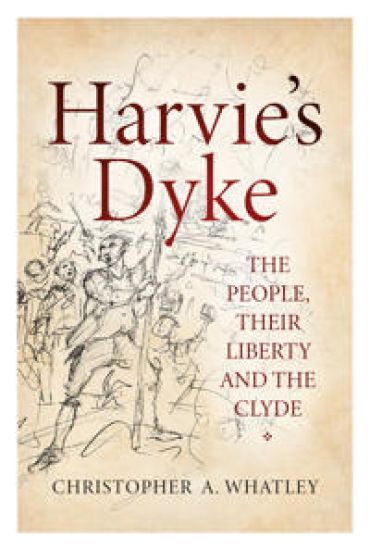
Harvie's Dyke

Harvie's Dyke

Christopher A. Whatley

JOHN DONALD PUBLISHERS LTD
2025
nidottu
In the early 1820s, Thomas Harvie, a newly rich, arrogant Glasgow distiller, bought Westthorn estate on the eastern edge of the city close to the north bank of the River Clyde. To establish the bounds of his property and keep out intruders, he erected two walls, the larger of which (‘Harvie’s Dyke’) was massive, fortified and blocked a long-established pathway alongside the river. Colliers and other workers from nearby villages (many of whom regularly used the walkway) were outraged. A large crowd gathered on midsummer’s evening in 1823 and set about demolishing the wall. After a cavalry charge put an end to the disturbance, dozens of the rioters were arrested and some imprisoned. But Harvie rebuilt his walls, and a six-year struggle with the people of Glasgow ensued, which resulted in a House of Lords ruling in 1828 in favour of those who had campaigned for ‘the liberties of the banks of the Clyde’. The episode gripped the city and was heralded in poems, song and newspapers for many decades. It also inspired later protests against landowners who attempted to obstruct public rights of way. This book is testimony to a triumphant victory for ordinary Glaswegians over an uncompromising estate proprietor.
Scottish Society 1707–1830

Scottish Society 1707–1830

Christopher A. Whatley

Manchester University Press
2000
nidottu
Scottish Society, 1707-1830 challenges much conventional wisdom and provides readers with many new insights into Scottish social and economic history.. Argues that the Union of 1707 was vital for Scottish success, but in ways which have hitherto been overlooked.. Contests received wisdom on issues such as the role of the Kirk and other agencies for inculcating order, and argues that the eighteenth and early nineteenth centuries in Scotland were years of upheaval and deep social conflict in both the Highlands and Lowlands, where commercialism and later the market economy revolutionised social relationships.. The period surrounding the Radical War in 1820 is identified as a watershed in Scottish history, almost making but also breaking the Scottish working class.. Not only on an exhaustive reading of secondary material but also incorporates a wealth of new evidence from previously little-used or unused primary sources.