Kirjojen hintavertailu – 12 903 725 kirjaa ja 27 kauppaa

Kirjailija

Christopher Brooke

Kirjat ja teokset yhdessä paikassa: 11 kirjaa, julkaisuja vuosilta 1966–2022, suosituimpiin kuuluu Europe in the Central Middle Ages. Vertaile teosten hintoja ja tarkista saatavuus suomalaisista kirjakaupoista.

11 kirjaa

Kirjojen julkaisuvuodet: 1966–2022.

Philosophic Pride

Philosophic Pride

Christopher Brooke

PRINCETON UNIVERSITY PRESS
2022
pokkari
Philosophic Pride is the first full-scale look at the essential place of Stoicism in the foundations of modern political thought. Spanning the period from Justus Lipsius's Politics in 1589 to Jean-Jacques Rousseau's Emile in 1762, and concentrating on arguments originating from England, France, and the Netherlands, the book considers how political writers of the period engaged with the ideas of the Roman and Greek Stoics that they found in works by Cicero, Seneca, Epictetus, and Marcus Aurelius. Christopher Brooke examines key texts in their historical context, paying special attention to the history of classical scholarship and the historiography of philosophy. Brooke delves into the persisting tension between Stoicism and the tradition of Augustinian anti-Stoic criticism, which held Stoicism to be a philosophy for the proud who denied their fallen condition. Concentrating on arguments in moral psychology surrounding the foundations of human sociability and self-love, Philosophic Pride details how the engagement with Roman Stoicism shaped early modern political philosophy and offers significant new interpretations of Lipsius and Rousseau together with fresh perspectives on the political thought of Hugo Grotius and Thomas Hobbes. Philosophic Pride shows how the legacy of the Stoics played a vital role in European intellectual life in the early modern era.
Europe in the Central Middle Ages

Europe in the Central Middle Ages

Christopher Brooke

Routledge
2018
sidottu
This wide-ranging introduction to medieval Europe has been updated and revised. In his popular survey Brooke explores the variety of human experience in the period. He looks at society, economy, religious life and popular religion, learning, culture, as well as political events; the rise of the Normans and the heyday of the medieval Empire. For the new edition there is increased coverage of the role of women and more attention to central Europe, Bohemia, Hungary and Poland.
Philosophic Pride

Philosophic Pride

Christopher Brooke

Princeton University Press
2012
sidottu
Philosophic Pride is the first full-scale look at the essential place of Stoicism in the foundations of modern political thought. Spanning the period from Justus Lipsius's Politics in 1589 to Jean-Jacques Rousseau's Emile in 1762, and concentrating on arguments originating from England, France, and the Netherlands, the book considers how political writers of the period engaged with the ideas of the Roman and Greek Stoics that they found in works by Cicero, Seneca, Epictetus, and Marcus Aurelius. Christopher Brooke examines key texts in their historical context, paying special attention to the history of classical scholarship and the historiography of philosophy. Brooke delves into the persisting tension between Stoicism and the tradition of Augustinian anti-Stoic criticism, which held Stoicism to be a philosophy for the proud who denied their fallen condition. Concentrating on arguments in moral psychology surrounding the foundations of human sociability and self-love, Philosophic Pride details how the engagement with Roman Stoicism shaped early modern political philosophy and offers significant new interpretations of Lipsius and Rousseau together with fresh perspectives on the political thought of Hugo Grotius and Thomas Hobbes. Philosophic Pride shows how the legacy of the Stoics played a vital role in European intellectual life in the early modern era.
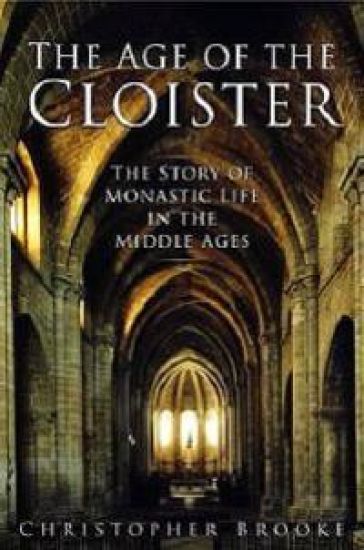
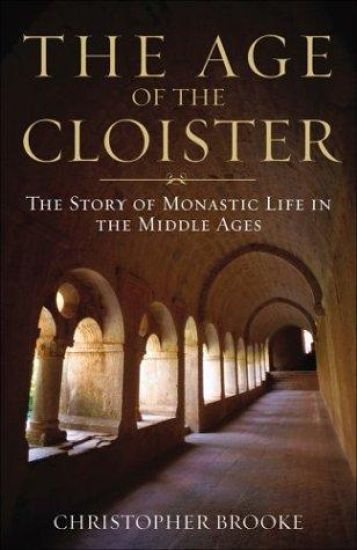
The Age of the Cloister

The Age of the Cloister

Christopher Brooke

Sutton Publishing Ltd
2007
pokkari
Among the most beautiful and evocative buildings in the whole of Christendom are the monasteries of Western Europe. Set either in remote and lovely surroundings or in bustling areas of pilgrimage, they remain monuments to the intense spiritual experiences of medieval times. In this exploration of the age of monasticism, Christopher Brooke examines the ideals, the achievements and the impact on society of this extraordinary flowering of spirituality.
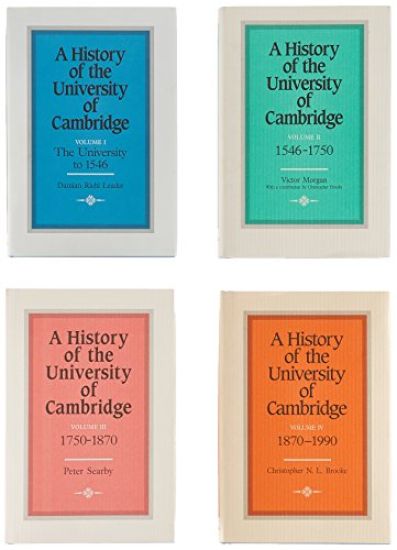
A History of the University of Cambridge 4 Volume Hardback Set

A History of the University of Cambridge 4 Volume Hardback Set

Leader Damian Riehl; Morgan Victor; Searby Peter; Christopher Brooke

Cambridge University Press
2004
muu
This is a fascinating institutional history of the University of Cambridge and its place in the world. Volume I, the first book on the medieval university in over a century, explores the university's intellectual, social, political and religious life and how this changed with the coming of the Renaissance and Reformation. Volume II studies relations between Cambridge and its wider world in the early modern period: the court and church hierarchy; the 'country'; and the wider academic world. Volume III charts the beginnings of its transformation into the University as it exists today: inclusive in its membership, diverse in its curricula, and staffed by committed scholars and teachers. Finally, Volume IV explores the extraordinary growth in size and academic stature of the University between 1870 and 1990. This is a vital contribution to the history not only of one major university, but of the academic societies of Europe in general.
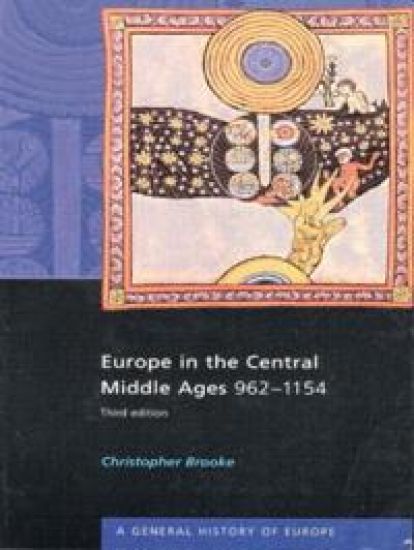
Europe in the Central Middle Ages

Europe in the Central Middle Ages

Christopher Brooke

Routledge
2000
nidottu
This wide-ranging introduction to medieval Europe has been updated and revised. In his popular survey Brooke explores the variety of human experience in the period. He looks at society, economy, religious life and popular religion, learning, culture, as well as political events; the rise of the Normans and the heyday of the medieval Empire. For the new edition there is increased coverage of the role of women and more attention to central Europe, Bohemia, Hungary and Poland.
From Alfred to Henry III, 871-1272

From Alfred to Henry III, 871-1272

Christopher Brooke

WW Norton Co
1966
nidottu
The 400 years covered by this volume saw two Danish invasions and the Norman Conquest of England. Each conquest carried with it extensive political and social changes. Alfred began the work of creating a unified kingdom out of the shambles of the smaller kingdoms that had fallen under Viking raids. The ninth and tenth centuries saw the settlement of the Danes and the eleventh the emergence of a strong monarchy under the Danish King Cnut. "With the English kingdom grew up the first semblance of national institutions," writes Professor Brooks--institutions of central and local government which made the English monarchy among the most mature in the Europe of its time.... These established institutions were not destroyed by the Normans; they adapted and developed them. Although England had had close ties with the continent before the Conquest, after 1066 English cultural and social life was greatly enriched through the French influence. During this time the Church was finding new inspiration in monastic and papal reform and a great intellectual revival culminated in the creation of universities. Professor Brooke describes all the cultural and political developments of these years and shows how the reign of Henry III ushered in a "great age of art and architecture" and a "new attitude to government," which began to work by consent of the governed.