Kirjojen hintavertailu – 12 903 735 kirjaa ja 27 kauppaa

Kirjailija

Christopher C. H. Cook

Kirjat ja teokset yhdessä paikassa: 11 kirjaa, julkaisuja vuosilta 2006–2026, suosituimpiin kuuluu Spirituality in Mind. Vertaile teosten hintoja ja tarkista saatavuus suomalaisista kirjakaupoista.

Nimi esiintyy myös muodoissa: Christopher C.H. Cook

11 kirjaa

Kirjojen julkaisuvuodet: 2006–2026.

Spirituality in Mind

Spirituality in Mind

Christopher C. H. Cook

Cambridge University Press
2026
nidottu
Spirituality in Mind offers a unique, personal, and critical perspective on the complex entanglements between psychiatry, spirituality, religion, and theology. Drawing on over four decades of experience, the author explores how spirituality, despite often being overlooked or undervalued, is central to holistic, patient-centred psychiatric care. Through compelling case studies and interdisciplinary insights, the book challenges conventional symptom-focused models and advocates for a shift toward meaningful recovery. It engages with the concept of “clinical theology,” highlighting the ordinary theological concerns of patients and the need for psychiatry to be more spiritually attentive. By integrating perspectives from the critical medical humanities, this book demonstrates that spirituality is not an optional extra but a core concern of psychiatry, psychiatrists, and patients alike. Spirituality in Mind raises vital questions about the nature and purpose of psychiatric practice, offering a new vision for mental health care.
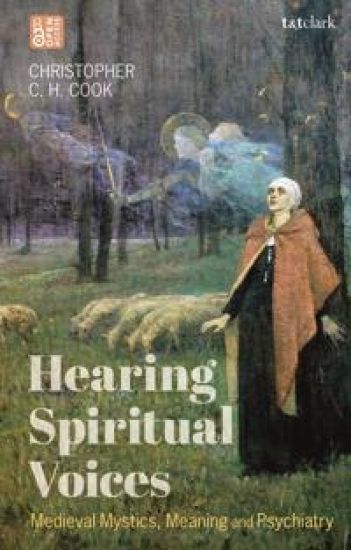
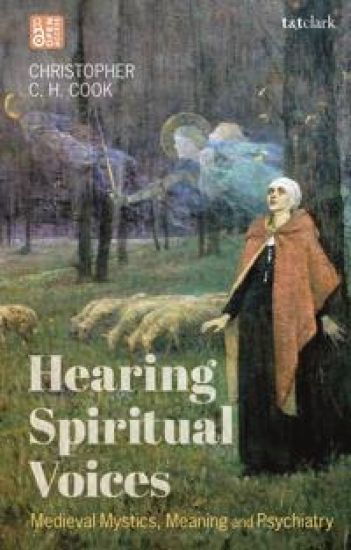
Hearing Spiritual Voices

Hearing Spiritual Voices

Christopher C.H. Cook

BLOOMSBURY PUBLISHING PLC
2023
sidottu
This open access book explores unusual perceptual, or perception-like, experiences. These are often meaningful to those who have them and may be sympathetically or unsympathetically interpreted by others. One interpretation, especially when voices are associated with unusual behaviour, is that they are evidence of mental disorder. Ostensibly such interpretations are sympathetic (showing concern for someone who is ill) but in practice they are used to deny the meaning and value of the experiences for those concerned, thus depriving them (and others) of creative and innovative ways of understanding the human condition. The question is thus one of the meaning. Are such experiences meaningful only as indicators of a diagnosis, or are they meaningful in other ways, shedding light on human self-understanding and perhaps even a wider spiritual reality? Psychiatry has tended to see such phenomena as diagnostically meaningful but not as sources of deeper insight into the human condition. This book takes three 14th century examples of women who heard spiritually significant voices: Margery Kempe, Julian of Norwich, and Joan of Arc. Each of these women, in different ways, has left an enduring legacy in literature and history. Modern psychiatric commentary on the voices that they reported has generally focussed on diagnosis rather than on wider questions of meaning. These commentaries will be used as a lens through which to consider how contemporary psychiatric practice might be enriched by the humanities and enabled to find a more spiritually empathetic, if not also sympathetic, enriching and meaning enhancing perspective on unusual mental phenomena. The eBook editions of this book are available open access under a CC BY-NC-ND 4.0 licence on bloomsburycollections.com. Open access was funded by The Wellcome Trust.
Hearing Spiritual Voices

Hearing Spiritual Voices

Christopher C.H. Cook

BLOOMSBURY PUBLISHING PLC
2023
nidottu
This open access book explores unusual perceptual, or perception-like, experiences. These are often meaningful to those who have them and may be sympathetically or unsympathetically interpreted by others. One interpretation, especially when voices are associated with unusual behaviour, is that they are evidence of mental disorder. Ostensibly such interpretations are sympathetic (showing concern for someone who is ill) but in practice they are used to deny the meaning and value of the experiences for those concerned, thus depriving them (and others) of creative and innovative ways of understanding the human condition. The question is thus one of the meaning. Are such experiences meaningful only as indicators of a diagnosis, or are they meaningful in other ways, shedding light on human self-understanding and perhaps even a wider spiritual reality? Psychiatry has tended to see such phenomena as diagnostically meaningful but not as sources of deeper insight into the human condition. This book takes three 14th century examples of women who heard spiritually significant voices: Margery Kempe, Julian of Norwich, and Joan of Arc. Each of these women, in different ways, has left an enduring legacy in literature and history. Modern psychiatric commentary on the voices that they reported has generally focussed on diagnosis rather than on wider questions of meaning. These commentaries will be used as a lens through which to consider how contemporary psychiatric practice might be enriched by the humanities and enabled to find a more spiritually empathetic, if not also sympathetic, enriching and meaning enhancing perspective on unusual mental phenomena. The eBook editions of this book are available open access under a CC BY-NC-ND 4.0 licence on bloomsburycollections.com. Open access was funded by The Wellcome Trust.
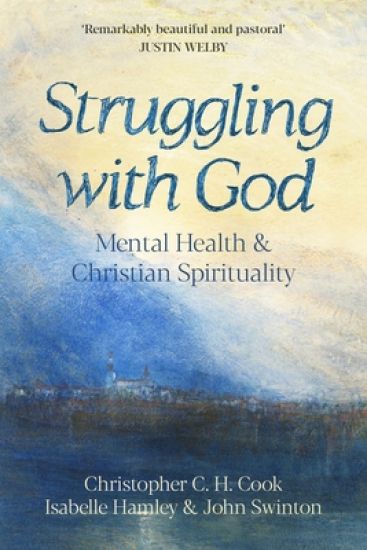
Struggling with God

Struggling with God

Christopher C. H. Cook; Isabelle Hamley; John Swinton

SPCK PUBLISHING
2023
nidottu
'Remarkably beautiful and pastoral' JUSTIN WELBY, ARCHBISHOP OF CANTERBURY 'Brimming with wisdom and humanity' DAME SARAH MULLALLY, DBE, BISHOP OF LONDON Struggling with God gets right to the heart of a great predicament for many Christians. When it feels as if our struggles are overwhelming - and our capacity for faith and hope and love is diminished - how is it possible to maintain, never mind nourish, our relationship with God? The truth, as this deeply compassionate volume reminds us, is that Jesus came alongside people wrestling with mental health problems. Many familiar conditions, such as anxiety and depression, and more severe ones, including bipolar affective disorder and schizophrenia, are addressed by the authors here. Dispelling common myths and misconceptions, they explore the impact such mental health disorders can have on individual Christians, Church and society.. Each chapter includes biblical reflections relevant to its theme, prayers, questions to facilitate individual/group study, and pointers to further reading. In short, the book presents a Christian vision of spiritual and mental wellbeing through prayerful struggling with God.
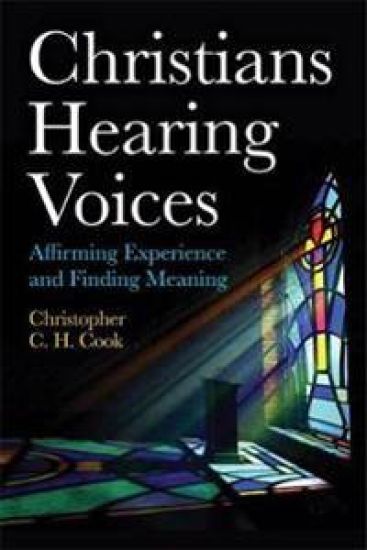
Christians Hearing Voices

Christians Hearing Voices

Christopher C. H. Cook

Jessica Kingsley Publishers
2020
pokkari
In this insightful book, accounts of voice hearers are presented, evaluated and interpreted by a Christian theologian and psychiatrist. By listening to the first-hand experiences of voice hearers and evaluating them in the light of Christian theology, the book enables the reader to understand the experiences of voice hearers as a part of Christian experience and to engage with the theological issues raised by them, including the nature of revelation. This engaging and thought-provoking collection looks at a range of stories - ranging from comforting to complex to simply conversational - to encourage debate and search for meaning and also show how the reader can adapt clinical and pastoral practice to better aid people in this situation.
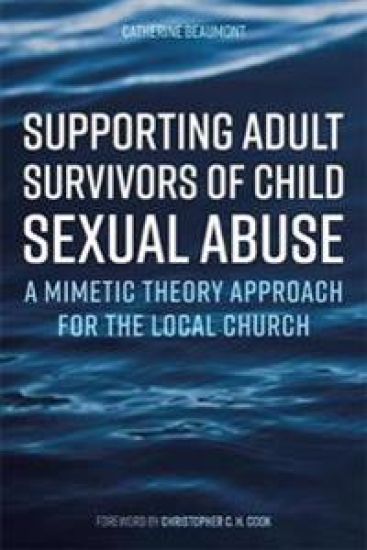
Supporting Adult Survivors of Child Sexual Abuse

Supporting Adult Survivors of Child Sexual Abuse

Catherine Beaumont; Christopher C. H. Cook

Jessica Kingsley Publishers
2020
pokkari
Offering a model of care that the church can use with survivors of sexual abuse, this supportive book is backed up by René Girard's Mimetic Theory throughout. The book proposes that the treatment survivors receive in churches could be greatly improved if instead of adding to a survivor's sense of guilt, difference or isolation or trying to change survivors' thoughts, feelings or behaviour they adopt the role of God as benevolent other. It shows that by adopting these beliefs churches can move past unintentional scapegoating of sexual abuse survivors and into a healing community where survivors feel included on churchgoers' journeys towards health and wholeness.
Hearing Voices, Demonic and Divine

Hearing Voices, Demonic and Divine

Christopher C. H. Cook

Routledge
2020
nidottu
The Open Access version of this book, available at www.taylorfrancis.com/books/9781472453983, has been made available under a Creative Commons Attribution-Non Commercial-No Derivative 4.0 license. Experiences of hearing the voice of God (or angels, demons, or other spiritual beings) have generally been understood either as religious experiences or else as a feature of mental illness. Some critics of traditional religious faith have dismissed the visions and voices attributed to biblical characters and saints as evidence of mental disorder. However, it is now known that many ordinary people, with no other evidence of mental disorder, also hear voices and that these voices not infrequently include spiritual or religious content. Psychological and interdisciplinary research has shed a revealing light on these experiences in recent years, so that we now know much more about the phenomenon of "hearing voices" than ever before. The present work considers biblical, historical, and scientific accounts of spiritual and mystical experiences of voice hearing in the Christian tradition in order to explore how some voices may be understood theologically as revelatory. It is proposed that in the incarnation, Christian faith finds both an understanding of what it is to be fully human (a theological anthropology), and God’s perfect self-disclosure (revelation). Within such an understanding, revelatory voices represent a key point of interpersonal encounter between human beings and God.
Hearing Voices, Demonic and Divine

Hearing Voices, Demonic and Divine

Christopher C. H. Cook

Routledge
2018
sidottu
The Open Access version of this book, available at www.taylorfrancis.com/books/9781472453983, has been made available under a Creative Commons Attribution-Non Commercial-No Derivative 4.0 license. Experiences of hearing the voice of God (or angels, demons, or other spiritual beings) have generally been understood either as religious experiences or else as a feature of mental illness. Some critics of traditional religious faith have dismissed the visions and voices attributed to biblical characters and saints as evidence of mental disorder. However, it is now known that many ordinary people, with no other evidence of mental disorder, also hear voices and that these voices not infrequently include spiritual or religious content. Psychological and interdisciplinary research has shed a revealing light on these experiences in recent years, so that we now know much more about the phenomenon of "hearing voices" than ever before. The present work considers biblical, historical, and scientific accounts of spiritual and mystical experiences of voice hearing in the Christian tradition in order to explore how some voices may be understood theologically as revelatory. It is proposed that in the incarnation, Christian faith finds both an understanding of what it is to be fully human (a theological anthropology), and God’s perfect self-disclosure (revelation). Within such an understanding, revelatory voices represent a key point of interpersonal encounter between human beings and God.
The Philokalia and the Inner Life: On Passions and Prayer

The Philokalia and the Inner Life: On Passions and Prayer

Christopher C. H. Cook

Pickwick Publications
2012
nidottu
The Philokalia, a collection of spiritual texts by fathers of the Eastern Church spanning the fourth to the fifteenth centuries, was first published in Venice in 1782. Significant in bringing about a renaissance of Orthodox spirituality since then, it shows deep psychological as well as spiritual awareness. The Philokalia and the Inner Life critically examines the nature of mental and spiritual well-being as understood in the Philokalia. It identifies the passions as 'hostile pleasures', with a seductive and addictive quality, which are detrimental to human well-being, and explores the remedies for the passions that the Philokalia prescribes. Like the Philokalia, contemporary psychotherapies seek to interpret human thoughts and restore well-being, although the 'talking cure' of secular psychotherapy contrasts significantly with the 'praying cure' of the Philokalia. This book is for all who are interested in spirituality, theology and the life of prayer, as well as students of the Philokalia. It is also for clinicians, counselors and psychotherapists, especially those who wish to explore the relationship between psychological and spiritual well-being.
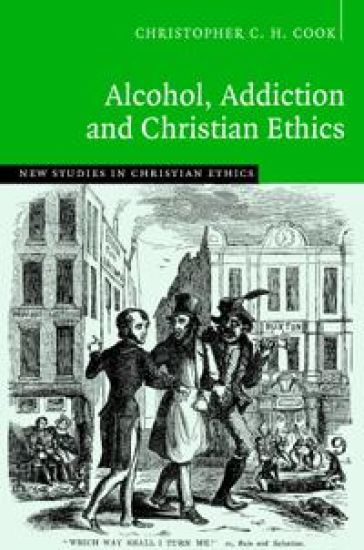
Alcohol, Addiction and Christian Ethics

Alcohol, Addiction and Christian Ethics

Christopher C. H. Cook

Cambridge University Press
2008
pokkari
Addictive disorders are characterised by a division of the will, in which the addict is attracted both by a desire to continue the addictive behaviour and also by a desire to stop it. Academic perspectives on this predicament usually come from clinical and scientific standpoints, with the 'moral model' rejected as outmoded. But Christian theology has a long history of thinking and writing on such problems and offers insights which are helpful to scientific and ethical reflection upon the nature of addiction. Chris Cook reviews Christian theological and ethical reflection upon the problems of alcohol use and misuse, from biblical times until the present day. Drawing particularly upon the writings of St Paul the Apostle and Augustine of Hippo, a critical theological model of addiction is developed. Alcohol dependence is also viewed in the broader ethical perspective of the use and misuse of alcohol within communities.
Alcohol, Addiction and Christian Ethics

Alcohol, Addiction and Christian Ethics

Christopher C. H. Cook

Cambridge University Press
2006
sidottu
Addictive disorders are characterised by a division of the will, in which the addict is attracted both by a desire to continue the addictive behaviour and also by a desire to stop it. Academic perspectives on this predicament usually come from clinical and scientific standpoints, with the 'moral model' rejected as outmoded. But Christian theology has a long history of thinking and writing on such problems and offers insights which are helpful to scientific and ethical reflection upon the nature of addiction. Chris Cook reviews Christian theological and ethical reflection upon the problems of alcohol use and misuse, from biblical times until the present day. Drawing particularly upon the writings of St Paul the Apostle and Augustine of Hippo, a critical theological model of addiction is developed. Alcohol dependence is also viewed in the broader ethical perspective of the use and misuse of alcohol within communities.