Kirjojen hintavertailu – 12 859 819 kirjaa ja 27 kauppaa
Kirjailija
Christopher Chase-Dunn
Kirjat ja teokset yhdessä paikassa: 13 kirjaa, julkaisuja vuosilta 1997–2020, suosituimpiin kuuluu Global Formation. Vertaile teosten hintoja ja tarkista saatavuus suomalaisista kirjakaupoista.
Deftly demonstrates how the rise and fall of social movements throughout history is closely linked to economic and political developments. In the early decades of the twenty-first century, an international movement to slow the pace of climate change mushroomed across the globe. The self-proclaimed Climate Justice movement urges immediate action to reduce carbon emissions and calls for the adoption of bold new policies to address global warming before irreversible and catastrophic damage threatens the habitability of the planet. On another front, since the 1980s, multiple waves of resistance have occurred around the world against the uneven transition from state-led development to the neoliberal globalization project. Both Climate Justice and Anti-Austerity movements represent the urgency of understanding how global change affects the ability of citizens around the world to mobilize and protect themselves from planetary warming and the loss of social protections granted in earlier eras. In Global Struggles and Social Change, Christopher Chase-Dunn and Paul Almeida explore how global change stimulates the formation and shape of such movements. Contending that large-scale economic shifts condition the pattern of social movement mobilizations around the world, the authors trace these trends back to premodern societies, revealing how severe disruptions of indigenous communities led to innovative collective actions throughout history. Drawing on historical case studies, world system and protest event analysis, and social networks, they also examine the influence of global change processes on local, national, and transnational social movements and explain how in turn these movements shape institutional shifts. Touching on hot-button topics, including global warming, immigrant rights protests, the rise of right-wing populism, and the 2008 financial crisis, the book also explores a broad range of premodern social movements from indigenous people in the Americas, Mesopotamia, and China. The authors pay special attention to periods of disruption and external threats, as well as the role of elites, emotions, charisma, and religion or spirituality in shaping protest movements. Providing sweeping coverage, Global Struggles and Social Change is perfect for students and anyone interested in globalization, international and comparative politics, political sociology, and communication studies.
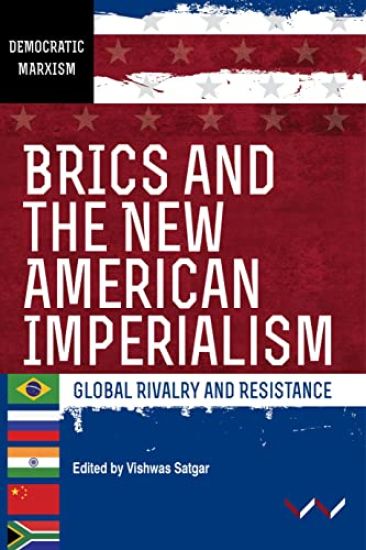
Vishwas Satgar; Ferrial Adam; Samir Amin; Patrick Bond; William K Carroll; Christopher Chase-Dunn; Alexander Gallas; Ana Garcia; Karina Kato; Nivedita Majumdar; Keamogetswe Seipato
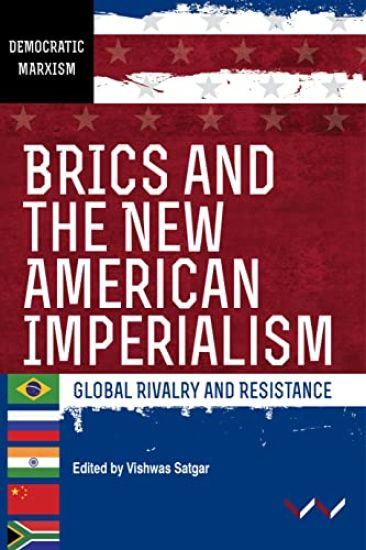
Challenges the mainstream understanding of BRICS and US dominance to situate the new global rivalries engulfing capitalism BRICS is a grouping of the five major emerging economies of Brazil, Russia, India, China and South Africa. Volume five in the Democratic Marxism series, BRICS and the New American Imperialism challenges the mainstream understanding of BRICS and US dominance to situate the new global rivalries engulfing capitalism. It offers novel analyses of BRICS in the context of increasing US induced imperial chaos, deepening environmental crisis tendencies (such as climate change and water scarcity), contradictory dynamics inside BRICS countries and growing subaltern resistance. The authors revisit contemporary thinking on imperialism and anti-imperialism, drawing on the work of Rosa Luxemburg, one of the leading theorists after Marx, who attempted to understand the expansionary nature of capitalism from the heartlands to the peripheries. The richness of Luxemburg's pioneering work inspires most of the volume's contributors in their analyses of the dangerous contradictions of the contemporary world as well as forms of democratic agency advancing resistance. While various forms of resistance are highlighted, among them water protests, mass worker strikes, anti-corporate campaigning and forms of cultural critique, this volume grapples with the challenge of renewing anti-imperialism beyond the NGO-driven World Social Forum and considers the prospects of a new horizontal political vessel to build global convergence. It also explores the prospects of a Fifth International of Peoples and Workers.
Spanning ten thousand years of social change, this book examines the ways in which world-systems evolve. A comparative study of stateless societies, state-based regional empires, and the modern global capitalist political economy, it reveals the underlying processes at work in the reproduction and transformation of social, economic, and political s
This book examines the changing nature of global inequalities and efforts that are being made to move toward a more egalitarian world society. The contributors are world historical sociologists and geographers who place the contemporary issues of unequal power, wealth and income in a global historical perspective. The geographers examine the roles of geopolitics and patterns of warfare in the historical development of the modern world-system, and the sociologists examine endeavours to improve the situations of poor peoples and nations and to engage the challenges of sustainability that are linked with global inequalities. Overcoming Global Inequalities contains cutting-edge research from engaged social scientists intended to help humanity deal with the challenges of global inequality in the 21st century.
The World Social Forum quickly became the largest political gathering in human history and continues to offer a direct challenge to the extreme inequities of corporate-led globalisation. It has expanded its presence and continues to be an exciting experiment in global and participatory democracy. The book's contributors have participated in World Social Forums around the globe. Recounting dozens of dramatic firsthand experiences, they draw on their knowledge of global politics to introduce the process, its foundations and relevance to ongoing transnational efforts toward democracy. This second edition of Global Democracy shows how the Forums have developed since their inception in 2001 and how they are now connected with other global movements including Occupy, the Arab Spring and beyond.
Although the United States is currently the world's only military and economic superpower, the nation's superpower status may not last. The possible futures of the global system and the role of U. S. power are illuminated by careful study of the past. This book addresses the problems of conceptualizing and assessing hegemonic rise and decline in comparative and historical perspective. Several chapters are devoted to the study of hegemony in premodern world-systems. And several chapters scrutinize the contemporary position and trajectory of the United States in the larger world-system in comparison with the rise and decline of earlier great powers, such as the Dutch and British empires. Contributors: Kasja Ekholm, Johnny Persson, Norihisa Yamashita, Giovanni Arrighi, Beverly Silver, Karen Barkey, Jonathan Friedman, Christopher Chase-Dunn, Rebecca Giem, Andrew Jorgenson, John Rogers, Shoon Lio, Thomas Reifer, Peter Taylor, Albert Bergesen, Omar Lizardo, Thomas D. Hall.
The fall of communism, the emergence of 'the information age,' and the expansion of economic globalism are the points of departure for this new edition of Chase-Dunn's landmark book. The author shows how these seemingly new developments fit with earlier patterns of global formation and change, extending the influential model that drew wide attention to this award-winning book. The new edition also evaluates recent major studies of the modern world-system and assesses the implications for the future of the contemporary system.
"The authors combine an excellent state-of-the-art review of the literature in world-systems analysis with a vigorous presentation of their own quite coherent views. This book is a major contribution to our collective dialogue on the past and the future." —Immanuel Wallerstein Binghamton University, author of The Modern World-System "An up-to-date and synthetic overview of current world-systems research. The authors draw on diverse literatures from political science to archaeology, from contemporary policy issues to Native American studies, and from history to sociology. This thoughtful volume serves as both a provocative summary of ongoing scholarship and a fertile foundation for future cross-disciplinary dialogue." —Gary M. Feinman University of Wisconsin—Madison "To understand the evolution of the world's political economy, we need empirical theories that can handle 'ancient' and 'modern' processes, a longer time frame encompassing multiple millennia, and less concern about trespassing in other people's disciplines. Chase-Dunn and Hall's new book, Rise and Demise, delivers all three with noteworthy style and effect." —William Thompson Indiana University "Rise and Demise is a wide ranging and stimulating synthesis of the world-systems approach and its main findings. Its broad coverage of parallel social processes in various regions and time periods convincingly makes the argument that world-systems theory is able to integrate many diverse historical and social science specializations." —Richard E. Blanton Purdue University