Kirjojen hintavertailu – 12 859 818 kirjaa ja 27 kauppaa

Kirjailija

Christopher Coker

Kirjat ja teokset yhdessä paikassa: 39 kirjaa, julkaisuja vuosilta 1983–2024, suosituimpiin kuuluu Kunskap och information : den mänskliga intelligensen potential och fara. Vertaile teosten hintoja ja tarkista saatavuus suomalaisista kirjakaupoista.

39 kirjaa

Kirjojen julkaisuvuodet: 1983–2024.

Men at War

Men at War

Christopher Coker

C Hurst Co Publishers Ltd
2014
sidottu
Since Achilles first stormed into our imagination, literature has introduced its readers to truly unforgettable martial characters. In Men at War Christopher Coker discusses some of the most famous of these fictional creations and their impact on our understanding of war and masculinity. Grouped into five archetypes - warriors, heroes, villains, survivors and victims - these characters range across 3000 years of history, through epic poems, the modern novel and one of the twentieth cen- tury's most famous film scripts. Great authors like Homer and Tolstoy show us aspects of reality invisible except through a literary lens, while fictional characters such as Achilles and Falstaff, Robert Jordan and Jack Aubrey, are not just larger than life; they are life's largeness - and this is why we seek them out. Although the Greeks knew that the lovers, wives and mothers of soldiers are the chief victims of battle, for the combatants, war is a masculine pursuit. Each of Coker's chapters explores what fiction tells us about war's appeal to young men and the way it makes - and breaks - them. The existential appeal of war too is perhaps best conveyed in fictional accounts, and these too are scrutinised by the author.
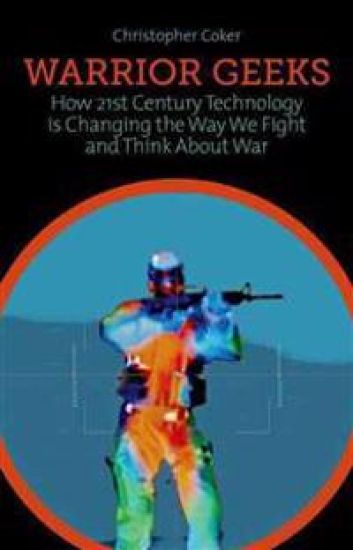
Warrior Geeks

Warrior Geeks

Christopher Coker

C Hurst Co Publishers Ltd
2013
sidottu
Warrior Geeks examines how technology is transforming the way we think about and fight war, taking three major changes that are driving this process: cybernetic technologies that are folding soldiers into a cybernetic system that will allow the military to read their thoughts and emotions and mould them accordingly; the coexistence of men and robots in the battle-spaces of tomorrow; and the extent to which we may be able to re-engineer warriors through pharmacological manipulation. By referring back to the Greeks who defined the contours of war for us, Coker shows how we are in danger of losing touch with our humanity - the name we give not only to a species but the virtues we deem it to embody. The journey from Greeks to Geeks may be a painful one. War can only be rendered more humane if we stay in touch with the ancestors, yet unfortunately we are planning to subcontract our ethical choices to machines. In revaluing technology, are we devaluing our humanity, or the post-human condition, changing our subjectivity and thus the existential dimension of war by changing our relationship with technology both functionally and performatively?
Warrior Geeks: How 21st-Century Technology Is Changing the Way We Fight and Think about War
Warrior Geeks examines how technology is transforming the way we think about and fight war, taking three major changes that are driving this process: cybernetic technologies that are folding soldiers into a cybernetic system that will allow the military to read their thoughts and emotions and mould them accordingly; the coexistence of men and robots in the battle-spaces of tomorrow; and the extent to which we may be able to re-engineer warriors through pharmacological manipulation. By referring back to the Greeks who defined the contours of war for us, Coker shows how we are in danger of losing touch with our humanity - the name we give not only to a species but the virtues we deem it to embody. The journey from Greeks to Geeks may be a painful one. War can only be rendered more humane if we stay in touch with the ancestors, yet unfortunately we are planning to subcontract our ethical choices to machines. In revaluing technology, are we devaluing our humanity, or the post-human condition, changing our subjectivity and thus the existential dimension of war by changing our relationship with technology both functionally and performatively?
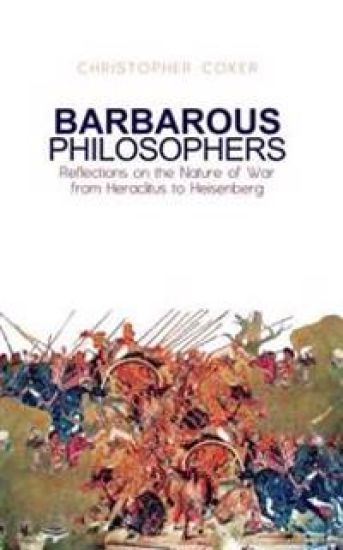
Barbarous Philosophers: Reflections on the Nature of War from Herclitus to Heisenberg
This is not a book about philosophy and war. It is a book on contemporary conflict in which the author invokes philosophy to help understand the problems that we face in fighting war today. Barbarous Philosophers sets out to discuss the nature of war through the work of sixteen philosophers from Heraclitus in the sixth century BC to the philosopher-physicist Werner Heisenberg writing in the 1950s. Each section begins with a brief epigram representative of each writer's thinking. The contention of the book is that war, as opposed to warfare, is largely an invention of philosophy--our reflection on organised collective violence that date from the time we emerged from the hunter-gatherer stage of development and created the first civilisations centred around city life. The Greek philosophers were the first to invent what Pascal called the 'rules' of war and in representing the nature of war they also influenced how it was conducted to the extent that generals allowed their minds to be shaped over time by the work of philosophy. The purpose of philosophy, writes Herbert Simon, is to understand meaningful simplicity in the midst of disorderly complexity. Behind the flux of everyday life there is an 'ordered' existence which it is the task of philosophy to uncover if it can. Behind the ever changing character of war lies its nature that needs to be grasped if it is to be waged successfully.
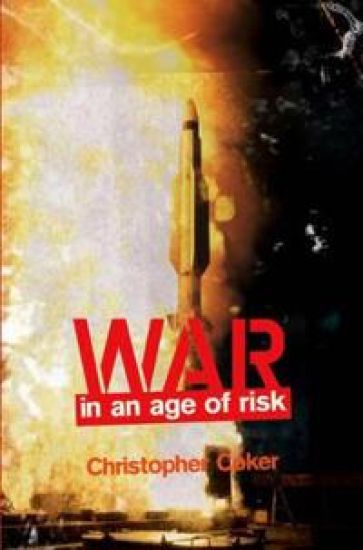
War in an Age of Risk

War in an Age of Risk

Christopher Coker

Polity Press
2009
sidottu
Wars throughout history have been fought in the name of ideology, religion and the pursuit of peace. Our thinking about war – when it is justified, how it should be fought and how it is perceived – has changed dramatically over time. Whereas in the past war has been seen as a battle of wills, this provocative and illuminating new book shows how war has evolved into an exercise in risk management. In a rare blend of political science, sociology, history and cultural thought, Christopher Coker peels away the layers of meaning shrouding our current understanding of war and warfare. Using the ideas of writers such as Zygmunt Bauman, Ulrich Beck and Frank Furedi, he shows that risk has become the language of business, politics and public policy and so we should not be surprised that it has now become the language of war. The book highlights the increasing difference between homeland security and national security in the modern world, arguing that the defense of the citizen is often now more challenging than the defense of the state. By demonstrating the changing character and complexity of conflict from World War I to the current the current fight against terrorism, the book provides a powerful and highly distinctive account of the re-branding of war in an age of risk. This book is set to ignite debate amongst students and scholars of international politics as well as appealing to anyone interested in war and its place in contemporary society.
War in an Age of Risk

War in an Age of Risk

Christopher Coker

Polity Press
2009
nidottu
Wars throughout history have been fought in the name of ideology, religion and the pursuit of peace. Our thinking about war – when it is justified, how it should be fought and how it is perceived – has changed dramatically over time. Whereas in the past war has been seen as a battle of wills, this provocative and illuminating new book shows how war has evolved into an exercise in risk management. In a rare blend of political science, sociology, history and cultural thought, Christopher Coker peels away the layers of meaning shrouding our current understanding of war and warfare. Using the ideas of writers such as Zygmunt Bauman, Ulrich Beck and Frank Furedi, he shows that risk has become the language of business, politics and public policy and so we should not be surprised that it has now become the language of war. The book highlights the increasing difference between homeland security and national security in the modern world, arguing that the defense of the citizen is often now more challenging than the defense of the state. By demonstrating the changing character and complexity of conflict from World War I to the current the current fight against terrorism, the book provides a powerful and highly distinctive account of the re-branding of war in an age of risk. This book is set to ignite debate amongst students and scholars of international politics as well as appealing to anyone interested in war and its place in contemporary society.
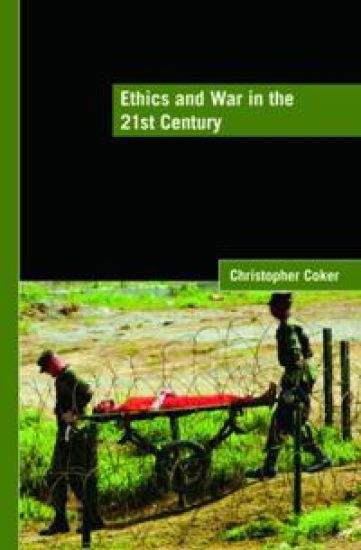
Ethics and War in the 21st Century

Ethics and War in the 21st Century

Christopher Coker

Routledge
2008
nidottu
This book explores the ethical implications of war in the contemporary world. The author, a leading theorist of warfare, explains why it is of crucial importance that Western countries should continue to apply traditional ethical rules and practices in war, even when engaging with international terrorist groups. The book uses the work of the late American philosopher Richard Rorty to explain the need to make ethical rules central to the conduct of military operations. Arguing that the question of ethics was re-opened by the ‘War on Terror’, the book then examines America’s post-9/11 redefinition of its own prevailing discourse of war. It ends with a discussion of other key challenges to the ethics of war, such as the rise of private security companies and the use of robots in war. In exploring these issues, this book seeks to place ethics at the centre of debates about the conduct of future warfare. This book will be of great interest to all students of military ethics, war studies, military history and strategic studies in general, and to military colleges in particular.
Ethics and War in the 21st Century

Ethics and War in the 21st Century

Christopher Coker

Routledge
2008
sidottu
This book explores the ethical implications of war in the contemporary world. The author, a leading theorist of warfare, explains why it is of crucial importance that Western countries should continue to apply traditional ethical rules and practices in war, even when engaging with international terrorist groups. The book uses the work of the late American philosopher Richard Rorty to explain the need to make ethical rules central to the conduct of military operations. Arguing that the question of ethics was re-opened by the ‘War on Terror’, the book then examines America’s post-9/11 redefinition of its own prevailing discourse of war. It ends with a discussion of other key challenges to the ethics of war, such as the rise of private security companies and the use of robots in war. In exploring these issues, this book seeks to place ethics at the centre of debates about the conduct of future warfare. This book will be of great interest to all students of military ethics, war studies, military history and strategic studies in general, and to military colleges in particular.
The Warrior Ethos

The Warrior Ethos

Christopher Coker

Routledge
2007
sidottu
This is the first scholarly book to look at the role of the 'warrior' in modern war, arguing that warriors' actions, and indeed thoughts, are increasingly patrolled and that the modern battlefield is an unforgiving environment in which to discharge their vocation. As war becomes ever more instrumentalized, so its existential dimension is fast being hollowed out. Technology is threatening the agency of the warrior and this volume paints a picture of early twenty-first century warfare, helping to explain why so many aspiring warriors are becoming disenchanted with their profession. Written by a leading thinker on warfare, this book sets out to explain what makes an American Marine a ‘warrior’ and why suicide bombers, or Al Qaeda fighters, do not qualify for this title. This distinction is one of the central features of the current War on Terror – and one that justifies much more extensive discussion than it has so far received. The Warrior Ethos will be of great interest to all students of military history, strategy, military sociology and war studies.
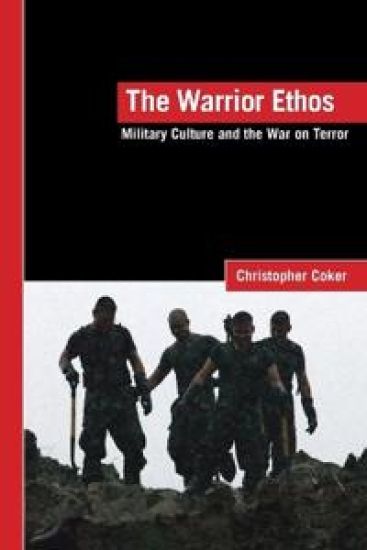
The Warrior Ethos

The Warrior Ethos

Christopher Coker

Routledge
2007
nidottu
This is the first scholarly book to look at the role of the 'warrior' in modern war, arguing that warriors' actions, and indeed thoughts, are increasingly patrolled and that the modern battlefield is an unforgiving environment in which to discharge their vocation. As war becomes ever more instrumentalized, so its existential dimension is fast being hollowed out. Technology is threatening the agency of the warrior and this volume paints a picture of early twenty-first century warfare, helping to explain why so many aspiring warriors are becoming disenchanted with their profession. Written by a leading thinker on warfare, this book sets out to explain what makes an American Marine a ‘warrior’ and why suicide bombers, or Al Qaeda fighters, do not qualify for this title. This distinction is one of the central features of the current War on Terror – and one that justifies much more extensive discussion than it has so far received. The Warrior Ethos will be of great interest to all students of military history, strategy, military sociology and war studies.
The Future of War

The Future of War

Christopher Coker

Wiley-Blackwell (an imprint of John Wiley Sons Ltd)
2004
nidottu
In this book, Professor Christopher Coker presents an original and controversial thesis about the future of war. Argues that the biotechnology revolution has given war a new lease of life. Draws on thinkers from Hegel and Nietzsche to the postmodernists. Refers to modern fiction and films. Part of the prestigious Blackwell Manifestos series.
The Future of War

The Future of War

Christopher Coker

Wiley-Blackwell (an imprint of John Wiley Sons Ltd)
2004
sidottu
In this book, Professor Christopher Coker presents an original and controversial thesis about the future of war. Argues that the biotechnology revolution has given war a new lease of life. Draws on thinkers from Hegel and Nietzsche to the postmodernists. Refers to modern fiction and films. Part of the prestigious Blackwell Manifestos series.
Humane Warfare

Humane Warfare

Christopher Coker

Routledge
2001
nidottu
The decision to fight 'humanitarian wars' - such as Kosovo - and the development of technology to make war more humane, illustrates the trend in the West to try to humanise war, and thereby humanise modernity. This highly controversial and cutting-edge book asks whether the attempt to make war 'virtual' or 'virtuous' can succeed and whether the west is deluding itself (not its enemies) in thinking that war can ever be made more humane. Christopher Coker's radical conclusion is that Western humanitarian warfare is in fact an endgame as other non-Western societies will make sure it does not succeed. Eminently readable, this book combines theory with accounts by politicians and serving military personnel, alongside illuminating literary insights. It will be vital reading for all those interested in international relations and strategic studies and defence issues, including journalists, students and politicians.
Humane Warfare

Humane Warfare

Christopher Coker

Routledge
2001
sidottu
The decision to fight 'humanitarian wars' - such as Kosovo - and the development of technology to make war more humane, illustrates the trend in the West to try to humanise war, and thereby humanise modernity. This highly controversial and cutting-edge book asks whether the attempt to make war 'virtual' or 'virtuous' can succeed and whether the west is deluding itself (not its enemies) in thinking that war can ever be made more humane. Christopher Coker's radical conclusion is that Western humanitarian warfare is in fact an endgame as other non-Western societies will make sure it does not succeed. Eminently readable, this book combines theory with accounts by politicians and serving military personnel, alongside illuminating literary insights. It will be vital reading for all those interested in international relations and strategic studies and defence issues, including journalists, students and politicians.
Twilight Of The West

Twilight Of The West

Christopher Coker

Basic Books
1997
sidottu
It would have been inconceivable," wrote Henry Kissinger in his best-selling book Diplomacy, that the architects of NATO would have seen as the end result of victory in the Cold War greater diversity within the Alliance." In Twilight of the West, Christopher Coker offers an interpretation of why the Western Alliance is in serious trouble and why it may have entered the twilight of its collective life. Divided into three parts, the book first looks at the cultural forces that brought the Western powers together in 1941 and prompted them to build an Atlantic Community. Where the Alliance failed, however, was in taking hold where it counted most,in the European imagination. The second part addresses the present-day consciousness of both Europe and the United States as they prepare for the twenty-first century. In the final section, Coker examines two key questions: whether the West can escape the undertow of violence that marks the end of the millennium and whether the challenges from East Asia and the Islamic world are of such magnitude that the West will have to reinvent itself. Throughout, Coker draws on a wide-ranging discussion of Western culture to understand the changes that are taking place in the Western world. Particular emphasis is placed on the changes in philosophy that helped shape the Alliance and its view of the rest of the world.