Kirjailija
Christopher E. Smith
Kirjat ja teokset yhdessä paikassa: 13 kirjaa, julkaisuja vuosilta 1996–2027, suosituimpiin kuuluu John Paul Stevens. Vertaile teosten hintoja ja tarkista saatavuus suomalaisista kirjakaupoista.
Nimi esiintyy myös muodoissa: Christopher E Smith
13 kirjaa
Kirjojen julkaisuvuodet: 1996–2027.
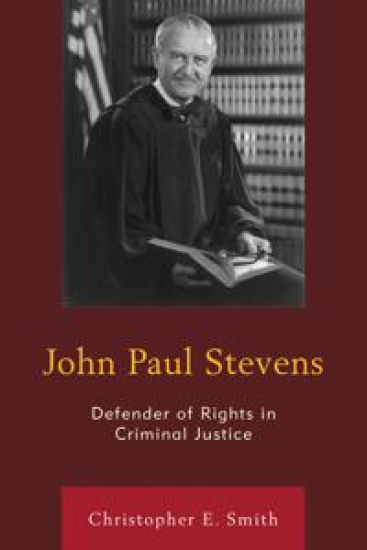
This book examines the judicial opinions and criminal justice policy impact of Justice John Paul Stevens, the U. S. Supreme Court’s most prolific opinion author during his 35-year career on the nation’s highest court. Although Justice Stevens, a Republican appointee of President Gerald Ford, had a professional reputation as a corporate antitrust law attorney, he immediately asserted himself as the Court’s foremost advocate of prisoners’ rights and Miranda rights when he arrived at the Court in 1975. In examining Justice Stevens’s opinions on these topics as well as others, including capital punishment and right to counsel, the chapters of the book connect his prior experiences with the development of his views on rights in criminal justice. In particular, the book examines his relevant experiences as a law clerk to Justice Wiley Rutledge in the Supreme Court’s 1947 term, a volunteer attorney handling criminal cases in Illinois, and a judge on the U. S. court of appeals to explore how these experiences shaped his understanding of the importance of rights in criminal justice. For many issues, such as those affecting imprisoned offenders, Justice Stevens was a strong defender of rights throughout his career. For other issues, such as capital punishment, there is evidence that he became increasingly protective of rights over the course of his Supreme Court career. The book also examines how Justice Stevens became increasingly important as a leading dissenter against the diminution of rights in criminal justice as the Supreme Court’s composition became increasingly conservative in the 1980s and thereafter. Because of the nature and complexity of Justice Stevens’s numerous and varied opinions over the course of his lengthy career, scholars find it difficult to characterize his judicial philosophy and impact with simple labels. Yet in the realm of criminal justice, close examination of his work reveals that he earned a reputation and an enduring legacy as an exceptionally important defender of constitutional rights.

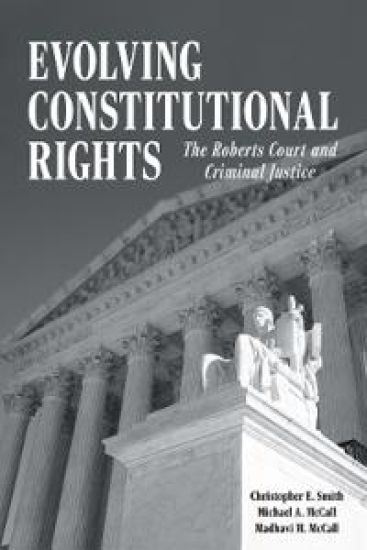
Evolving Constitutional Rights
Christopher E. Smith; Michael A. McCall; Madhavi M. McCall
SOUTHERN ILLINOIS UNIVERSITY PRESS
2025
sidottu
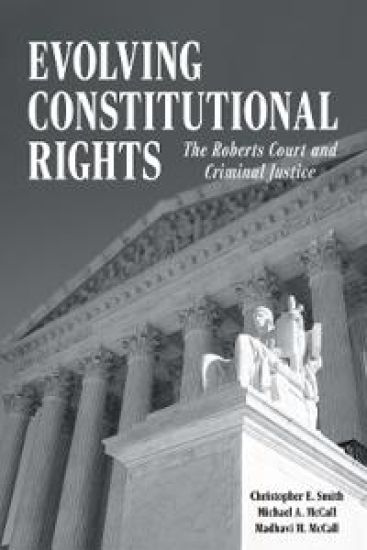
Evolving Constitutional Rights
Christopher E. Smith; Michael A. McCall; Madhavi M. McCall
SOUTHERN ILLINOIS UNIVERSITY PRESS
2025
nidottu
Illuminating continuity and change in Supreme Court decisions Evolving Constitutional Rights: The Roberts Court and Criminal Justice offers a compelling and in-depth analysis of how the U. S. Supreme Court has reshaped constitutional protections under Chief Justice John Roberts. Authors Christopher E. Smith, Michael A. McCall, and Madhavi M. McCall examine the Court’s significant decisions from 2005 to Justice Breyer’s retirement in 2022, revealing a complex judicial landscape where traditional doctrines are revised and fundamental rights are redefined. The Roberts Court played a decisive role in some of the most contentious issues in American law. Due to several justices’ application of originalist interpretations, its rulings have reconfigured key constitutional protections—often in ways that expand the authority of law enforcement while constraining legislative power over criminal statutes. The trajectory of the Court’s conservative supermajority raises pressing questions about the future of constitutional rights. Taking a rigorous yet accessible approach, Evolving Constitutional Rights breaks down the Court’s influence across the full spectrum of criminal justice issues, from sentencing and trial rights to search-and-seizure protections, Miranda warnings, and corrections policies. Using both legal and empirical analysis, the authors track patterns in judicial ideology, uncovering how the Roberts Court has not only reinforced conservative principles but also unexpectedly broadened rights in areas such as digital privacy and defense counsel obligations. This timely and insightful book goes beyond historical rulings to offer a forward-looking perspective on the Supreme Court’s role in shaping public safety, legal precedent, and the balance of power in American government. Essential reading for legal scholars, policymakers, and anyone concerned with the future of constitutional rights, this new volume provides a clear and authoritative examination of the Roberts Court’s lasting impact on American law.
First Published in 1997. Organised in a easily readable format this book on the Supreme Court and punishment takes the reader through the sentencing and incarceration issues that have been so controversial and yet, so relatively unchanged over the years.
This book illuminates the decision-making processes of the US Supreme court through an examination of several prisoners' rights cases. In 1964, the Supreme Court declined to hear prisoners’ claims about religious freedom. In 2014, the Supreme Court heard a case that led to the justices’ unanimous endorsement of a Muslim prisoner’s religious right to grow a beard despite objections from prison officials. In the fifty-year span between those two events, the Supreme Court developed the law concerning rights for imprisoned offenders. As demonstrated in this book, the factors that shape Supreme Court decision making are well-illustrated by prisoners’ rights cases. This area of law illuminates competing approaches to constitutional interpretation, behind-the-scenes interactions among the justices, and the manipulation of legal precedents. External actors also affect the Supreme Court and its decisions when the president appoints new justices and Congress targets the judiciary with legislative enactments. Because of the controversial nature of prisoners’ rights issues, these cases serve to illuminate the full array of influences over Supreme Court decision making.
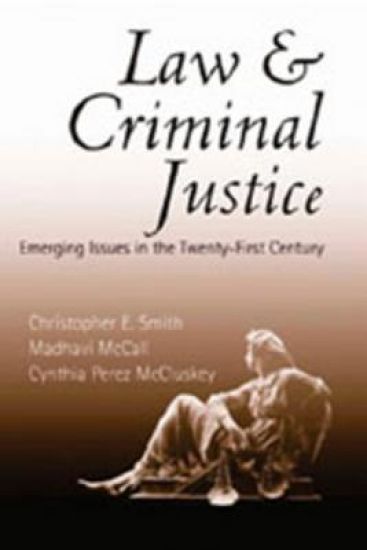
Law and Criminal Justice
Christopher E. Smith; Madhavi M. McCall; Cynthia Perez Mccluskey
Peter Lang Publishing Inc
2005
nidottu
Law changes as new developments affect society. The dawn of a new century provides a marking point for the evaluation of trends in law and policy. This book examines emerging issues that will shape society's rules and legal processes in the twenty-first century. By identifying developments affecting technology, demography, and politics, the authors evaluate impacts on law and criminal justice. Many of the issues discussed, including the expanding Latino population, new technologies for investigations, weapons, and executions, health crises in prisons, DNA testing, and the « war on terrorism, will have profound effects on the fates of individuals drawn into the justice system.
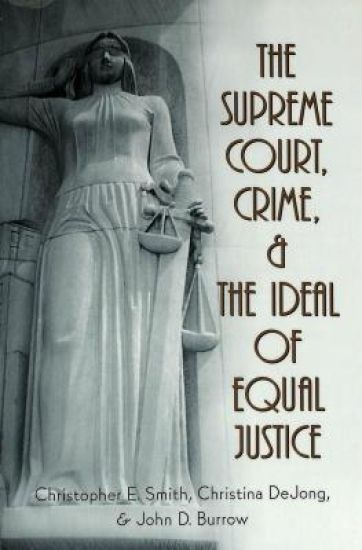
The Supreme Court, Crime, and the Ideal of Equal Justice
Christopher E. Smith; Christina DeJong; John D. Burrow
Peter Lang Publishing Inc
2003
nidottu
The words -equal justice under law- are literally etched in stone and prominently displayed above the entrance to the United States Supreme Court. These words stand as an enduring proclamation of a paramount objective of the courts and the Constitution. Although judges are the guardians of the Constitution's principles, this book examines how their decisions both advance and impede the ideal of equal justice. By analyzing interpretations of -equal protection- and other rights affecting discrimination and disadvantages linked to race, gender, and social status, Smith, DeJong, and Burrow illustrate how constitutional law often facilitates the denial of equal justice for people drawn into the criminal justice system."
First Published in 1997. Organised in a easily readable format this book on the Supreme Court and punishment takes the reader through the sentencing and incarceration issues that have been so controversial and yet, so relatively unchanged over the years.
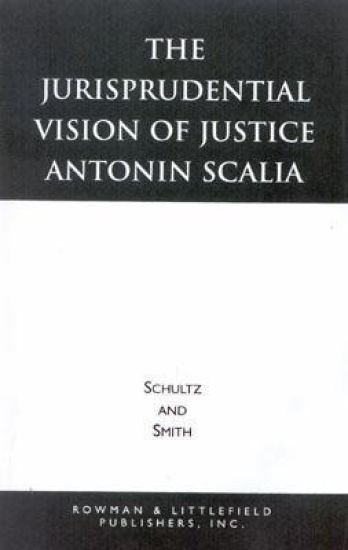
The Jurisprudential Vision of Justice Antonin Scalia
David A. Schultz; Christopher E. Smith
Rowman Littlefield
1996
nidottu
When Antonin Scalia was appointed to the Supreme Court in 1986, conservatives hoped he would become the intellectual leader of President Reagan's judicial counter-revolution. In this first book-length analysis of Scalia's jurisprudence, David A. Schultz and Christopher E. Smith argue that Scalia's impact has been neither what conservatives hoped nor what liberals feared. The authors examine Scalia's political and judicial philosophy and they outline the areas of the law that Scalia has most profoundly affected, particularly constitutional protections for property rights. Citing Scalia's use of judicial review to check legislative power and his attempts to limit several types of individual rights developed during the Warren and Burger Courts, the authors conclude that Scalia's decisions reflect an effort to create a post-Carolene Products jurisprudence and to form a new pattern of assumptions regarding the role of the Supreme Court in American society. This is essential reading for students, scholars, and anyone interested in the Supreme Court and constitutional law.