Kirjojen hintavertailu – 12 903 725 kirjaa ja 27 kauppaa
Kirjailija
Christopher Emdin
Kirjat ja teokset yhdessä paikassa: 9 kirjaa, julkaisuja vuosilta 2017–2026, suosituimpiin kuuluu For White Folks Who Teach in the Hood... and the Rest of Y'All Too: Reality Pedagogy and Urban Education (10th Anniversary Edition). Vertaile teosten hintoja ja tarkista saatavuus suomalaisista kirjakaupoista.
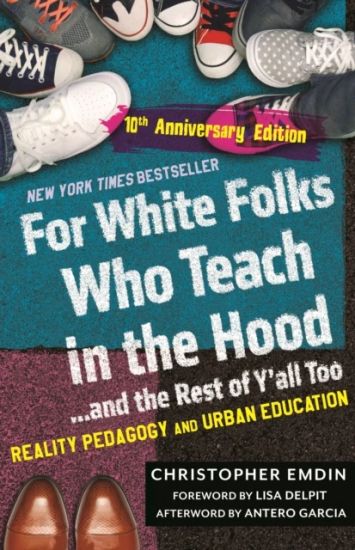
A New York Times Best Seller "Essential reading for all adults who work with black and brown young people... Filled with exceptional intellectual sophistication and necessary wisdom for the future of education."--Imani Perry, National Book Award Winner author of South To America An award-winning educator offers a much-needed antidote to traditional top-down pedagogy and promises to radically reframe the landscape of urban education for the better Drawing on his own experience of feeling undervalued and invisible in classrooms as a young man of color, Dr. Christopher Emdin has merged his experiences with more than a decade of teaching and researching in urban America. He takes to task the perception of urban youth of color as unteachable, and he challenges educators to embrace and respect each student's culture and to reimagine the classroom as a site where roles are reversed and students become the experts in their own learning. Putting forth his theory of Reality Pedagogy, Emdin provides practical tools to unleash the brilliance and eagerness of youth and educators alike--both of whom have been typecast and stymied by outdated modes of thinking about urban education. With this fresh and engaging new pedagogical vision, Emdin demonstrates the importance of creating a family structure and building communities within the classroom, using culturally relevant strategies like hip-hop music and call-and-response, and connecting the experiences of urban youth to indigenous populations globally. Merging real stories with theory, research, and practice, Emdin demonstrates how by implementing the "Seven Cs" of reality pedagogy in their own classrooms, urban youth of color benefit from truly transformative education.
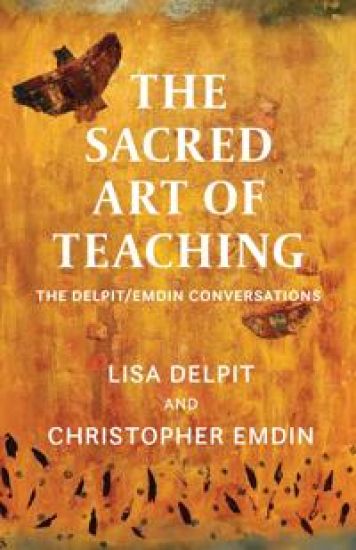
An unprecedented, no-holds-barred set of dialogues about race and education from two of the country’s best-known educators Lisa Delpit was one of the first educators to receive a MacArthur “genius” Award. Her book Other People’s Children is a classic in the field, and she has been called “a visionary scholar and reformer” by the Harvard Education School, which awarded her an outstanding alumni award. Chris Emdin is an award-winning educator whose book For White People Who Teach in the Hood . . . and the Rest of Y’all Too was a national bestseller. He is the creator of the HipHopEd social media movement and has been named one of Root’s 100 Most Influential African Americans and one of twenty-seven people bridging divides in the U. S. by Time magazine. In this powerful and deeply personal volume, these two educators, generations apart but united by a shared commitment to transformative education, compare notes for the first time. Readers are treated to candid exchanges on topics including the role of art in education, students and politics, how educators of color can navigate the academy, specific approaches to pedagogy, the role of rap in education, and how spirituality informs their work. With honesty, humor, and hard-won wisdom, they reflect on their own journeys into education, the challenges they’ve faced, and the strategies they’ve developed to uphold equity and justice in a system too often resistant to both. These conversations are not only intellectually rich but emotionally resonant, offering a model of mentorship, mutual respect, and the power of dialogue across difference. A gift to teachers, scholars, and anyone passionate about reimagining public education, this book is a lasting contribution to the field—one that will inspire readers for generations to come.
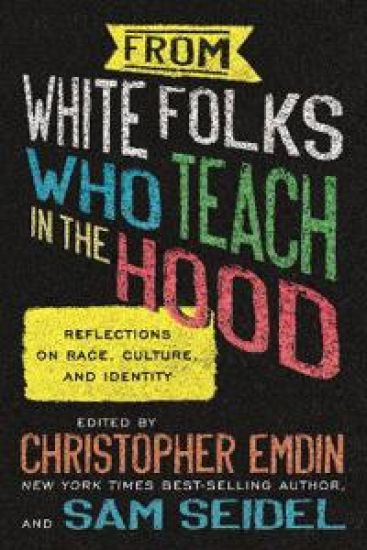
A timely companion to the New York Times bestseller For White Folks Who Teach in the Hood...and the Rest of Y'all Too Progressive white educators on the challenges and reimaginings of anti-racist education, cultural responsiveness, and sustained liberatory learning practices Designed for educators by educators, From White Folks Who Teach in the Hood is the white teachers' guide to effective multicultural, anti-racist pedagogy. Over 20 educators are featured in this book, representing different types of schools, different geographies, different durations of experience in the classroom, and different depths of experience in interrogating their whiteness. Throughout the text, nationally renowned educators and coeditors Dr. Christopher Emdin and sam seidel offer feedback and perspective on how to incorporate the practices and wrestle with the ideas outlined by the contributors. Replete with practical reflections and actionable exercises, this book explores among other things: --identity formation, healing, and growth in the early years of a teacher's career --the restrictive, harmful nature of standardization and the power of localization as a tool for transformation --hip-hop as a vehicle for promoting culture and authenticity within the classroom --whiteness as a racial identity and intentional anti-racist teacher trainings to identify and unlearn white supremacy From White Folks Who Teach in the Hood is the essential classroom companion for every white teacher committed to fostering productive learning spaces that respect the races, cultures, and identities of their students. It offers all readers a window into the essential work that must be done to transform our nation's schools from sites of harm to sites of healing.
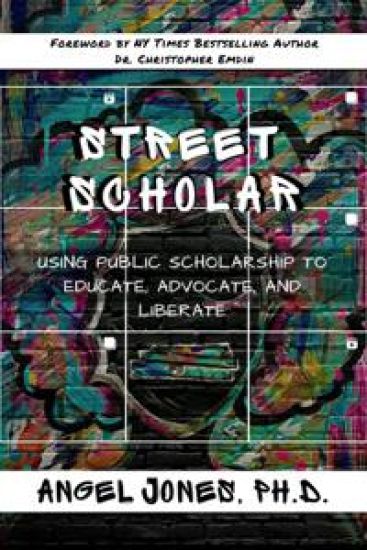
STREET SCHOLAR is an unapologetic call-to-action that challenges the Academy to thoughtfully and intentionally engage in public scholarship. Dr. Angel Jones introduces us to a "street scholar" - someone whose mission, movements, and motivation are rooted in activism and community uplift. Jones describes her journey through academia as an Afro-Latina scholar who uses social media to peel back the curtain on the ‘ivory tower’ and make her scholarship accessible to all. She uses her platform to liberate, educate, and advocate for social justice. STREET SCHOLAR is an appeal for academic scholarship to be in conversation with the community it serves, and it offers a framework to make public scholarship a tool for liberation. “Academics often throw around words like 'engaged scholarship' or 'praxis' when what they mean is 'sometimes I spend time with people outside the academy.' Angel Jones presents us with a volume that demonstrates what it means to build knowledge from the ground (or should I say, street) up. This should be on every educator's bookshelf!”—Dr. Gloria Ladson-Billings, Professor Emerita, University of Wisconsin-Madison "Dr. Angel Jones' work is on time. By challenging traditional research paradigms in the digital age, she is providing us with steps and guideposts to battle the latest iterations of white supremacy. In a world that moves at break-neck speed where history is erased and misinformation reigns supreme, we must not overlook the importance of the dissemination of justice in real time."—Dave Stovall, author, professor, and critical race scholar "Angel is an unapologetic Black woman who is dedicated to advocating for our community. I engage with her content because I appreciate her and the unique ability she has to address controversial topics in a way that is educational and thought-provoking. Her work is important and she is setting the example for what it means to use our platforms to benefit the greater good.”—Amber Riley, award-winning actress, singer, and activist "With a mission of educate, advocate, and liberate, this book breaks down the importance of the active nature of this work. There is nothing submissive about this book. This is a goal oriented, results centered, action plan and a must read.”—Etan Thomas, NBA veteran, author, and activist
Bellamy's debut novel revives a minor character from Bram Stoker's Dracula and imagines her as an independent woman living in San Francisco during the 1980s. Hypocrisy's not the problem, I think, it's allegory the breeding ground of paranoia. The act of reading into--how does one know when to stop? KK says that Dodie has the advantage because she's physical and I'm only psychic. ... The truth is: everyone is adopted. My true mother wore a turtleneck and a long braid down her back, drove a Karmann Ghia, drank Chianti in dark corners, fucked Gregroy Corso ...--Dodie Bellamy, The Letters of Mina Harker First published in 1998, Dodie Bellamy's debut novel The Letters of Mina Harker sought to resuscitate this minor character from Bram Stoker's Dracula and reimagine her as an independent woman living in San Francisco during the 1980s--a woman not unlike Dodie Bellamy. Harker confesses the most intimate details of her relationships with four different men in a series of letters. Vampirizing Mina Harker, Bellamy turns the novel into a laboratory: a series of attempted transmutations between the two women in which the real story occurs in the gaps and the slippages. Lampooning the intellectual theory-speak of that era, Bellamy's narrator fights to inhabit her own sexuality despite feelings of vulnerability and destruction. Stylish but ruthlessly unpretentious, The Letters of Mina Harker was Bellamy's first major claim to the literary space she would come to inhabit.
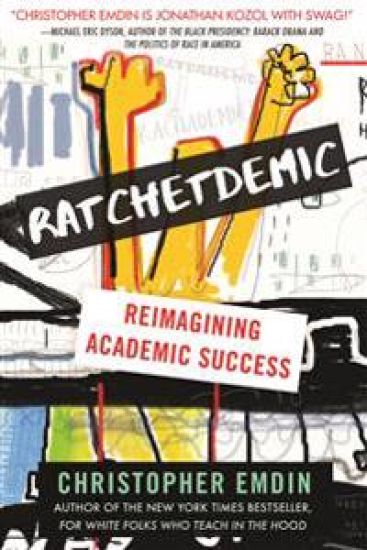
A revolutionary new educational model that encourages educators to provide spaces for students to display their academic brilliance without sacrificing their identities Building on the ideas introduced in his New York Times best-selling book, For White Folks Who Teach in the Hood, Christopher Emdin introduces an alternative educational model that will help students (and teachers) celebrate ratchet identity in the classroom. Ratchetdemic advocates for a new kind of student identity--one that bridges the seemingly disparate worlds of the ivory tower and the urban classroom. Because modern schooling often centers whiteness, Emdin argues, it dismisses ratchet identity (the embodying of "negative" characteristics associated with lowbrow culture, often thought to be possessed by people of a particular ethnic, racial, or socioeconomic status) as anti-intellectual and punishes young people for straying from these alleged "academic norms," leaving young people in classrooms frustrated and uninspired. These deviations, Emdin explains, include so-called "disruptive behavior" and a celebration of hip-hop music and culture. Emdin argues that being "ratchetdemic," or both ratchet and academic (like having rap battles about science, for example), can empower students to embrace themselves, their backgrounds, and their education as parts of a whole, not disparate identities. This means celebrating protest, disrupting the status quo, and reclaiming the genius of youth in the classroom.
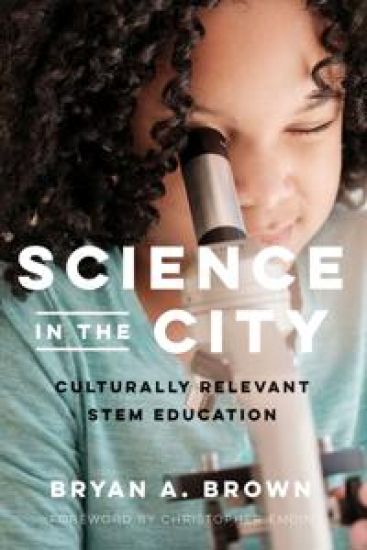
Science in the City examines how language and culture matter for effective science teaching. Author Bryan A. Brown argues that, given the realities of our multilingual and multicultural society, teachers must truly understand how issues of culture intersect with the fundamental principles of learning. This book links an exploration of contemporary research on urban science teaching to a more generative instructional approach in which students develop mastery by discussing science in culturally meaningful ways. The book starts with a trenchant analysis of the 'black tax,' a double standard at work in science language and classrooms that forces students of color to appropriate and express their science knowledge solely in ways that accord with the dominant culture and knowledge regime. Because we are in an interactive, multimedia world, the author also posits the necessity of applying what is known about best practices in science teaching to best practices in technology. The book then turns to instruction, illustrating how science education can flourish if it is connected to students' backgrounds, identities, language, and culture. In this empowered-and inclusive-form of science classroom, the role of narrative is key: educators use stories and anecdotes to induct students into the realm of scientific thinking; introduce big ideas in easy, familiar terms; and prioritize explanation over mastery of symbolic systems. The result is a classroom that showcases how the use of more familiar, culturally relevant modes of communication can pave the way for improved science learning.
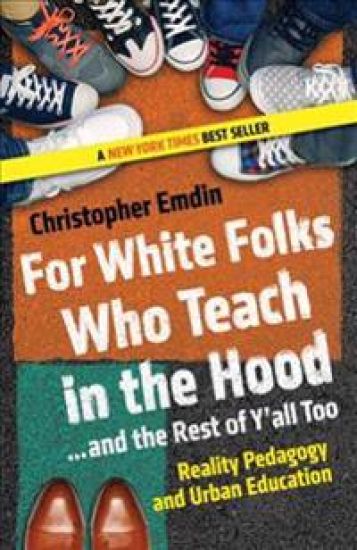
A New York Times Best Seller Merging real stories with theory, research, and practice, a prominent scholar offers a new approach to teaching and learning for every stakeholder in urban education. Drawing on his own experience of feeling undervalued and invisible in classrooms as a young man of color and merging his experiences with more than a decade of teaching and researching in urban America, award-winning educator Christopher Emdin offers a new lens on an approach to teaching and learning in urban schools. For White Folks Who Teach in the Hood...and the Rest of Y'all Too is the much-needed antidote to traditional top-down pedagogy and promises to radically reframe the landscape of urban education for the better. He begins by taking to task the perception of urban youth of color as unteachable, and he challenges educators to embrace and respect each student's culture and to reimagine the classroom as a site where roles are reversed and students become the experts in their own learning. Putting forth his theory of Reality Pedagogy, Emdin provides practical tools to unleash the brilliance and eagerness of youth and educators alike--both of whom have been typecast and stymied by outdated modes of thinking about urban education. With this fresh and engaging new pedagogical vision, Emdin demonstrates the importance of creating a family structure and building communities within the classroom, using culturally relevant strategies like hip-hop music and call-and-response, and connecting the experiences of urban youth to indigenous populations globally. Merging real stories with theory, research, and practice, Emdin demonstrates how by implementing the "Seven C's" of reality pedagogy in their own classrooms, urban youth of color benefit from truly transformative education. For White Folks Who Teach in the Hood...and the Rest of Y'all Too has been featured in MotherJones.com, Education Week, Weekend All Things Considered with Michel Martin, Diverse: Issues in Higher Education, PBS NewsHour.com, Slate, The Washington Post, Scholastic Administrator Magazine, Essence Magazine, Salon, ColorLines, Ebony.com, Huffington Post Education