

Kirjailija
Christopher Gravett
Kirjat ja teokset yhdessä paikassa: 22 kirjaa, julkaisuja vuosilta 1985–2026, suosituimpiin kuuluu memo Wissen. Ritter. Vertaile teosten hintoja ja tarkista saatavuus suomalaisista kirjakaupoista.
22 kirjaa
Kirjojen julkaisuvuodet: 1985–2026.
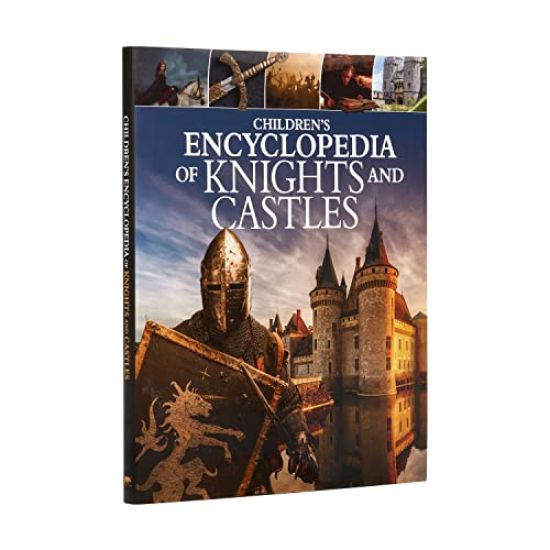
Children's Encyclopedia of Knights and Castles
Sean Sheehan; Kathy Elgin; Saviour Pirotta; Fiona Macdonald; Patricia Levy; Christopher Gravett
Arcturus Publishing Ltd
2021
sidottu
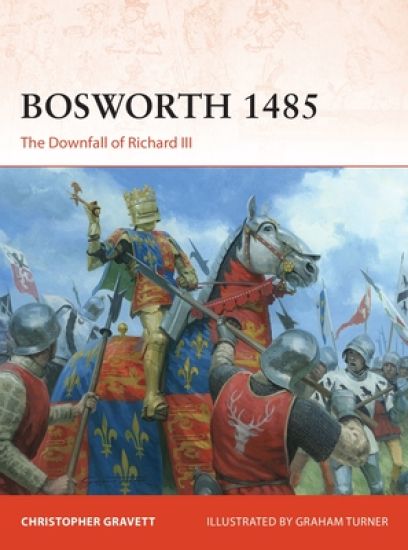
A study of the Battle of Bosworth, the climactic battle of the Wars of the Roses, based on a new interpretation of events following the discovery of the true location of the battlefield. The battle of Bosworth was the culmination of the War of the Roses, the dynastic struggle between the houses of York and Lancaster that dominated England in the second half of the 15th century. Edward IV had secured the throne for the house of York, but his early death in 1483, followed by the death of his sons and the taking of the throne by his brother, Richard of York, saw a renewed outbreak of fighting. His reign began with a major rebellion and was dogged by rumours of his involvement in murder, with Richard facing threats not only from the lords he alienated but also the Lancastrian faction waiting in the wings. Henry Tudor eventually decided to take the huge risk of attempting to seize the throne and Richard’s army marched to meet him, finally clashing near Market Bosworth. Guiding the reader from the campaign's origins to its aftermath, and covering the commanders and forces of King Richard III and Henry Tudor, this is a complete treatment of one of the most important events in English history. The story of Bosworth has been transformed in the 20th century as an extensive survey between 2005 and 2009 by the Battlefields Trust has pinpointed the location of the battlefield, for many years a source of debate and controversy, and this new history is based on that interpretation. It highlights the incredible discovery of Richard III's remains in Leicester, the study of the bones and relate this to what was previously thought to have happened to him at the end of the battle.
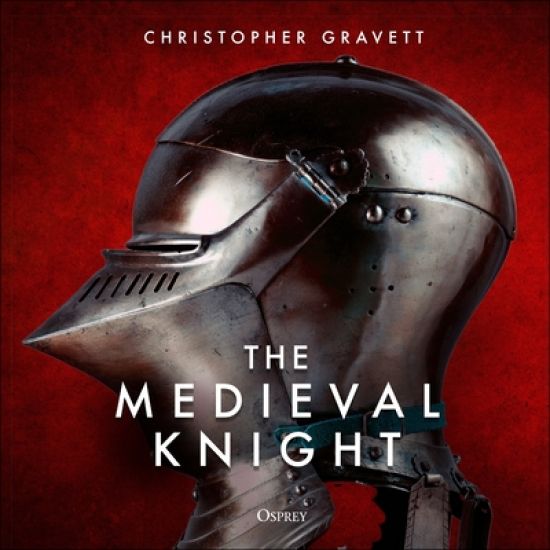
This attractively packaged gift book offers a comprehensive look at the development of the fearsome medieval English knight from the 12th century to the 15th century. The ‘knight in shining armour’ has become a staple figure in popular culture, and images of bloody battlefields, bustling feasting halls and courtly tournaments have been creatively interpreted many times in film and fiction. But what was the medieval knight truly like? In this fascinating title, former Senior Curator at the Royal Armouries Christopher Gravett describes how knights evolved over three centuries of English and European history, the wars they fought, their lives both in peacetime and on campaign, the weapons they fought with, the armour and clothing they wore and their fascinating code and mythology of chivalry. The text is richly illustrated with images ranging from manuscript illustrations to modern artwork reconstructions and many photographs of historic artefacts and sites.
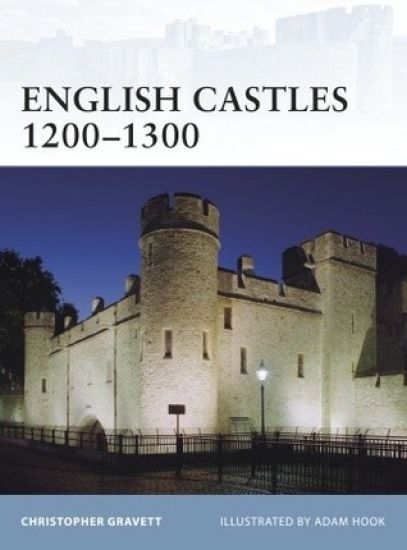
The simple castles raised after the Norman conquest had been developed throughout 11th and 12th centuries, whilst the introduction of Islamic and Byzantine fortification techniques from the late 12th century led to further developments in castle architecture. These fortifications were to be well tested throughout the course of the 13th century as England was riven by the conflict, characterized by prolonged sieges, between the monarchy and powerful magnates. As well as providing the focus for warfare, castles increasingly became the centres of their communities, providing a more permanent base for the lord, his family and retainers, as well as acting as centres for justice and administration.
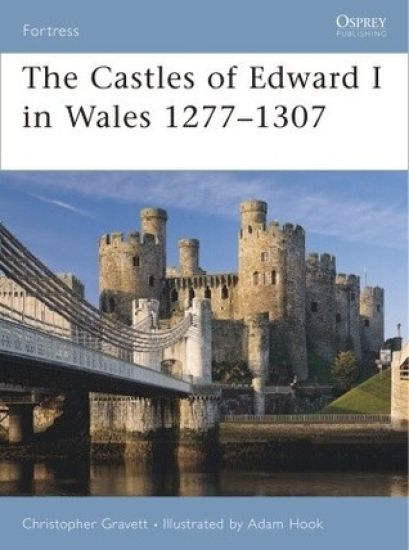
In 1277, Edward I gathered a huge army and marched into Wales to subdue the rebel Welsh princes. A key part of his strategy was to erect a castle wherever his army rested. This title takes a detailed look at the design, development and principles of defence of these Welsh castles, documenting daily life within their walls and the historical events that took place around them. Focusing on key sites, it highlights the varied castle designs ranging from fortifications based on French models to the defences inspired by Constantinople, and is illustrated with eight pages of full-colour illustrations and cutaway artwork.
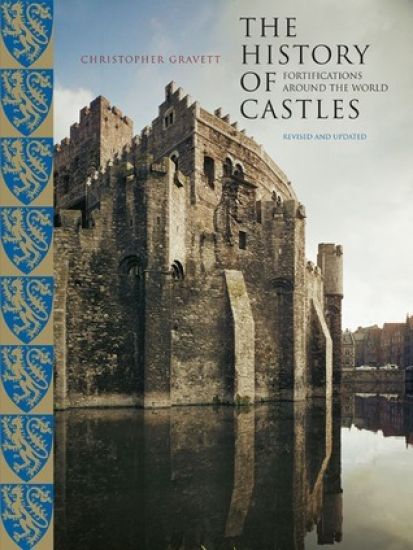
The History of Castles is the ultimate guide to the world's most fascinating castles and strongholds. Chapters include information on castles from France, England, Wales, Scotland, Ireland, Germany, Austria, Switzerland, the Iberian Peninsula, Italy, Scandinavia, Eastern Europe, Russia, and the Middle East. An ideal book for history enthusiasts, people planning to take a vacation near one of these castles, and for anyone who is enamored of these breathtaking buildings.
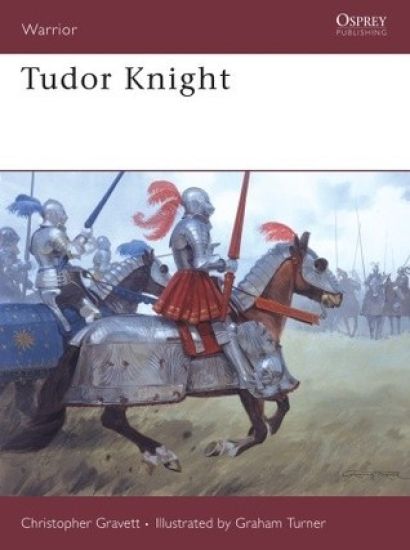
The Tudor Knight was the first line of defence employed by monarchs from Henry VIII to Elizabeth I, the last of a long tradition of knighthood dating back to the 11th century. He was well trained in the arts of war and chivalry from a young age, and he was skilled in the arts and languages, for the knight was a fighter and a gentleman. Knighthood during the Tudor era saw reforms in recruitment, appearance, and most radically in training and equipment. This book follows the knight from his first jousts to his real experience of battle, and it examines the innovations in military technology that influenced his training, equipment and experience of battle.
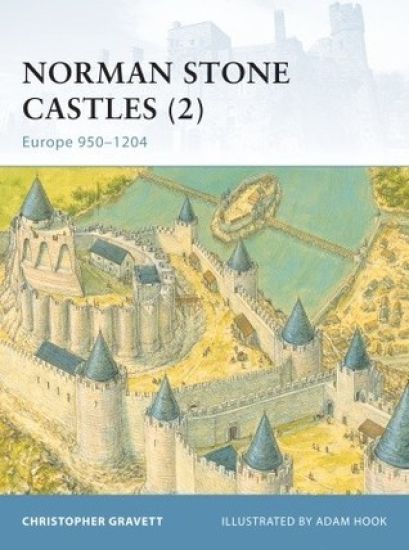
Following their settlement in the north of France, the Normans sought to consolidate their territorial gains in what was to become known as Normandy. They did this by building a series of castles and fortifications. Duke William's desire to hold down his lords, and his efforts to crush opposition to his minority also led to a number of famous sieges at castles such as Brionne, Arques and Alencon. This book discusses the Norman castles in Normandy, as well as in the Mediterranean, where at Melfi and Ademo in Italy and Sicily, Sahyun and Bagras in the Principality of Antioch they also left their mark.
The Normans were some of the most feared warriors of the High Medieval period, descended from the Vikings who had settled in Northern France under their leader Rollo in or around 911: throughout the following centuries they built on their warlike reputation. This culminated in their conquest of England under Duke William I. This conquest was by no means assured even after the climactic victory of the battle of Hastings. In order to consolidate his position, William built a series of fortifications around the country. This book covers all these developments from the early days of William I through to the fortifications of Henry II, Richard I and John.
Following their victory at Towton in 1461, The House of York continued to triumph. By 1470, however, relations between Edward and his lieutenant, Eari of Warwick, had broken down and Warwick had joined the Lancastrian cause. On 14 April 1471 at Barnet, Edward defeated and killed Warwick. On the same day Henry VI's wife and son, Queen Margaret and Prince Edward, landed at Weymouth. Learning of the disaster, they united with Warwick's army and made a stand at Tewkesbury. Edward IV bombarded Somerset's division, who reacted with a surprise attack on the Yorkist line. However, Edward IV counterattacked and routed Somerset's men. The Lancastrians fled. This title examines how, after Tewkesbury, the Lancastrian cause had been virtually wiped out.
The Lancastrian army was conducting a triumphant march on the capital, having defeated Warwick at the Second Battle of St. Albans, when on 4 March, Edward of York was proclaimed king in London. The Lancastrians withdrew northwards and Edward followed in pursuit. The two armies met at the village of Towton on 29 March 1461. This long and bitter battle began early as the two armies advanced towards each other, raging all day with the Lancastrians seeming to have the better of it, until the Duke of Norfolk arrived with several thousand Yorkist reinforcements., resulting in what is known as 'Bloody Meadow'. This book reveals how Towton marked the resurgence of the Yorkist cause and established Edward IV as king.
The 14th-century knight lived in a time of change, in terms of both recruitment methods and the appearance of fighting men. This title describes all aspects of the knight's life, including his training in the castle yard and the hard knocks of the tournament. The knight's life on campaign is explored along with the role of mercenary knights, the motivation of knights in the field and the influence of chivalry.
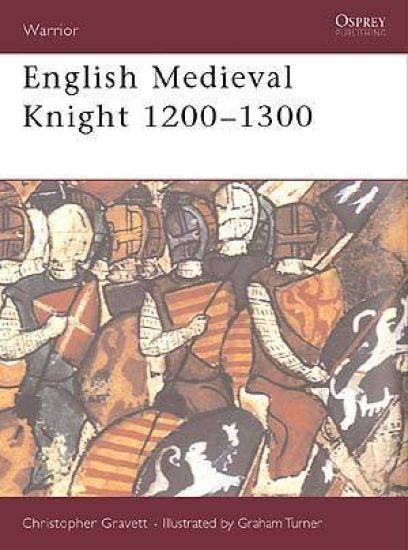
This volume details the life of the English knight during the 13th century, a period in which knighthood became so expensive that many eligible men had to be forced into it by royal command. How the tournament, a highly dangerous but lucrative way of accumulating wealth and status, evolved through the century is thoroughly explored along with the formation of the army using the feudal system, commutation of duty by the money payment of scutage and the hiring of mercenaries. Photographs of rare surviving pieces of armour along with Graham Turner's colour plates are used to illustrate this volume.
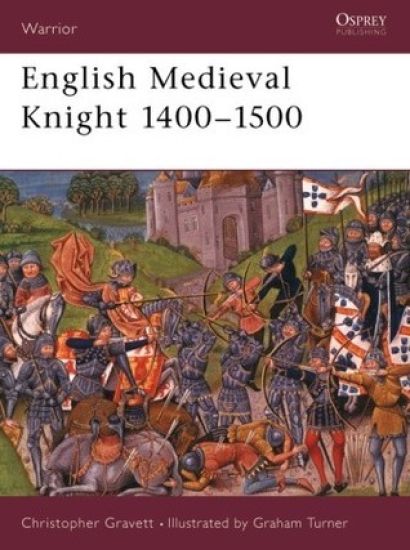
This book is a detailed and fascinating look at the English knight through the high watermark of the age of mail. This, and all the other equipment a knight needed are examined, together with the role of squires. In order to take a 'through the eyes' look at the life of a knight during this period, the books follows a hypothetical knight, to show how he faired on campaign with the Normans at the loss of Normandy. His son will ride in the civil wars of Henry III and Simon de Montfort and with Edward I in the Welsh and Scottish wars.
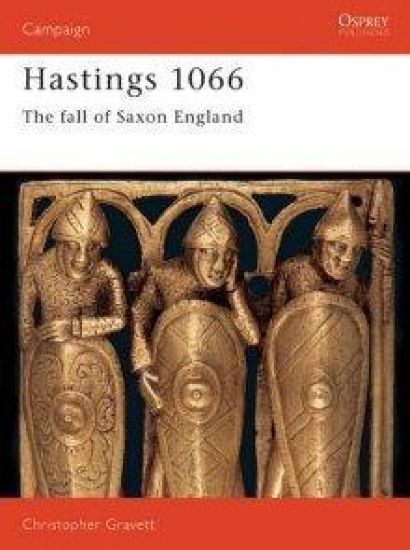
Very few battles of the medieval period can be regarded as decisive but Hastings was certainly one of them. Fought on 14th October 1066 between Duke William of Normandy and Harold Godwinson, king of England, the outcome irrevocably changed the course of English history. William's victory was largely due to the tactical superiority of his forces: not only did he possess infantry and cavalry, but also a significant number of archers or crossbowmen, to whose withering fire the English could make little reply. The eventual death of King Harold prompted an English collapse the successful outcome ensuring William's accession to the English throne.
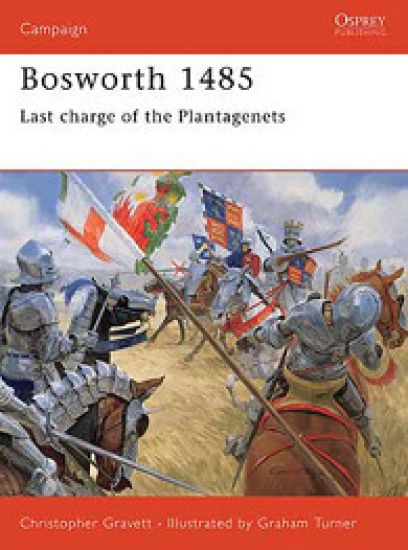
The battle of Bosworth effectively put an end to the dynastic struggle known as the Wars of the Roses. Shakespeare was to immortalize the battle and Richard's death in Richard III, and the life and reign of the last Plantagenet have sparked centuries of debate. Guiding the reader from the campaign's origins to its aftermath, and covering the commanders and forces of King Richard III and Henry Tudor, this is a complete treatment of one of the most important events in English history. Christopher Gravett cuts through myth and propaganda as he clearly details the course of this pivotal campaign.
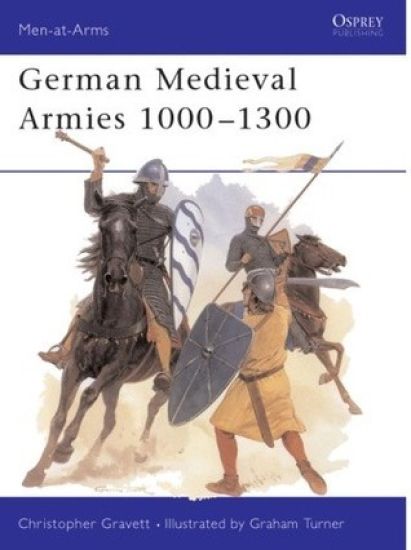
German Medieval Armies 1000–1300
Christopher Gravett
Osprey Publishing
1997
nidottu
Halvin toimitettuna 17,90 €
A history of the early medieval German Armies from the fragmentation of Charlemagne's Frankish Empire to the rise of the German, or Holy Roman Empire. This text looks in detail at the period of the Saxon wars and the Crusades including the rise of the Teutonic Knights. From the religious and political strife that rocked Germany in the early 11th century to civil war, campaigns in Italy and Henry IV's brief capture of Rome, and the successes of the Teutonic Knights and the Ministeriales - the serf-knights.
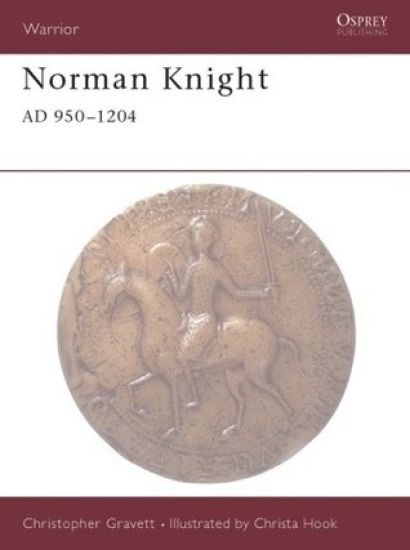
Throughout the 11th and 12th centuries the Norman knight was possibly the most feared warrior in Western Europe. He was descended originally from the Vikings who had settled in Northern France under their leader Rollo in or around 911 at the behest of Charles the Simple and throughout the following centuries they remembered and built on their warlike reputation. This book shows how their military prowess was renowned throughout the known world and resulted in Normans conquering Sicily in 1060 and England in 1066, as well as participating in many important battles in Italy and playing a major part in the First Crusade.
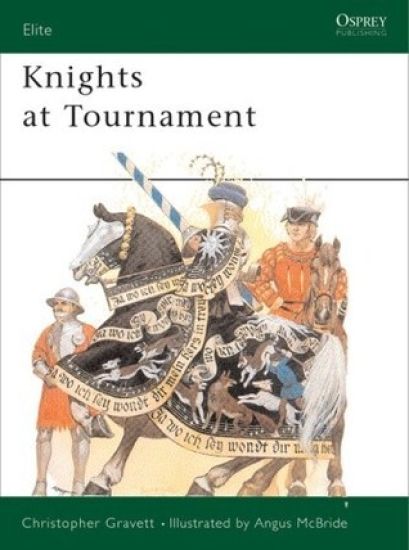
Like all warrior classes throughout history medieval knights engaged in military games, partly in preparation for war and partly for pure sport. From their often brutal origins in the 10th century to the gaudy pageantry and eventual decline of the 15th and 16th centuries, tournaments were the centre of the knightly life. The image of the armoured and surcoated knight on his caparisoned charger remains the epitome of the chivalric ideal. Christopher Gravett explores the history of the tournament from its chaotic beginnings to its more formal, 'civilised' incarnation, describing the various 'events' and equipment which came into use.