Kirjojen hintavertailu – 12 903 725 kirjaa ja 27 kauppaa

Kirjailija

Christopher H. Lutz

Kirjat ja teokset yhdessä paikassa: 5 kirjaa, julkaisuja vuosilta 1997–2022, suosituimpiin kuuluu Strike Fear in the Land. Vertaile teosten hintoja ja tarkista saatavuus suomalaisista kirjakaupoista.

5 kirjaa

Kirjojen julkaisuvuodet: 1997–2022.

Strike Fear in the Land

Strike Fear in the Land

W. George Lovell; Christopher H. Lutz; Wendy Kramer

UNIVERSITY OF OKLAHOMA PRESS
2022
nidottu
The conquest of Guatemala was brutal, prolonged and complex, fraught with intrigue and deception, and not at all clear-cut. Yet views persist of it as an armed confrontation whose stakes were evident and whose outcomes were decisive, especially in favor of the Spaniards. A critical reappraisal is long overdue, one that calls for us to reconsider events and circumstances in the light of not only new evidence but also keener awareness of indigenous roles in the drama. While acknowledging the prominent role played by Pedro de Alvarado (1485–1541), Strike Fear in the Land reexamines the conquest to give us a greater appreciation of indigenous involvement in it, and sustained opposition to it. Authors W. George Lovell, Christopher H. Lutz, and Wendy Kramer develop a fresh perspective on Alvarado as well as the alliances forged with native groups that facilitated Spanish objectives. The book reveals, for instance, that during the years most crucial to the conquest, Alvarado was absent from Guatemala more often than he was present; he relied on his brother, Jorge de Alvarado, to act in his stead. A pact with the Kaqchikel Maya was also not nearly as solid or long-lived as previously thought, as Alvarado’s erstwhile allies soon turned against the Spaniards, fomenting a prolonged rebellion. Even the story of the K’iche’ leader TecÚn UmÁn, hailed in Guatemala as a national hero who fronted native resistance, undergoes significant revision. Strike Fear in the Land is an arresting saga of personalities and controversies, conveying as never before the turmoil of this pivotal period in Mesoamerican history.
Strange Lands and Different Peoples

Strange Lands and Different Peoples

W. George Lovell; Christopher H. Lutz

University of Oklahoma Press
2021
nidottu
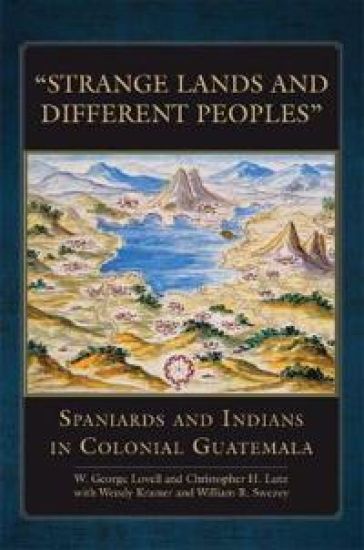
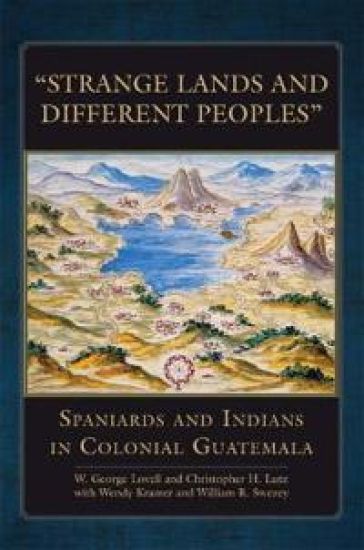
Guatemala emerged from the clash between Spanish invaders and Maya cultures that began five centuries ago. The conquest of these 'rich and strange lands,' as Hernán Cortés called them, and their 'many different peoples' was brutal and prolonged. 'Strange Lands and Different Peoples' examines the myriad ramifications of Spanish intrusion, especially Maya resistance to it and the changes that took place in native life because of it. The studies assembled here, focusing on the first century of colonial rule (1524-1624), discuss issues of conquest and resistance, settlement and colonization, labor and tribute, and Maya survival in the wake of Spanish invasion. The authors reappraise the complex relationship between Spaniards and Indians, which was marked from the outset by mutual feelings of resentment and mistrust. While acknowledging the pivotal role of native agency, the authors also document the excesses of Spanish exploitation and the devastating impact of epidemic disease. Drawing on research findings in Spanish and Guatemalan archives, they offer fresh insight into the Kaqchikel Maya uprising of 1524, showing that despite strategic resistance, colonization imposed a burden on the indigenous population more onerous than previously thought. Guatemala remains a deeply divided and unjust society, a country whose current condition can be understood only in light of the colonial experiences that forged it. Affording readers a critical perspective on how Guatemala came to be, 'Strange Lands and Different Peoples' shows the events of the past to have enduring contemporary relevance.
Strike Fear in the Land

Strike Fear in the Land

W. George Lovell; Christopher H. Lutz; Wendy Kramer

University of Oklahoma Press
2020
sidottu
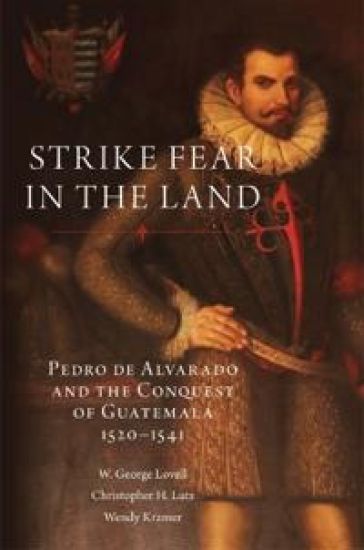
The conquest of Guatemala was brutal, prolonged and complex, fraught with intrigue and deception, and not at all clear-cut. Yet views persist of it as an armed confrontation whose stakes were evident and whose outcomes were decisive, especially in favor of the Spaniards. A critical reappraisal is long overdue, one that calls for us to reconsider events and circumstances in the light of not only new evidence but also keener awareness of indigenous roles in the drama. While acknowledging the prominent role played by Pedro de Alvarado (1485-1541), Strike Fear in the Land reexamines the conquest to give us a greater appreciation of indigenous involvement in it, and sustained opposition to it. Authors W. George Lovell, Christopher H. Lutz, and Wendy Kramer develop a fresh perspective on Alvarado as well as the alliances forged with native groups that facilitated Spanish objectives. The book reveals, for instance, that during the years most crucial to the conquest, Alvarado was absent from Guatemala more often than he was present; he relied on his brother, Jorge de Alvarado, to act in his stead. A pact with the Kaqchikel Maya was also not nearly as solid or long-lived as previously thought, as Alvarado's erstwhile allies soon turned against the Spaniards, fomenting a prolonged rebellion. Even the story of the K'iche' leader Tecún Umán, hailed in Guatemala as a national hero who fronted native resistance, undergoes significant revision. Strike Fear in the Land is an arresting saga of personalities and controversies, conveying as never before the turmoil of this pivotal period in Mesoamerican history.
Strange Lands and Different Peoples

Strange Lands and Different Peoples

W. George Lovell; Christopher H. Lutz

University of Oklahoma Press
2013
sidottu
Guatemala emerged from the clash between Spanish invaders and Maya cultures that began five centuries ago. The conquest of these ""rich and strange lands,"" as Hernán Cortés called them, and their ""many different peoples"" was brutal and prolonged. ""Strange Lands and Different Peoples"" examines the myriad ramifications of Spanish intrusion, especially Maya resistance to it and the changes that took place in native life because of it. The studies assembled here, focusing on the first century of colonial rule (1524-1624), discuss issues of conquest and resistance, settlement and colonization, labor and tribute, and Maya survival in the wake of Spanish invasion. The authors reappraise the complex relationship between Spaniards and Indians, which was marked from the outset by mutual feelings of resentment and mistrust. While acknowledging the pivotal role of native agency, the authors also document the excesses of Spanish exploitation and the devastating impact of epidemic disease. Drawing on research findings in Spanish and Guatemalan archives, they offer fresh insight into the Kaqchikel Maya uprising of 1524, showing that despite strategic resistance, colonization imposed a burden on the indigenous population more onerous than previously thought. Guatemala remains a deeply divided and unjust society, a country whose current condition can be understood only in light of the colonial experiences that forged it. Affording readers a critical perspective on how Guatemala came to be, ""Strange Lands and Different Peoples"" shows the events of the past to have enduring contemporary relevance.
Santiago de Guatemala, 1541-1773

Santiago de Guatemala, 1541-1773

Christopher H. Lutz

University of Oklahoma Press
1997
nidottu
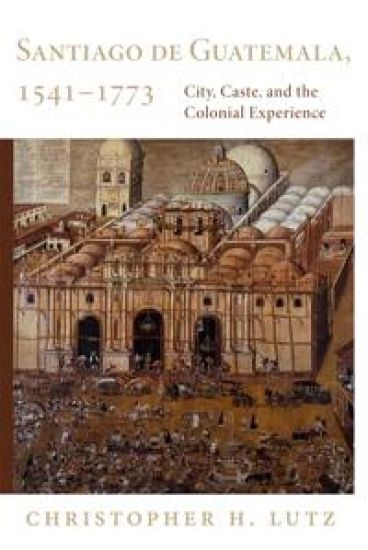
Santiago de Guatemala was the colonial capital and most important urban center of Spanish Central America from its establishment in 1541 until the earthquakes of 1773. Christopher H. Lutz traces the demographic and social history of the city during this period, focusing on the rise of groups of mixed descent. During these two centuries the city evolved from a segmented society of Indians, Spaniards, and African slaves to an increasingly mixed population as the formerly all-Indian barrios became home to a large intermediate group of ladinos. The history of the evolution of a multiethnic society in Santiago also sheds light on the present-day struggle of Guatemalan ladinos and Indians and the problems that continue to divide the country today.