Kirjojen hintavertailu – 12 859 828 kirjaa ja 27 kauppaa

Kirjailija

Christopher Hamerton

Kirjat ja teokset yhdessä paikassa: 22 kirjaa, julkaisuja vuosilta 2014–2026, suosituimpiin kuuluu Corporate Crisis Recovery. Vertaile teosten hintoja ja tarkista saatavuus suomalaisista kirjakaupoista.

22 kirjaa

Kirjojen julkaisuvuodet: 2014–2026.

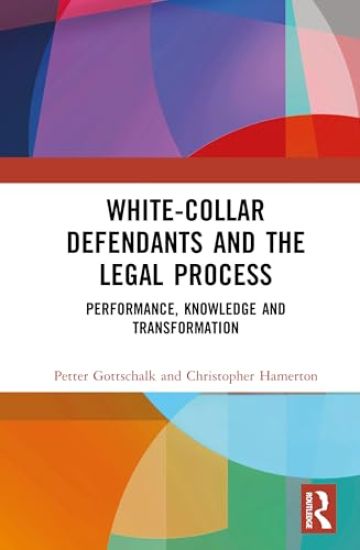
White-Collar Defendants and the Legal Process

White-Collar Defendants and the Legal Process

Petter Gottschalk; Christopher Hamerton

TAYLOR FRANCIS LTD
2026
sidottu
This book provides a detailed socio-legal examination of the experiences, perceptions, and responses of individual white-collar defendants following the criminal trial process. White-collar crime is defined both in an offense-based perspective and an offender-based perspective. The offense-based perspective focuses on non-violent acts for financial gain, while the offender-based perspective focuses on members of the elite in society who abuse their professional positions for financial gain. Applying both of these definitions, this book pursues a close comparative analysis of a number of key international white-collar crime case studies. Examining the formal ritual of the criminal legal process, the book considers the experience of defendants within the performative context of the other legal actors in the trial: advocates, judges and public participants. In doing so, the book offers a nuanced and compelling socio-legal analysis of the process of white-collar trial and punishment, whilst critically exploring the perceptions and experiences of elite defendants within this under-researched area of the public sphere. This book will appeal to scholars and students of socio-legal studies, corporate law, and criminal justice.

International Perspectives on Child Victimisation

International Perspectives on Child Victimisation

Julia Davidson; Christopher Hamerton

Routledge
2026
sidottu
International Perspectives on Child Victimisation offers a comprehensive overview of the established themes and emergent debates relating to the abuse and victimization of children. Highlighting key areas of global concern, and illustrated with detailed case studies of important developments, Julia Davidson and Christopher Hamerton address child abuse, child poverty, child exploitation, child prostitution, and child imprisonment within the context of children's rights, and international legal and policy issues. Their focus in this regard is on the ‘place’ of the child in the context of current victimology and social justice discourses, as they explore the social, cultural, and political context of international child victimization. A solid introduction to child victimization for both undergraduate and postgraduate audiences, this book will also appeal to practitioners and policy-makers engaged in child protection and intervention.
Precarious Futures

Precarious Futures

Christopher Hamerton; Craig Webber

Springer Nature Switzerland AG
2025
sidottu
Precarious Futures explores the evolving and emerging relationship between crime and technology in an increasingly complex and interconnected world, along with its implications for new perceptions of crime and deviance. It evaluates the rise of the World Wide Web and the model of cybercrime, questions whether existing criminological thought offers relevance and efficacy in current circumstances, conditions and future predictions, and revisits the concept of Relative Deprivation and the underpinning social psychological and socio-political foundations of it. It argues that Relative Deprivation allied to post-industrial precarity provides a central platform for understanding crime and deviance in a hyper-connected and hyper-commercial neoliberal world. The book develops to explore current criminological and security conceptions of artificial intelligence, big data, crime and social control, as well as hacktivism, and how opportunities for crime have become‘democratised’ and expanded through the Web. Drawing on empirical data, theoretical narratives and a review of the state of crime now and in a speculative near future, Hamerton and Webber discuss some potential directions for a new transdisciplinary critical criminology. Precarious Futures speaks to criminologists, sociologists and social theory scholars and students, as well as academics and professionals in associated technological fields such as cyber-security, computer science and web science.
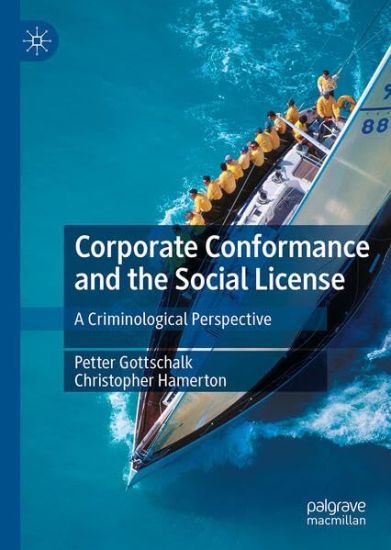
Corporate Conformance and the Social License

Corporate Conformance and the Social License

Christopher Hamerton; Petter Gottschalk

Springer International Publishing AG
2025
sidottu
The principal focus of Corporate Conformance and the Social License: A Criminological Perspective is to enhance and broaden the criminological dialogue surrounding the role of and effect of corporate conformance as a key element in the maintenance of the social license to operate. The book posits that in recent years conformance has emerged as a key component in shaping corporate behaviour and informing corporate crises. With a series of widely publicised global scandals heightening awareness of extensive and serious repercussions, revealing severe financial and environmental impacts, operational issues, and even existential concerns. This has led to a growing body of research focusing on how such crises materialise, are perceived and might be strategically managed and prevented. The book foregrounds conformance as a proactive demonstration of adherence to contemporary ethical standards of globalized business practice, with the authors offering a novel perspective that considers conformance and associated normative pressures within a criminological framework. Here, convenience theory is applied to analyse a series of important contemporary case-studies, with the research illustrating how corporations and their stakeholders have used conformance to manage, maintain and, following periods of crisis, attempt to regain their corporate license to operate. The book further explores differences in strategic conformance responses in terms of perceptions and reactions from the public, media and criminal justice system.
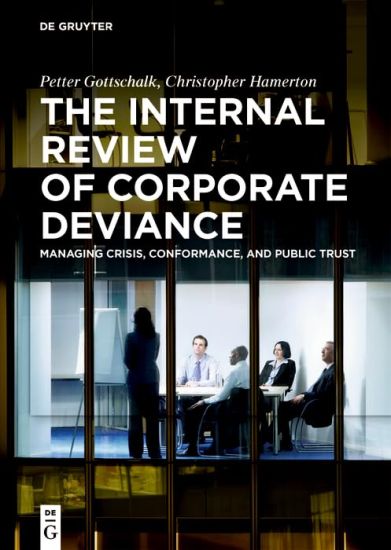
The Internal Review of Corporate Deviance

The Internal Review of Corporate Deviance

Petter Gottschalk; Christopher Hamerton

De Gruyter
2025
sidottu
In this pioneering monograph based upon extensive primary research, Gottschalk and Hamerton explore and evaluate the developing global field of internal investigations within complex organizations. Applying an offender-based perspective, the authors explore the central role of convenience in seeking to inform, improve and develop policy and practice. A comparative interdisciplinary work, with extensive coverage of European, North American, African and Asian paradigms, The Internal Review of Corporate Deviancepresents empirical fieldwork supplemented by the detailed analysis of a large number of internal reviews produced on completion of internal investigations. The aggregate research gathered considers offender motive, conformance, potential damage and recovery of the corporate social license, and convenience themes, while critically assessing investigation effectiveness and review maturity – as both successful and deficient practice. In doing so, the book presents a close analysis of the field to identify, position, and reveal the strategic role of internal review and impact of the social license on contemporary conceptions of white-collar deviance and crime. This book will be of interest to scholars of criminology, business management, law and sociology, along with practitioners and professionals within allied disciplines.
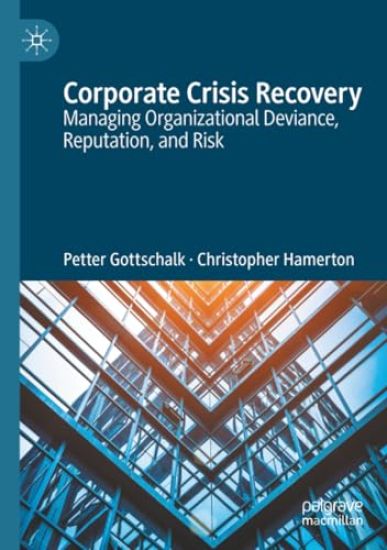
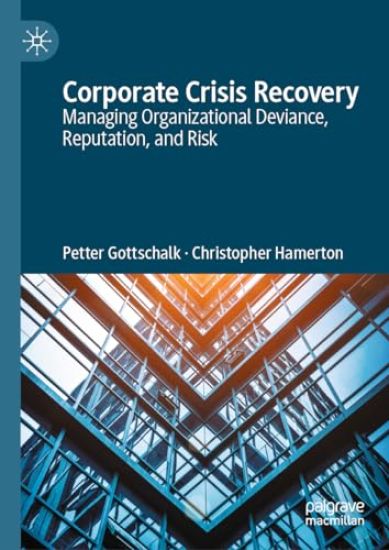
Corporate Crisis Recovery

Corporate Crisis Recovery

Petter Gottschalk; Christopher Hamerton

Springer International Publishing AG
2025
nidottu
The principal aim of Corporate Crisis Recovery: Managing Organizational Deviance, Reputation, and Risk is to complement and expand criminological discourse on the concept of the social license to operate as a means of influencing the behaviour of corporations. In recent years, the wide-spanning consequences of some very public globalized corporate crises - including fiscal and environmental impact, staff retention, and organizational survival - have led to a growing body of research on crisis perception and responsive strategic management. Developments that position corporate crisis recovery as an anticipated requirement of visible compliance to normalized and anticipated standards of ethical practice and business conduct. Utilizing convenience theory to illustrate how corporations, and the individuals therein, are able to lose, repair, and recover the corporate license to operate after corruption and scandal, the book develops to evaluate the responses of the public and criminal justice process to serious reputational damage and substantial breach of trust.
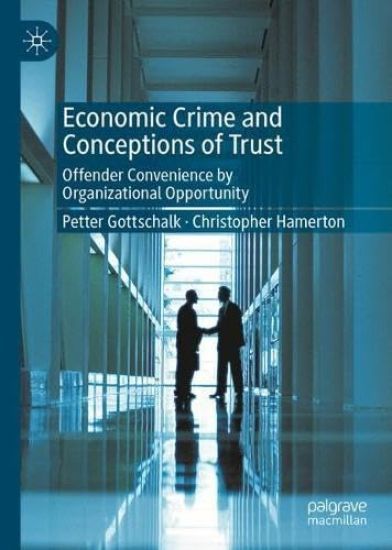
Economic Crime and Conceptions of Trust

Economic Crime and Conceptions of Trust

Petter Gottschalk; Christopher Hamerton

Springer International Publishing AG
2025
sidottu
Economic Crime and Conceptions of Trust explores the intricacies of the contemporary concept of trust in episodes of misconduct through an analysis of workplace deviance and crime. Grounded in detailed examinations of contemporary case studies and bolstered by original comparative fieldwork, the text takes an offender-focused approach, emphasizing the pivotal role of convenience. Adopting an interdisciplinary perspective, the authors seek to enhance and broaden existing understanding of white-collar and corporate criminology, while also highlighting its relevance to strategic management studies. A core argument of the book is that the traditional emphasis on individual actors and notions of trustworthiness when conceptualising white-collar has waned in recent times. The authors’ perspective revisits and builds upon this important foundational concept of late twentieth-century discourse within the discipline, signalling a need for a reassessment and highlighting a number of recent conceptual developments to evaluate and position trust within the twenty-first century globalized business sphere.
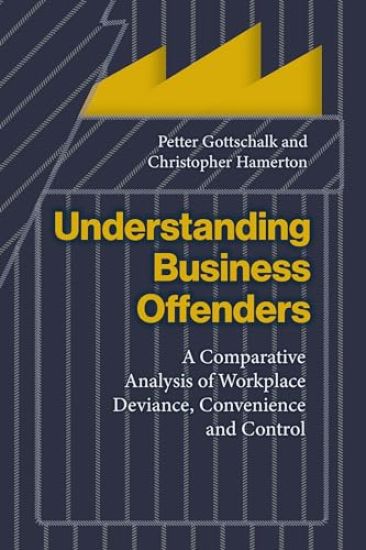
Understanding Business Offenders

Understanding Business Offenders

Petter Gottschalk; Christopher Hamerton

BERGHAHN BOOKS
2024
sidottu
Focusing on understanding business offenders through an exploration of workplace deviance and crime, this book closely examines a number of illustrative contemporary case studies and underpins the analysis of original comparative fieldwork, with an interdisciplinary approach, which informs, develops, and augments the existing literature on white-collar criminology. The book contends, inter alia, that the traditional centrality of the individual actor within narratives of white-collar offending has receded somewhat in recent years despite being a founding artifact within its late twentieth- century discourse, and that therefore a detailed reassessment is overdue.
Corporate Social License

Corporate Social License

Petter Gottschalk; Christopher Hamerton

Springer International Publishing AG
2024
nidottu
This book makes a distinctive and innovative contribution to the study of white-collar and corporate crime through detailed examination of the use, affect, and violation of the corporate social license – a concept frequently extended to a license to operate.
Corporate Crisis Recovery

Corporate Crisis Recovery

Petter Gottschalk; Christopher Hamerton

Springer International Publishing AG
2024
sidottu
The principal aim of Corporate Crisis Recovery: Managing Organizational Deviance, Reputation, and Risk is to complement and expand criminological discourse on the concept of the social license to operate as a means of influencing the behaviour of corporations. In recent years, the wide-spanning consequences of some very public globalized corporate crises – including fiscal and environmental impact, staff retention, and organizational survival – have led to a growing body of research on crisis perception and responsive strategic management. Developments that position corporate crisis recovery as an anticipated requirement of visible compliance to normalized and anticipated standards of ethical practice and business conduct. Utilizing convenience theory to illustrate how corporations, and the individuals therein, are able to lose, repair, and recover the corporate license to operate after corruption and scandal, the book develops to evaluate the responses of the public and criminal justice process to serious reputational damage and substantial breach of trust.
Devilry, Deviance, and Public Sphere

Devilry, Deviance, and Public Sphere

Christopher Hamerton

Springer International Publishing AG
2023
nidottu
Devilry, Deviance, and Public Sphere draws on criminology and social theory to explore and expand social historical themes in the analysis of perceptions of deviance and crime in the eighteenth century. Developing the theoretical device of Folk Devils and Moral Panics, instigated by Stanley Cohen and developed by Erich Goode and Nachman Ben-Yehuda, the book explores the social discovery of, and public response to, crime and deviance in that period. Detailed contemporary case studies of youth violence, sexual deviance, and substance abuse are used to argue that Hanoverian London and its novel media can be identified as the initiating historical site for what might now be termed public order moral panics. In doing so, Hamerton provides a vivid historical lineage of moral panic which traverses much of the long eighteenth century. The book considers social change, allowing for points of theoretical convergence and divergence to be observed, whilst exploring historical models of public opinion, media, deviance and crime alongside the unique character and power located within the burgeoning Metropolis. Devilry, Deviance, and Public Sphere seeks to make an important contribution to the understanding of both moral panic theory and the historiography of crime and deviance, and posits that the current discourse on folk devils and moral panics can be extended and enriched via the exploration of the moral crises of earlier centuries.
Corporate Social License

Corporate Social License

Petter Gottschalk; Christopher Hamerton

Springer International Publishing AG
2023
sidottu
This book makes a distinctive and innovative contribution to the study of white-collar and corporate crime through detailed examination of the use, affect, and violation of the corporate social license – a concept frequently extended to a license to operate. Whilst discrete aspects of corporate social responsibility have found their way into the discourse on business deviance and crime, no single book to date has provided a detailed exploration of social licence through a criminological lens. Here, using an interdisciplinary focus which includes illustrative case-studies and large-scale original fieldwork, Gottschalk and Hamerton explore European, North American, Asian, and global perspectives to identify, position, and reveal the impact of the social license on contemporary conceptions of white-collar and corporate deviance and crime. Corporate Social License: A Study in Legitimacy, Conformance, and Corruption will be of interest to scholars of criminology, law, business management, and sociology along with professionals within allied fields.
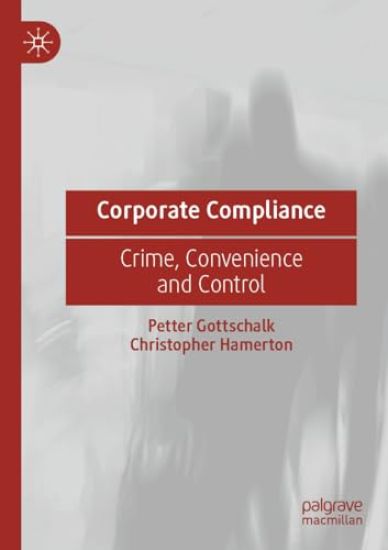
Corporate Compliance

Corporate Compliance

Petter Gottschalk; Christopher Hamerton

Springer International Publishing AG
2023
nidottu
Compliance has long been identified by scholars of white-collar crime as a key strategic control device in the regulation of corporations and complex organisations. Nevertheless, this essential process has been largely ignored within criminology as a specific subject for close scrutiny – Corporate Compliance: Crime, Convenience and Control seeks to address this anomaly. This initiating book applies the theory of convenience to provide criminological insight into the enduring self-regulatory phenomenon of corporate compliance. Convenience theory suggests that compliance is challenged when the corporation has a strong financial motive for illegitimate profits, ample organisational opportunities to commit and conceal wrongdoing, and executive willingness for deviant behaviour. Focusing on white-collar deviance and crime within corporations, the book argues that lack of compliance is recurrently a matter of deviant behaviour by senior executives within organisations who abuse their privileged positions to commission, commit and conceal financial crime.
Lawyer Roles in Knowledge Work

Lawyer Roles in Knowledge Work

Petter Gottschalk; Christopher Hamerton

Intersentia Ltd
2023
nidottu
This book provides the first thorough examination of the concept of lawyer roles in knowledge work, offering a detailed comparative exploration and analysis of the globalized legal services industry in terms of individual and corporate professional functions. Knowledge management has long been identified by scholars within the business sphere as a key strategic device in the development of complex organizations and developing markets. However, this essential process has been largely ignored within socio-legal studies and professional practice applications as a specific subject for close scrutiny. Lawyer Roles in Knowledge Work seeks to address this anomaly, with Gottschalk and Hamerton recognizing the strong lineage and correlation that exists between the study of knowledge management and contemporary legal practice. Using an interdisciplinary focus which includes illustrative case-studies, the book explores European, North American, and global perspectives as well as models to identify, position, and reveal the forward-looking lawyer as a defender, enabler, and investigator. In doing so, it revaluates current strategic legal practice and organizational behaviour within the context of changing patterns of business, the workplace, social rules, systems of governance, decision making, social ordering and control. Lawyer Roles in Knowledge Work will speak to students of law, business management, criminology, and sociology, along with legal practitioners and professionals within allied fields.
Devilry, Deviance, and Public Sphere

Devilry, Deviance, and Public Sphere

Christopher Hamerton

Springer International Publishing AG
2022
sidottu
Devilry, Deviance, and Public Sphere draws on criminology and social theory to explore and expand social historical themes in the analysis of perceptions of deviance and crime in the eighteenth century. Developing the theoretical device of Folk Devils and Moral Panics, instigated by Stanley Cohen and developed by Erich Goode and Nachman Ben-Yehuda, the book explores the social discovery of, and public response to, crime and deviance in that period. Detailed contemporary case studies of youth violence, sexual deviance, and substance abuse are used to argue that Hanoverian London and its novel media can be identified as the initiating historical site for what might now be termed public order moral panics. In doing so, Hamerton provides a vivid historical lineage of moral panic which traverses much of the long eighteenth century. The book considers social change, allowing for points of theoretical convergence and divergence to be observed, whilst exploring historical models of public opinion, media, deviance and crime alongside the unique character and power located within the burgeoning Metropolis. Devilry, Deviance, and Public Sphere seeks to make an important contribution to the understanding of both moral panic theory and the historiography of crime and deviance, and posits that the current discourse on folk devils and moral panics can be extended and enriched via the exploration of the moral crises of earlier centuries.
Corporate Compliance

Corporate Compliance

Petter Gottschalk; Christopher Hamerton

Springer International Publishing AG
2022
sidottu
Compliance has long been identified by scholars of white-collar crime as a key strategic control device in the regulation of corporations and complex organisations. Nevertheless, this essential process has been largely ignored within criminology as a specific subject for close scrutiny – Corporate Compliance: Crime, Convenience and Control seeks to address this anomaly. This initiating book applies the theory of convenience to provide criminological insight into the enduring self-regulatory phenomenon of corporate compliance. Convenience theory suggests that compliance is challenged when the corporation has a strong financial motive for illegitimate profits, ample organisational opportunities to commit and conceal wrongdoing, and executive willingness for deviant behaviour. Focusing on white-collar deviance and crime within corporations, the book argues that lack of compliance is recurrently a matter of deviant behaviour by senior executives within organisations who abuse their privileged positions to commission, commit and conceal financial crime.
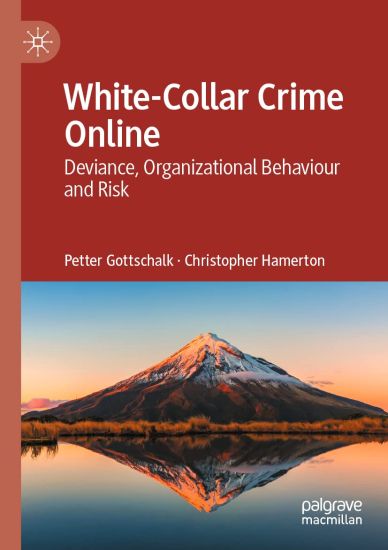
White-Collar Crime Online

White-Collar Crime Online

Petter Gottschalk; Christopher Hamerton

Springer Nature Switzerland AG
2022
nidottu
This initiating monograph provides the first thorough examination of the concept of white-collar crime online. Applying an offender-based perspective which considers the central role of convenience, it seeks to inform, improve and develop the current literature on cybercrime, whilst paying particular attention to its founding category within criminology. It argues that white-collar crime has receded from criminological perspectives on cybercrime in recent years and that a detailed, rich re-assessment of white-collar crime in contemporary digital societies is needed. Following a theoretical introduction, the book develops to discuss, inter alia, implications for corporate reputation, the various organizational roles utilized in mitigating external and internal threats, the unique considerations involved in law enforcement efforts, and likely future directions within the field. White-Collar Crime Online recognises the strong lineage and correlation that exists between the study of white-collar crime and cybercrime. Using convenience theory within a comparative analysis which includes case-studies, the book explores both European and American paradigms, perspectives and models to determine where white-collar crime exists within the contemporary workplace and how this might relate to the ongoing discourse on cybercrime. In doing so it revaluates criminological theory within the context of changing patterns of business, the workplace, social rules, systems of governance, decision making, social ordering and control. White-Collar Crime Online will speak to criminologists, sociologists and professionals; including those interested in cyber-security, economics, technology and computer science.
Privatising Criminal Justice

Privatising Criminal Justice

Christopher Hamerton; Sue Hobbs

Routledge
2022
sidottu
Privatising Criminal Justice explores the social, cultural and political context of privatisation in the criminal justice sector. In recent years, the criminal justice sector has made various strategic partnerships with the private sector, exemplified by initiatives within the police, the prison system and offender services. This has seen unprecedented growth in the past 30 years and a veritable explosion under the tenure of the coalition government in the UK. This book highlights key areas of domestic and global concern and illustrates, with detailed case studies of important developments. It connects the study of criminology and criminal justice to the wider study of public policy, government institutions and political decision making. In doing so, Privatising Criminal Justice provides a theoretical and practical framework for evaluating collaborative public and private-sector response to social problems at the beginning of the twenty-first century. An accessible and compelling read, this book will appeal to students and scholars of criminology, criminal justice, sociology and politics and all those interested in how privatisation has shaped the contemporary criminal justice system.
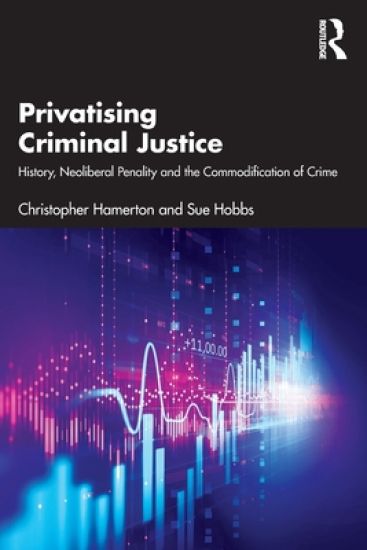
Privatising Criminal Justice

Privatising Criminal Justice

Christopher Hamerton; Sue Hobbs

Routledge
2022
nidottu
Privatising Criminal Justice explores the social, cultural and political context of privatisation in the criminal justice sector. In recent years, the criminal justice sector has made various strategic partnerships with the private sector, exemplified by initiatives within the police, the prison system and offender services. This has seen unprecedented growth in the past 30 years and a veritable explosion under the tenure of the coalition government in the UK. This book highlights key areas of domestic and global concern and illustrates, with detailed case studies of important developments. It connects the study of criminology and criminal justice to the wider study of public policy, government institutions and political decision making. In doing so, Privatising Criminal Justice provides a theoretical and practical framework for evaluating collaborative public and private-sector response to social problems at the beginning of the twenty-first century. An accessible and compelling read, this book will appeal to students and scholars of criminology, criminal justice, sociology and politics and all those interested in how privatisation has shaped the contemporary criminal justice system.
White-Collar Crime Online

White-Collar Crime Online

Petter Gottschalk; Christopher Hamerton

Springer Nature Switzerland AG
2021
sidottu
This initiating monograph provides the first thorough examination of the concept of white-collar crime online. Applying an offender-based perspective which considers the central role of convenience, it seeks to inform, improve and develop the current literature on cybercrime, whilst paying particular attention to its founding category within criminology. It argues that white-collar crime has receded from criminological perspectives on cybercrime in recent years and that a detailed, rich re-assessment of white-collar crime in contemporary digital societies is needed. Following a theoretical introduction, the book develops to discuss, inter alia, implications for corporate reputation, the various organizational roles utilized in mitigating external and internal threats, the unique considerations involved in law enforcement efforts, and likely future directions within the field. White-Collar Crime Online recognises the strong lineage and correlation that exists between the study of white-collar crime and cybercrime. Using convenience theory within a comparative analysis which includes case-studies, the book explores both European and American paradigms, perspectives and models to determine where white-collar crime exists within the contemporary workplace and how this might relate to the ongoing discourse on cybercrime. In doing so it revaluates criminological theory within the context of changing patterns of business, the workplace, social rules, systems of governance, decision making, social ordering and control. White-Collar Crime Online will speak to criminologists, sociologists and professionals; including those interested in cyber-security, economics, technology and computer science.