

Kirjailija
Christopher Hamilton
Kirjat ja teokset yhdessä paikassa: 16 kirjaa, julkaisuja vuosilta 2001–2026, suosituimpiin kuuluu Western Tales. Vertaile teosten hintoja ja tarkista saatavuus suomalaisista kirjakaupoista.
16 kirjaa
Kirjojen julkaisuvuodet: 2001–2026.
What is it like to experience rapture? For philosopher Christopher Hamilton, it is a loss of self that is also a return to self—an overflowing and emptying out of the self that also nourishes and fills the self. In this inviting book, he reflects on the nature of rapture and its crucial yet unacknowledged place in our lives. Hamilton explores moments of rapture in everyday existence and aesthetic experience, tracing its disruptive power and illuminating its philosophical significance. Rapture is found in sexual love and other forms of intense physical experience, such as Philippe Petit’s nerve-defying wire walk between the Twin Towers. Hamilton also locates it in quieter but equally joyous moments, such as contemplating a work of art or the natural world. He considers a range of examples in philosophy and culture—Nietzsche and Weil, Woolf and Chekhov, the extremes of experience in Werner Herzog’s films—as well as aspects of ordinary life, from illness to gardening. Conversational and evocative, this book calls on us to ask how we might make ourselves more open to experiences of rapturous joy and freedom.
What is it like to experience rapture? For philosopher Christopher Hamilton, it is a loss of self that is also a return to self—an overflowing and emptying out of the self that also nourishes and fills the self. In this inviting book, he reflects on the nature of rapture and its crucial yet unacknowledged place in our lives. Hamilton explores moments of rapture in everyday existence and aesthetic experience, tracing its disruptive power and illuminating its philosophical significance. Rapture is found in sexual love and other forms of intense physical experience, such as Philippe Petit’s nerve-defying wire walk between the Twin Towers. Hamilton also locates it in quieter but equally joyous moments, such as contemplating a work of art or the natural world. He considers a range of examples in philosophy and culture—Nietzsche and Weil, Woolf and Chekhov, the extremes of experience in Werner Herzog’s films—as well as aspects of ordinary life, from illness to gardening. Conversational and evocative, this book calls on us to ask how we might make ourselves more open to experiences of rapturous joy and freedom.
This book, taking its point of departure from Stanley Cavell’s claim that philosophy and autobiography are dimensions of each other, aims to explore some of the relations between these forms of reflection, first by seeking to develop an outline of a philosophy of autobiography, and then by exploring the issue from the side of five autobiographical works. Christopher Hamilton argues in the volume that there are good reasons for thinking that philosophical texts can be considered autobiographical, and then turns to discuss the autobiographies of Walter Benjamin, Peter Weiss, Jean-Paul Sartre, George Orwell, Edmund Gosse and Albert Camus. In discussing these works, Hamilton explores how they put into question certain received understandings of what philosophical texts suppose themselves to be doing, and also how they themselves constitute philosophical explorations of certain key issues, e.g. the self, death, religious and ethical consciousness, sensuality, the body. Throughout, there is an exploration of the ways in which autobiographies help us in thinking about self-knowledge and knowledge of others. A final chapter raises some issues concerning the fact that the five autobiographies discussed here are all texts dealing with childhood.
This book, taking its point of departure from Stanley Cavell’s claim that philosophy and autobiography are dimensions of each other, aims to explore some of the relations between these forms of reflection, first by seeking to develop an outline of a philosophy of autobiography, and then by exploring the issue from the side of five autobiographical works. Christopher Hamilton argues in the volume that there are good reasons for thinking that philosophical texts can be considered autobiographical, and then turns to discuss the autobiographies of Walter Benjamin, Peter Weiss, Jean-Paul Sartre, George Orwell, Edmund Gosse and Albert Camus. In discussing these works, Hamilton explores how they put into question certain received understandings of what philosophical texts suppose themselves to be doing, and also how they themselves constitute philosophical explorations of certain key issues, e.g. the self, death, religious and ethical consciousness, sensuality, the body. Throughout, there is an exploration of the ways in which autobiographies help us in thinking about self-knowledge and knowledge of others. A final chapter raises some issues concerning the fact that the five autobiographies discussed here are all texts dealing with childhood.
Read on and Start Investing within Reading the First 20 Pages Imagine waking up one day and realizing you can halve your working hours and spend most of your time with your loved ones. Instead of rushing to go to work, you can have a slow morning cup of coffee on a sunny balcony on a Wednesday afternoon. You wouldn't be the first one to achieve this with the help of a few smart stock market investments. Yes, it's completely normal if you have no clue where to begin even thinking about investing. If you are like most stock market beginners, words like 'bull', 'bear', 'dividend, ' and 'IPO' confuse you. No worries These precise definitions with examples can get you to earning passive income Ask any big stock market investor - they started with learning stock market terms, concepts, and golden rules of how it works. If you learn stock market terms now, they will make your investing experience easy, enjoyable, and profitable This book will teach you how to invest the right way so that when it comes time for you to buy stocks, your money doesn't go down the drain. You will see for yourself how simple it is to gain profit with the right approach Here is what you get inside this blueprint: Learn all the necessary terms to get going in the stock market fast Get started with investing immediately and effortlessly make passive income safely Build your skills now and start investing while reading And much, much more Instead of letting inflation eat up years' worth of savings, investing in stocks is the most popular, tested, and profitable way of earning more money at home. This book makes sure you play safe and start learning how to earn income with the right terminology. You're not risking anything by starting small
Middle age, for many, marks a key period for a radical reappraisal of one's life and way of living. The sense of time running out, both from the perspective that one's life has ground to a halt, and from the point of view of the greater closeness of death, and the sense of loneliness engendered by the compromised and wasteful nature of life, become ever clearer in mid-life, and can lead to a period of dramatic self doubt. In this book, the philosopher Christopher Hamilton (early 40s) explores the moods, emotions and experiences of middle age in the contemporary world, seeking to describe and analyze that period of life philosophically. Hamilton draws on his own personal experiences of turning 40 as well as a wide range of sources - from the philosophical writings of Schopenhauer, Nietzsche, Hegel, Heidegger to the literature of Tolstoy, Dostoevsky, Conrad and the films of Woody Allen - to offer us a philosophy of middle age. Some of the many fascinating themes explored include the strong sense of nostalgia experienced in mid-life, of loss for one's youth, and of regret, the sense that life has become boring, the recognition that one can never fully escape feelings of guilt, and - central to the experience of middle age - the question of what is the point of going on at all. In the light of the 'melancholy wisdom' of mid-life Hamilton suggests that pleasure becomes much more important than at previous stages of life and he shows that the enjoyment of pleasure can be something noble. Insightful, entertaining, and thought-provoking, "Middle Age" is fascinating reading and for anyone heading for a 'mid-life crisis' it is much cheaper than buying a sports car.
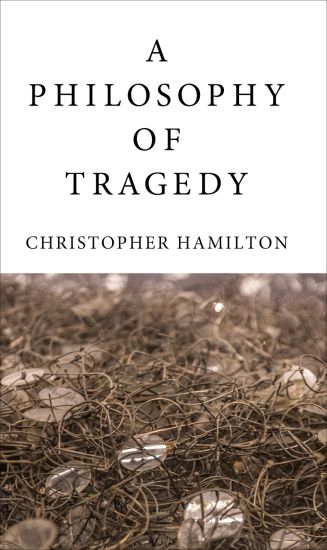
A Philosophy of Tragedy explores the tragic condition of man in modernity. Nietzsche knew it, as have countless characters in literature, and the modern age places us squarely before it: the sheer contingency and instability of our existence, our homelessness, our unredeemed suffering, our fractured relation to morality. Christopher Hamilton draws as much on literature, including the tragic theatre, as on philosophy to offer a stirring account of our tragic state. In doing so he explores the nature of philosophy itself, the ways it has been understood and its relationship to humanity. The book ranges from the debate over the 'death of tragedy' to a critique of modern virtue ethics, offers a new interpretation of the evil of Auschwitz and explores the work of thinkers who have seen our tragic being as inherently inconsolable. A Philosophy of Tragedy shows how tragedy has been and continues to be a crucial part of the modern human experience - one from which we should not avert our eyes.

No matter how insulated we are by wealth or friends we can all expect to undergo some form of loss, failure or disappointment. The common reaction is to bear it as best we can - some do this better than others - and move on with life. Christopher Hamilton proposes a different response to adversity. Focusing on the arenas of family, love, illness and death, he explores constructive ways to deal with adversity and embrace it to derive unique insight into our condition. Offering examples from history, literature and science, he suggests how we might recognize it as a precious source of enlightenment, shaping our very existence. One in the new series of books from The School of Life, launched January 2014: How to Age by Anne Karpf How to Develop Emotional Health by Oliver James How to Be Alone by Sara Maitland How to Deal with Adversity by Christopher Hamilton How to Think About Exercise by Damon Young How to Connect with Nature by Tristan Gooley
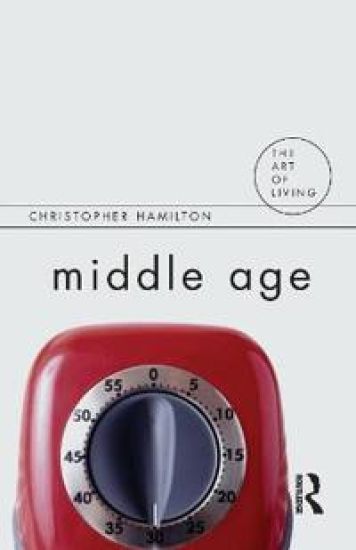
Middle age, for many, marks a key period for a radical reappraisal of one's life and way of living. The sense of time running out, both from the perspective that one's life has ground to a halt, and from the point of view of the greater closeness of death, and the sense of loneliness engendered by the compromised and wasteful nature of life, become ever clearer in mid-life, and can lead to a period of dramatic self doubt. In this book, the philosopher Christopher Hamilton (early 40s) explores the moods, emotions and experiences of middle age in the contemporary world, seeking to describe and analyze that period of life philosophically. Hamilton draws on his own personal experiences of turning 40 as well as a wide range of sources - from the philosophical writings of Schopenhauer, Nietzsche, Hegel, Heidegger to the literature of Tolstoy, Dostoevsky, Conrad and the films of Woody Allen - to offer us a philosophy of middle age. Some of the many fascinating themes explored include the strong sense of nostalgia experienced in mid-life, of loss for one's youth, and of regret, the sense that life has become boring, the recognition that one can never fully escape feelings of guilt, and - central to the experience of middle age - the question of what is the point of going on at all. In the light of the 'melancholy wisdom' of mid-life Hamilton suggests that pleasure becomes much more important than at previous stages of life and he shows that the enjoyment of pleasure can be something noble. Insightful, entertaining, and thought-provoking, "Middle Age" is fascinating reading and for anyone heading for a 'mid-life crisis' it is much cheaper than buying a sports car.
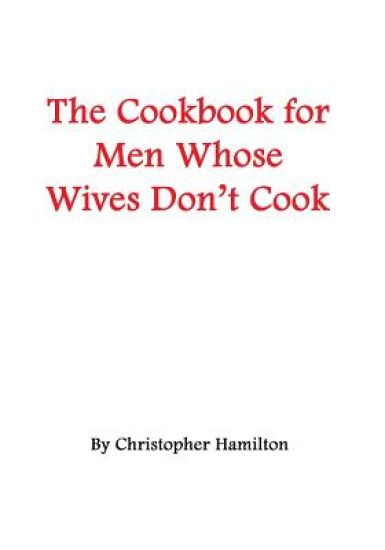
A humorous step by step guide to preparing, cooking, and serving anything from a quick and easy 10 minute meal for one to a lavish feast for many. This book is geared towards the person who has difficulty telling a pot from a pan, yet still wants to eat well. Inside you will find guided recipes for beef, poultry, pork, salads, appetizers, breakfasts, and desserts with options to fit your time, taste, budget, and dietary needs. It's a real-world cookbook for real-world people written by a guy who had to learn to cook as soon as he found out his wife didn't
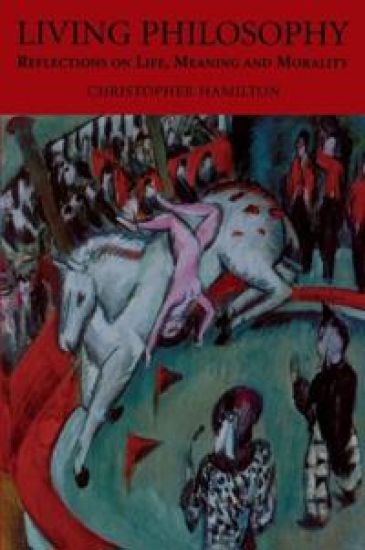
The mystery of birth and death, of fate and destiny, of the nature of wisdom, and of the meaning of life itself have preoccupied philosophers since time immemorial. Some of the perplexities of our moral life form the basis of Christopher Hamilton's book. In a series of original and perceptive philosophical essays - including those on 'Birth and Death', 'Virtue and Human Flourishing', 'The Need to Sleep', 'Sex', 'Truth and Reality', 'Vanity and Destiny' and 'The Fear of Death'- the author reflects on the nature of morality and its relation to experience; on the individual mind and its place in philosophy; and on the strangeness of life itself. Drawing widely on literature and philosophy, and grouping many of its reflections on thoughts found there - from Nietzsche and Schopenhauer, from Shakespeare, Dostoyevsky, George Eliot, Kafka, Jean-Paul Sartre, D H Lawrence and others - Living Philosophy has some affinities with the philosophy practised by such figures as Martha Nussbaum, Stanley Cavell and Peter Winch. Written in a gentle, meditative and exploratory style, the book develops a way of approaching philosophy that opens up room not so much to answer the pressing questions of life as to deepen our sense of what those questions are. Features *Can be used for both introductory and advanced courses on ethics *Engages with contemporary philosophical and cultural issues *Provides numerous literary and philosophical examples *The clear, direct and non-technical style of writing makes the book accessible to those outside academic life who are interested in philosophy and to established philosophers *Constitutes a bold critique of current academic writings in the area