

Kirjailija
Christopher Harris
Kirjat ja teokset yhdessä paikassa: 38 kirjaa, julkaisuja vuosilta 1987–2026, suosituimpiin kuuluu Mexico '68 in Cultural Memory. Vertaile teosten hintoja ja tarkista saatavuus suomalaisista kirjakaupoista.
38 kirjaa
Kirjojen julkaisuvuodet: 1987–2026.
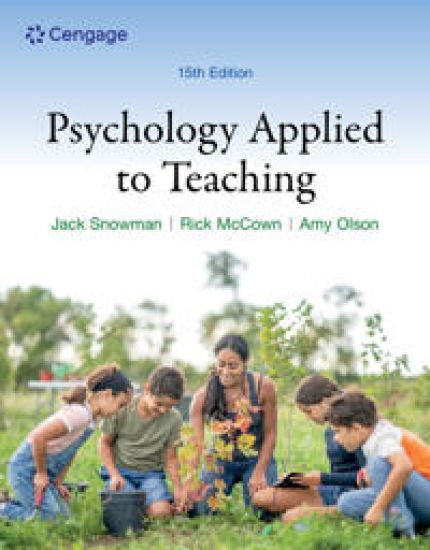
Psychology Applied to Teaching
Jack Snowman; Rick McCown; Amy Olson; Christopher Harris
CENGAGE LEARNING, INC
2026
nidottu
Widely acclaimed for its applied, practical and teacher-centered approach, "Psychology Applied to Teaching," 15th Edition, shows how psychological theories can help teachers better understand students as unique individuals and support them as learners. The text is framed to help aspiring and practicing educators see themselves as scholars of practice -- intentional in their inquiry to improve outcomes for every learner. The text blends fresh concepts and contemporary research with long-standing theory and tools for growth. This edition integrates InTASC standards and aligns with the Core Propositions of the National Board for Professional Teaching Standards, offering a roadmap for professional development. Learning Objectives guide your study and connect Knowing and Doing objectives to critical questions explored in every chapter.

Terrorism and Counterterrorism in Western Europe
Christopher Harris
Hutson Street Press
2025
pokkari

Terrorism and Counterterrorism in Western Europe
Christopher Harris
Hutson Street Press
2025
sidottu

Do computers think for themselves? Not really, but they can learn through experience and with feedback from people. Machine learning is a branch of artificial intelligence concerned with how computers can gain new abilities and understandings. Presenting computers with large data sets allows them to sift through the information to find patterns and make connections. In this way, computers can identify, describe, and even rate images and works of art, even if they don't know what art is Readers will discover more about machine learning and how it affects our lives. The manageable text helps readers comprehend a potentially difficult concept.

Do computers think for themselves? Not really, but they can learn through experience and with feedback from people. Machine learning is a branch of artificial intelligence concerned with how computers can gain new abilities and understandings. Presenting computers with large data sets allows them to sift through the information to find patterns and make connections. In this way, computers can identify, describe, and even rate images and works of art, even if they don't know what art is Readers will discover more about machine learning and how it affects our lives. The manageable text helps readers comprehend a potentially difficult concept.

Representing and Remembering Tlatelolco
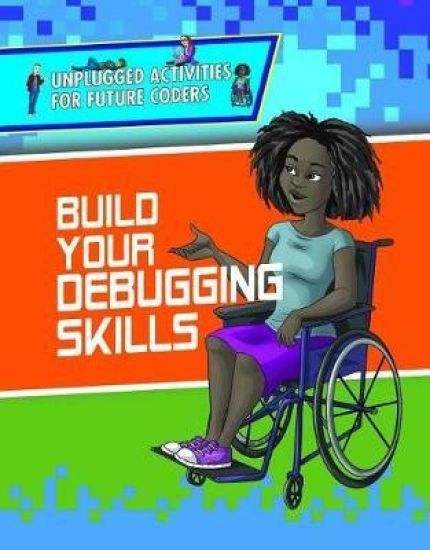
A single error in a line of code can cause a computer program to go haywire or stop working entirely. Luckily coding has a process for dealing with errors: debugging. Debugging consists of finding and fixing errors in code. You don't have to work as a coder to develop your debugging skills, though. The simple activities in this book help readers develop their logic skills and an eagle eye for spotting errors, both of which are indispensible in coding and helpful in many other areas as well.
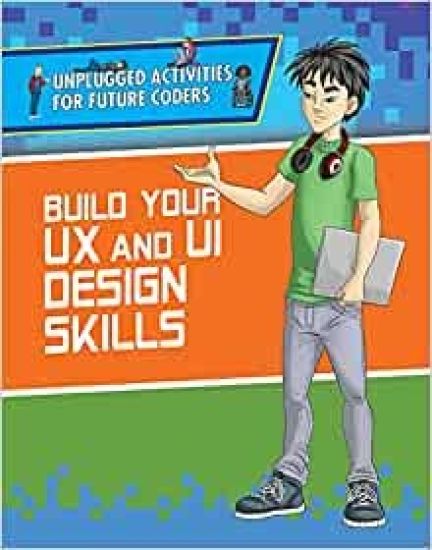
Though code is what makes software run, its user experience (UX) is what makes it a success. Designing a user experience requires a combination of computer science skills and an artistic eye, especially when it comes to the user interface (UI). What users see and interact with will greatly influence their reaction to a piece of software. This book teaches the importance of UX and UI designers and introduces the practices of good software design, all while stimulating readers with unique, engaging activities.
A single error in a line of code can cause a computer program to go haywire or stop working entirely. Luckily coding has a process for dealing with errors: debugging. Debugging consists of finding and fixing errors in code. You don't have to work as a coder to develop your debugging skills, though. The simple activities in this book help readers develop their logic skills and an eagle eye for spotting errors, both of which are indispensible in coding and helpful in many other areas as well.
The dozen activities in this book don't require a computer, but will help readers become masters at computational thinking. This volume stars out with activities highlighting the necessity of giving clear, direct instructions. It continues to include instructions that introduce readers to concept of computer languages, commenting on codes, number systems, and the importance of binary in coding. Fun illustrations and informative sidebars help make the volume engaging, while back matter elements like a glossary and further reading section reinforce what readers have learned and offer ways to learn more about thinking like a coder.
(How) Opera Works, (Hoe) opera werkt
Liesbeth Kruyt; Christopher Harris
Amsterdam University Press
2018
nidottu
‘A profound approach to opera uncovers a gold mine of possibilities; opera is fuelled with the energy of the future. And while the search for gold will always go on, the other ‘mines’ — concealed in the operatic production process — must be tracked down and defused. Risk-taking is integral to the operatic process; without risks, an exciting policy is unthinkable.’ It was with these thrilling and significant metaphors that, in 1988, Pierre Audi laid out his initial plans as artistic director of Dutch National Opera. It is now thirty years later, and the time has come to consider the gold mine that Pierre Audi discovered for us. Hence this publication, which contains the essence of Audi’s ideas concerning music theatre, opera, and art in general. In it we can trace the changes and the development of his artistic vision over the last decades; through it we can see that opera is fuelled with the energy of the future. The book is written in both Dutch and English.
All the electricity has gone out, nobody knows why, and it's five months later. Food is scarce, and gas is scarcer. The world isn't sudden chaos: it's simply quiet and lost. Survival depends on trusting the right people, and staying away from the wrong ones. But how can you tell the difference? Tulsa is a ground's-eye view of the apocalypse: a front-row seat to the slow-motion unraveling of society and the things we believe comprise identity. As the world falls apart, there are people everywhere-trustworthy or treacherous-and somewhere in the countryside, there is a particular farm....
Public Lives, Private Virtues surveys portraits of American Revolutionary heroes in books, magazines, and school texts from 1782 to 1832 and relates these sketches to cultural changes of the period. Faced with rapid and sometimes unsettling change, historians, biographers, and editors of period offered their readers narrative and visual portraits of heroes, hoping to promote classical civic virtues during a time when business-minded Americans increasingly pursued individual gain. The fifty years following the Revolution saw biography shift from historical narration to description of private experience. The most interesting of the biographers, Mason Locke Weems, created an original life of Washington, adapting his style to the needs of book buyers, who were put off by the cost of conventional histories and attracted to the books' entertaining stories. During this period magazine editors in the mid-Atlantic and New England states occasionally wrote sketches of heroes to provide readers examples of virtue, but their major contribution was to publish original graphic portraits. Some magazine illustrators copied portraits by American painters; others fashioned elaborate allegorical pieces. Brief narratives of Revolutionary heroes met the needs of the growing number of New England schoolbook authors especially well. By reading descriptions of the war's heroes and their adventures, authors believed children would learn virtue as well as rhetorical skills. In all their forms during this period, narratives and portraits of Revolutionary heroes extolled classical virtues even though the rise of commerce and Americans' pursuit of individual wealth made these virtues anachronistic.
Kid Centrifuge is a rock band with dreams no bigger than other rock bands: ho-hum, tour and get signed and be famous and change the universe. Alas, unlike their rock-music forebears, our heroes live in a world that has largely moved on to techno, dance and pop. Sure, the music industry is still littered with double-crossers and backbiters, but now they're looking for DJs, and maybe guitar champions need no longer apply. So the Kids tilt against the same old windmills musicians have battled forever, but with a suspicion that the same old animating dream -- all you need is a guitar and a great song and you'll make a million bucks-- is dead. That gives their grass-roots aspirations more than a little desperation, and bad decisions ensue. War On Sound gets inside its four featured musicians -- Amanda, the singer; Sebastian, the guitarist; Kate, the drummer; and Scott, the bass player and angsty piloting force -- the way Don DeLillo did in Great Jones Street and Roddy Doyle did in The Commitments. These talented kids wage war, blinkers in place, faith challenged...they have big success and big failure, and they keep playing. War On Sound is by turns hilarious and profound, and illuminates the contemporary music scene better than any recent novel.
Christopher's: Precious Little Life
Christopher Harris
Createspace Independent Publishing Platform
2015
nidottu
Teaching the Underground Railroad Through Play
Christopher Harris; Patricia Harris Ph. D.; Brian Mayer
Rosen Classroom
2015
nidottu
Slavery is a sensitive topic in American history. This book provides resources and lesson plans for a week-long unit covering slavery, the Underground Railroad, and the abolition movement built around an award-winning board game. In Freedom: The Underground Railroad, students will take on the role of abolitionists helping slaves reach freedom in Canada. Background knowledge, primary source documents, and detailed lesson plans on teaching slavery and using the game provide full support for instruction. Customized Freedom mini-game scenarios designed by Brian Mayer and Christopher Harris. Game: Freedom: The Underground Railroad. Brian Mayer. Academy Games, 2013.
Teaching Programming Concepts Through Play
Christopher Harris; Patricia Harris Ph. D.
Rosen Classroom
2015
nidottu
Understanding how computer programming works is a critical part of digital literacy for students today. Even students who aren't learning how to code can benefit greatly from knowing how programs work. This book uses highly engaging games to immerse students in the world of logical thinking and problem solving. From programming robots to writing stories that work as interactive fiction games, the lessons in this book provide ways to build digital literacy beyond the computer lab. Games: RoboRally. Richard Garfield. Avalon Hill, 2010. Old Town. Stephan Riedel. Clicker Spiele, 2012. Ricochet Robots. Alex Randolph. Z-Man Games, 2013. Parsley Game System. Memento Mori Theatricks.
Teaching Financial Literacy Through Play
Christopher Harris; Patricia Harris Ph. D.
Rosen Classroom
2015
nidottu
It may only be play money, but the games in this book can help students better understand how important financial literacy is in their real lives. Play-based lesson plans in the book cover topics including spending and saving, risk assessment, and return on investment using fast-paced board and card games. A larger capstone game pulls together all of the concepts in a market-driven game that places students in the role of stockholders investing in and managing train companies. Who will use financial savvy to turn the biggest profit? Games: High Society. Reiner Knizia. Gryphon Games, 2008. Can't Stop. Sid Sackson. Gryphon Games, 2011. Panic on Wall Street. Britton Roney. Marabunta, 2011. Chicago Express. Harry Wu. Queen Games, 2007.