
Kirjojen hintavertailu – 12 903 724 kirjaa ja 27 kauppaa

Kirjailija

Christopher Hayden

Kirjat ja teokset yhdessä paikassa: 2 kirjaa, julkaisuja vuosilta 2022–2024, suosituimpiin kuuluu Guildford F ire Station. Vertaile teosten hintoja ja tarkista saatavuus suomalaisista kirjakaupoista.

2 kirjaa

Kirjojen julkaisuvuodet: 2022–2024.

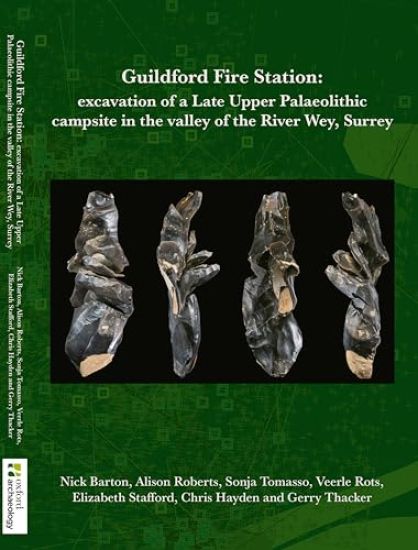
Guildford F ire Station

Guildford F ire Station

Nick Barton; Alison Roberts; Sonja Tomasso; Veerle Rots; Elizabeth Stafford; Christopher Hayden; Gerry Thacker

OXFORD ARCHAEOLOGY
2024
nidottu
Excavations carried out prior to the construction of a new fire station in Guildford, Surrey, revealed a well preserved, in situ Late Upper Palaeolithic flint scatter. The site lay on cold climate fluvial sandy gravels deposited in braided stream systems prior to the onset of the Late Glacial (Windermere) interstadial. Typological analysis of the flint and OSL dates suggest that the scatter itself dates from the first half of the Late Glacial (Windermere) interstadial (c 1415KBP). The lithic assemblage is homogeneous and, apart from initial extraction and nodule testing, all stages of flint manufacture are represented. Two main concentrations of knapping are represented, the main focus of which were the production of blade blanks some of which were removed from the site. Functional analysis of the tools suggests relatively short occupation during which hunting, smallscale craft activities linked with the retooling of hunting weapons and the manufacture of hide items, and limited processing of animal and plant materials took place. The assemblage is comparable to that from Wey Manor Farm, Surrey, 17km further downstream, and raises the question of the relationship between the two sites. Both share technological and typological features in common with the Creswellian, though Wey Manor Farm has a greater diversity in lithic point types. Comparison with Continental assemblages suggests that the Surrey sites share affinities with the Older Azilian or equivalents in northwest France and Germany and implies strong postMagdalenian influences in the Late Upper Palaeolithic of Britain.
London Gateway

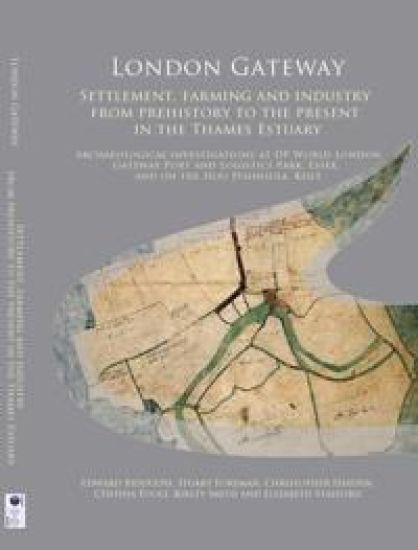
London Gateway

Edward Biddulph; Stuart Foreman; Christopher Hayden; Cynthia Poole; Kirsty Smith

OXFORD ARCHAEOLOGY
2022
sidottu
Archaeological investigations were carried out by Oxford Archaeology between 2008 and 2016 within DP World London Gateway Port and Logistics Park near Stanford-le-Hope in Essex and on the site of a compensatory wildlife habitat on the Hoo Peninsula in Kent. Some 40 sites were the subject of some form of archaeological assessment, and of these, 16 contained significant archaeological remains or were otherwise important to the understanding of the area. The combined evidence paints a picture of life on the edge of the Thames Estuary from early prehistory to the 20th century. The discoveries show how the area has attracted settlers, farmers and traders since prehistory. People came to the marshes in Mesolithic and Neolithic times, perhaps on a seasonal basis, to hunt, and gather plants and seafood. In the late Bronze Age, Iron Age and Roman periods, people trapped seawater to extract salt, a valuable commodity used for food preservation. In the medieval period, the marshland offered unrivalled pasture for the sheep and cattle belonging to upland farms on the gravel terraces. Over time, the marshes were drained to increase the pasture and the value of the farming estates. The creeks that snaked through the marshes were a means of communication and trade. A timber wharf, built in the 16th century, was recorded on the edge of one such creek. In modern times, the sparsely populated area proved an ideal location for the establishment of oil refineries and other industries, positioning London Gateway at the heart of British trade. The area has also inspired artists, writers and filmmakers. This volume joins two others - London Gateway: Maritime Archaeology in the Thames Estuary and London Gateway: Iron Age and Roman Salt Making in the Thames Estuary - that explore the archaeology and heritage of the London Gateway site.