Kirjojen hintavertailu – 12 903 725 kirjaa ja 27 kauppaa

Kirjailija

Christopher Hodges

Kirjat ja teokset yhdessä paikassa: 16 kirjaa, julkaisuja vuosilta 2005–2026, suosituimpiin kuuluu Regulation That Works. Vertaile teosten hintoja ja tarkista saatavuus suomalaisista kirjakaupoista.

16 kirjaa

Kirjojen julkaisuvuodet: 2005–2026.

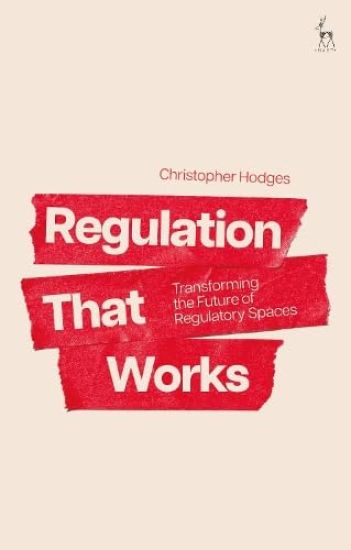
Regulation That Works

Regulation That Works

Christopher Hodges

BLOOMSBURY PUBLISHING PLC
2026
sidottu
This book explains what regulation is – and is not. It clarifies how regulation actually works, and how it can be made better. It also sets out how regulation should be done given fundamental challenges and changes to how we have done it. What is regulation trying to achieve? Is there too much red tape? Does regulation impede growth and innovation? Does regulation provide protection, and stability, and fair behaviours? Is it effective? How do we know if it succeeds? The book illustrates competing regulatory models, and how multiple tools work – but also how things need to work differently in the future. Given the pace of change in new technologies, creating unknown and uncontrollable risks, and the global nature of these technologies, we can only keep ourselves safe if we modernise how we ‘do’ regulation and work in collaborative ecosystems in which everyone works together to identify and control new harms. We should be aiming to achieve multiple outcomes, including protection as well as fair markets, facilitating innovation, and economic growth and social cohesion. The book elucidates how this is all possible – if we organise ourselves and behave in new ways. Examples show sectors where all of this is already being applied – in Australia, Canada, New Zealand, and the UK. This is a revolutionary book, and a must-read for anyone who wants to effect change in their regulatory spaces.
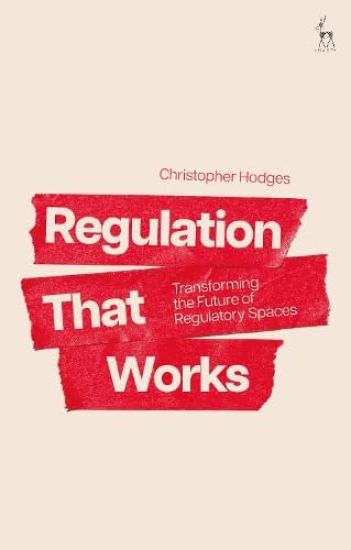
Regulation That Works

Regulation That Works

Christopher Hodges

BLOOMSBURY PUBLISHING PLC
2026
nidottu

Halvin toimitettuna 39,60 €

This book explains what regulation is – and is not. It clarifies how regulation actually works, and how it can be made better. It also sets out how regulation should be done given fundamental challenges and changes to how we have done it. What is regulation trying to achieve? Is there too much red tape? Does regulation impede growth and innovation? Does regulation provide protection, and stability, and fair behaviours? Is it effective? How do we know if it succeeds? The book illustrates competing regulatory models, and how multiple tools work – but also how things need to work differently in the future. Given the pace of change in new technologies, creating unknown and uncontrollable risks, and the global nature of these technologies, we can only keep ourselves safe if we modernise how we ‘do’ regulation and work in collaborative ecosystems in which everyone works together to identify and control new harms. We should be aiming to achieve multiple outcomes, including protection as well as fair markets, facilitating innovation, and economic growth and social cohesion. The book elucidates how this is all possible – if we organise ourselves and behave in new ways. Examples show sectors where all of this is already being applied – in Australia, Canada, New Zealand, and the UK. This is a revolutionary book, and a must-read for anyone who wants to effect change in their regulatory spaces.
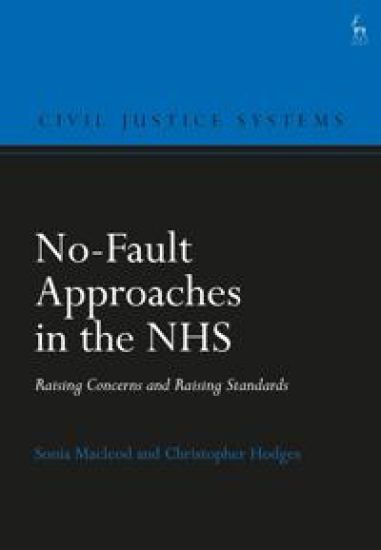
No-Fault Approaches in the NHS

No-Fault Approaches in the NHS

Sonia Macleod; Christopher Hodges

BLOOMSBURY PUBLISHING PLC
2024
nidottu
This book explores how concerns can be raised about the NHS, why raising concerns hasn’t always improved standards, and how a no-fault open culture approach could drive improvements. The book describes a wide range of mechanisms for raising concerns about the NHS, including complaints, the ombudsman, litigation, HSIB, and the major inquiries since 2000, across the various UK jurisdictions. The NHS approach is contextualised within the broader societal developments in dispute resolution, accountability, and regulation. The authors take a holistic view, and outline practical solutions for reforming how the NHS responds to problems. These should improve the situation for those raising concerns and for those working within the NHS, as well as providing cost savings. The no-fault approaches proposed in the book provide long-term sustainable solutions to systemic problems, which are particularly timely given the impact of the COVID-19 pandemic on the NHS. The book will be of interest to academics, researchers, ADR practitioners, practising lawyers, and policy makers.
Outcome-Based Cooperation

Outcome-Based Cooperation

Christopher Hodges

BLOOMSBURY PUBLISHING PLC
2024
nidottu
How do we cooperate – in social, local, business, and state communities? This book proposes an Outcome-Based Cooperative Model, in which all stakeholders work together on the basis of trust and respect to achieve shared aims and outcomes. The Outcome-Based Cooperative Model is built up from an extensive analysis of behavioural and social psychology, genetic anthropology, research into behaviour and culture in societies, organisations, regulation, and enforcement. The starting point is acceptance that humanity is facing ever larger risks, which are now systemic and even existential. To overcome the challenges, humans need to cooperate more, rather than compete, alienate, or draw apart. Answering how we do that requires basing ourselves, our institutions, and systems on relationships that are built on trust. Trust is based on evidence that we can be trusted to behave well (ethically), built up over time. We should aim to agree common goals and outcomes, moderating those that conflict, produce evidence that we can be trusted, and examine our performance in achieving the right outcomes, rather than harmful ones. The implications are that we need to do more in rebasing our relationships in local groupings, business organisations, regulation, and dispute resolution. The book examines recent systems and developments in all these areas, and makes proposals of profound importance for reform. This is a new blueprint for liberty, solidarity, performance, and achievement.
No-Fault Approaches in the NHS

No-Fault Approaches in the NHS

Sonia Macleod; Christopher Hodges

BLOOMSBURY PUBLISHING PLC
2022
sidottu
This book explores how concerns can be raised about the NHS, why raising concerns hasn’t always improved standards, and how a no-fault open culture approach could drive improvements. The book describes a wide range of mechanisms for raising concerns about the NHS, including complaints, the ombudsman, litigation, HSIB, and the major inquiries since 2000, across the various UK jurisdictions. The NHS approach is contextualised within the broader societal developments in dispute resolution, accountability, and regulation. The authors take a holistic view, and outline practical solutions for reforming how the NHS responds to problems. These should improve the situation for those raising concerns and for those working within the NHS, as well as providing cost savings. The no-fault approaches proposed in the book provide long-term sustainable solutions to systemic problems, which are particularly timely given the impact of the COVID-19 pandemic on the NHS. The book will be of interest to academics, researchers, ADR practitioners, practising lawyers, and policy makers.
Outcome-Based Cooperation

Outcome-Based Cooperation

Christopher Hodges

BLOOMSBURY PUBLISHING PLC
2022
sidottu
How do we cooperate – in social, local, business, and state communities? This book proposes an Outcome-Based Cooperative Model, in which all stakeholders work together on the basis of trust and respect to achieve shared aims and outcomes. The Outcome-Based Cooperative Model is built up from an extensive analysis of behavioural and social psychology, genetic anthropology, research into behaviour and culture in societies, organisations, regulation, and enforcement. The starting point is acceptance that humanity is facing ever larger risks, which are now systemic and even existential. To overcome the challenges, humans need to cooperate more, rather than compete, alienate, or draw apart. Answering how we do that requires basing ourselves, our institutions, and systems on relationships that are built on trust. Trust is based on evidence that we can be trusted to behave well (ethically), built up over time. We should aim to agree common goals and outcomes, moderating those that conflict, produce evidence that we can be trusted, and examine our performance in achieving the right outcomes, rather than harmful ones. The implications are that we need to do more in rebasing our relationships in local groupings, business organisations, regulation, and dispute resolution. The book examines recent systems and developments in all these areas, and makes proposals of profound importance for reform. This is a new blueprint for liberty, solidarity, performance, and achievement.
Noble Automation Now!

Noble Automation Now!

Christopher Hodges

Indie Books International
2021
pokkari
This book coins the term Noble Automation as combining Intelligent Automation technology with the inspired and insightful leadership necessary to help humans be heroes. Doing so stimulates a wave of human innovation and taps into the incredible potential of people working toward inspiring goals. Companies profit, and people thrive. The benefits of implementing Noble Automation include freeing people to be more human by removing drudgery, providing insights, and allowing us the time and energy to feel, think, empathize, and connect. It means profitably putting the full value of human ingenuity to work. Noble Automation Now lays out a seven-step roadmap to succeed on your journey to implement Noble Automation in your company.
Regulatory Delivery

Regulatory Delivery

Graham Russell; Christopher Hodges

Hart/Beck
2019
sidottu
This ground-breaking book addresses the challenge of regulatory delivery, defined as the way that regulatory agencies operate in practice to achieve the intended outcomes of regulation. Regulatory reform is moving beyond the design of regulation to address what good regulatory delivery looks like. The challenge in practice is to operate a regulatory regime that is both appropriate and effective. Questions of how regulations are received and applied by those whose behaviour they seek to control, and the way they are enforced, are vital in securing desired regulatory outcomes. This book, written by and for practitioners of regulatory delivery, explains the Regulatory Delivery Model, developed by Graham Russell and his team at the UK Department for Business, Energy and Industrial Strategy. The model sets out a framework to steer improvements to regulatory delivery, comprising three prerequisites for regulatory agencies to be able to operate effectively (Governance Frameworks, Accountability and Culture) and three practices for regulatory agencies to be able to deliver societal outcomes (Outcome Measurement, Risk-based Prioritisation and Intervention Choices). These elements are explored by an international group of experts in regulatory delivery reform, with case studies from around the world. Regulatory Delivery is the first product of members of the International Network for Delivery of Regulation.
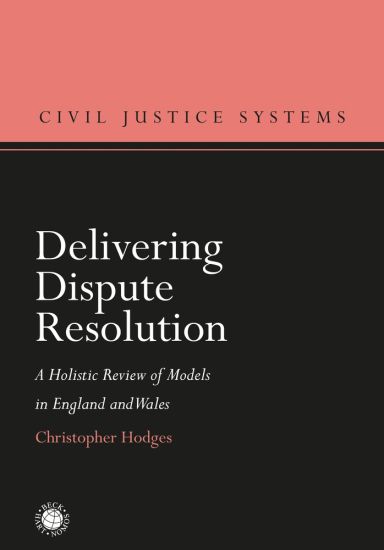
Delivering Dispute Resolution

Delivering Dispute Resolution

Christopher Hodges

Hart/Beck
2019
sidottu
This book reviews the techniques, mechanisms and architectures of the way disputes are processed in England and Wales. Adopting a comparative approach, it evaluates the current state of the main different types of dispute resolution systems, including business, consumer, personal injury, family, property, employment and claims against the state. It provides a holistic overview of the whole system and suggests both systemic and detailed reforms. Examining dispute resolution pathways from users’ perspectives, the book highlights options such as ombudsmen, regulators, tribunals and courts as well as mediation and other ADR and ODR approaches. It maps numerous sectoral developments to see if learning might be spread to other sectors. Several recurrent themes arise, including the diversification in the use of techniques; adoption of digital, online and artificial technology; cost and funding constraints; the emergence of new intermediaries; the need to focus accessibility arrangements for people and businesses that need help with their problems; and identifying effective ways for achieving behavioural change. This timely study analyses the shift from adversarial legalism to softer means of resolving social problems, and points to a major opportunity to devise an imaginative and holistic strategic vision for the jurisdiction. This title is included in Bloomsbury Professional's International Arbitration online service.
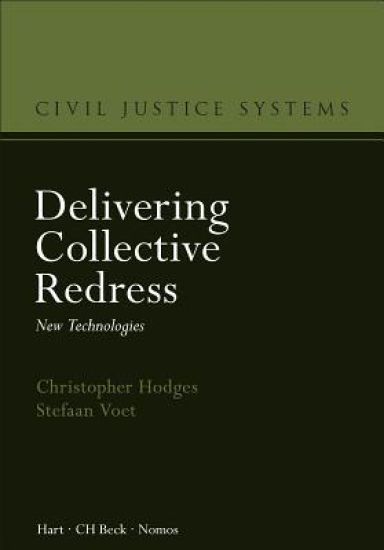
Delivering Collective Redress

Delivering Collective Redress

Christopher Hodges; Stefaan Voet

Hart/Beck
2018
sidottu
This book charts the transformative shifts in techniques that seek to deliver collective redress, especially for mass consumer claims in Europe. It shows how traditional approaches of class litigation (old technology) have been eclipsed by the new technology of regulatory redress techniques and consumer ombudsmen. It describes a series of these techniques, each illustrated by leading examples taken from a 2016 pan-EU research project. It then undertakes a comparative evaluation of each technique against key criteria, such as effective outcomes, speed, and cost. The book reveals major transformations in European legal systems, shows the overriding need to view legal systems from fresh viewpoints, and to devise a new integrated model.
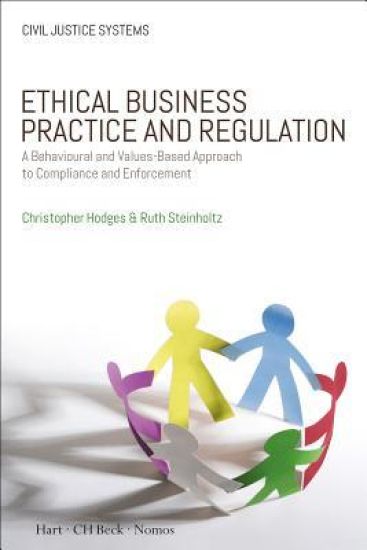
Ethical Business Practice and Regulation

Ethical Business Practice and Regulation

Christopher Hodges; ; Ruth Steinholtz

Hart/Beck
2017
nidottu
This book explains the concepts of Ethical Business Practice (EBP) and Ethical Business Regulation (EBR), a new paradigm in compliance and enforcement based on behavioural science and ethics. EBR provides the basis for an effective relationship between a business and its regulators, resulting in better outcomes for both. EBR is attracting extensive attention from regulators and businesses around the world. The UK Government’s 2017 Regulatory Futures Review draws on EBR as the foundation for its policy of ‘regulatory self-assurance’. EBR draws on findings from behavioural science, responsive regulation, safety and business and integrity management to create a practical and holistic approach. Examples include the open culture that is essential for civil aviation safety, the Primary Authority agreements between regulators and national businesses, and feedback mechanisms provided by market vigilance systems and sectoral consumer ombudsmen. This book provides an essential blueprint for sustainable business and effective future regulation.
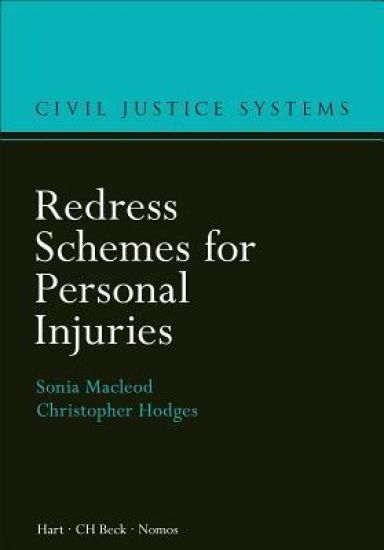
Redress Schemes for Personal Injuries

Redress Schemes for Personal Injuries

Sonia Macleod; Christopher Hodges

Hart/Beck
2017
sidottu
This ground-breaking book takes a fresh look at potential non-litigation solutions to providing personal injury compensation. It is the first systematic comparative study of such a large number – over forty – of personal injury compensation schemes. It covers the drivers for their creation, the frameworks under which they operate, the criteria and thresholds used, the compensation offered, the claims process, statistics on throughput and costs, and analysis of financial costings. It also considers and compares the successes and failings of these schemes. Many different types of redress providers are studied. These include the comprehensive no-blame coverage offered by the New Zealand Accident Compensation Corporation; the widely used Patient, Pharmaceutical, Motor Accident and Workers Compensation Insurance systems of the Nordic states; the far smaller issue-focused schemes like the UK Thalidomide and vCJD Trusts; vaccine damage schemes that exist in many countries; as well as motor vehicle schemes from the USA. Conclusions are drawn about the functions, essential requirements, architecture, scope, operation and performance of personal injury compensation systems. The relationships between such schemes, the courts and regulators are also discussed, and both calls and need for reforms are noted. Noting the wide calls for reform of NHS medical negligence litigation within the UK, and its replacement with a no blame approach, the authors’ findings outline options for future policy in this area. This major contribution builds on general shifts from courts to ADR, and from blame to no blame in regulation, and is a work that has the potential to have a major impact on the field of personal injury redress. With contributions by Raymond Byrne, Claire Bright, Shuna Mason, Magdalena Tulibacka, Matti Urho, Mary Walker and Herbert Woopen.
Law and Corporate Behaviour

Law and Corporate Behaviour

Christopher Hodges

Beck/Hart Publishing
2015
sidottu
This book examines the theories and practice of how to control corporate behaviour through legal techniques. The principal theories examined are deterrence, economic rational acting, responsive regulation, and the findings of behavioural psychology. Leading examples of the various approaches are given in order to illustrate the models: private enforcement of law through litigation in the USA, public enforcement of competition law by the European Commission, and the recent reform of policies on public enforcement of regulatory law in the United Kingdom. Noting that behavioural psychology has as yet had only limited application in legal and regulatory theory, the book then analyses various European regulatory structures where behavioural techniques can be seen or could be applied. Sectors examined include financial services, civil aviation, pharmaceuticals, and workplace health & safety. Key findings are that ‘enforcement’ has to focus on identifying the causes of non-compliance, so as to be able to support improved performance, rather than be based on fear motivating complete compliance. Systems in which reporting is essential for safety only function with a no-blame culture. The book concludes by proposing an holistic model for maximising compliance within large organisations, combining public regulatory and criminal controls with internal corporate systems and external influences by stakeholders, held together by a unified core of ethical principles. Hence, the book proposes a new theory of ethical regulation. This title is included in Bloomsbury Professional's International Arbitration online service.
Consumer ADR in Europe

Consumer ADR in Europe

Christopher Hodges; Iris Benöhr; Naomi Creutzfeldt

Beck/Hart Publishing
2012
sidottu
This is the first systematic comparative study into how consumer ADR systems (usually ombudsmen and médiateurs) work, the differing national architectures within which they operate and how they can be improved. It describes ADR schemes in Belgium, France, Germany, Lithuania, the Netherlands, Poland, Slovenia, Spain, Sweden and the United Kingdom as well as emerging pan-EU dispute resolution schemes. Use of the techniques of mediation, conciliation and adjudication are noted. It also covers EU measures on consumer ADR, and 2011 proposals for legislation on ADR and ODR. Data on volumes, cost and duration of ADR schemes are compared, both between different systems and with courts. The authors' findings underpin EU and national developments, and outline options for future policy. Findings and proposals are included for the functions, scope, performance, essential requirements, architecture and operation of ADR systems. The relationships between ADR, courts and regulators are discussed, and need for reforms are noted. This is a ground-breaking work that will have a major impact on European legal systems. This title is included in Bloomsbury Professional's International Arbitration online service.
The Reform of Class and Representative Actions in European Legal Systems
This book examines the principal trends and policy goals relating to collective redress mechanisms in Europe. It identifies three principal areas in which procedures and debates have emerged: within consumer protection and competition law, and from some national court systems. It identifies differing national models of public and private enforcement in consumer protection law in the Member States, and the search for more efficient and inclusive procedures that would deliver increased access to justice and enhanced compliance with desired standards (arguably through deterrence). A sequence of case studies illustrates the pros and cons of differing models. Lessons are also drawn from the experience of class actions in the USA over the transactional costs of private law mechanisms, and adverse economic consequences. The various policy strands are unravelled and prioritised, and options for the future are recommended. The American 'private enforcement' model is contrasted with the more prevalent European public and mediated enforcement tradition. New developments involving Ombudsmen and oversight of compensation by public enforcement bodies are identified, and underlying theories of restorative justice and responsive regulation discussed. Public, private, formal, informal, ADR and voluntary methodologies are evaluated against criteria, and it is concluded that the optimal options for collective redress in Europe involve a combination of approaches, with priority given to public and voluntary solutions over private court-based mechanisms. "Reform of collective redress is the hottest topic in European civil justice today. Dr. Hodges, one of the world's leading experts in the field, provides a deeply informed evaluation of the current debates. Illustrative case studies drawn from both consumer protection and competition areas enrich and ground his provocative analysis of the complex issues at stake making this a "must-have" book for every practitioner, academic and policy-maker in the field". Professor Jane Stapleton, Australian National University, and University of Texas, Austin.
European Regulation of Consumer Product Safety

European Regulation of Consumer Product Safety

Christopher Hodges

Oxford University Press
2005
sidottu
This book examines the European Community legislation that regulates the safety of consumer products. Hodges surveys the extent to which this legislation aims to and succeeds in achieving safety for a wide range of products. There are different legal requirements for medicines, machines, electronics, toys and so on, which employ different regulatory mechanisms, including pre-marketing assessment, provision of information, control of the manufacturing environment, post-marketing obligations on producers and authorities, and obligations on distributors and users. Hodges compares the various mechanisms relating to medicinal products, products covered by 'New Approach' Directives, cosmetics, biocides, tobacco products, and consumer products covered by the General Product Safety Directive, and asks why particular mechanisms are used, or not used for different products. The book then moves on to consider what is meant by product 'safety', demonstrating the relativity of this concept. Hodges highlights an important problem: that consumers, the media, and experts can all have differing ideas on the level of safety that is relevant and acceptable. Hodges contends that the systems are in need of review, to ensure they work effectively and give value for money. In some cases, there is an need for more or less control. He argues for more systematic collection of safety data, and for consistecy in surveillance and enforcement mechanisms across Europe, pointing towards the need for a European Product Safety Agency.