Kirjojen hintavertailu – 12 903 724 kirjaa ja 27 kauppaa
Kirjailija
Christopher J. Coyne
Kirjat ja teokset yhdessä paikassa: 16 kirjaa, julkaisuja vuosilta 2007–2026, suosituimpiin kuuluu The Political Economy of Terrorism, Counterterrorism, and the War on Terror. Vertaile teosten hintoja ja tarkista saatavuus suomalaisista kirjakaupoista.
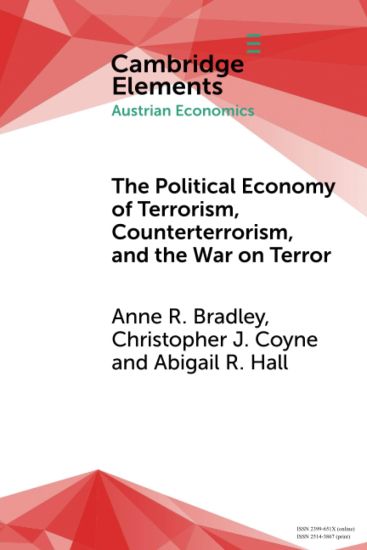
This Element explores the topics of terrorism, counterterrorism, and the US government's war on terror following the September 11, 2001 terror attacks. It draw on insights from Austrian and public choice economics. First, the foundations of the economics of terrorism are discussed emphasizing that the behaviors of terrorists and counter-terrorists are purposeful and goal-oriented. Then, the economics of counterterrorism policies and the importance of institutional change is considered. Next, the three dilemmas facing liberal societies as it relates to counterterrorism efforts is focused on. The Element then provides an assessment of the US government's war on terror. It discusses the origins of the war, discuss whether it can be judged a success or failure, and consider some of the main effects both abroad and within the United States. The final chapter concludes with a discussion of several areas for future research.
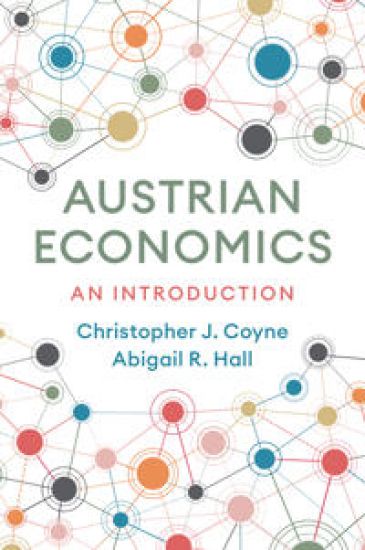
How can people peacefully cooperate with others to improve their lives? This important book answers this question by introducing readers to the Austrian school of economics. Austrian economics is a heterodox tradition with a distinct philosophy of science stressing purposive individual action, subjective value, the unique nature of economic knowledge, and the importance of prices and markets for coordination. Beginning in Austria in the 1870s with the work of Carl Menger, the ideas of those working in this tradition shaped the field of economics as we know it today. Coyne and Hall tell the story of the key thinkers and ideas in the Austrian school. In doing so, they demonstrate the tradition's ongoing relevance to a wide range of contemporary issues, including entrepreneurship, development, government regulation, artificial intelligence, business cycles and recessions, infectious diseases, recovery from natural disasters, and war. Comprehensive and accessibly written, Austrian Economics: An Introduction is an indispensable resource on its topic. Readers will come away with a better understanding of economics and an appreciation of the marvel of human cooperation.
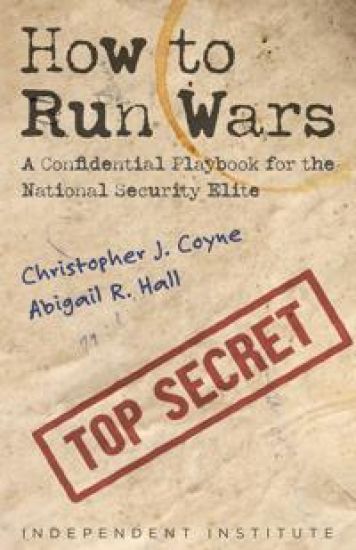
A copy of the top-secret memo below recently came into our hands, and we thought we should bring it to your attention! “Dear National Security Elite: In an ideal world, the public would simply accept whatever their leaders—you, in other words—told them. They would comply with restrictions and mandates, not as a matter of mere obedience, but as a matter of unquestionable patriotic duty. But we don’t live in an ideal world. And with the fate of the world, especially the world’s wars, in the hands of our enlightened, benevolent, and eminentlyresponsible national security elite—in your hands, in other words—we can’t afford to risk opening the conversation to an informed public. And we certainly can’t risk asking for anything so antiquated as “consent,” either. Not when the stakes are this high. You simply must learn: How to control the narrative—every narrative—in your favor; How to completely capture the media and effectively quash dissent; How destroying liberty creates more liberty in the long (long) run; Why top-down economic planning, here and abroad, is your best friend; How to flout international, and of course domestic, law and get away with it; And much, much more… The danger with any book like this is, obviously, that it may fall into the wrong hands. If any member of the general public should happen upon these pages, the consequences would be fatal. After all, people may realize that the national security elite—you, in other words—are not, in fact, all-powerful harbingers of peace… They may realize that you are, literally, a force for good… armed and relentlessly attempting to bend the planet to your noble will. And that realization would be nothing short of disastrous. Don’t let this book fall into the wrong hands!” Merciless in their penetrating analysis, Christopher J. Coyne and Abigail Hall have written the satirical portrait of America’s contemporary military-industrial complex. Drawing inspiration from the 1936 classic How to Run a War, by Bruce W. Knight, this book is a must-read for anyone who would know the truth about America’s endless wars and the people who run them…. The truth might just set us free. It will certainly make you laugh. Then—really angry.
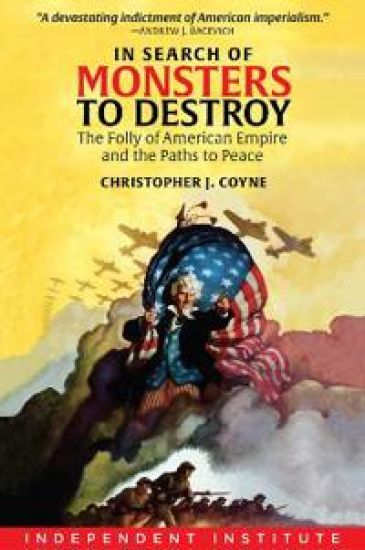
The attempt by the United States since 9/11 to establish liberal political regimes in the Middle East and in the mountains of Afghanistan was doomed to fail-and for one simple reason. Imperialism and militarism build empires, not liberalism. And if we do not absorb this truth, the rest of the twenty-first century will be a repeat of its bloodstained beginning. So says Christopher Coyne, Senior Fellow at the Independent Institute and professor of economics at George Mason University, in this eye-opening, must-read book on America's recent foreign policy failures. Since the 19th century, the US government has used its immense power to promote liberal values and create a global liberal empire to "protect" them.
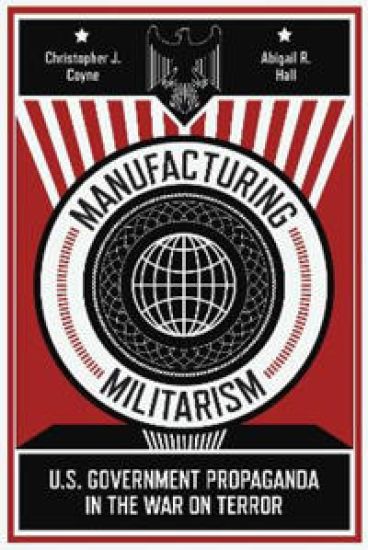
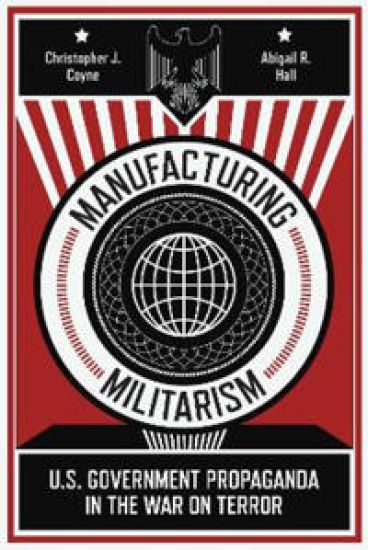
The U. S. government's prime enemy in the War on Terror is not a shadowy mastermind dispatching suicide bombers. It is the informed American citizen. With Manufacturing Militarism, Christopher J. Coyne and Abigail R. Hall detail how military propaganda has targeted Americans since 9/11. From the darkened cinema to the football field to the airport screening line, the U. S. government has purposefully inflated the actual threat of terrorism and the necessity of a proactive military response. This biased, incomplete, and misleading information contributes to a broader culture of fear and militarism that, far from keeping Americans safe, ultimately threatens the foundations of a free society. Applying a political economic approach to the incentives created by a democratic system with a massive national security state, Coyne and Hall delve into case studies from the War on Terror to show how propaganda operates in a democracy. As they vigilantly watch their carry-ons scanned at the airport despite nonexistent threats, or absorb glowing representations of the military from films, Americans are subject to propaganda that, Coyne and Hall argue, erodes government by citizen consent.
Written for an audience of students, general readers, and economists alike, this Element is a primer on the field of the economics of conflict and peace. It offers a reasonably comprehensive, systematic, and detailed overview - even if in broad strokes - of the field's orthodox and heterodox history of thought and current theories and evidence. The authors view this Element as a baseline account on which to build a future, separate and more fully developed, work on the economics of peace, economic growth, and human development. Altogether, the Element contextualizes the field of conflict and peace economics, outlines its history of thought, highlights examples of current theoretical and empirical scholarship in the field, and maps trajectories for further research.
This Element surveys the field of defense, peace, and war economics with particular emphasis on the contributions made by Austrian economists. I first review treatments of defense, peace, and war by the classical economists. I then discuss the rise of a distinct and systematic defense, peace, and war economics field of study starting in the 1960s. Next, I consider the contributions by Austrian economists to the field. This includes the economic analysis of the nature of the war economy, problems with the public good justification for the state-provision of defense, the seen and unseen costs of war, the idea of the liberal peace, and the realities and limitations of foreign intervention. I conclude with a discussion of some open areas for future research.
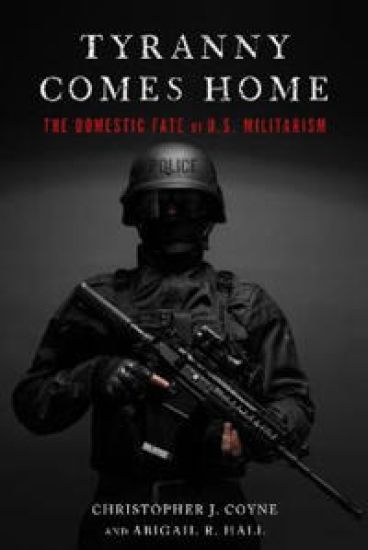
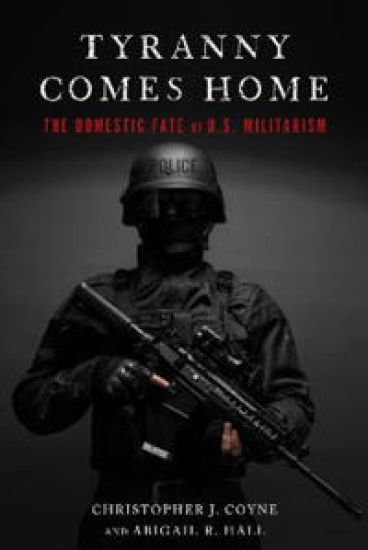
Many Americans believe that foreign military intervention is central to protecting our domestic freedoms. But Christopher J. Coyne and Abigail R. Hall urge engaged citizens to think again. Overseas, our government takes actions in the name of defense that would not be permissible within national borders. Emboldened by the relative weakness of governance abroad, the U. S. government is able to experiment with a broader range of social controls. Under certain conditions, these policies, tactics, and technologies are then re-imported to America, changing the national landscape and increasing the extent to which we live in a police state. Coyne and Hall examine this pattern—which they dub "the boomerang effect"—considering a variety of rich cases that include the rise of state surveillance, the militarization of domestic law enforcement, the expanding use of drones, and torture in U. S. prisons. Synthesizing research and applying an economic lens, they develop a generalizable theory to predict and explain a startling trend. Tyranny Comes Home unveils a new aspect of the symbiotic relationship between foreign interventions and domestic politics. It gives us alarming insight into incidents like the shooting in Ferguson, Missouri and the Snowden case—which tell a common story about contemporary foreign policy and its impact on our civil liberties.
In 2010, Haiti was ravaged by a brutal earthquake that affected the lives of millions. The call to assist those in need was heard around the globe. Yet two years later humanitarian efforts led by governments and NGOs have largely failed. Resources are not reaching the needy due to bureaucratic red tape, and many assets have been squandered. How can efforts intended to help the suffering fail so badly? In this timely and provocative book, Christopher J. Coyne uses the economic way of thinking to explain why this and other humanitarian efforts that intend to do good end up doing nothing or causing harm. In addition to Haiti, Coyne considers a wide range of interventions. He explains why the U. S. government was ineffective following Hurricane Katrina, why the international humanitarian push to remove Muammar Gaddafi in Libya may very well end up causing more problems than prosperity, and why decades of efforts to respond to crises and foster development around the world have resulted in repeated failures. In place of the dominant approach to state-led humanitarian action, this book offers a bold alternative, focused on establishing an environment of economic freedom. If we are willing to experiment with aid—asking questions about how to foster development as a process of societal discovery, or how else we might engage the private sector, for instance—we increase the range of alternatives to help people and empower them to improve their communities. Anyone concerned with and dedicated to alleviating human suffering in the short term or for the long haul, from policymakers and activists to scholars, will find this book to be an insightful and provocative reframing of humanitarian action.
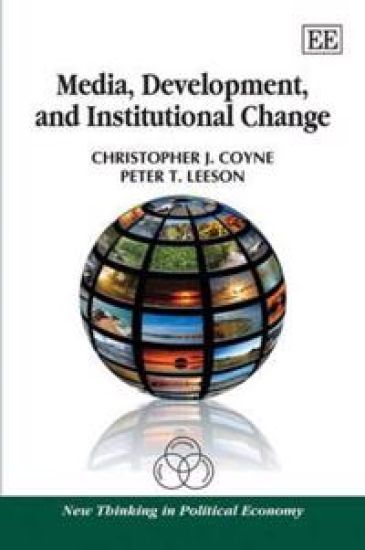
Media, Development, and Institutional Change investigates mass media's profound ability to affect institutional change and economic development. The authors use the tools of economics to illuminate the media's role in enabling and inhibiting political-economic reforms that promote development. The book explores how media can constrain government, how governments manipulate media to entrench their power, and how private and public media ownership affects a country's ability to prosper. The authors identify specific media-related policies governments of underdeveloped countries should adopt if they want to grow. They illustrate why media freedom is a critical ingredient in the recipe of economic development and why even the best-intentioned state involvement in media is more likely to slow prosperity than to enhance it. Scholars and students of economics, political science and sociology; policy-makers, analysts and others in the development community; and academics in media studies will find this book insightful and provocative.
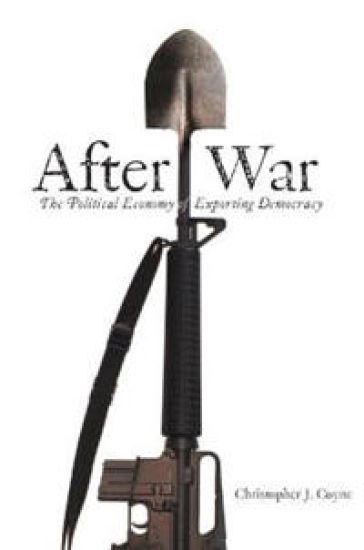
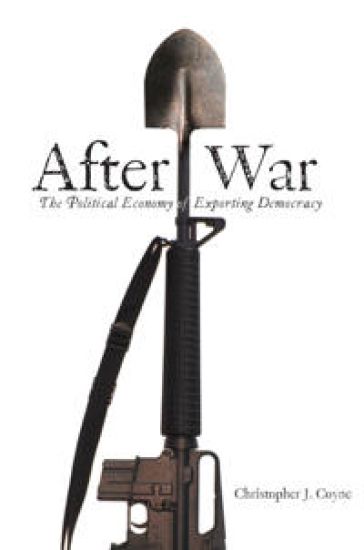
Why does liberal democracy take hold in some countries but not in others? Why do we observe such different outcomes in military interventions, from Germany and Japan to Afghanistan and Iraq? Do efforts to export democracy help as much as they hurt? These are some of the most enduring questions of our time. Historically, the United States has attempted to generate change in foreign countries by exporting liberal democratic institutions through military occupation and reconstruction. Despite these efforts, the record of U. S.-led reconstructions has been mixed, at best. For every West Germany or Japan, there is a Cuba, Haiti, Somalia, or Vietnam. After War seeks to answer these critical foreign policy questions by bringing an economic mindset to a topic that has been traditionally tackled by historians, policymakers, and political scientists. Economics focuses on how incentives influence human action. Therefore, within an economic context, a successful reconstruction entails finding and establishing a set of incentives that makes citizens prefer a liberal democratic order. Coyne examines the mechanisms and institutions that contribute to the success of reconstruction programs by creating incentives for sustained cooperation. Coyne emphasizes that the main threat to Western nations in the post-Cold War period will not come from a superpower, but rather from weak, failed, and conflict-torn states—and rogue groups within them. It is also critical to recognize that the dynamics at work—cultural, historical, and social—in these modern states are fundamentally different from those that the United States faced in the reconstructions of West Germany and Japan. As such, these historical cases of successful reconstruction are poor models for todays challenges. In Coynes view, policymakers and occupiers face an array of internal and external constraints in dealing with rogue states. These constraints are often greatest in the countries most in need of the political, economic, and social change. The irony is that these projects are least likely to succeed precisely where they are most needed. Coyne offers two bold alternatives to reconstruction programs that could serve as catalysts for social change: principled non-intervention and unilateral free trade. Coyne points to major differences in these preferred approaches; whereas reconstruction projects involve a period of coerced military occupation, free trade-led reforms are voluntary. The book goes on to highlight the economic and cultural benefits of free trade. While Coyne contends that a commitment to non-intervention and free trade may not lead to Western-style liberal democracies in conflict-torn countries, such a strategy could lay the groundwork for global peace.