Kirjailija
Christopher Lasch
Kirjat ja teokset yhdessä paikassa: 11 kirjaa, julkaisuja vuosilta 1985–2024, suosituimpiin kuuluu Haven in a Heartless World. Vertaile teosten hintoja ja tarkista saatavuus suomalaisista kirjakaupoista.
11 kirjaa
Kirjojen julkaisuvuodet: 1985–2024.
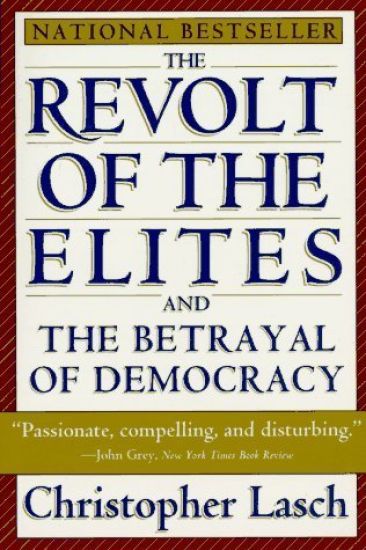
»En gång i tiden var det "massornas uppror" som ansågs hota samhällsordningen och den västerländska kulturens civiliserande traditioner. I vår tid kommer emellertid det främsta hotet från dem som befinner sig högst upp i den sociala hierarkin, inte från massorna.« Så inleds en av essäerna i boken Eliternas uppror och sveket mot demokratin av den amerikanske historikern Christopher Lasch. När den utkom 1995 ansåg många att den moderna västerländska samhällsmodellen hade »segrat« och stod på sin historiska topp. Men Christopher Lasch stämde inte in i denna hyllningskör. Det han istället fäste sin blick på var modellens många sprickor. Han såg en intellektuell klass som avskurit sig själv från verkligheten, en samhällselit som brutit banden med sina lokala och nationella rötter, en medelklass och en arbetarklass som förlorat mycket av sin ekonomiska status. Han såg hur viktiga samhällsinstitutioner som familj, skolor, medier och religiösa samfund hade eroderat, hur levande närsamhällen fått ge vika för anonyma köpcentra, hur den medborgerliga anda som tidigare burit upp sociala gemenskaper hade förtunnats. I sin bok Eliternas uppror frilade Christopher Lasch, på ett närmast profetiskt vis, rötterna till det samhälleliga sönderfall som idag, 30 år senare, är så mycket mer framträdande. Något enkelt recept för att vända utvecklingen presenterade han inte han såg med misstro på både gamla politiska ideologier och nya sociala rörelser. Det han satte sitt hopp till var en förnyelse av den populistiska demokratiska traditionen präglad av självtillit och direktstyre. Christopher Lasch (1932 1994) var en amerikansk historiker vid University of Rochester, New York. De originella analyser och tolkningar av efterkrigstidens samhällsutveckling som han presenterade i flera böcker har fortsatt att väcka intresse efter hans död. Det gäller böcker som Den narcissistiska kulturen (1981), Den belägrade familjen (1983), Det minimala jaget (1985) och, inte minst, den bok som skulle bli författarens sista och kanske mest kända, Eliternas uppror och sveket mot demokratin (1995). Svante Nordin om Eliternas uppror (ur bokens förord):»Eliternas uppror och sveket mot demokratin känns häpnadsväckande, nästan profetiskt aktuell. Boken väckte när den kom ut avsevärd uppmärksamhet och diskussion, detta även i Sverige. Men idag ter den sig ännu mera brännande. Titeln alluderade på den spanske filosofen José Ortega y Gassets klassiska Massornas uppror från 1930. Ortega hade varnat för de faror som de moderna masskulturen kunde föra med sig, för ett de okunnigas och naivas herravälde, om man så vill för en segrande populism. Lasch vänder på problematiken. I sin samtid, såväl i USA som i Europa, ser han i stället ett eliternas uppror. I den era som omedelbart efterträdde det kalla kriget, i en ny globaliserad värld, iakttog Lasch en ny typ av eliter. En gång hade det, menade Lasch, funnits eliter som var förankrade i ett visst land och på en viss plats, som de identifierade sig med, som de kände ansvar för, vars välgång de ville främja. De förknippade ställning och förmögenhet med ansvar, de kände sig delaktiga av ett folk och en kultur. De grundade skolor, universitet, sjukhus, kyrkor och museer. De slog rot. Denna typ av elit var nu på väg att ersättas av en ny.«
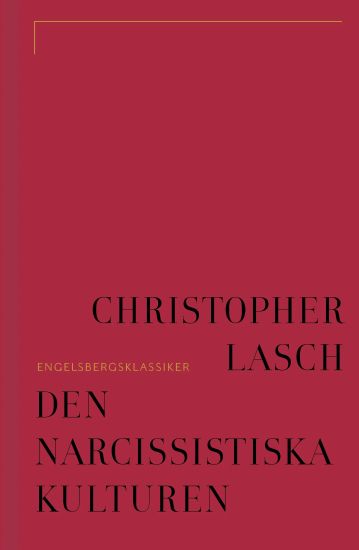
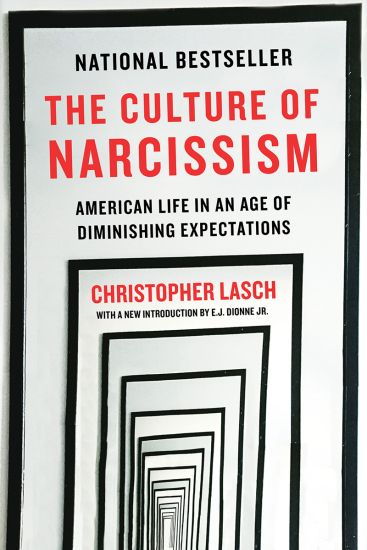
När Den narcissistiska kulturen publicerades första gången 1979, hyllades den amerikanske historieprofessorn Christopher Lasch (1932-1994) som en biblisk profet av Time Magazine. Laschs identifiering av narcissism som inte bara en individuell sjukdom, utan också en växande social epidemi, var banbrytande. Boken beskriver en utveckling av det amerikanska samhället som fortsatt in i vår tid och som gör en läsning än mer relevant idag. Lasch menar att den narcissistiska kulturen kommit att dominera en rad områden i det amerikanska samhället: familjen, politiken, näringslivet, utbildningen och idrotten. Han betraktar en samtid där medborgarna alltmer blickar inåt, och där progressiva krafter snarare arbetar för självförverkligande än för samhällets gemensamma intressen. Kuvade under senkapitalismens konkurrens söker narcissistiska individer frihet genom att kapa alla band till historien, samtiden och framtiden och göra sig oberoende av mellanmänskliga relationer, men finner endast tomhet. Bokförlaget Stolpes nyutgåva av boken ingår i serien Engelsbergsklassiker och har ett nyskrivet förord av Mattias Hessérus." I intellektuellt knivskarpa resonemang skärskådar Lasch den moderna narcissismens inverkan på vår kultur." BTJ.
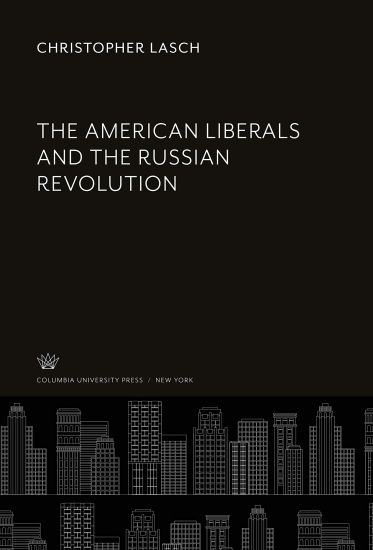
The American Liberals and the Russian Revolution
Christopher Lasch
Columbia University Press
2020
sidottu
When The Culture of Narcissism was first published in 1979, Christopher Lasch was hailed as a “biblical prophet” (Time). Lasch’s identification of narcissism as not only an individual ailment but also a burgeoning social epidemic was ground-breaking. His diagnosis of American culture is even more relevant today, predicting the limitless expansion of the anxious and grasping narcissistic self into every part of American life.
Plain Style is an amusing and instructive guide to written English by the late Christopher Lasch, author of The Culture of Narcissism, The True and Only Heaven, and many other memorable works of American history and social criticism. Written for the benefit of the students at the University of Rochester, where Lasch taught from 1970 until his death in 1994, it quickly established itself in typescript as a local classic-a lively, witty, and historically minded alternative to the famous volume by William Strunk and E. B. White, The Elements of Style. Now available for the first time in published form, Plain Style is fundamentally a clear, readable, practical guide to the timeless principles of effective composition. At the same time, however, in ways that Stewart Weaver explains in his critical introduction, it is a distinctive and revealing addition to the published work of an eminent American thinker. No mere primer, Plain Style is an essay in cultural criticism, a political treatise even, by one for whom directness, clarity, and honesty of expression were essential to the living spirit of democracy. As the teachers and students who have for years benefited from its succinct wisdom will testify, Plain Style is an indispensable guide to writing and, indeed, Christopher Lasch's least-expected but perhaps most serviceable work.
Christopher Lasch has examined the role of women and the family in Western society throughout his career as a writer, thinker, and historian. In Women and the Common Life, Lasch suggests controversial linkages between the history of women and the course of European and American history more generally. He sees fundamental changes in intimacy, domestic ideals, and sexual politics taking place as a result of industrialization and the triumph of the market. Questioning a static image of patriarchy, Women and the Common Life insists on a feminist vision rooted in the best possibilities of a democratic common life. In her introduction to the work, Elisabeth Lasch-Quinn offers an original interpretation of the interconnections between these provocative writings.
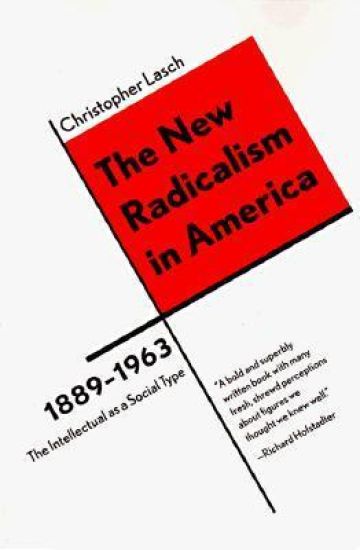
The New Radicalism in America 1889-1963
Christopher Lasch
WW Norton Co
1998
nidottu
Halvin toimitettuna 33,00 €
Around the turn of the century, the American liberal tradition made a major shift away from politics. The new radicals were more interested in the reform of education, culture, and sexual mores. Through vivid biographies, Christopher Lasch chronicles these social reformers from Jane Addams, Mabel Dodge Luhan, and Lincoln Steffens to Norman Mailer and Dwight MacDonald.
In a front-page review in the Washington Post Book World, John Judis wrote: "Political analysts have been poring over exit polls and precinct-level votes to gauge the meaning of last November's election, but they would probably better employ their time reading the late Christopher Lasch's book." And in the National Review, Robert Bork says The Revolt of the Elites "ranges provocatively [and] insightfully." Controversy has raged around Lasch's targeted attack on the elites, their loss of moral values, and their abandonment of the middle class and poor, for he sets up the media and educational institutions as a large source of the problem. In this spirited work, Lasch calls out for a return to community, schools that teach history not self-esteem, and a return to morality and even the teachings of religion. He does this in a nonpartisan manner, looking to the lessons of American history, and castigating those in power for the ever-widening gap between the economic classes, which has created a crisis in American society. The Revolt of the Elites and the Betrayal of Democracy is riveting social commentary.
One of the earliest and sharpest cultural commentators to investigate the twentieth-century American family, Christopher Lasch argues in this book that as social science "experts" intrude more and more into our lives, the family's vital role as the moral and social cornerstone of society disintegrates—and, left unchecked, so does our political and personal freedom. Mr. Lasch combines an analytic overview of the psychological and sociological literature on the American family with his own trenchant analysis of where the problem lies.
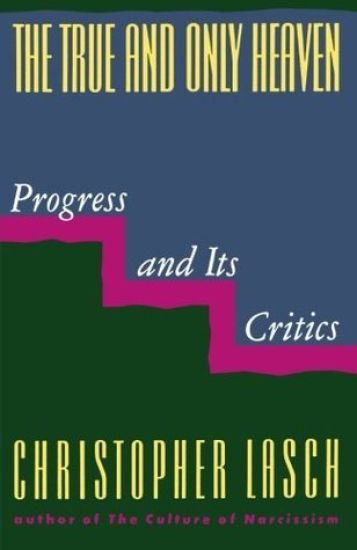
Can we continue to believe in progress? In this sobering analysis of the Western human condition, Christopher Lasch seeks the answer in a history of the struggle between two ideas: one is the idea of progress - an idea driven by the conviction that human desire is insatiable and requires ever larger production forces. Opposing this materialist view is the idea that condemns a boundless appetite for more and better goods and distrusts "improvements" that only feed desire. Tracing the opposition to the idea of progress from Rousseau through Montesquieu to Carlyle, Max Weber and G. D. H. Cole, Lasch finds much that is desirable in a turn toward moral conservatism, toward a lower-middle-class culture that features egalitarianism, workmanship and loyalty, and recognizes the danger of resentment of the material goods of others.
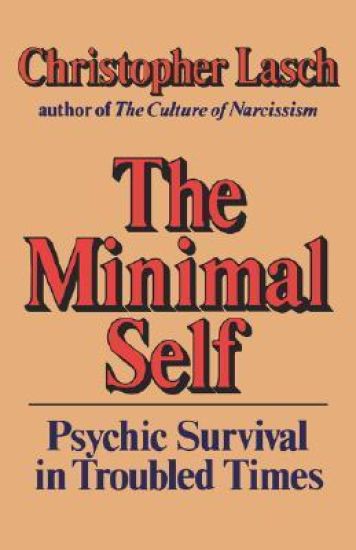
The redefinition of selfhood, through growing from despair in an uncertain world, offers the promise of a new culture based not on the technological conquest of nature but on its loving cultivation