Kirjailija
Christopher Lawrence
Kirjat ja teokset yhdessä paikassa: 15 kirjaa, julkaisuja vuosilta 1994–2025, suosituimpiin kuuluu The Pawpaw pandas. Vertaile teosten hintoja ja tarkista saatavuus suomalaisista kirjakaupoista.
15 kirjaa
Kirjojen julkaisuvuodet: 1994–2025.
Step into the whimsical bamboo world of Ping, Pong, and Pug - three cuddly panda siblings with big personalities and even bigger hearts From bedtime giggles to forest adventures, the Pawpaw Pandas explore friendship, fun, and the joy of doing everything together. A gentle and delightful read for little ones, wrapped in rhyme and warmth.
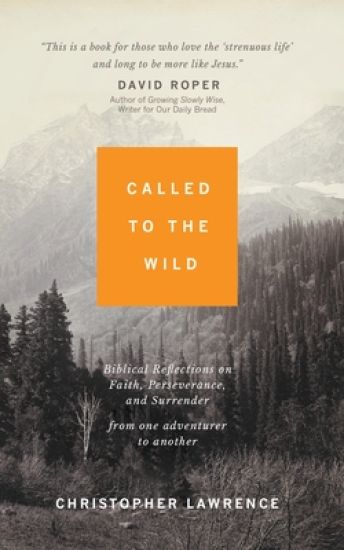
Brave the wild adventure of life with God. Life is full of unknowns. It's natural to want answers, explanations, and clear directions along the way. But for the Christ-follower, this longing for clarity is met with a mysterious invitation: to trust, to surrender, to lay down one's life. After his baptism, Jesus spent 40 days in the wilderness, where he was tempted, where his identity as "God's beloved son" was solidified, and where he drew close to God. The wilderness is not only a place to observe the grandeur of God, it's a place to explore the mysteries of God: His purposes, His plans, and His relentless love. Called to the Wild is a 40-day journey filled with thrilling adventure stories and poignant Biblical meditations, through which outdoor guide and Cru campus minister, Chris Lawrence, helps readers overcome fear and self-doubt by learning to follow Jesus as their trustworthy Guide through life's every adventure. Perfect for those who love the outdoors, this 40-day "expedition" contains daily devotionals inspired by Lawrence's firsthand experiences in the wilderness. Connecting these adventures with Scripture passages and insightful questions, this book will inspire the reader to: Connect with God's word in a fresh wayExplore His specific purposesTrust God in the unknownWalk more intimately with HimEven for the most faithful believer, instability and self-doubt threaten to steal joy, purpose, and passion. Every one of us is called to the wild: to draw near, to walk with, and to trust this Guide who is not tame, but who is always good.
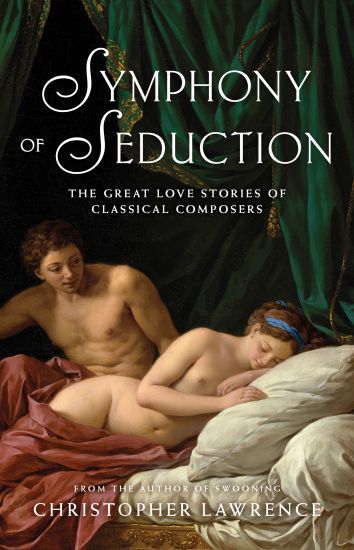
Symphony of Seduction: The Great Love Stories of Classical Composers
Christopher Lawrence
Nero
2018
pokkari
'Love cannot express the idea of music, while music may give an idea of love.' Romantic composer Hector Berlioz Berlioz should know. He didn't just hear the symphony when he fell in love with an Irish actress back in 1827, he wrote it. What was love like for the people who could really feel that song coming on? Symphony of Seduction tells of the romantic misadventures, tragedies and occasional triumphs of some of classical music's great composers, and traces the music that emerged as a result. For the eccentric Erik Satie, love came just once - and even then, not for long. Robert Schumann had to take his future father-in-law to court to win the right to marry. Hector Berlioz planned to murder a two-timing fianc e while dressed in drag, and Richard Wagner turned the temptation of adultery into a stage work that changed the course of music while rupturing his own marriage. Debussy's love triangle, Brahms' love for the wife of his insane mentor - all find expression in works we now consider to be some of the summits of creative achievement. Christopher Lawrence takes what we know about these love-crazed geniuses and adds a garnish of imagined pillow talk to recreate stories that are ultimately stranger than fiction - and come with a great soundtrack.
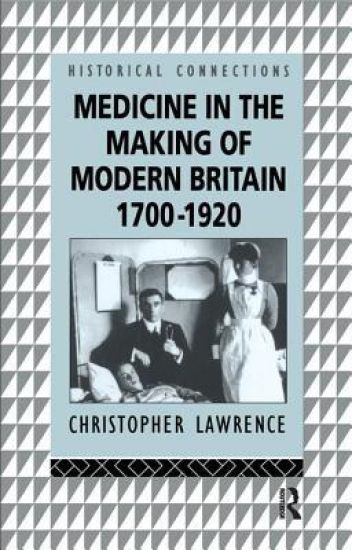
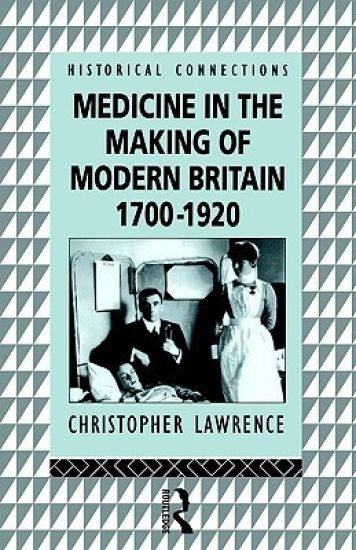
Christopher Lawrence's critical overview of medicine's place in the development of modern Britain examines the significance of the clinical encounter in contemporary society. * first short synoptic study of its kind * breaks new ground by bringing together specialised scholarship into a broad argument * shows how the medical profession created a very specific role for itself * relates medicine to general social policy
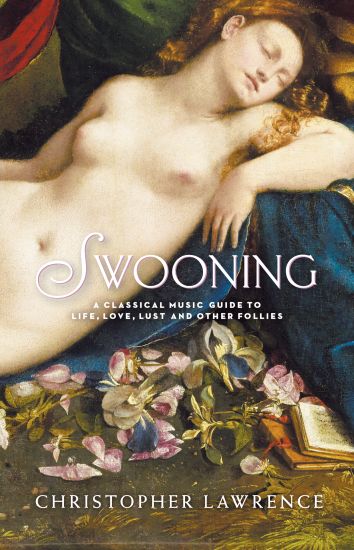
Swooning: A Classical Music Guide to Life, Love, Lust and Other Follies
Christopher Lawrence
Nero
2015
pokkari
The history of classical music is littered with murder, adultery, bigamy, fraud, sado-masochism, riches, poverty, gluttony, nervous breakdowns, bizarre behaviour and terrible, terrible toilet humour (Mozart was the prime exponent of the latter). Classical music - nice? Not at all. It's the most immediate expression of mental and emotional extremes- often deceptive, sometimes dangerous and frequently a discomforting revelation. Swooning documents the all too human flaws in the lives of the great composers by loosely following the sequence of emotions as experienced in a love affair - one that doesn't work out, of course. In this fully revised and updated edition, Christopher Lawrence leads us through the listening experience, from anger and Beethoven to sadness and Tchaikovsky, triumph and Wagner and freedom and Mozart - it's all here in this whimsical guide to the conduct of a romance, with some handy hints on how to make it more, well, harmonious. One of Australia's favourite radio personalities, Christopher Lawrence boasts a career spanning more than 40 years of broadcasting. He is best known for his work with ABC Classic FM, presenting the network's Breakfast and Drive programs between 1994 and 2001. Three of the Swoon CDs that evolved out of his Breakfast program broke sales records in the Australian classical music industry, each achieving Platinum status. As an orchestral and opera recording producer Christopher has been awarded an International Emmy for Performing Arts, three ARIA Awards, a Churchill Fellowship, and the Editors' Choice Award at the Cannes Classical Awards in France. Christopher has written three best-selling books- Swooning; Hymns of the Forefathers, based on his documentary series about the history of hymns seen on ABC TV; and Swing Symphony. He can be heard on ABC Classic FM from 9 a.m. to midday presenting Mornings.

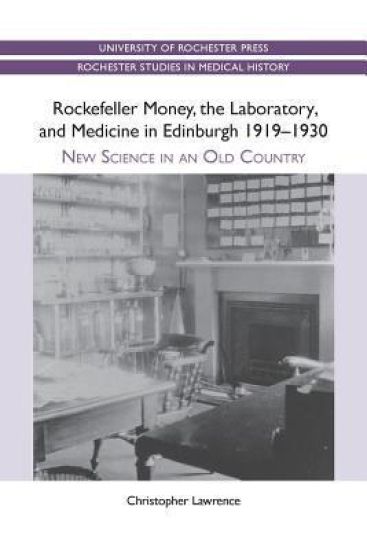
Rockefeller Money, the Laboratory and Medicine in Edinburgh 1919-1930:
Christopher Lawrence
University of Rochester Press
2013
pokkari
This book examines the Rockefeller Foundation's attempts to introduce the laboratory sciences, particularly biochemistry, into the Edinburgh medical world of the 1920s. In the first half of the twentieth century, reformers attempted to use the knowledge and practices of the laboratory sciences to radically transform medicine. Change was to be effected through medicine's major institutions; hospitals were to be turned into businesses and united to university-based medical schools. American ideas and money were major movers of these reforms. The Rockefeller Foundation supported these changes worldwide. reform, however, wasnot always welcomed. In Britain many old hospitals and medical schools stood by their educational and healing traditions. Further, American ideals were often seen as part of a larger transatlantic threat to British ways of life. In Edinburgh, targeted by reformers as an important center for training doctors for the empire, reform was resisted on the grounds that the city had sound methods of education and patient care matured over time. This resistance waspart of an anxiety about a wholesale invasion by American culture that was seen to be destroying Edinburgh's cherished values and traditions. These latter in turn were seen to stem from a distinct Scottish way of life. This bookexamines this culture clash through attempts to introduce the laboratory sciences, particularly biochemistry, into the Edinburgh medical world of the 1920s. Christopher Lawrence is Professor of the History of Medicine at the Wellcome Trust Centre for the History of Medicine, University College London. He is a fellow of the Royal College of Physicians of Edinburgh.
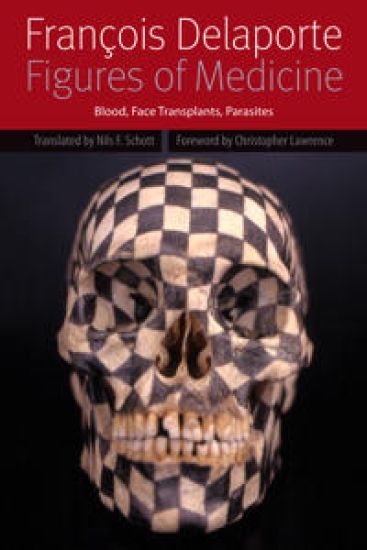
What does the infamous face transplant in France in 2005 share with the examination of "swollen faces" in Latin America in the 1930s? What does blood transfusion in Europe during the 17th century have in common with the discovery of mosquitoes as parasitic vectors in China at the close of the 19th century? And, last, how does the reconstruction of noses using skin flaps in Bologna in the 16th century relate to the opening of a forehead cyst in Guatemala in 1916? The six essays that form Figures of Medicine present a wealth of symmetries. François Delaporte shows that each epistemological concern demands its own mode of engagement; problems reside not only in their objects but also in the historical situations in which they emerge. Focusing on efforts to resolve medical problems that are particular and nonetheless exemplary, Delaporte unpacks these separate cases to show how multiple actors—over long periods of time and across different geographies—must be taken into account to remove epistemological blockages that stand in the way of understanding. A remarkable contribution to the history of science and medicine, this book shows the value of historical epistemology from philosophical, historical, and anthropological perspectives.
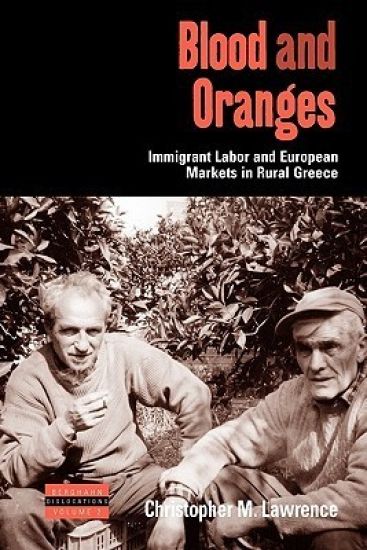
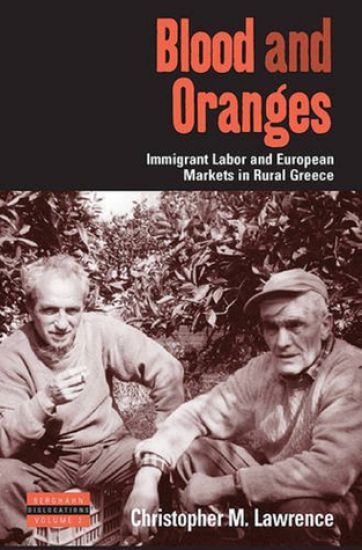
A compelling account of the intersection of globalization and neo-racism in a rural Greek community, this book describes the contradictory political and economic development of the Greek countryside since its incorporation into the European Union, where increased prosperity and social liberalization have been accompanied by the creation of a vulnerable and marginalized class of immigrant laborers. The author analyzes the paradoxical resurgence of ethnic nationalism and neo-racism that has grown in the wake of European unification and addresses key issues of racism, neoliberalism and nationalism in contemporary anthropology.
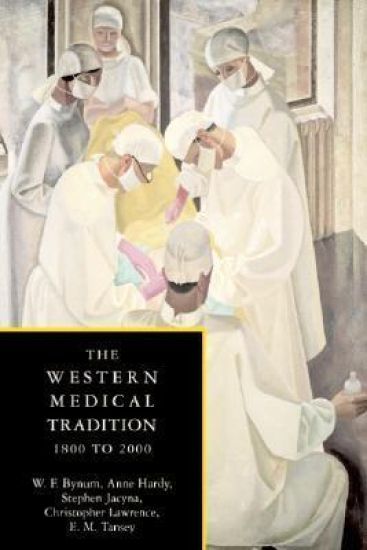
The Western Medical Tradition
W. F. Bynum; Anne Hardy; Stephen Jacyna; Christopher Lawrence; E. M. Tansey
Cambridge University Press
2006
pokkari
This book, first published in 2006, is a detailed and authoritative account of the last two centuries of the development of 'Western' medicine, a tradition now important everywhere in the world. It is written by leading experts who not only describe the most important people, events, and transformations, but give explanations for why medicine developed as it did, becoming as important as it has in the modern world. It contains one of the first historical summaries of the development of medicine after the Second World War. It is an authoritative source of new information as well as a synthesis of the current state of knowledge on this fascinating subject. The Western Medical Tradition, 1800–2000 is a companion volume to The Western Medical Tradition, 800 BC to AD 1800.
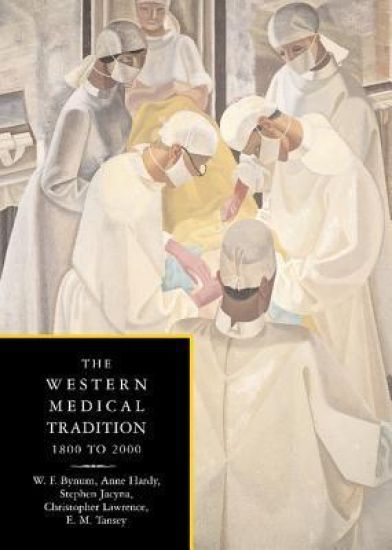
The Western Medical Tradition
W. F. Bynum; Anne Hardy; Stephen Jacyna; Christopher Lawrence; E. M. Tansey
Cambridge University Press
2006
sidottu
This book, first published in 2006, is a detailed and authoritative account of the last two centuries of the development of 'Western' medicine, a tradition now important everywhere in the world. It is written by leading experts who not only describe the most important people, events, and transformations, but give explanations for why medicine developed as it did, becoming as important as it has in the modern world. It contains one of the first historical summaries of the development of medicine after the Second World War. It is an authoritative source of new information as well as a synthesis of the current state of knowledge on this fascinating subject. The Western Medical Tradition, 1800–2000 is a companion volume to The Western Medical Tradition, 800 BC to AD 1800.
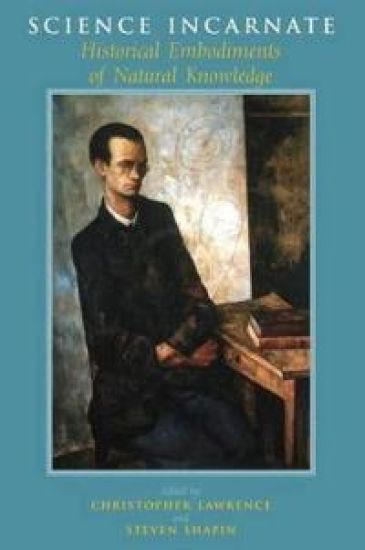
Science Incarnate – Historical Embodiments of Natural Knowledge
Christopher Lawrence; Steven Shapin
University of Chicago Press
1998
nidottu
Since antiquity, "disembodied knowledge" has often been taken as synonomous with "objective truth". Yet we also have very specific mental images of the kinds of bodies that house great minds - the ascetic philosopher versus the hearty surgeon, for example. Does truth have anything to do with the belly? What difference does it make to the persuit of knowledge whether Einstein rode a bicycle, Russell was randy, or Darwin was flatulent? Bringing together body and knowledge, this text offers historical answers to such skeptical questions about the relationships between body, mind and knowledge. Focusing on the 17th century to the present, the book explores how intellectuals sought to establish the value and authority of their ideas through public displays of their private ways of life. Patterns of eating, sleeping, exercising, being ill and having or avoiding sex, as well as the marks of gender and bodily form, were proof of the presence or absence of intellectual virtue, integrity, skill and authority. Intellectuals examined in detail include Rene Descartes, Isaac Newton, Charles Darwin and Ada Lovelace. The book addresses issues central to modern discussions about the nature of knowledge and how it is produced and incorporates history, philosophy, sociology and anthropology.
Christopher Lawrence's critical overview of medicine's place in the development of modern Britain examines the significance of the clinical encounter in contemporary society. * first short synoptic study of its kind * breaks new ground by bringing together specialised scholarship into a broad argument * shows how the medical profession created a very specific role for itself * relates medicine to general social policy