Kirjojen hintavertailu – 12 903 724 kirjaa ja 27 kauppaa
Kirjailija
Christopher Lloyd
Kirjat ja teokset yhdessä paikassa: 89 kirjaa, julkaisuja vuosilta 1968–2026, suosituimpiin kuuluu We are All Animals. Vertaile teosten hintoja ja tarkista saatavuus suomalaisista kirjakaupoista.
With the aim of encouraging a critical rereading of Mirbeau’s most durable works, this study examines his problematic status as a producer of fictions, his use of humour and cruelty, and his treatment of social class and biological diversity, making detailed reference to four books written in the second half of his career: Le Jardin des supplices, Le Journal d’une femme de chambre, Les 21 Jours d’un neurasthénique and La 628-E8
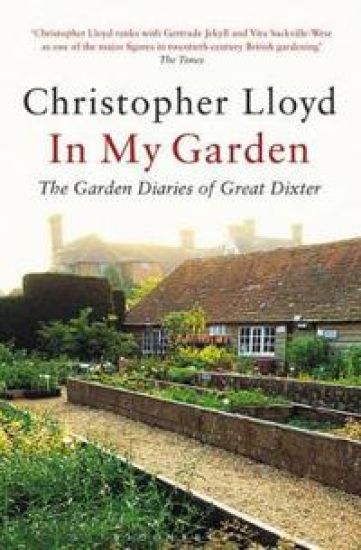
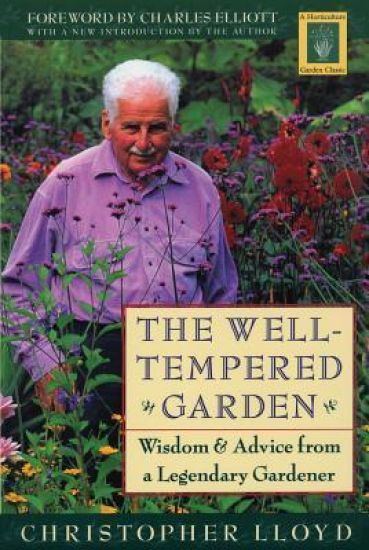
Christopher Lloyd has been writing a weekly column in "Country Life" since 1963 and, until now, this wealth of garden literature has been denied to a wider public. There are many garden writers, but few whose work can be considered to have the status of literature. There is only one who has achieved this at the same time as delivering horticultural information which enlightens even the most erudite of plantsmen, and that is Christopher Lloyd. His prose is exciting; his knowledge is vast; his ideas are provocative, and what is the true test of a writer who has transcended his medium, he makes you laugh out loud. In this selection from the storehouse of Christopher Lloyd's prose it will be apparent to what a high degree he has influenced gardening in our times. The book will capture the essence of Christopher Lloyd and of his garden at Great Dixter.
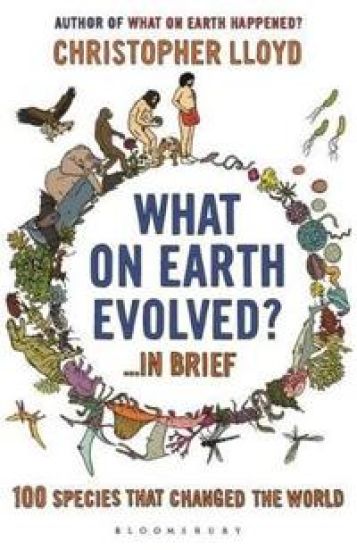
Why have creatures evolved as they are? Which species have been the most successful? How do life forms adapt to a world dominated by nearly seven billion humans? Christopher Lloyd leads us on an exhilarating journey from the birth of life to the present day, as he attempts to answer these fundamental questions. Along the way, he reveals the stories of the 100 most influential species that have ever lived, from slime, dragonflies, and dung beetles to dogs, yeast, and bananas. These 100 species are scored and ranked in order of their impact on the planet, life and people. "What on Earth Evolved ...in Brief?" is a lively and eye-opening insight into mankind's place in nature, and our pivotal relationship with the Earth itself: past, present and future.
What is the shortest route between one point and another in a road network? Where is the incidence of disease the highest? How does rainfall correlate with altitude? How does the concentration of a pollutant vary in space, and where do high concentrations correlate with densely populated areas? Geographical or spatial data play a vital role in many parts of daily life. We are dependent on information about where things are located and about the attributes of those things, either directly, as in the use of a map for navigating around a city, or indirectly, where we use resources like water or gas. Making use of spatial data requires a whole set of approaches to extract information from those data and make them useful. Underpinning these approaches is the analysis of data. Spatial Data Analysis introduces key principles about spatial data and provides guidance on methods for their exploration; it provides a set of key ideas or frameworks that will give the reader knowledge of the kinds of problems that can be tackled using the tools that are widely available for the analysis of spatial data. The approach is gradual and systematic; the initial focus is on themes that follow through the rest of the book. These key ideas are introduced, illustrated, and restated to ensure that readers develop a clear understanding of them. Beyond careful explanations, a clear understanding is fostered still further by numerous worked examples and case studies. In short, the stress is on first principles and reinforcement of key ideas throughout - on education rather than simply training, based on the conviction that users of spatial data analysis tools should know something about how the approaches work rather than simply how to apply them. Online Resource Centre The Online Resource Centre to accompany Spatial Data Analysis features For registered adopters of the book: Figures from the book, available to download. For students: Synthetic data and worked examples to enable readers to experiment with the methods described in the book.
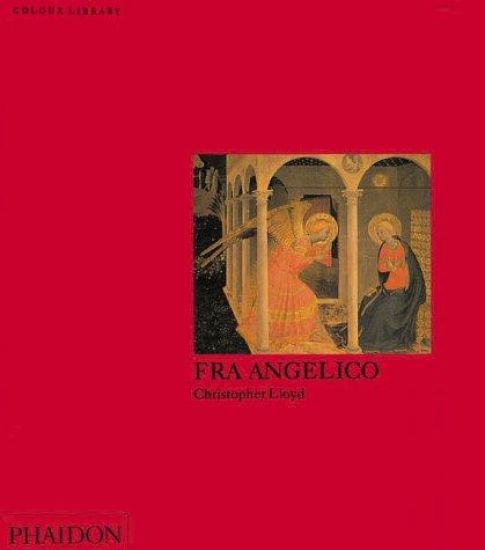
Fra Angelico (c. 1400-55) is one of the most popular artists of the early Italian Renaissance. In his own lifetime churches and cathedrals competed for his work, and the style he evolved has come to be regarded as the natural language of religious painting. For more than a century the popular image of an angel has been that of an angel by Fra Angelico. Perhaps his best known work is the series of fresco decorations in the convent of San Marco in Florence, where Angelico was a friar. These paintings tell the story of the life of Christ as vividly and movingly today as they must have done over five hundred years ago. The powerful simplicity of the forms, the treatment of light and the subtlety of colour testify both to Fra Angelico's personal religious conviction and to his awareness of recent developments in Florentine art. This comprehensive survey of Angelico's work includes many panels from San Marco, and from his other important commission in the Vatican, and a superb selection of altarpieces and panels spanning his whole working life. Christopher Lloyd's authoritative essay on Angelico was first published in 1979, with the forty-eight full page colour plates. For this revised edition, David White has added a full and clear commentary on each picture, and numerous black-and-white illustrations to compare with the paintings.
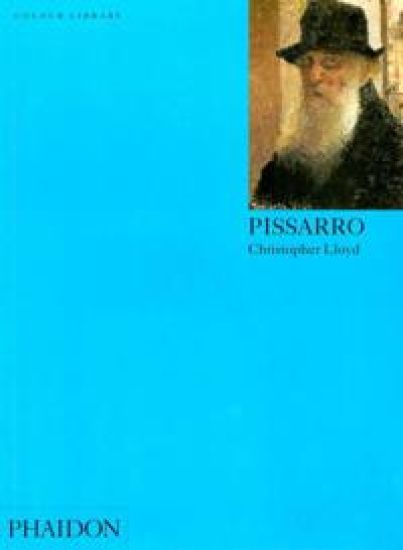
Camille Pissarro (1830-1903) was not only a central figure in the Impressionist movement but a major influence on the development of modern art. He was the only artist to exhibit at all eight of the Impressionist exhibitions between 1874 and 1886, and his letters are a fascinating and invaluable source of information on the theoretical aspects and practical implications of Impressionism. Pissarro’s career touched that of an extraordinary number of his contemporaries, to whom he was often a teacher and always a friend. In his early years he worked with Monet; in the 1870s he painted in close friendship with Cézanne; he was a guide for Gauguin, whom he introduced to the Impressionist group; and in the 1880s he flirted with Neo-Impressionism with Seurat. This book charts the evolution of his painting, and celebrates his compositional brilliance, technical skill and innovatory approach, forty-eight full-page colour plated, combined with Christopher Lloyd’s illuminating text, constitute a superb introduction to the artist. His essay on Pissaro, first published in 1979, has been revised and updated, with the addition of commentaries to each plate written by Amanda Renshaw, and a wide selection of comparative illustrations.
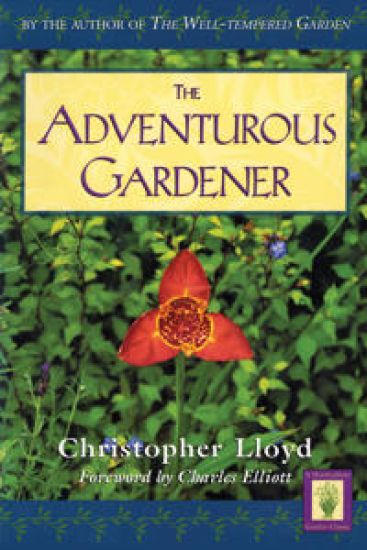
Lloyd inspires gardeners to be adventurous and offers ways to make new and exciting such familiar chores as weeding, taking cuttings, reseeding, and pruning.