Kirjojen hintavertailu – 12 903 742 kirjaa ja 27 kauppaa

Kirjailija

Christopher McCrudden

Kirjat ja teokset yhdessä paikassa: 4 kirjaa, julkaisuja vuosilta 2007–2018, suosituimpiin kuuluu Buying Social Justice. Vertaile teosten hintoja ja tarkista saatavuus suomalaisista kirjakaupoista.

4 kirjaa

Kirjojen julkaisuvuodet: 2007–2018.

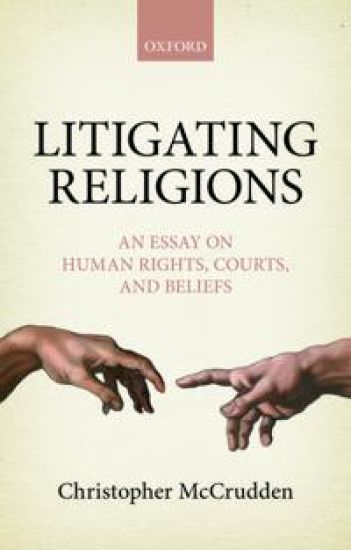
Litigating Religions

Litigating Religions

Christopher McCrudden

Oxford University Press
2018
sidottu
Religions are a problem for human rights, and human rights are a problem for religions. And both are problems for courts. This book presents an interpretation of how religion and human rights interrelate in the legal context, and how this relationship might be reconceived to make this relationship somewhat less fraught. Litigating Religions, an essay adapted by Christopher McCrudden from the Alberico Gentili Lectures given at the University of Macerata, Italy, examines how the resurgent role of religion in public life gives rise to tensions with key aspects of human rights, in particular freedom of religion and anti-discrimination law, and how these tensions cannot be considered as simply transitional. The context for the discussion is the increasingly troubled area of human rights litigation involving religious arguments, such as wearing religious dress at work, conscientious objections by marriage registrars, admission of children to religious schools, prohibitions on same-sex marriage, and access to abortion. Christopher McCrudden argues that, if we wish to establish a better dialogue between the contending views, we must address a set of recurring problems identifiable in such litigation. To address these problems requires changes both in human rights theory and in religious understandings.
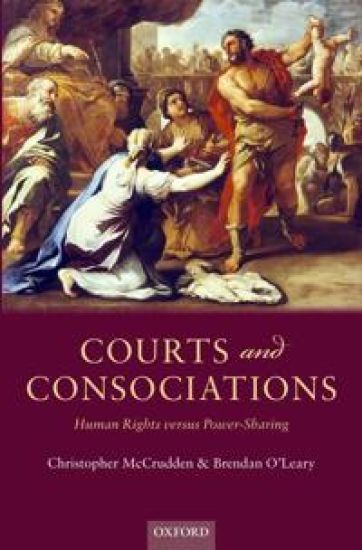
Courts and Consociations

Courts and Consociations

Christopher McCrudden; Brendan O'Leary

Oxford University Press
2013
sidottu
Consociations are power-sharing arrangements, increasingly used to manage ethno-nationalist, ethno-linguistic, and ethno-religious conflicts. Current examples include Belgium, Bosnia, Northern Ireland, Burundi, and Iraq. Despite their growing popularity, they have begun to be challenged before human rights courts as being incompatible with human rights norms, particularly equality and non-discrimination. Courts and Consociations examines the use of power-sharing agreements, their legitimacy, and their compatibility with human rights law. Key questions include to what extent, if any, consociations conflict with the liberal individualist preferences of international human rights institutions, and to what extent consociational power-sharing may be justified to preserve peace and the integrity of political settlements. In three critical cases, the European Court of Human Rights has considered equality challenges to important consociational practices, twice in Belgium and then in Sejdic and Finci v Bosnia regarding the constitution established for Bosnia Herzegovina under the Dayton Agreement. The Court's decision in Sejdic and Finci has significantly altered the approach it previously took to judicial review of consociational arrangements in Belgium. This book accounts for this change and assess its implications. The problematic aspects of the current state of law are demonstrated. Future negotiators in places riven by potential or actual bloody ethnic conflicts may now have less flexibility in reaching a workable settlement, which may unintentionally contribute to sustaining such conflicts and make it more likely that negotiators will consider excluding regional and international courts from reviewing these political settlements. Providing a clear, accessible introduction to both the political use of power-sharing settlements and the human rights law on the issue, this book is an invaluable guide to all academics, students, and professionals engaged with transitional justice, peace agreements, and contemporary human rights law.
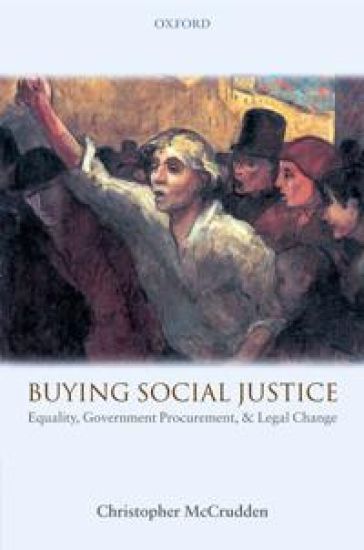
Buying Social Justice

Buying Social Justice

Christopher McCrudden

Oxford University Press
2007
nidottu
Governments spend huge amounts of money buying goods and services from the private sector. How far should their spending power be affected by social policy? Arguments against the practice are often made by economists - on the grounds of inefficiency - and lawyers - on the grounds of free competition and international economic law. Buying Social Justice analyses how governments in developed and developing countries use their contracting power in order to advance social equality and reduce discrimination, and argues that this approach is an entirely legitimate, and efficient means of achieving social justice. The book looks at the different experiences of a range of countries, including the UK, the USA and South Africa. It also examines the impact of international and regional regulation of the international economy, and questions the extent to which the issue of procurement policy should be regulated at the national, European or international levels. The role of EC and WTO law in mediating the tensions between the economic function of procurement and the social uses of procurement is discussed, and the outcomes of controversies concerning the legitimacy of the integration of social values into procurement are analysed. Buying Social Justice argues that European and international legal regulation of procurement has become an important means of accentuating the positive and eliminating the negative in both the social and economic uses of procurement.
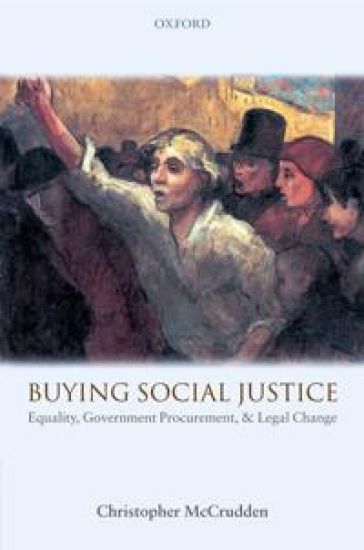
Buying Social Justice

Buying Social Justice

Christopher McCrudden

Oxford University Press
2007
sidottu
Governments spend huge amounts of money buying goods and services from the private sector. How far should their spending power be affected by social policy? Arguments against the practice are often made by economists - on the grounds of inefficiency - and lawyers - on the grounds of free competition and international economic law. Buying Social Justice analyses how governments in developed and developing countries use their contracting power in order to advance social equality and reduce discrimination, and argues that this approach is an entirely legitimate, and efficient means of achieving social justice. The book looks at the different experiences of a range of countries, including the UK, the USA and South Africa. It also examines the impact of international and regional regulation of the international economy, and questions the extent to which the issue of procurement policy should be regulated at the national, European or international levels. The role of EC and WTO law in mediating the tensions between the economic function of procurement and the social uses of procurement is discussed, and the outcomes of controversies concerning the legitimacy of the integration of social values into procurement are analysed. Buying Social Justice argues that European and international legal regulation of procurement has become an important means of accentuating the positive and eliminating the negative in both the social and economic uses of procurement.