Kirjailija
Christopher Rowland
Kirjat ja teokset yhdessä paikassa: 20 kirjaa, julkaisuja vuosilta 1990–2024, suosituimpiin kuuluu Blake and the Bible. Vertaile teosten hintoja ja tarkista saatavuus suomalaisista kirjakaupoista.
20 kirjaa
Kirjojen julkaisuvuodet: 1990–2024.
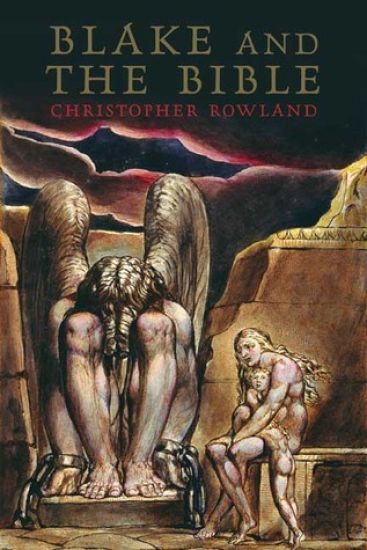
The Bible was crucial for William Blake and for his poetic genius, whether as an object of criticism or as an inspiration. This book—the first substantial study of the topic in sixty years—locates Blake within the broad spectrum of Christian biblical interpretation and explores the ways in which Blake engaged with the Bible. Christopher Rowland argues that Blake's approach to the Bible was broadly consistent, even though he underwent something of a religious change in his later years. The author also shows how Blake saw himself as being in the prophetic tradition and also as somehow continuing the work of John of Patmos, author of the Book of Revelation.
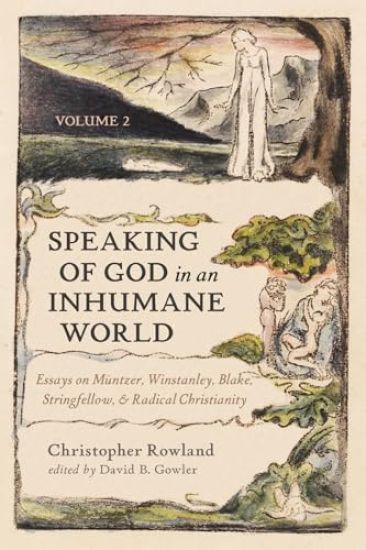
This two-volume collection of essays on the Bible and social justice, liberation theology, and radical Christianity by Christopher Rowland addresses the question raised by Gustavo Gutierrez about how we can speak of God as a loving parent in a world that continues to be so inhumane. These essays by an esteemed New Testament scholar represent intellectual interests of a lifetime as he integrated exegesis of the New Testament texts in their first-century contexts and located their interpretations within the quests for meaning and significance that exist within contemporary society. These essays represent mostly the latter concern--exploring Christian Scripture, which has informed the lives of men and women down the centuries--as they interpret both contexts, and in doing so make a significant contribution to contextual theology that should be heard by the inhabitants of both contexts. The first volume of Speaking of God in an Inhumane World includes essays on liberation theology and radical Christianity; the second volume focuses primarily on radical Christianity and includes reflections on Gerrard Winstanley, William Blake, William Stringfellow, and others.
This volume of essays by Christopher Rowland, written during the last forty years, concerns the nature of apocalypticism and its reception history. His reading of apocalyptic texts is thereby colored not by immersion into the study of "apocalyptic" in biblical scholarship, but by acquaintance with early Jewish mysticism. One of the Oxford English Dictionary's definitions of "mystic" is one which helps to understand not only the mystical but also apocalyptic: a mystic is "one who believes in the possibility of the spiritual apprehension of truths that are inaccessible to the understanding." This definition and the importance of the opening word of Revelation as an apocalypse - in other words, a writing whose form is revelatory -, are explored in these essays. As this understanding of apocalypticism contrasts with the eschatological character predominant in modern biblical scholarship, a theme of this collection therefore is that the eschatological elements in apocalyptic texts are not the determining feature of what constitutes "apocalyptic," which must especially attend to the revelatory form of apocalyptic texts such as Revelation. The pervasiveness of apocalyptic and mystical elements in the New Testament is a consistent thread throughout the volume, which also includes consideration of the apocalyptic and eschatological thought of Joachim of Fiore and his disciples, the early modern appeal to visions and revelation, and culminates in the texts and images of William Blake (1757-1827). The collection's concern with the history of the reception of such ideas contributes to the vindication of Ernst Käsemann's view of apocalyptic being the "mother of Christian theology".
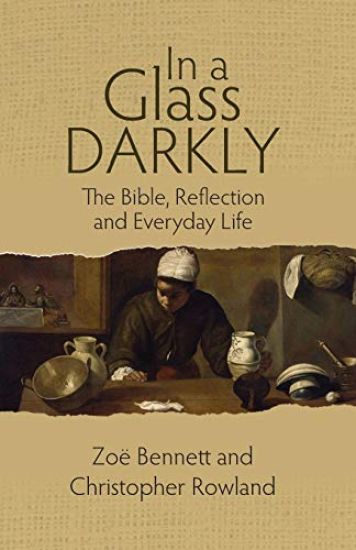
The Bible forms a key part in the development of critical theological thinking and reflection on experience. Equally, to understand how we as individuals read the bible, we need to be critically aware of our own stories and context. Text and life, tradition and experience, are inextricably intertwined. "In a Glass Darkly" offers for the first time a critical dialogue between practical theology and biblical hermeneutics. It considers the role of emotional engagement and critical understanding in biblical interpretation from here and presents being critical as an act which is just as much appreciative as it is suspicious.
From Historical to Critical Post-Colonial Theology
Robert S Heaney; Christopher Rowland
Pickwick Publications
2015
pokkari
Moving ever closer to the sun within...this collection of poetry was written to accompany the path of ^elevation. May light and life fill our world.
Transforming Faith Communities
Michael Ian Bochenski; Christopher Rowland
Wipf Stock Publishers
2013
pokkari
Transforming Faith Communities
Michael I Bochenski; Christopher Rowland
Pickwick Publications
2013
sidottu
Theological Reflection for Human Flourishing
Helen Cameron; John Reader; Victoria Slater; Christopher Rowland
SCM Press
2012
nidottu
This book is aimed at those training for ministry, those in ministry and lay people wishing to reflect upon their work. It seeks to enable those in pastoral ministry to reflect upon their institutional encounters and to enable lay people who work in institutions as professionals or managers to reflect upon their pastoral encounters. By generating shared encounters of theological reflection between these two groups the authors identify points of solidarity and tension between them. The book seeks to address the commonly voiced concern that clergy and laity talk past each other and don't engage on the issues that they find perplexing. Readers of the book will gain an increased confidence in reflecting upon their own practice and engaging with others in theological reflection.
The Mystery of God: Early Jewish Mysticism and the New Testament
Christopher Rowland; C. R. a. Morray-Jones
BRILL
2009
sidottu
This book brings together the perspectives of apocalypticism and early Jewish mysticism to illuminate the New Testament. The first part explores the importance of apocalypticism across the whole of the New Testament, and the second part the relevance of Jewish mystical to the New Testament.
The context and approach of the reader have been underestimated in Biblical Exegesis. The Biblical text is sometimes thought to be above time and space, above mere human contingencies. This has made it monolithic - a stone on which countless individuals have been dashed to pieces. Yet this interpretation has been developed by interpreters who have institutional power, and who have been unaware that they are interpreting in the interests of those who have such power. The book looks at past and present interpretations, as well as how certain subjects have been understood within them, including homosexuality, marriage, divorce and Liberation Theology.
At different times and places, Christian ideas have had a radical, critical role and have served as a basis for programs of social change. This concise and clearly written book documents the history of radical Christianity by discussing some of the most important developments and figures, from the millenarian movements of early Christianity to the liberation theology of today. Christopher Rowland begins by discussing the character and transformation of early Christian ideas and the ongoing patterns of protest against the status quo. Subsequent chapters deal with the legacy of the Apocalypse and with the work of Thomas Muenzer and Gerrard Winstanley. A final chapter on liberation theology examines the role of religion in Latin America today, where basic Christian communities have emerged as power-houses of social and political reform. 'Radical Christianity' is a reading of recovery which shows that social criticism and hope for a better world are integral features of the Christian tradition. The book will be of great interest to students of religion and to anyone concerned with the role of religious ideas in past and present-day societies.
This ground-breaking commentary on The Revelation to John (the Apocalypse) reveals its far-reaching influence on society and culture, and its impact on the church through the ages. Explores the far-reaching influence of the Apocalypse on society and culture. Shows the book's impact on the Christian church through the ages. Looks at interpretations of the Apocalypse by theologians, ranging from Augustine to late twentieth century liberation theologians. Considers the book's effects on writers, artists, musicians, political figures, visionaries, and others, including Dante, Hildegard of Bingen, Milton, Newton, the English Civil war radicals, Turner, Blake, Handel, and Franz Schmidt. Provides access to material not readily available elsewhere. Will appeal to students and scholars across a wide range of disciplines, as well as to general readers. More information about this series is available from the Blackwell Bible Commentaries website at http://www.bbibcomm.net/
This important book provides a sampling of liberation theology's use of biblical texts, relating it to the "standard" methods of interpretation in Europe and America. Divided into four sections, the book sets out contemporary readings of the parable of Jesus influenced by a liberationist perspective; identifies the biblical and theoretical foundations of liberation theology, comparing them with the dominant exegetical paradigm in the first world; explores the way in which liberation exegesis affects reading the canonical accounts of Jesus; and argues that liberation theology cannot be seen solely as a third-world phenomenon.