Kirjojen hintavertailu – 12 859 818 kirjaa ja 27 kauppaa
Kirjailija
Christopher Tolkien
Kirjat ja teokset yhdessä paikassa: 45 kirjaa, julkaisuja vuosilta 1992–2026, suosituimpiin kuuluu The Shaping of Middle-Earth. Vertaile teosten hintoja ja tarkista saatavuus suomalaisista kirjakaupoista.
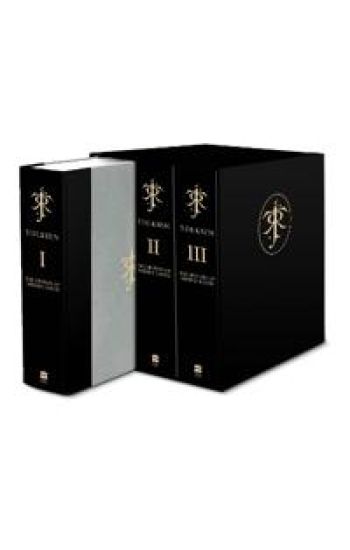
This special collector’s edition features all 12 parts of the series bound in three volumes. Each book includes a silk ribbon marker and is quarter-bound in black, with grey boards stamped in gold foil, and the set is presented in a matching black slipcase. J. R. R. Tolkien is famous the world over for his unique literary creation, exemplified in The Hobbit, The Lord of the Rings and The Silmarillion. What is less well known, however, is that he also produced a vast amount of further material that greatly expands upon the mythology and numerous stories of Middle-earth, and which gives added life to the thousand-year war between the Elves and the evil spirit Morgoth, and his terrifying lieutenant, Sauron. It was to this enormous task of literary construction that his Tolkien’s youngest son and literary heir, Christopher, applied himself to produce the monumental and endlessly fascinating series of twelve books, The History of Middle-earth. This very special collector’s edition brings together all twelve books into three hardback volumes – over 5,000 pages of fascinating Tolkien material – and places them in one matching box.
A beautifully designed hardcover box set containing four classic myths and legends composed or translated by J. R. R. Tolkien -- Sir Gawain and the Green Knight, The Legend of Sigurd and Gudr n, The Fall of Arthur, and Beowulf. The fifth set in a series of affordable hardcover box sets celebrating the literary achievement of Christopher Tolkien, featuring double-sided dust jackets. Set 5 contains Sir Gawain and the Green Knight, The Legend of Sigurd and Gudr n, The Fall of Arthur, and Beowulf: A Translation and Commentary. Sir Gawain and the Green Knight and Pearl are two poems by an unknown author written in about 1400. Sir Gawain is a romance, a fairy-tale for adults, full of life and colour; Pearl is apparently an elegy on the death of a child but, like Gawain, it is also a sophisticated and moving debate on much less tangible matters. Sir Orfeo is a slighter romance, belonging to an earlier and different tradition. It was a special favourite of Tolkien's. The three translations are here uniquely accompanied with the complete text of Tolkien's acclaimed 1953 W. P. Ker Memorial Lecture that he delivered on Sir Gawain. The Legend of Sigurd and Gudr n tells the epic story of the Norse hero, Sigurd, the dragon-slayer, during a time of gods, betrayal and fierce battles; the revenge of his wife, Gudr n; and the Fall of the Nibelungs. Told in verse composed by J. R. R. Tolkien derived from the ancient poetry of the Poetic Edda and the prose V lsunga Saga, this masterful fusion of myth and poetry is accompanied by notes and commentary by Christopher Tolkien. The Fall of Arthur tells the extraordinary story of the final days of England's legendary hero, King Arthur. It is the only venture by J. R. R. Tolkien into the legends of Arthur King of Britain, and may well be regarded as his finest and most skilful achievement in the use of the Old English alliterative metre. The long narrative poem is accompanied by significant if tantalising notes, in which can be discerned clear if mysterious associations of the Arthurian conclusion with The Silmarillion. The translation of Beowulf by J. R. R. Tolkien was completed in 1926: he returned to it later but seems never to have considered its publication. This edition is twofold, for the translation is here paired with an illuminating written commentary on the poem by the translator himself, prepared for a series of lectures given at Oxford in the 1930s. From these lectures there arises a sense of the immediacy and clarity of his vision. It is as if Tolkien entered into the imagined past: standing beside Beowulf and his men shaking out their mail-shirts as they beached their ship on the coast of Denmark, listening to the rising anger of Beowulf at the taunting of Unferth, or looking up in amazement at Grendel's terrible hand set under the roof of Heorot. These are accompanied by Sellic spell, a "marvellous tale" written by Tolkien suggesting what might have been the form and style of an Old English folk-tale of Beowulf, in which there was no association with the "historical legends" of the Northern kingdoms. Published together for the first time, these four books--all edited by the author's son and literary executor--collect a fascinating period of Christopher Tolkien's forty-year career devoted to presenting his father J. R. R. Tolkien's scholarly writings on the myths and legends of northern Europe, a unique accomplishment that celebrates the academic brilliance and storytelling genius of one of the twentieth century's finest literary pioneers.
The translation of Beowulf by J. R. R. Tolkien was an early work, very distinctive in its mode, completed in 1926: he returned to it later to make hasty corrections, but seems never to have considered its publication. This edition is twofold, for there exists an illuminating commentary on the text of the poem by the translator himself, in the written form of a series of lectures given at Oxford in the 1930s; and from these lectures a substantial selection has been made, to form also a commentary on the translation in this book. From his creative attention to detail in these lectures there arises a sense of the immediacy and clarity of his vision. It is as if he entered into the imagined past: standing beside Beowulf and his men shaking out their mail-shirts as they beached their ship on the coast of Denmark, listening to the rising anger of Beowulf at the taunting of Unferth, or looking up in amazement at Grendel's terrible hand set under the roof of Heorot. But the commentary in this book includes also much from those lectures in which, while always anchored in the text, he expressed his wider perceptions. He looks closely at the dragon that would slay Beowulf "snuffling in baffled rage and injured greed when he discovers the theft of the cup"; but he rebuts the notion that this is "a mere treasure story", "just another dragon tale". He turns to the lines that tell of the burying of the golden things long ago, and observes that it is "the feeling for the treasure itself, this sad history" that raises it to another level. "The whole thing is sombre, tragic, sinister, curiously real. The 'treasure' is not just some lucky wealth that will enable the finder to have a good time, or marry the princess. It is laden with history, leading back into the dark heathen ages beyond the memory of song, but not beyond the reach of imagination." Sellic spell, a "marvellous tale", is a story written by Tolkien suggesting what might have been the form and style of an Old English folk-tale of Beowulf, in which there was no association with the "historical legends" of the Northern kingdoms.
Many years ago, J. R. R. Tolkien composed his own version of the great legend of Northern antiquity, recounted here in The Legend of Sigurd and Gudr n. In the Lay of the V lsungs is told the ancestry of the great hero Sigurd, the slayer of F fnir, most celebrated of dragons; of his awakening of the Valkyrie Brynhild, who slept surrounded by a wall of fire, and of their betrothal; and of his coming to the court of the great princes who were named the Niflungs (or Nibelungs), with whom he entered into blood-brotherhood. In scenes of dramatic intensity, of confusion of identity, thwarted passion, jealousy, and bitter strife, the tragedy of Sigurd and Brynhild, of Gunnar the Niflung and Gudr n his sister, mounts to its end in the murder of Sigurd, the suicide of Brynhild, and the despair of Gudr n. The Lay of Gudr n recounts her fate after the death of Sigurd, her marriage against her will to the mighty Atli, ruler of the Huns (the Attila of history), his murder of her brothers, and her hideous revenge.
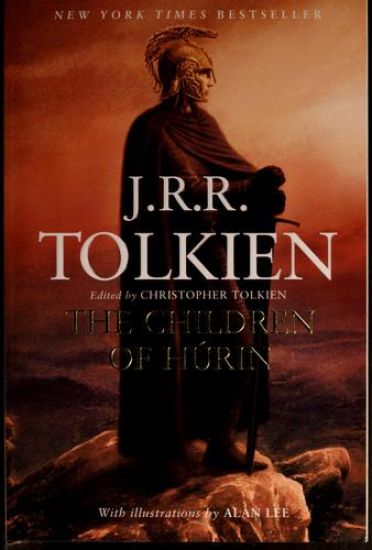
J. R. R. Tolkien's The Children of H rin is one of the three 'Great Tales' of the Elder Days. This paperback edition includes eight color paintings by renowned Tolkien illustrator Alan Lee and a black-and-white map. The Children of H rin is the first complete book by Tolkien since the 1977 publication of The Silmarillion. Six thousand years before the One Ring is destroyed, Middle-earth lies under the shadow of the Dark Lord Morgoth. The greatest warriors among elves and men have perished, and all is in darkness and despair. But a deadly new leader rises, T rin, son of H rin, and with his grim band of outlaws begins to turn the tide in the war for Middle-earth--awaiting the day he confronts his destiny and the deadly curse laid upon him.
One of the three 'Great Tales' of the Elder Days, J. R. R. Tolkien's The Children of H rin takes place in Middle-earth thousands of years before the events of The Hobbit and The Lord of the Rings. The Children of H rin is the first complete book by Tolkien since the 1977 publication of The Silmarillion. Six thousand years before the One Ring is destroyed, Middle-earth lies under the shadow of the Dark Lord Morgoth. The greatest warriors among elves and men have perished, and all is in darkness and despair. But a deadly new leader rises, T rin, son of H rin, and with his grim band of outlaws begins to turn the tide in the war for Middle-earth--awaiting the day he confronts his destiny and the deadly curse laid upon him.
This edition contains the final three volumes of "The History of Middle-Earth", by J. R. R. Tolkien's son and literary heir. The series brings together the vast amount of further material that expands upon the mythology and numerous stories of Middle-Earth,
J. R. R. Tolkien is famous for his literary creation, exemplified in "The Hobbit", "The Lord of the Rings" and "The Silmarillion". He also produced a vast amount of further material that expands upon the mythology and numerous stories of Middle-Earth, and which gives added life to the thousand-year war between the Elves and the evil spirit Morgoth, and his terrifying lieutenant, Sauron. It was to this task of literary construction that Tolkien's youngest son and literary heir, Christopher, applied himself to, producing the series of twelve books, "The History of Middle-Earth". This hardback edition brings together the first five volumes of "The Complete History of Middle-earth": "The Book of Lost Tales Parts 1 and 2", "The Lays of Beleriand", "The Shaping of Middle-Earth" and "The Lost Road". It features dozens of rare maps and illustrations drawn by J. R. R. Tolkien.
This edition contains the first five volumes of "The History of Middle-Earth", by J. R. R. Tolkien's son and literary heir. These volumes give an account of the writing of "The Lord of the Rings", and provide the reader with numerous additional scenes, and rare illustrations.
The complete 12-book History of Middle-earth, printed in three volumes and set in a matching box. J. R. R. Tolkien is famous the world over for his unique literary creation, exemplified in The Hobbit, The Lord of the Rings and The Silmarillion. What is less well known, however, is that he also produced a vast amount of further material that greatly expands upon the mythology and numerous stories of Middle-earth, and which gives added life to the thousand-year war between the Elves and the evil spirit Morgoth, and his terrifying lieutenant, Sauron. It was to this enormous task of literary construction that his Tolkien's youngest son and literary heir, Christopher, applied himself to produce the monumental and endlessly fascinating series of twelve books, The History of Middle-earth. This very special collector's edition brings together all twelve books into three hardback volumes - over 5,000 pages of fascinating Tolkien material - and places them in one matching box.
Every index from each of the 12 volumes of "The History Of Middle-Earth" is published together in this single volume - to create an index charting the writing of Tolkien's masterpieces "The Lord of The Rings" and "The Silmarillion".
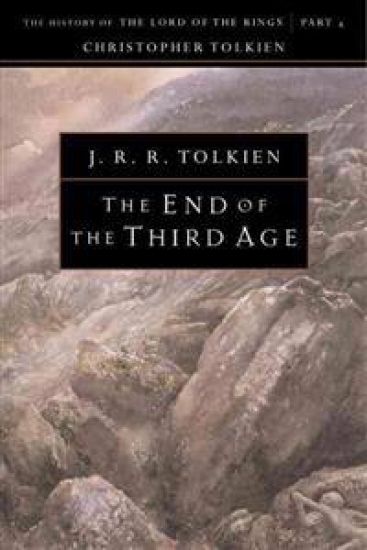
The End of the Third Age is comprised of the first section of the hardcover volume published as Sauron Defeated, the ninth volume of The History of Middle-earth. It completes Christopher Tolkien's account of the creation of The Lord of the Rings begun in the earlier volumes, The Return of the Shadow, The Treason of Isengard, and The War of the Ring. The End of the Third Age begins with Sam's rescue of Frodo from the Tower of Kirith Ungol, and giving a very different account of the Scouring of the Shire, this part ends with versions of the hitherto unpublished Epilogue, in which, years after the departure of Bilbo and Frodo from the Grey Havens, Sam attempts to answer his children's questions. The book is illustrated with changing conceptions of Kirith Ungol and Mount Doom, as well as previously unpublished drawings of Orthanc and Dunharrow.
The popular paperback edition of this fascinating collection of stories, which continue the tales of The Lord of the Rings and The Silmarillion and contains an alternative version of The Children of Hurin.
The concluding volume of The History of Middle-earth series, which examines the Appendices to The Lord of the Rings. The Peoples of Middle-earth traces the evolution of the Appendices to The Lord of The Rings, which provide a comprehensive historical structure of the Second and Third Ages, including Calendars, Hobbit genealogies and the Westron language. The book concludes with two unique abandoned stories: The New Shadow, set in Gondor during the Fourth Age, and the tale of Tal-elmar, in which the coming of the dreaded Numenorean ships is seen through the eyes of men of Middle-earth in the Dark Years. With the publication of this book, the long history of J. R. R. Tolkien’s creation is completed and the enigmatic state of his work can be understood.
The second of two companion volumes which documents the later writing of The Silmarillion, Tolkien’s epic tale of war. In The War of the Jewels Christopher Tolkien takes up his account of the later history of The Silmarillion from the point where it was left in Morgoth’s Ring. The story now returns to Middle-earth, and the ruinous conflict of the High Elves and the Men who were their allies with the power of the Dark Lord. With the publication in this book all of J. R. R. Tolkien’s later narrative writing concerned with the last centuries of the First Age, the long history of The Silmarillion, from its beginning in The Book of Lost Tales, is completed; and the enigmatic state of the work at his death can be understood. This book contains the full text of the Grey Annals, the primary record of The War of the Jewels, and a major story of Middle-earth now published for the first time: the tale of the disaster that overtook the forest people of Brethil when Hurin the Steadfast came among them after his release from long years of captivity in Angband, the fortress of Morgoth.
The second part of The History of The Lord of the Rings, an enthralling account of the writing of the Book of the Century which contains many additional scenes and includes the unpublished Epilogue in its entirety. The Treason of Isengard continues the account of the creation of The Lord of the Rings started in the earlier volume, The Return of the Shadow. It races the great expansion of the tale into new lands and peoples south and east of the Misty Mountains: the emerence of Lothlorien, of Ents, of the Riders of Rohan, and of Saruman the White in the fortress of Isengard. In brief outlines and pencilled drafts dashed down on scraps of paper are seen the first entry of Galadriel, the earliest ideas of the history of Gondor, and the original meeting of Aragorn and Eowyn, its significance destined to be wholly transformed. The book also contains a full account of the original map which was to be the basis of the emerging geography of Middle-earth. This series of fascinating books has now been repackaged to complement the distinctive and classic style of the ‘black cover’ A-format paperbacks of The Hobbit, The Lord of the Rings, The Silmarillion and Unfinished Tales.
The first of two companion volumes which documents the later writing of The Silmarillion, Tolkien’s epic tale of war. After The Lord of the Rings was at last achieved, J R R Tolkien turned his attention once again to ‘the Matter of the Elder Days’. The text of the Annals of Aman, the ‘Blessed Land’ in the far West, is given in full; while in writings hitherto unknown is seen the nature of the problems that Tolkien explored in his later years, as new and radical ideas, portending upheaval in the old narratives, emerged at the heart of the mythology, and as the destinies of Men and Elves, mortals and immortals, became of central significance, together with a vastly enlarged perception of the evil of Melkor, the Shadow upon Arda. The second part of this history of the later Silmarillion is concerned with developments in the legends of Beleriand after the completion of The Lord of the Rings.
The first part of The History of The Lord of the Rings, an enthralling account of the writing of the Book of the Century which contains many additional scenes and includes the unpublished Epilogue in its entirety.
The final part of The History of The Lord of the Rings, an enthralling account of the writing of the Book of the Century which contains many additional scenes and includes the unpublished Epilogue in its entirety. In the first section of Sauron Defeated Christopher Tolkien completes his fascinating study of The Lord of the Rings. Beginning with Sam’s rescue of Frodo from the Tower of Cirith Ungol, and giving a very different account of the Scouring of the Shire, this section ends with versions of the hitherto unpublished Epilogue, in which, years after the departure of Bilbo and Frodo from the Grey Havens, Sam attempts to answer his children’s questions. The second section is an edition of The Notion Club Papers. These mysterious papers, discovered in the early years of the twenty-first century, report the discussions of an Oxford club in the years 1986-7, in which after a number of topics, the centre of interest turns to the legend of Atlantis, the strange communications received by other members of the club from the past, and the violent irruption of the legend into the North-west of Europe. This series of fascinating books has now been repackaged to complement the distinctive and classic style of the ‘black cover’ A-format paperbacks of The Hobbit, The Lord of the Rings, The Silmarillion and Unfinished Tales.
The fifth volume of the History of Middle-earth, containing the early myths and legends which led to the writing of Tolkienâ??s epic tale of war, The Silmarillion.