Kirjojen hintavertailu – 12 859 828 kirjaa ja 27 kauppaa

Kirjailija

Christopher Williams

Kirjat ja teokset yhdessä paikassa: 72 kirjaa, julkaisuja vuosilta 1995–2026, suosituimpiin kuuluu The Boy With No Name. Vertaile teosten hintoja ja tarkista saatavuus suomalaisista kirjakaupoista.

72 kirjaa

Kirjojen julkaisuvuodet: 1995–2026.

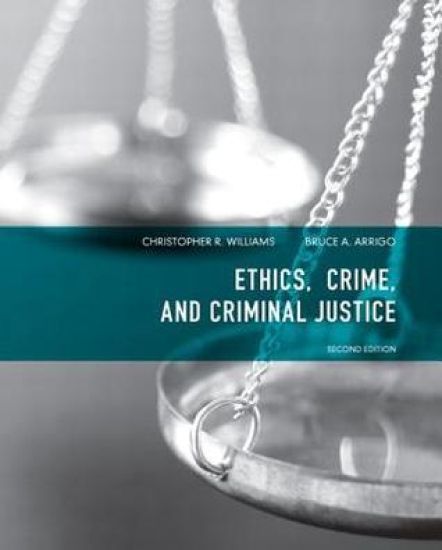
Ethics, Crime, and Criminal Justice

Ethics, Crime, and Criminal Justice

Christopher Williams; Bruce Arrigo

Pearson
2012
nidottu
This comprehensive, provocative text meaningfully examines ethical theories and their application to current issues, controversies, and professional scenarios in law, crime, and justice. It introduces students to the foundations of the study of ethics and morality; examines prominent moral and ethical themes, conflicts, and struggles in criminology and criminal justice; and explores the conceptual and practical value of key ethical concepts, principles, and arguments. This edition is extensively updated and revised for greater clarity, cohesiveness, and accessibility. An all-new chapter demonstrates practical application of normative frameworks to ethical dilemmas, and another largely new chapter introduces game theory, evolutionary psychology, and related concepts. Readers will find expanded discussions of social contract, cognitive neuroscience, Carol Gilligan’s ethic of care, and much more.
Valley of the Ancients: Book Three of the Restoration Series

Valley of the Ancients: Book Three of the Restoration Series

Christopher Williams

Independently Published
2011
nidottu
The sorcerer, Dagan, leads the Guardians to discover more about the ancient Kelcer prophecy. Their goal is to try and unravel some of the contradictions of the prophecy. What they find is completely unexpected. Meanwhile, Flare travels to the Valley of the Ancients. A valley that has been linked to the Dragon Order. He's not sure of what he will find. He's not even sure if the valley even has any ties to the Order. Flare can not possibly know that an agent of the Church is tracking him. The agent has powers that Flare cannot possibly suspect.
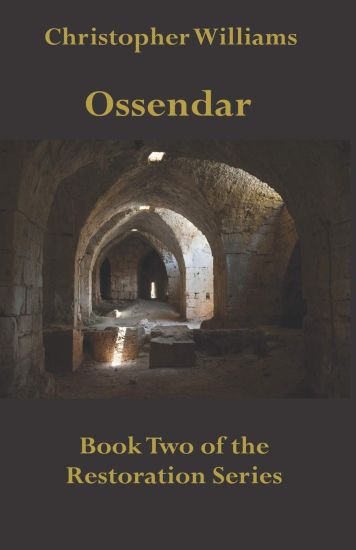
Ossendar: Book Two of the Restoration Series

Ossendar: Book Two of the Restoration Series

Christopher Williams

Independently Published
2010
nidottu
Ossendar picks up right where The Guardians: Book One of the Restoration Series left off. Flare a young half elf returns to Telur a hero and is cheered by the commoners. The nobles are a different story. Flare begins to settle into his new life as a prince of Telur and quickly discovers that life as a simple soldier wasn't so bad. Plots and schemes abound, even in the royal family. Even though the Church of Adel is watching him closely, afraid that Flare will restore the Dragon Order, Flare continues to study magic. When the opportunity to study sorcery presents itself, Flare can't pass it up. Both magical arts are forbidden for warriors to learn and if anyone finds out, then Flare will die slowly and horribly. With armies massing to the south and east, the king charges Flare with a secret and vital mission. He orders Flare to the catacombs under Mount Ogular to retrieve Ossendar, the sword of the last member of the Dragon Order. Flare takes his squad of soldiers and heads south, amazed by his mission. Not only is Ossendar supposed to be a powerful weapon, but it's also one of the identifiers that the Kelcer Prophecy uses to describe the coming destroyer. Kelcer prophesied in explicit terms of the horrors that the restorer of the Dragon Order would do; one of the first signs of the destroyer is that he will wield Ossendar.
Intervention and Support for Parents and Carers of Children and Young People on the Autism Spectrum
The needs of parents and carers of children on the autism spectrum are not met by conventional parenting strategies. This resource for trainers and facilitators offers the best available knowledge and theories to help them develop an understanding of how their child perceives the world and ultimately improve their family life. The manual is divided into ten sessions that introduce a topic related to autism and Asperger Syndrome, for example, 'mindblindness' and the social world, and strategies to manage individual behaviour. During each session parents are introduced to a new topic and are invited to participate in exercises and group discussions that serve to reinforce the key messages discussed earlier. Each session closes with recommended reading and 'homework'. This manual is a valuable resource for professionals working with parents of children and young people with autism and Asperger Syndrome and is an effective complement to How to Live with Autism and Asperger Syndrome: Practical Strategies for Parents and Professionals published by Jessica Kingsley Publishers, which is referenced throughout the resource.
A Cultivated Reason

A Cultivated Reason

Christopher Williams

Pennsylvania State University Press
1999
sidottu
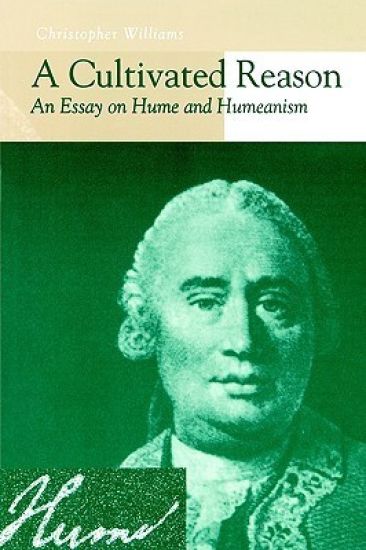
As Plato’s tripartite division of the soul, Descartes’s criterion of clear and distinct ideas, and Kant’s notion of the categorical imperative attest, philosophy has traditionally been wedded to rationalism and its “intellectualist” view of persons. In this book Christopher Williams seeks to wean his fellow philosophers away from an overly rationalistic self-understanding by using resources that are available within the philosophical tradition itself, including some that anticipate strands of Nietzsche’s thought. The book begins by developing Hume’s critique of rationalism, with reference especially to the section of the Treatise that deals with the continuing existence of bodies (an argument that subverts intellectualist criteria by attempting to satisfy them) and to his neglected essay “The Sceptic” where Hume reveals the importance of our embodiment through a comic portrayal of philosophers’ efforts to “correct our sentiments.” Then it moves on to ward off charges of irrationalism by showing that, although our powers of self-correction are more limited than the rationalist thinks they are, a Humean position is able both to sustain a commitment to reflection and to sensitize us to a version of irrationalism, manifest in monotheistic theologies, that is otherwise difficult to detect. The book concludes, more speculatively, with a comparison of persons to artworks in order to show how our aesthetic dimension is the source of some of the normative work previously assigned to rationalist reason. Ranging as it does across subfields from epistemology and history of philosophy to ethics and aesthetics, A Cultivated Reason should appeal to a wide audience of philosophers and to scholars in other fields as well.
A Cultivated Reason

A Cultivated Reason

Christopher Williams

Pennsylvania State University Press
1998
pokkari
As Plato’s tripartite division of the soul, Descartes’s criterion of clear and distinct ideas, and Kant’s notion of the categorical imperative attest, philosophy has traditionally been wedded to rationalism and its “intellectualist” view of persons. In this book Christopher Williams seeks to wean his fellow philosophers away from an overly rationalistic self-understanding by using resources that are available within the philosophical tradition itself, including some that anticipate strands of Nietzsche’s thought. The book begins by developing Hume’s critique of rationalism, with reference especially to the section of the Treatise that deals with the continuing existence of bodies (an argument that subverts intellectualist criteria by attempting to satisfy them) and to his neglected essay “The Sceptic” where Hume reveals the importance of our embodiment through a comic portrayal of philosophers’ efforts to “correct our sentiments.” Then it moves on to ward off charges of irrationalism by showing that, although our powers of self-correction are more limited than the rationalist thinks they are, a Humean position is able both to sustain a commitment to reflection and to sensitize us to a version of irrationalism, manifest in monotheistic theologies, that is otherwise difficult to detect. The book concludes, more speculatively, with a comparison of persons to artworks in order to show how our aesthetic dimension is the source of some of the normative work previously assigned to rationalist reason. Ranging as it does across subfields from epistemology and history of philosophy to ethics and aesthetics, A Cultivated Reason should appeal to a wide audience of philosophers and to scholars in other fields as well.
Invisible Victims

Invisible Victims

Christopher Williams

Jessica Kingsley Publishers
1995
pokkari
`[an] excellent and path-breaking book, which also considers crime prevention measures before giving advise on crime reporting, using the courts, and civil remedies. It contains a great deal of material useful to staff working with people with learning difficulties, plus training material and ideas.'- Labour Campaign for Criminal Justice Newsletter`This is an important and accessible book which is likely to prove useful to a variety of professional audiences. This book is both a handbook for practitioners and a summary of the state of knowledge about the criminal and other kinds of victimization suffered by people with learning difficulties. Alongside the literature review there are extracts from press reports as well as the relevant law, policies and charters, and details of organisations which will provide further information and help. There are also many vivid anecdotal accounts from social workers and from victims themselves, and these bring the research material to life in a remarkable way. This book represents a valiant attempt to combine research dissemination with practical tools for change, and it largely succeeds in its ambitious project…a timely and valuable addition to the literature.'- British Journal of Social Work`Williams ably describes the situation and the wide range of crime, abuse and victimisation which can take place… This publication will be an excellent source book.'- Community Care`Clear advice is offered in relation to crime prevention and how best to make use of press reporting and the courts should a crime occur. This is an excellent reference book. Key points are presented in useful summaries and the addresses of many relevant organisations are provided… This publication should be read by everyone interested in the rights of people with learning disabilities.'- Nursing Times`The book is a valuable contribution to the body of specialist information available about people with learning difficulties.'- Connect Bulletin`Chris' work is the most complete look at the subject today, giving details of research into the current situation and the relevant laws; providing a comprehensive guide as to action in particular situtations and making recommendations for changes in current practice and procedures. This book includes outline training sessions for support staff, advocates and the police.'- Values into Action`The book contains a wealth of detail and information…Clearly and accessibly written…provides excellent resource material for training staff and advocates, and for work with people with learning difficulties themselves.'- Professional Social Work`It is a scholarly work and relies upon extensive consultation and research…There are some salutary lessons and the book is disturbing to read, not only for examples of unacceptable conduct towards people with learning disabilities but also for illustrations of how well-intentioned people may behave in an inappropriate manner…everyone concerned with the welfare of mentally disabled and other vulnerable individuals will have much to learn form this comprehensive study of…the problem.'- Journal of Applied Research in Intellectual Disabilities`I recommend this book as an invaluable reference for more or less anyone in this field, although perhaps one could single out advocates, staff trainers and service managers as those who could least afford to be without a copy. A feature that I found particularly appealing is the way the author takes care to illustrate good practice as well as holding bad practice up for vilification…Buy the book for your library; if you know a judge or magistrate you may consider it a good idea to send a copy on his or her birthday!'- British Journal of Learning DisabilitiesInvisible Victims outlines the range and nature of crimes against people with learning difficulties, and the way the law does - or should - relate to these crimes. It discusses the sources of victimization and deals with prevention specifically from the perspective of learning disabilities, outlining:how to achieve redress for victims through the police and courtsmethods for creating alternative means of redress to these usual channels. The concerns voiced in the book will also have relevance for other minority groups who are `invisible' to current crime research and policy development. Intended as a basis for action, the book contains material and ideas for staff training and offers clear policy proposals. The book will provoke discussion on the subject of crimes against people with learning difficulties among a variety of audiences.

Origins of Form

Origins of Form

Christopher Williams

Architectural Book Publishing Co Inc.,U.S.
1995
nidottu
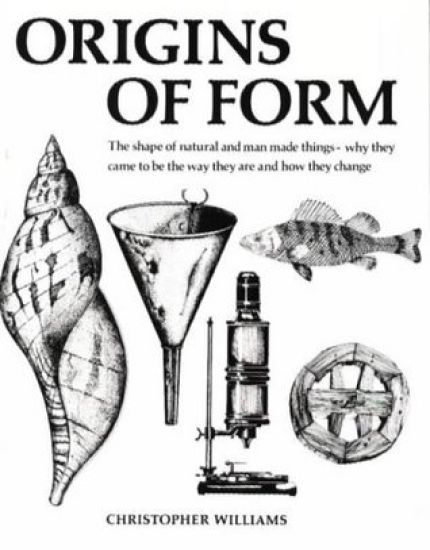
This book is about the shape of things. What limits the height of a tree, why is a large ship or office building more efficient than a small one, what is the similarity between a human rib cage and an aeroplane, or a bison and a cantilevered bridge? How might we plan for things to improve as they are used instead of wearing out? The author has chosen eight criteria that constitute the major influences in three-dimensional form. These criteria comprise the eight chapters of the book; each looks at form from entirely different viewpoints. The products of both nature and man are examined and compared. The facts and information were gathered from many sources and the result is an invaluable work for students, designers, architects, planners, and an informed introduction to a fascinating subject for laymen.