Kirjojen hintavertailu – 12 859 828 kirjaa ja 27 kauppaa
Kirjailija
Chuan Zhang
Kirjat ja teokset yhdessä paikassa: 7 kirjaa, julkaisuja vuosilta 2020–2025, suosituimpiin kuuluu Radio-Frequency Quadrupole Accelerators. Vertaile teosten hintoja ja tarkista saatavuus suomalaisista kirjakaupoista.
This book guides readers into the realm of particle accelerators, which have served as indispensable tools for fundamental research, energy development, medical therapy, industrial applications, national security, etc., since 1924.
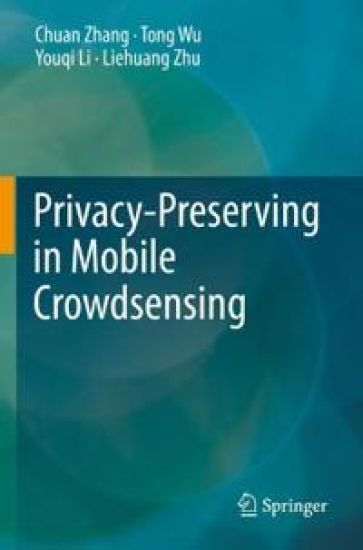
Mobile crowdsensing is a new sensing paradigm that utilizes the intelligence of a crowd of individuals to collect data for mobile purposes by using their portable devices, such as smartphones and wearable devices. Commonly, individuals are incentivized to collect data to fulfill a crowdsensing task released by a data requester. This “sensing as a service” elaborates our knowledge of the physical world by opening up a new door of data collection and analysis. However, with the expansion of mobile crowdsensing, privacy issues urgently need to be solved. In this book, we discuss the research background and current research process of privacy protection in mobile crowdsensing. In the first chapter, the background, system model, and threat model of mobile crowdsensing are introduced. The second chapter discusses the current techniques to protect user privacy in mobile crowdsensing. Chapter three introduces the privacy-preserving content-based task allocation scheme. Chapter fourfurther introduces the privacy-preserving location-based task scheme. Chapter five presents the scheme of privacy-preserving truth discovery with truth transparency. Chapter six proposes the scheme of privacy-preserving truth discovery with truth hiding. Chapter seven summarizes this monograph and proposes future research directions. In summary, this book introduces the following techniques in mobile crowdsensing: 1) describe a randomizable matrix-based task-matching method to protect task privacy and enable secure content-based task allocation; 2) describe a multi-clouds randomizable matrix-based task-matching method to protect location privacy and enable secure arbitrary range queries; and 3) describe privacy-preserving truth discovery methods to support efficient and secure truth discovery. These techniques are vital to the rapid development of privacy-preserving in mobile crowdsensing.
This book guides readers into the realm of particle accelerators, which have served as indispensable tools for fundamental research, energy development, medical therapy, industrial applications, national security, etc., since 1924. Towards a new generation of high power proton and ion accelerators, challenges often come from space charge effects, which are most pronounced in low-velocity beams. This book focuses on Radio-Frequency Quadrupole (RFQ) accelerators, one of the most popular front-end structures for accelerator facilities, and their beam physics. Uncovering the limitations of the classic design methods, novel approaches to achieve efficient RFQ accelerators with high beam quality will be presented. In addition, new ideas for possible future developments, such as how to realize long RFQs with high performance and how RFQs can be applied for much higher beam-velocities to shorten large-scale accelerators, will be introduced. To provide a general overview of the research and development of RFQs accelerating particle species from protons to uranium ions, this book uses over 10 real examples developed or proposed in the twenty-first century for various facilities of different dimensions (from large scale e.g. a collider to small scale e.g. university experimental setups). With its rich content and comprehensive scope, this book is an invaluable reference for researchers and graduate students interested in RFQ accelerators and the intricacies of space charge physics in low-velocity beams.
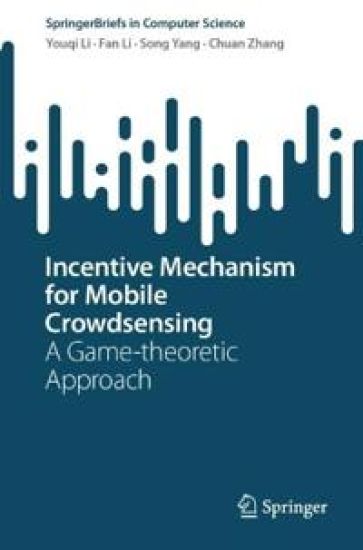
Mobile crowdsensing (MCS) is emerging as a novel sensing paradigm in the Internet of Things (IoTs) due to the proliferation of smart devices (e.g., smartphones, wearable devices) in people’s daily lives. These ubiquitous devices provide an opportunity to harness the wisdom of crowds by recruiting mobile users to collectively perform sensing tasks, which largely collect data about a wide range of human activities and the surrounding environment. However, users suffer from resource consumption such as battery, processing power, and storage, which discourages users’ participation. To ensure the participation rate, it is necessary to employ an incentive mechanism to compensate users’ costs such that users are willing to take part in crowdsensing. This book sheds light on the design of incentive mechanisms for MCS in the context of game theory. Particularly, this book presents several game-theoretic models for MCS in different scenarios. In Chapter 1, the authors present an overview of MCS and state the significance of incentive mechanism for MCS. Then, in Chapter 2, 3, 4, and 5, the authors propose a long-term incentive mechanism, a fair incentive mechanism, a collaborative incentive mechanism, and a coopetition-aware incentive mechanism for MCS, respectively. Finally, Chapter 6 summarizes this book and point out the future directions. This book is of particular interest to the readers and researchers in the field of IoT research, especially in the interdisciplinary field of network economics and IoT.
Mobile crowdsensing is a new sensing paradigm that utilizes the intelligence of a crowd of individuals to collect data for mobile purposes by using their portable devices, such as smartphones and wearable devices. Commonly, individuals are incentivized to collect data to fulfill a crowdsensing task released by a data requester. This “sensing as a service” elaborates our knowledge of the physical world by opening up a new door of data collection and analysis. However, with the expansion of mobile crowdsensing, privacy issues urgently need to be solved. In this book, we discuss the research background and current research process of privacy protection in mobile crowdsensing. In the first chapter, the background, system model, and threat model of mobile crowdsensing are introduced. The second chapter discusses the current techniques to protect user privacy in mobile crowdsensing. Chapter three introduces the privacy-preserving content-based task allocation scheme. Chapter fourfurther introduces the privacy-preserving location-based task scheme. Chapter five presents the scheme of privacy-preserving truth discovery with truth transparency. Chapter six proposes the scheme of privacy-preserving truth discovery with truth hiding. Chapter seven summarizes this monograph and proposes future research directions. In summary, this book introduces the following techniques in mobile crowdsensing: 1) describe a randomizable matrix-based task-matching method to protect task privacy and enable secure content-based task allocation; 2) describe a multi-clouds randomizable matrix-based task-matching method to protect location privacy and enable secure arbitrary range queries; and 3) describe privacy-preserving truth discovery methods to support efficient and secure truth discovery. These techniques are vital to the rapid development of privacy-preserving in mobile crowdsensing.