Kirjojen hintavertailu – 12 903 725 kirjaa ja 27 kauppaa

Kirjailija

Chun-Chieh Huang

Kirjat ja teokset yhdessä paikassa: 8 kirjaa, julkaisuja vuosilta 2001–2023, suosituimpiin kuuluu What is China? : observations and perspectives. Vertaile teosten hintoja ja tarkista saatavuus suomalaisista kirjakaupoista.

8 kirjaa

Kirjojen julkaisuvuodet: 2001–2023.

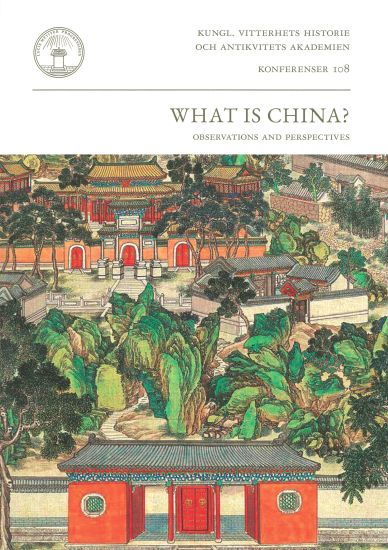
What is China? : observations and perspectives

What is China? : observations and perspectives

Joakim Enwall; Fredrik Fällman; Ge Zhaoguang; Chun-Chieh Huang; Youngmin Kim; Torbjörn Lodén; Ooi Kee beng; Fansen Wang; Wang Gungwu; Zhang Longxi

Kungl. Vitterhetsakademien
2023
nidottu
“China is”, in the words of Bertrand Russell, “much less a political entity than a civilization.” To this we may add that China is also a geographical area. The word China has multiple meanings charged with different kinds of values and preconceptions. In this book ten scholars from Mainland China, Hong Kong, Korea, Malaysia, Singapore, Sweden, and Taiwan explore various meanings and aspects of Chinese identity. What does “China” mean as a cultural concept and when referring to a geographical territory? What is the significance of the historical relationship between the interior and exterior for the Chinese identity? How have classical texts been used by the Chinese state? These are central questions in this book, where you will also find contributions analysing, among other topics, the Chinese self-image and China as seen from the outside. One article examines the ideological use of the notion of “Chinese characteristics” in contemporary Mainland China, while another analyses China’s future development in terms of the country’s transformation from a multiethnic empire to a homogenous national state.
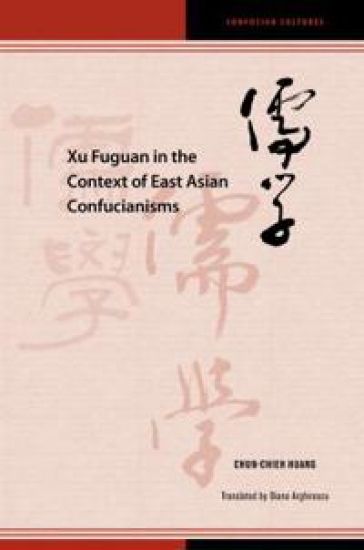
Xu Fuguan in the Context of East Asian Confucianisms

Xu Fuguan in the Context of East Asian Confucianisms

Chun-chieh Huang

University of Hawai'i Press
2019
sidottu
Among twentieth-century Confucians, Xu Fuguan (1904–1982) remains preeminent. This volume, written by Chun-chieh Huang, an authority on Xu’s life and thought, offers English-speaking readers for the first time an exhaustive analysis of the philosopher’s original ideas and research. A distinguished member of the group of Contemporary New Confucians, Xu made a significant contribution to the revival of Chinese culture and society, and the present book outlines the specific features of his legacy in comparison with the views of some of his influential Chinese and Japanese contemporaries. The topics covered illustrate an overarching idea, namely, the innovative way in which Xu Fuguan answers a major question concerning Chinese culture, one posed by Chinese intellectuals since the May Fourth Movement: how best to approach the modernization of China. Xu’s work is based on the assumption that Confucian thought and ethics—the core of Chinese tradition—can be modernized because “there is nothing in it which is not compatible with the idea of human dignity or rights in modern society.” Xu addresses the question of China’s modernization by offering arguments in favor of building a connection between Confucianism and democracy, mainly its political dimension. Huang places his subject in the vast context of twentieth-century Chinese Confucian studies and the history of East Asian thought. He compares Xu Fuguan with his most influential opponents Hu Shi (1891–1962) and Fu Sinian (1896–1950) as well as fellow Confucians Tang Junyi (1909–1978) and Mou Zongsan (1909–1995). Huang draws further comparisons between Xu’s thought and that of Japanese Enlightenment philosopher Fukuzawa Yukichi (1835–1901) and the father of contemporary Japanese capitalism, Shibusawa Eiichi (1840–1931). These contrasts highlight the “Chineseness” of Xu’s theories and the marks left by traditional Chinese thought and culture on his writing and life in the countryside, where he spent much of his youth.
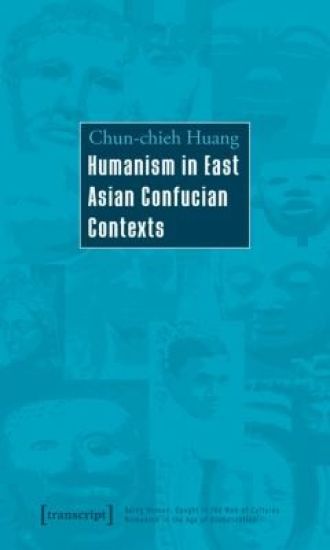
Humanism in East Asian Confucian Contexts

Humanism in East Asian Confucian Contexts

Chun-chieh Huang

Transcript Verlag
2021
nidottu
The past 60 years have seen the rediscovery of the immense cultural depth of Confucian humanist thought and its power to shape the way human beings are understood in East Asia. In this volume, renowned Confucian scholar Chun-chieh Huang analyzes various East Asian contexts to identify the central pillars of the Confucian humanist spirit: a continuum between mind and body, harmony between oneself and others, the unity of heaven and humanity, and a profound historical consciousness. Scholars of religion, history, philosophy and Asian studies will find this volume an indispensable guide to the rich tradition of East Asian Confucian humanism.
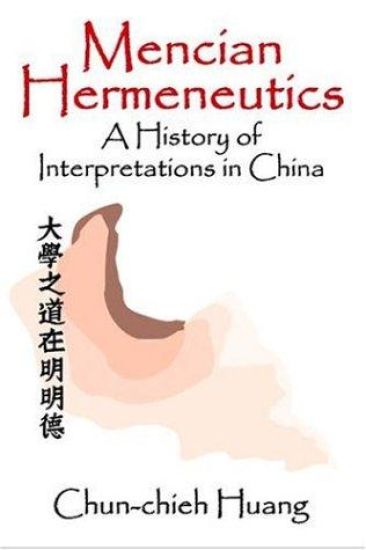
Mencian Hermeneutics

Mencian Hermeneutics

Chun-chieh Huang

Routledge
2018
nidottu
Considered second only to Confucius in the history of Chinese thought, Mencius (371?-289 b.c.), was a moral philosopher whose arguments, while pragmatically rooted in the political and social conditions of his time, go beyond particular situations to probe their origins and speculate on their larger implications. His writings constitute a living tradition in China and the world at large. Sinological studies of Mencius have long emphasized philological and archaeological research, situating the texts mainly in Chinese history. Critical appraisal of the texts lends itself to Western traditions of interpretation. In Mencian Hermeneutics, Chun-chieh Huang utilizes both approaches to offer a historical and universal understanding of Mencius. Huang builds from the premise that Mencius' thinking and all Chinese thought are sociopolitical in tone and humanistic and metaphysical in nature and range. The strength of Mencius' thought lies in the organic mutuality of these factors. His arguments are shaped by the politics, literature, and economics of his age. At the same time, the concrete programs he proposed and his sharp criticisms of alternative policies are rooted in the metaphysical soil of man and the world, human solidarity and cosmic symbiosis, and human nature within the natural world. The book is divided into two parts. Part 1 analyzes the concrete as opposed to the theoretical character of Mencius' thought. Huang demonstrates the organic unity of his intellectual system with its concepts of linkage between innermost to outermost, self to social, rightness vs. profit, and his political ideal of populist government through familial empathy. Part 2 deals with the long historical odyssey of Mencius' work in China's interpretive tradition, an exegetical process similar in its origins to Western hermeneutics. In comparing and analyzing these approaches to Mencius, Huang seeks to show that Chinese hermeneutics is more than an activity of intellectual curiosity about the ancient world, but is instead a means to sociopolitical action, an application in society of the fruits of personal cultivation. Mencian Hermeneutics will be of interest to Chinese area specialists, sociologists, literary scholars, and philosophers.
Taiwan in Transformation

Taiwan in Transformation

Chun-chieh Huang

Routledge
2017
nidottu
The late twentieth century witnessed rapid changes not only in Taiwan's economy, but also in its identity. Both economic as well as ideological restructuring have been basic elements in the transformation of postwar Taiwan, as rapid democratization opened a Pandora's Box, and stirred a whirlwind of social discord. This volume considers such important questions as whether the old Taiwanese work ethic is a relic of the past, and whether Taiwan is likely to become a battleground of ideological wars. The book addresses Taiwanese nostalgia for Chinese culture; the rise and fall of postwar Taiwanese agrarian culture; the transformation of farmers' social consciousness in the period 195-970; the place of Confucianism in postwar Taiwan; and the awakening of the "self" and the development of a Taiwanese national identity in the post World War II period. Finally, it considers whether "mutual historical understanding" may be the basis for Taiwan-Mainland relations in the twenty-first century. This second edition includes a new chapter on the history of Taiwan after World War II, incorporating additional developments in Taiwan in the past decade. Insights extrapolated from an understanding of history are essential for grasping and solving the basic problems Taiwan now faces and, above all, the conflicted relationship between Taiwan and Mainland China. The book's thematic undercurrent is the question of Taiwan and Mainland China: How do we deal with the tension between cultural China and political China?
Taiwan in Transformation

Taiwan in Transformation

Chun-Chieh Huang

AldineTransaction
2014
sidottu
The late twentieth century witnessed rapid changes not only in Taiwan's economy, but also in its identity. Both economic as well as ideological restructuring have been basic elements in the transformation of postwar Taiwan, as rapid democratization opened a Pandora's Box, and stirred a whirlwind of social discord. This volume considers such important questions as whether the old Taiwanese work ethic is a relic of the past, and whether Taiwan is likely to become a battleground of ideological wars. The book addresses Taiwanese nostalgia for Chinese culture; the rise and fall of postwar Taiwanese agrarian culture; the transformation of farmers' social consciousness in the period 1950–1970; the place of Confucianism in postwar Taiwan; and the awakening of the "self" and the development of a Taiwanese national identity in the post–World War II period. Finally, it considers whether "mutual historical understanding" may be the basis for Taiwan-Mainland relations in the twenty-first century. This second edition includes a new chapter on the history of Taiwan after World War II, incorporating additional developments in Taiwan in the past decade. Insights extrapolated from an understanding of history are essential for grasping and solving the basic problems Taiwan now faces and, above all, the conflicted relationship between Taiwan and Mainland China. The book's thematic undercurrent is the question of Taiwan and Mainland China: How do we deal with the tension between cultural China and political China?
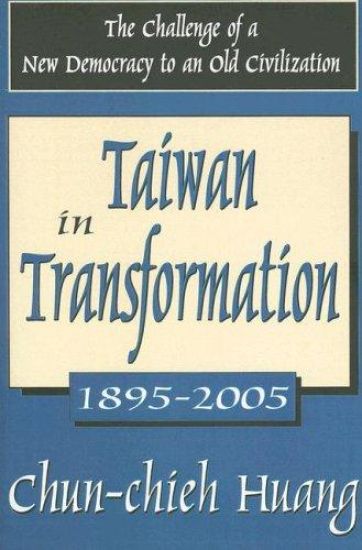
Taiwan in Transformation 1895-2005

Taiwan in Transformation 1895-2005

Chun-chieh Huang

AldineTransaction
2007
nidottu
The last decade of the twentieth century witnessed rapid changes not only in global politics but also in Taiwan's quests for new identities. The notorious martial law was lifted in July 1987, and long-repressed calls for democratization began to be heard that caught worldwide attention. In tandem with economic transformation, the entire world of thought in Taiwan underwent significant changes. Both economic and ideological restructuring have been basic elements of transformation in postwar Taiwan. However, rapid democratization has opened a Pandora's box, and stirred a whirlwind of discord. This volume elaborates on the "where from" and the "where to" of the Taiwan transformation and attempts to answer such questions as: Is the old Taiwanese work ethic just a relic of the past? Is Taiwan going to become an Armageddon of ideological wars? Chapters deal with the vicissitudes of Taiwanese nostalgia for cultural China; postwar Taiwan in historical perspective, in particular the rise and fall of the agrarian culture; the transformation of farmers' social consciousness in the period 1950-1970; Confucianism in postwar Taiwan: historical, philosophical, and sociological; the case of Hsu Fu-kuan, which provides an epic case of the intertwining of cultural crisis with personal crisis; the development and metamorphoses of Taiwanese consciousness in the unfolding political context, the awakening of the "self"; and finally "mutual historical understanding" as the basis for Taiwan-Mainland relations in the twenty-first century. Taiwan in Transformation seeks to show that historical insights extrapolated from an understanding of history are essential for grasping and solving the basic problems facing Taiwan at present, including the Taiwan-Mainland relationship in the twenty-first century. It will be of interest to Chinese area specialists, sociologists, and historians.
Mencian Hermeneutics

Mencian Hermeneutics

Chun-chieh Huang

Transaction Publishers
2001
sidottu
Considered second only to Confucius in the history of Chinese thought, Mencius (371?-289 b.c.), was a moral philosopher whose arguments, while pragmatically rooted in the political and social conditions of his time, go beyond particular situations to probe their origins and speculate on their larger implications. His writings constitute a living tradition in China and the world at large. Sinological studies of Mencius have long emphasized philological and archaeological research, situating the texts mainly in Chinese history. Critical appraisal of the texts lends itself to Western traditions of interpretation. In Mencian Hermeneutics, Chun-chieh Huang utilizes both approaches to offer a historical and universal understanding of Mencius. Huang builds from the premise that Mencius' thinking and all Chinese thought are sociopolitical in tone and humanistic and metaphysical in nature and range. The strength of Mencius' thought lies in the organic mutuality of these factors. His arguments are shaped by the politics, literature, and economics of his age. At the same time, the concrete programs he proposed and his sharp criticisms of alternative policies are rooted in the metaphysical soil of man and the world, human solidarity and cosmic symbiosis, and human nature within the natural world. The book is divided into two parts. Part 1 analyzes the concrete as opposed to the theoretical character of Mencius' thought. Huang demonstrates the organic unity of his intellectual system with its concepts of linkage between innermost to outermost, self to social, rightness vs. profit, and his political ideal of populist government through familial empathy. Part 2 deals with the long historical odyssey of Mencius' work in China's interpretive tradition, an exegetical process similar in its origins to Western hermeneutics. In comparing and analyzing these approaches to Mencius, Huang seeks to show that Chinese hermeneutics is more than an activity of intellectual curiosity about the ancient world, but is instead a means to sociopolitical action, an application in society of the fruits of personal cultivation. Mencian Hermeneutics will be of interest to Chinese area specialists, sociologists, literary scholars, and philosophers.