Kirjojen hintavertailu – 12 903 724 kirjaa ja 27 kauppaa

Kirjailija

Chunhui Li

Kirjat ja teokset yhdessä paikassa: 6 kirjaa, julkaisuja vuosilta 2018–2026, suosituimpiin kuuluu Circular Economy and Sustainable Development Enterprises. Vertaile teosten hintoja ja tarkista saatavuus suomalaisista kirjakaupoista.

6 kirjaa

Kirjojen julkaisuvuodet: 2018–2026.

Circular Economy and Sustainable Development Enterprises

Circular Economy and Sustainable Development Enterprises

Jiansu Mao; Chunhui Li; Yuansheng Pei; Linyu Xu

Springer Verlag, Singapore
2019
nidottu
This textbook systematically addresses why and how Circular Economy should be developed and practiced by employing a Discussion and Research (D&R) teaching method. This method allows us to show the whole process of academic research, from formulating the key questions, to methodology design, and ultimately to conclusions and applications. In addition, the suggested class discussions and group homework provide good opportunities for participant cooperation and exchange. In this textbook, all chapters and sections are intended to answer specific scientific key or sub-key questions, while all chapters are also internally structured logically and systematically, from question to final conclusion. This textbook may help to boost student performance in science and research and was selected for inclusion in the 13th Five-Year planning teaching materials for regular higher education in China.
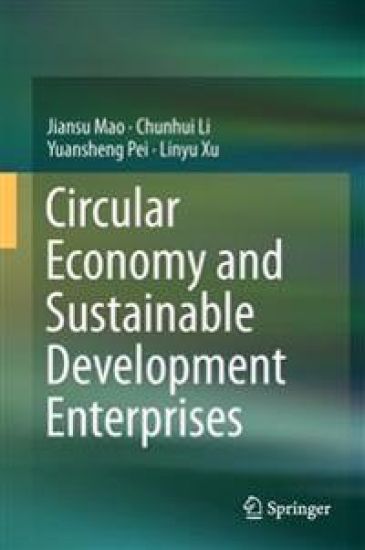
Circular Economy and Sustainable Development Enterprises

Circular Economy and Sustainable Development Enterprises

Jiansu Mao; Chunhui Li; Yuansheng Pei; Linyu Xu

Springer Verlag, Singapore
2018
sidottu
This textbook systematically addresses why and how Circular Economy should be developed and practiced by employing a Discussion and Research (D&R) teaching method. This method allows us to show the whole process of academic research, from formulating the key questions, to methodology design, and ultimately to conclusions and applications. In addition, the suggested class discussions and group homework provide good opportunities for participant cooperation and exchange. In this textbook, all chapters and sections are intended to answer specific scientific key or sub-key questions, while all chapters are also internally structured logically and systematically, from question to final conclusion. This textbook may help to boost student performance in science and research and was selected for inclusion in the 13th Five-Year planning teaching materials for regular higher education in China.
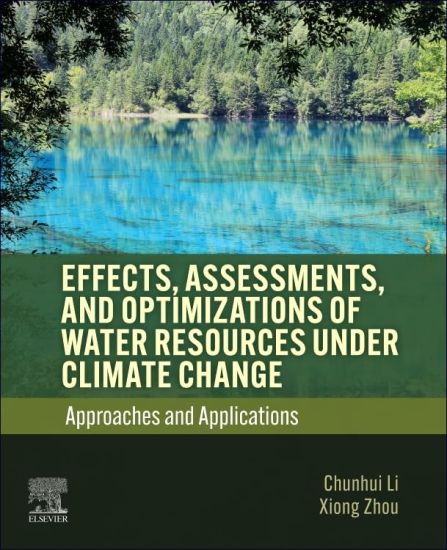
Effects, Assessments, and Optimizations of Water Resources under Climate Change

Effects, Assessments, and Optimizations of Water Resources under Climate Change

Chunhui Li; Xiong Zhou

Elsevier - Health Sciences Division
2026
nidottu
Effects, Assessments, and Optimizations of Water Resources under Climate Change: Approaches and Applications presents a systematic exploration of how climate change is reshaping the global water resources. From assessing the impacts of temperature and precipitation extremes to addressing the spatial variability in water stress, the book offers innovative methods and solutions for sustainable water management. The chapters focus on the use of advanced hydrological models, ecological footprint methods, and optimization approaches to manage water resources efficiently under climate change scenarios. Additionally, it includes comprehensive case studies that demonstrate the practical application of these methods in real-world water management, providing readers with actionable insights and strategies for planning water resources under climate change. This is a necessary guide for students and researchers, as well as for policymakers, and water resource managers seeking practical and scientific strategies for securing water resources in the face of climate uncertainty.
Application of the Water Footprint: Water Stress Analysis and Allocation
Based on the water footprint (WF) concept, this book reviews WF-based water stress evaluation methods at the city, provincial and river basin levels respectively. In addition, it explores the factors that influence regional water footprint in the spatial sequence via the extended STIRPAT model. Highlighting the utilization of WF accounting in sustainable water management, one of the book’s goals is to establish the optimization model of water allocation in various industrial sectors. Based on WF accounting, which thoroughly considers the water input for production, the relevant intermediate water inputs, and the water amount for wastewater discharge dilutions, the book provides a wealth of insights for scholars and practitioners with an interest in water resources and environmental management. In addition, it exhibits a scientific plan for regional water resource utilization and allocation, helping relieve regional water shortages.
Application of the Water Footprint: Water Stress Analysis and Allocation
Based on the water footprint (WF) concept, this book reviews WF-based water stress evaluation methods at the city, provincial and river basin levels respectively. In addition, it explores the factors that influence regional water footprint in the spatial sequence via the extended STIRPAT model. Highlighting the utilization of WF accounting in sustainable water management, one of the book’s goals is to establish the optimization model of water allocation in various industrial sectors. Based on WF accounting, which thoroughly considers the water input for production, the relevant intermediate water inputs, and the water amount for wastewater discharge dilutions, the book provides a wealth of insights for scholars and practitioners with an interest in water resources and environmental management. In addition, it exhibits a scientific plan for regional water resource utilization and allocation, helping relieve regional water shortages.