
Kirjojen hintavertailu – 12 903 724 kirjaa ja 27 kauppaa

Kirjailija

Cicero

Kirjat ja teokset yhdessä paikassa: 159 kirjaa, julkaisuja vuosilta 1913–2026, suosituimpiin kuuluu Marcus Tullius Cicero: Die Politischen Reden. Band 3. Vertaile teosten hintoja ja tarkista saatavuus suomalaisista kirjakaupoista.

Nimi esiintyy myös muodoissa: Cícero

159 kirjaa

Kirjojen julkaisuvuodet: 1913–2026.

Pro Caelio. De Provinciis Consularibus. Pro Balbo

Pro Caelio. De Provinciis Consularibus. Pro Balbo

Cicero

LOEB
1958
sidottu

Halvin toimitettuna 38,10 €

Three postconsular speeches. Cicero (Marcus Tullius, 106–43 BC), Roman lawyer, orator, politician, and philosopher, of whom we know more than of any other Roman, lived through the stirring era that saw the rise, dictatorship, and death of Julius Caesar in a tottering republic. In his political speeches especially and in his correspondence we see the excitement, tension and intrigue of politics and the part he played in the turmoil of the time. Of about 106 speeches, delivered before the Roman people or the Senate if they were political, before jurors if judicial, fifty-eight survive (a few of them incompletely). In the fourteenth century Petrarch and other Italian humanists discovered manuscripts containing more than 900 letters of which more than 800 were written by Cicero and nearly 100 by others to him. These afford a revelation of the man all the more striking because most were not written for publication. Six rhetorical works survive and another in fragments. Philosophical works include seven extant major compositions and a number of others; and some lost. There is also poetry, some original, some as translations from the Greek. The Loeb Classical Library edition of Cicero is in twenty-nine volumes.
Pro Sestio. In Vatinium
The statesman defends a friend and assails an enemy. Cicero (Marcus Tullius, 106–43 BC), Roman lawyer, orator, politician, and philosopher, of whom we know more than of any other Roman, lived through the stirring era that saw the rise, dictatorship, and death of Julius Caesar in a tottering republic. In his political speeches especially and in his correspondence we see the excitement, tension and intrigue of politics and the part he played in the turmoil of the time. Of about 106 speeches, delivered before the Roman people or the Senate if they were political, before jurors if judicial, fifty-eight survive (a few of them incompletely). In the fourteenth century Petrarch and other Italian humanists discovered manuscripts containing more than 900 letters of which more than 800 were written by Cicero and nearly 100 by others to him. These afford a revelation of the man all the more striking because most were not written for publication. Six rhetorical works survive and another in fragments. Philosophical works include seven extant major compositions and a number of others; and some lost. There is also poetry, some original, some as translations from the Greek. The Loeb Classical Library edition of Cicero is in twenty-nine volumes.
Rhetorica ad Herennium

Rhetorica ad Herennium

Cicero

LOEB
1954
sidottu

Halvin toimitettuna 38,50 €

Spurious composition. Cicero (Marcus Tullius, 106–43 BC), Roman lawyer, orator, politician, and philosopher, of whom we know more than of any other Roman, lived through the stirring era that saw the rise, dictatorship, and death of Julius Caesar in a tottering republic. In his political speeches especially and in his correspondence we see the excitement, tension and intrigue of politics and the part he played in the turmoil of the time. Of about 106 speeches, delivered before the Roman people or the Senate if they were political, before jurors if judicial, fifty-eight survive (a few of them incompletely). In the fourteenth century Petrarch and other Italian humanists discovered manuscripts containing more than 900 letters of which more than 800 were written by Cicero and nearly 100 by others to him. These afford a revelation of the man all the more striking because most were not written for publication. Six rhetorical works survive and another in fragments. Philosophical works include seven extant major compositions and a number of others; and some lost. There is also poetry, some original, some as translations from the Greek. The Loeb Classical Library edition of Cicero is in twenty-nine volumes.
On Invention. The Best Kind of Orator. Topics
Three rhetorical treatises. Cicero (Marcus Tullius, 106–43 BC), Roman lawyer, orator, politician, and philosopher, of whom we know more than of any other Roman, lived through the stirring era that saw the rise, dictatorship, and death of Julius Caesar in a tottering republic. In his political speeches especially and in his correspondence we see the excitement, tension and intrigue of politics and the part he played in the turmoil of the time. Of about 106 speeches, delivered before the Roman people or the Senate if they were political, before jurors if judicial, fifty-eight survive (a few of them incompletely). In the fourteenth century Petrarch and other Italian humanists discovered manuscripts containing more than 900 letters of which more than 800 were written by Cicero and nearly 100 by others to him. These afford a revelation of the man all the more striking because most were not written for publication. Six rhetorical works survive and another in fragments. Philosophical works include seven extant major compositions and a number of others; and some lost. There is also poetry, some original, some as translations from the Greek. The Loeb Classical Library edition of Cicero is in twenty-nine volumes.
On the Orator: Books 1–2

On the Orator: Books 1–2

Cicero

LOEB
1942
sidottu

Halvin toimitettuna 36,30 €

On the Orator, Books 1-2 A. Rhetorical Treatises Cicero Translator E. W. Sutton and H. Rackham Cicero (Marcus Tullius, 106–43 BC), Roman lawyer, orator, politician and philosopher, of whom we know more than of any other Roman, lived through the stirring era which saw the rise, dictatorship, and death of Julius Caesar in a tottering republic. In his political speeches especially and in his correspondence we see the excitement, tension and intrigue of politics and the part he played in the turmoil of the time. Of about 106 speeches, delivered before the Roman people or the Senate if they were political, before jurors if judicial, 58 survive (a few of them incompletely). In the fourteenth century Petrarch and other Italian humanists discovered manuscripts containing more than 900 letters of which more than 800 were written by Cicero and nearly 100 by others to him. These afford a revelation of the man all the more striking because most were not written for publication. Six rhetorical works survive and another in fragments. Philosophical works include seven extant major compositions and a number of others; and some lost. There is also poetry, some original, some as translations from the Greek. The Loeb Classical Library edition of Cicero is in twenty-nine volumes.
On the Orator: Book 3. On Fate. Stoic Paradoxes. Divisions of Oratory
The philosopher-statesman on ethics and rhetoric. Cicero (Marcus Tullius, 106–43 BC), Roman lawyer, orator, politician, and philosopher, of whom we know more than of any other Roman, lived through the stirring era that saw the rise, dictatorship, and death of Julius Caesar in a tottering republic. In his political speeches especially and in his correspondence we see the excitement, tension and intrigue of politics and the part he played in the turmoil of the time. Of about 106 speeches, delivered before the Roman people or the Senate if they were political, before jurors if judicial, fifty-eight survive (a few of them incompletely). In the fourteenth century Petrarch and other Italian humanists discovered manuscripts containing more than 900 letters of which more than 800 were written by Cicero and nearly 100 by others to him. These afford a revelation of the man all the more striking because most were not written for publication. Six rhetorical works survive and another in fragments. Philosophical works include seven extant major compositions and a number of others; and some lost. There is also poetry, some original, some as translations from the Greek. The Loeb Classical Library edition of Cicero is in twenty-nine volumes.
Brutus. Orator

Brutus. Orator

Cicero

LOEB
1939
sidottu
The statesman on the history and practice of Roman oratory. Cicero (Marcus Tullius, 106–43 BC), Roman lawyer, orator, politician, and philosopher, of whom we know more than of any other Roman, lived through the stirring era that saw the rise, dictatorship, and death of Julius Caesar in a tottering republic. In his political speeches especially and in his correspondence we see the excitement, tension and intrigue of politics and the part he played in the turmoil of the time. Of about 106 speeches, delivered before the Roman people or the Senate if they were political, before jurors if judicial, fifty-eight survive (a few of them incompletely). In the fourteenth century Petrarch and other Italian humanists discovered manuscripts containing more than 900 letters of which more than 800 were written by Cicero and nearly 100 by others to him. These afford a revelation of the man all the more striking because most were not written for publication. Six rhetorical works survive and another in fragments. Philosophical works include seven extant major compositions and a number of others; and some lost. There is also poetry, some original, some as translations from the Greek. The Loeb Classical Library edition of Cicero is in twenty-nine volumes.
The Verrine Orations, Volume II
The young statesman’s first major prosecution. Cicero (Marcus Tullius, 106–43 BC), Roman lawyer, orator, politician, and philosopher, of whom we know more than of any other Roman, lived through the stirring era that saw the rise, dictatorship, and death of Julius Caesar in a tottering republic. In his political speeches especially and in his correspondence we see the excitement, tension and intrigue of politics and the part he played in the turmoil of the time. Of about 106 speeches, delivered before the Roman people or the Senate if they were political, before jurors if judicial, fifty-eight survive (a few of them incompletely). In the fourteenth century Petrarch and other Italian humanists discovered manuscripts containing more than 900 letters of which more than 800 were written by Cicero and nearly 100 by others to him. These afford a revelation of the man all the more striking because most were not written for publication. Six rhetorical works survive and another in fragments. Philosophical works include seven extant major compositions and a number of others; and some lost. There is also poetry, some original, some as translations from the Greek. The Loeb Classical Library edition of Cicero is in twenty-nine volumes.
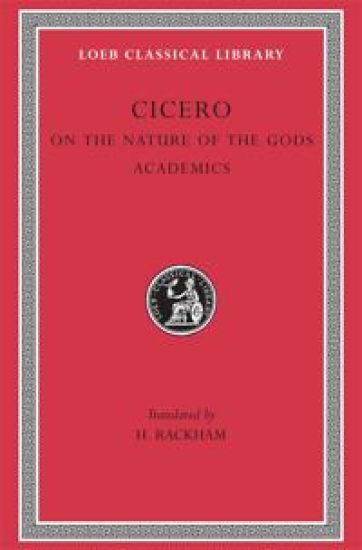
On the Nature of the Gods. Academics

On the Nature of the Gods. Academics

Cicero

LOEB
1933
sidottu

Halvin toimitettuna 38,10 €

The philosopher-statesman on theology and epistemology. Cicero (Marcus Tullius, 106–43 BC), Roman lawyer, orator, politician, and philosopher, of whom we know more than of any other Roman, lived through the stirring era that saw the rise, dictatorship, and death of Julius Caesar in a tottering republic. In his political speeches especially and in his correspondence we see the excitement, tension, and intrigue of politics and the part he played in the turmoil of the time. Of about 106 speeches, delivered before the Roman people or the Senate if they were political, before jurors if judicial, fifty-eight survive (a few of them incompletely). In the fourteenth century Petrarch and other Italian humanists discovered manuscripts containing more than 900 letters of which more than 800 were written by Cicero and nearly 100 by others to him. These afford a revelation of the man all the more striking because most were not written for publication. Six rhetorical works survive and another in fragments. Philosophical works include seven extant major compositions and a number of others; and some lost. There is also poetry, some original, some as translations from the Greek. The Loeb Classical Library edition of Cicero is in twenty-nine volumes.
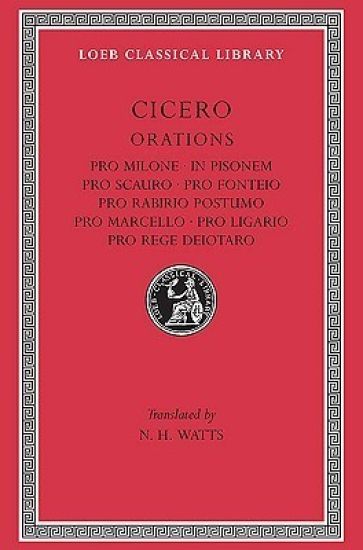
Pro Milone. In Pisonem. Pro Scauro. Pro Fonteio. Pro Rabirio Postumo. Pro Marcello. Pro Ligario. Pro Rege Deiotaro
Speeches from turbulent times. Cicero (Marcus Tullius, 106–43 BC), Roman lawyer, orator, politician, and philosopher, of whom we know more than of any other Roman, lived through the stirring era that saw the rise, dictatorship, and death of Julius Caesar in a tottering republic. In his political speeches especially and in his correspondence we see the excitement, tension and intrigue of politics and the part he played in the turmoil of the time. Of about 106 speeches, delivered before the Roman people or the Senate if they were political, before jurors if judicial, fifty-eight survive (a few of them incompletely). In the fourteenth century Petrarch and other Italian humanists discovered manuscripts containing more than 900 letters of which more than 800 were written by Cicero and nearly 100 by others to him. These afford a revelation of the man all the more striking because most were not written for publication. Six rhetorical works survive and another in fragments. Philosophical works include seven extant major compositions and a number of others; and some lost. There is also poetry, some original, some as translations from the Greek. The Loeb Classical Library edition of Cicero is in twenty-nine volumes.
Pro Quinctio. Pro Roscio Amerino. Pro Roscio Comoedo. On the Agrarian Law
The early speeches. Cicero (Marcus Tullius, 106–43 BC), Roman lawyer, orator, politician, and philosopher, of whom we know more than of any other Roman, lived through the stirring era that saw the rise, dictatorship, and death of Julius Caesar in a tottering republic. In his political speeches especially and in his correspondence we see the excitement, tension and intrigue of politics and the part he played in the turmoil of the time. Of about 106 speeches, delivered before the Roman people or the Senate if they were political, before jurors if judicial, fifty-eight survive (a few of them incompletely). In the fourteenth century Petrarch and other Italian humanists discovered manuscripts containing more than 900 letters of which more than 800 were written by Cicero and nearly 100 by others to him. These afford a revelation of the man all the more striking because most were not written for publication. Six rhetorical works survive and another in fragments. Philosophical works include seven extant major compositions and a number of others; and some lost. There is also poetry, some original, some as translations from the Greek. The Loeb Classical Library edition of Cicero is in twenty-nine volumes.
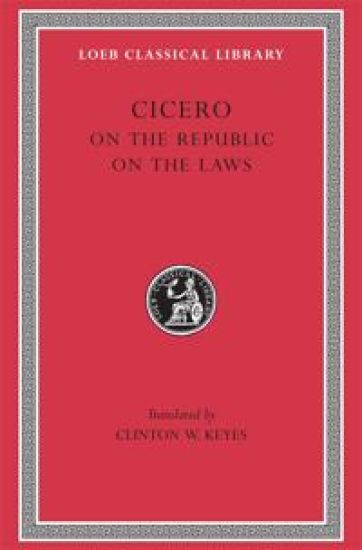
On the Republic. On the Laws

On the Republic. On the Laws

Cicero

LOEB
1928
sidottu

Halvin toimitettuna 38,10 €

The statesman on statecraft. Cicero (Marcus Tullius, 106–43 BC), Roman lawyer, orator, politician, and philosopher, of whom we know more than of any other Roman, lived through the stirring era that saw the rise, dictatorship, and death of Julius Caesar in a tottering republic. In his political speeches especially and in his correspondence we see the excitement, tension, and intrigue of politics and the part he played in the turmoil of the time. Of about 106 speeches, delivered before the Roman people or the Senate if they were political, before jurors if judicial, fifty-eight survive (a few of them incompletely). In the fourteenth century Petrarch and other Italian humanists discovered manuscripts containing more than 900 letters of which more than 800 were written by Cicero and nearly 100 by others to him. These afford a revelation of the man all the more striking because most were not written for publication. Six rhetorical works survive and another in fragments. Philosophical works include seven extant major compositions and a number of others; and some lost. There is also poetry, some original, some as translations from the Greek. The Loeb Classical Library edition of Cicero is in twenty-nine volumes.
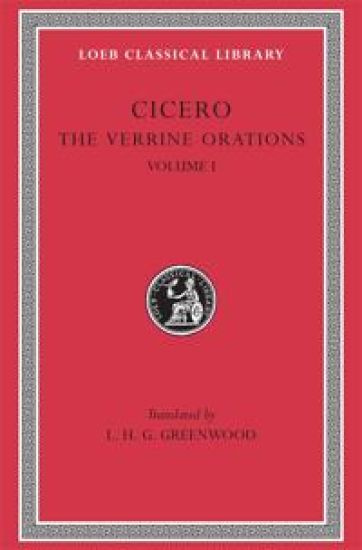
The Verrine Orations, Volume I
The young statesman’s first major prosecution. Cicero (Marcus Tullius, 106–43 BC), Roman lawyer, orator, politician, and philosopher, of whom we know more than of any other Roman, lived through the stirring era that saw the rise, dictatorship, and death of Julius Caesar in a tottering republic. In his political speeches especially and in his correspondence we see the excitement, tension and intrigue of politics and the part he played in the turmoil of the time. Of about 106 speeches, delivered before the Roman people or the Senate if they were political, before jurors if judicial, fifty-eight survive (a few of them incompletely). In the fourteenth century Petrarch and other Italian humanists discovered manuscripts containing more than 900 letters of which more than 800 were written by Cicero and nearly 100 by others to him. These afford a revelation of the man all the more striking because most were not written for publication. Six rhetorical works survive and another in fragments. Philosophical works include seven extant major compositions and a number of others; and some lost. There is also poetry, some original, some as translations from the Greek. The Loeb Classical Library edition of Cicero is in twenty-nine volumes.
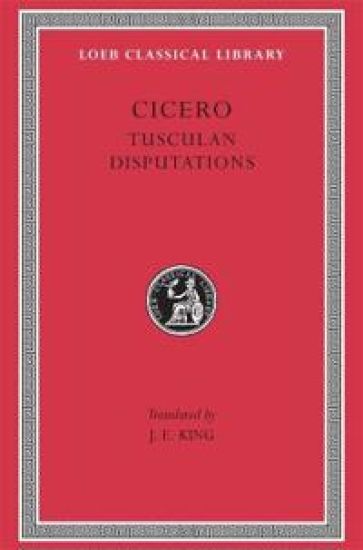
Tusculan Disputations
Philosophical dialogues of a grieving statesman. Cicero (Marcus Tullius, 106–43 BC), Roman lawyer, orator, politician, and philosopher, of whom we know more than of any other Roman, lived through the stirring era that saw the rise, dictatorship, and death of Julius Caesar in a tottering republic. In his political speeches especially and in his correspondence we see the excitement, tension and intrigue of politics and the part he played in the turmoil of the time. Of about 106 speeches, delivered before the Roman people or the Senate if they were political, before jurors if judicial, fifty-eight survive (a few of them incompletely). In the fourteenth century Petrarch and other Italian humanists discovered manuscripts containing more than 900 letters of which more than 800 were written by Cicero and nearly 100 by others to him. These afford a revelation of the man all the more striking because most were not written for publication. Six rhetorical works survive and another in fragments. Philosophical works include seven extant major compositions and a number of others; and some lost. There is also poetry, some original, some as translations from the Greek. The Loeb Classical Library edition of Cicero is in twenty-nine volumes.
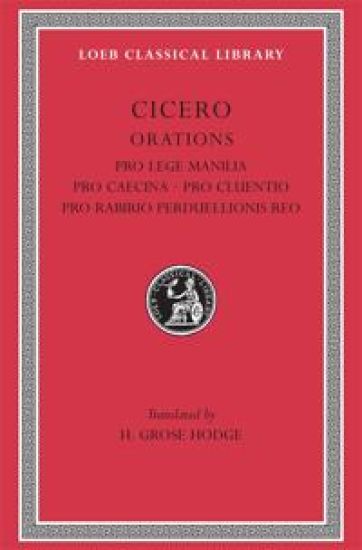
Pro Lege Manilia. Pro Caecina. Pro Cluentio. Pro Rabirio Perduellionis Reo
The ascending statesman. Cicero (Marcus Tullius, 106–43 BC), Roman lawyer, orator, politician, and philosopher, of whom we know more than of any other Roman, lived through the stirring era that saw the rise, dictatorship, and death of Julius Caesar in a tottering republic. In his political speeches especially and in his correspondence we see the excitement, tension and intrigue of politics and the part he played in the turmoil of the time. Of about 106 speeches, delivered before the Roman people or the Senate if they were political, before jurors if judicial, fifty-eight survive (a few of them incompletely). In the fourteenth century Petrarch and other Italian humanists discovered manuscripts containing more than 900 letters of which more than 800 were written by Cicero and nearly 100 by others to him. These afford a revelation of the man all the more striking because most were not written for publication. Six rhetorical works survive and another in fragments. Philosophical works include seven extant major compositions and a number of others; and some lost. There is also poetry, some original, some as translations from the Greek. The Loeb Classical Library edition of Cicero is in twenty-nine volumes.
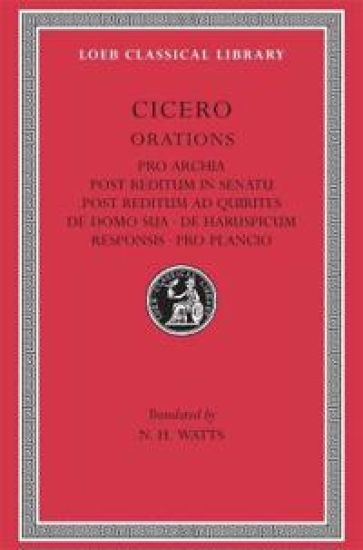
Pro Archia. Post Reditum in Senatu. Post Reditum ad Quirites. De Domo Sua. De Haruspicum Responsis. Pro Plancio
Defense of a poet, and five speeches from after exile. Cicero (Marcus Tullius, 106–43 BC), Roman lawyer, orator, politician, and philosopher, of whom we know more than of any other Roman, lived through the stirring era that saw the rise, dictatorship, and death of Julius Caesar in a tottering republic. In his political speeches especially and in his correspondence we see the excitement, tension and intrigue of politics and the part he played in the turmoil of the time. Of about 106 speeches, delivered before the Roman people or the Senate if they were political, before jurors if judicial, fifty-eight survive (a few of them incompletely). In the fourteenth century Petrarch and other Italian humanists discovered manuscripts containing more than 900 letters of which more than 800 were written by Cicero and nearly 100 by others to him. These afford a revelation of the man all the more striking because most were not written for publication. Six rhetorical works survive and another in fragments. Philosophical works include seven extant major compositions and a number of others; and some lost. There is also poetry, some original, some as translations from the Greek. The Loeb Classical Library edition of Cicero is in twenty-nine volumes.
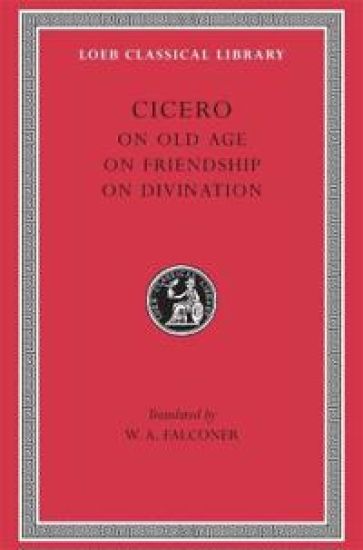
On Old Age. On Friendship. On Divination

On Old Age. On Friendship. On Divination

Cicero

LOEB
1923
sidottu

Halvin toimitettuna 37,20 €

Three late dialogues. Cicero (Marcus Tullius, 106–43 BC), Roman lawyer, orator, politician, and philosopher, of whom we know more than of any other Roman, lived through the stirring era that saw the rise, dictatorship, and death of Julius Caesar in a tottering republic. In his political speeches especially and in his correspondence we see the excitement, tension and intrigue of politics and the part he played in the turmoil of the time. Of about 106 speeches, delivered before the Roman people or the Senate if they were political, before jurors if judicial, fifty-eight survive (a few of them incompletely). In the fourteenth century Petrarch and other Italian humanists discovered manuscripts containing more than 900 letters of which more than 800 were written by Cicero and nearly 100 by others to him. These afford a revelation of the man all the more striking because most were not written for publication. Six rhetorical works survive and another in fragments. Philosophical works include seven extant major compositions and a number of others; and some lost. There is also poetry, some original, some as translations from the Greek. The Loeb Classical Library edition of Cicero is in twenty-nine volumes.
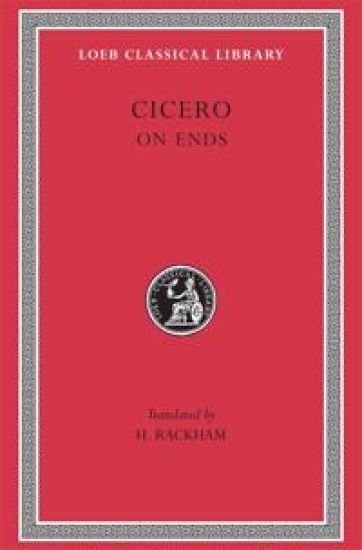
On Ends

On Ends

Cicero

LOEB
1914
sidottu

Halvin toimitettuna 38,10 €

The philosopher-statesman on Epicureanism, Stoicism, and the Old Academy. Cicero (Marcus Tullius, 106–43 BC), Roman lawyer, orator, politician, and philosopher, of whom we know more than of any other Roman, lived through the stirring era that saw the rise, dictatorship, and death of Julius Caesar in a tottering republic. In his political speeches especially and in his correspondence we see the excitement, tension, and intrigue of politics and the part he played in the turmoil of the time. Of about 106 speeches, delivered before the Roman people or the Senate if they were political, before jurors if judicial, fifty-eight survive (a few of them incompletely). In the fourteenth century Petrarch and other Italian humanists discovered manuscripts containing more than 900 letters of which more than 800 were written by Cicero and nearly 100 by others to him. These afford a revelation of the man all the more striking because most were not written for publication. Six rhetorical works survive and another in fragments. Philosophical works include seven extant major compositions and a number of others; and some lost. There is also poetry, some original, some as translations from the Greek. The Loeb Classical Library edition of Cicero is in twenty-nine volumes.
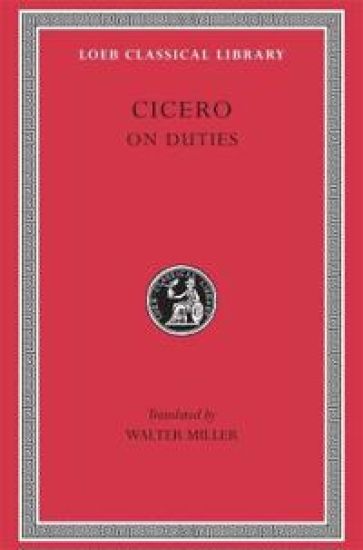
On Duties

On Duties

Cicero

LOEB
1913
sidottu

Halvin toimitettuna 37,20 €

The ethics of a statesman. Cicero (Marcus Tullius, 106–43 BC), Roman lawyer, orator, politician, and philosopher, of whom we know more than of any other Roman, lived through the stirring era that saw the rise, dictatorship, and death of Julius Caesar in a tottering republic. In his political speeches especially and in his correspondence we see the excitement, tension and intrigue of politics and the part he played in the turmoil of the time. Of about 106 speeches, delivered before the Roman people or the Senate if they were political, before jurors if judicial, fifty-eight survive (a few of them incompletely). In the fourteenth century Petrarch and other Italian humanists discovered manuscripts containing more than 900 letters of which more than 800 were written by Cicero and nearly 100 by others to him. These afford a revelation of the man all the more striking because most were not written for publication. Six rhetorical works survive and another in fragments. Philosophical works include seven extant major compositions and a number of others; and some lost. There is also poetry, some original, some as translations from the Greek. The Loeb Classical Library edition of Cicero is in twenty-nine volumes.