Kirjojen hintavertailu – 12 859 818 kirjaa ja 27 kauppaa

Kirjailija

Cinzia Arruzza

Kirjat ja teokset yhdessä paikassa: 5 kirjaa, julkaisuja vuosilta 2015–2019, suosituimpiin kuuluu Plotinus Ennead II.5. Vertaile teosten hintoja ja tarkista saatavuus suomalaisista kirjakaupoista.

5 kirjaa

Kirjojen julkaisuvuodet: 2015–2019.

Feminism for the 99%

Feminism for the 99%

Cinzia Arruzza; Tithi Bhattacharya; Nancy Fraser

Verso Books
2019
nidottu

Halvin toimitettuna 17,40 €

Unaffordable housing, poverty wages, healthcare, climate change, border policing; not the issues you ordinarily hear feminists talking about. But don't these issues impact the vast majority of women globally? Taking as its inspiration the new wave of feminist militancy that has erupted globally, this Manifesto makes a simple but powerful case: Feminism shouldn't start - or stop - with seeing women represented at the top of society. It must start with those at the bottom, and fight for the world they deserve. And that means targeting capitalism. Feminism must be anti-capitalist, eco-socialist and anti-racist. This is a manifesto for the 99%.
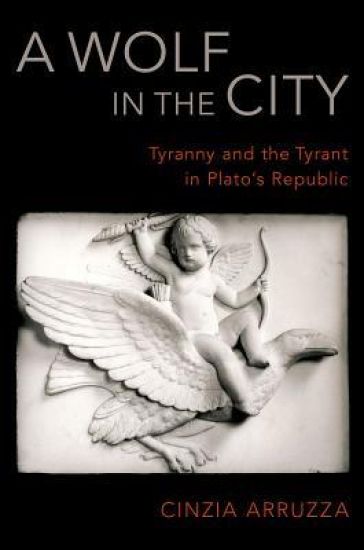
A Wolf in the City

A Wolf in the City

Cinzia Arruzza

Oxford University Press Inc
2018
sidottu
The problem of tyranny preoccupied Plato, and its discussion both begins and ends his famous Republic. Though philosophers have mined the Republic for millennia, Cinzia Arruzza is the first to devote a full book to the study of tyranny and of the tyrant's soul in Plato's Republic. In A Wolf in the City, Arruzza argues that Plato's critique of tyranny intervenes in an ancient debate concerning the sources of the crisis of Athenian democracy and the relation between political leaders and demos in the last decades of the fifth century BCE. Arruzza shows that Plato's critique of tyranny should not be taken as veiled criticism of the Syracusan tyrannical regime, but rather of Athenian democracy. In parsing Plato's discussion of the soul of the tyrant, Arruzza will also offer new and innovative insights into his moral psychology, addressing much-debated problems such as the nature of eros and of the spirited part of the soul, the unity or disunity of the soul, and the relation between the non-rational parts of the soul and reason.
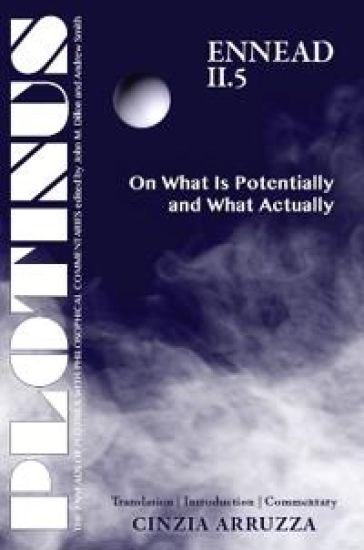
Plotinus Ennead II.5

Plotinus Ennead II.5

Cinzia Arruzza

Parmenides Publishing
2015
nidottu
The term dunamis (potentiality) entered into the philosophical vocabulary with Plato, but it was with Aristotle that it acquired, together with energeia (actuality), the strong technical meaning that the two terms have maintained, with variations, throughout subsequent philosophical tradition. The significance of the notions of actuality and potentiality in Plotinus’ thought can hardly be overstated. Throughout the Enneads, they are crucial to understanding the specific causality of intelligible realities and the relation of participation between intelligible and sensible realms. In Ennead II.5, Plotinus for the first time provides a systematic clarification of his peculiar use of these terms, through a sustained revision of Aristotle’s own elaboration of the topic and of his terminology. The treatise discusses the different meanings of potentiality and actuality as well as the way each of them applies or does not apply to the sensible realm, to the intelligible realm, and to matter. While the structure of the text unfolds in a coherent and cohesive manner, Plotinus’ writing in this treatise is dense and at times dry in its technicality. The detailed commentary guides the reader step by step, making an otherwise particularly difficult text accessible.