Kirjojen hintavertailu – 12 903 729 kirjaa ja 27 kauppaa

Kirjailija

Clair V. Uding

Kirjat ja teokset yhdessä paikassa: 4 kirjaa, julkaisuja vuosilta 2025–2026, suosituimpiin kuuluu Hot Spots of Crime. Vertaile teosten hintoja ja tarkista saatavuus suomalaisista kirjakaupoista.

4 kirjaa

Kirjojen julkaisuvuodet: 2025–2026.

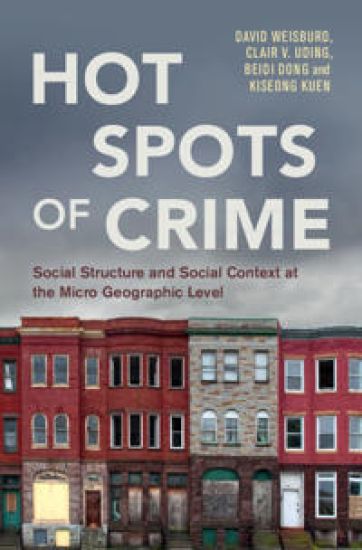
Hot Spots of Crime

Hot Spots of Crime

David Weisburd; Clair V. Uding; Beidi Dong; Kiseong Kuen

Cambridge University Press
2026
sidottu
While hot spots of crime have become an important focus of study in criminology and an important focus of crime prevention in programs like hot spots policing, to date we know little about these places. Who lives in hot spots of crime? What factors lead to these places becoming crime hot spots? What other social and health problems are found in these places? The book draws on more than 7,000 surveys of people living on crime hot spot and non-hot spot streets, systematic physical and social observations, and structured qualitative data collection. The results of this study illustrate that hot spots of crime are not just hot spots for crime, but also many other social ills. By shedding light on the social features of hot spots of crime, the book recognizes the importance of informal social controls in understanding and preventing crime at crime hot spots. This title is also available as open access on Cambridge Core.
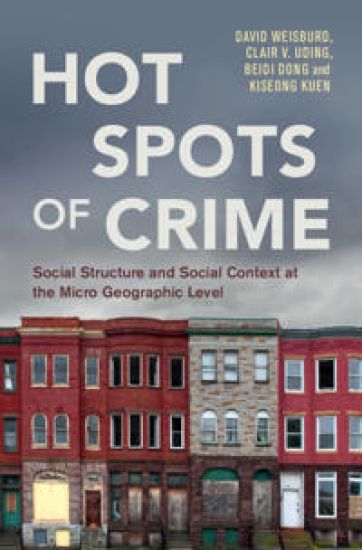
Hot Spots of Crime

Hot Spots of Crime

David Weisburd; Clair V. Uding; Beidi Dong; Kiseong Kuen

Cambridge University Press
2026
pokkari
While hot spots of crime have become an important focus of study in criminology and an important focus of crime prevention in programs like hot spots policing, to date we know little about these places. Who lives in hot spots of crime? What factors lead to these places becoming crime hot spots? What other social and health problems are found in these places? The book draws on more than 7,000 surveys of people living on crime hot spot and non-hot spot streets, systematic physical and social observations, and structured qualitative data collection. The results of this study illustrate that hot spots of crime are not just hot spots for crime, but also many other social ills. By shedding light on the social features of hot spots of crime, the book recognizes the importance of informal social controls in understanding and preventing crime at crime hot spots. This title is also available as open access on Cambridge Core.

The Future of the Criminology of Place

The Future of the Criminology of Place

David Weisburd; Barak Ariel; Anthony A. Braga; John Eck; Charlotte Gill; Elizabeth Groff; Clair V. Uding; Amarat Zaatut

Cambridge University Press
2025
pokkari
Microgeographic units of analysis have moved to the center of criminological inquiry. This Element brings together leading crime-and-place scholars to identify promising areas for future study. Section 1 introduces the Element and the importance of focusing on the future of studies of crime and place. Section 2 examines the development of hot-spots policing and the importance of focusing on its impact on communities. It also looks at how 'pracademics' can advance the science and practice of place-based policing. Section 3 focuses on place managers as prevention agents and examines how city government can influence crime at place. It further contends that rural communities need to become a key focus of crime-and-place scholarship. Section 4 emphasizes the importance of the connection of health, crime, and place. It also argues for the importance of expanding the methodological tools of crime and place to include careful ethnographic and qualitative research.
The Future of the Criminology of Place

The Future of the Criminology of Place

David Weisburd; Barak Ariel; Anthony A. Braga; John Eck; Charlotte Gill; Elizabeth Groff; Clair V. Uding; Amarat Zaatut

Cambridge University Press
2025
sidottu
Microgeographic units of analysis have moved to the center of criminological inquiry. This Element brings together leading crime-and-place scholars to identify promising areas for future study. Section 1 introduces the Element and the importance of focusing on the future of studies of crime and place. Section 2 examines the development of hot-spots policing and the importance of focusing on its impact on communities. It also looks at how 'pracademics' can advance the science and practice of place-based policing. Section 3 focuses on place managers as prevention agents and examines how city government can influence crime at place. It further contends that rural communities need to become a key focus of crime-and-place scholarship. Section 4 emphasizes the importance of the connection of health, crime, and place. It also argues for the importance of expanding the methodological tools of crime and place to include careful ethnographic and qualitative research.