Kirjojen hintavertailu – 12 903 725 kirjaa ja 27 kauppaa

Kirjailija

Claire Colebrook

Kirjat ja teokset yhdessä paikassa: 30 kirjaa, julkaisuja vuosilta 2001–2024, suosituimpiin kuuluu Gender. Vertaile teosten hintoja ja tarkista saatavuus suomalaisista kirjakaupoista.

30 kirjaa

Kirjojen julkaisuvuodet: 2001–2024.

Milton, Evil and Literary History

Milton, Evil and Literary History

Claire Colebrook

BLOOMSBURY PUBLISHING PLC
2008
sidottu
"Milton, Evil and Literary History" addresses the ways in which we read literary history according to quite specific images of growth, development, progression, flourishing and succession. Goodness has always been aligned with a life of expansion, creation, production and fruition, while evil is associated with the inert, non-relational, static and stagnant. These associations have also underpinned a distinction between good and evil notions of capitalism, where good exchange enables the agents to enhance their living potential and is contrasted with the evils of a capitalism system that circulates without any reference to life or spirit. Such images of a ghostly and technical economy divorced from animating origin are both central to Milton's theology and poetry and to the theories of literary history through which Milton is read. Regarded as a radical precursor to Romanticism, Milton's poetry supposedly requires the release of his radical spiritual content from the fetters of received orthodoxy. This literary and historical imagery of releasing the radical spirit of a text from the dead weight of received tradition is, this book argues, the dominant doxa of historicism and one which a counter-reading of Milton ought to question.
Irony in the Work of Philosophy

Irony in the Work of Philosophy

Claire Colebrook

University of Nebraska Press
2007
pokkari
In an era that proclaims itself postironic, the question and problem of irony are of more interest than ever. In this compelling inquiry, Claire Colebrook first takes up all the major figures in post-Cartesian philosophy on the subject of irony: Spinoza, Kant, Hegel, and Nietzsche. She similarly examines the modern thinkers in the Anglo-Saxon tradition: Rorty, Searle, and de Man. She then engages in an analysis of the Continental canon and the ironic dimension that marks contemporary philosophy. Beyond the question of irony, Colebrook treats the presence of irony in the history of philosophy and those points of overlap between nineteenth- and twentieth-century literature and philosophy. Ultimately, she extends what has belonged primarily to the domain of literature into a world of concepts.
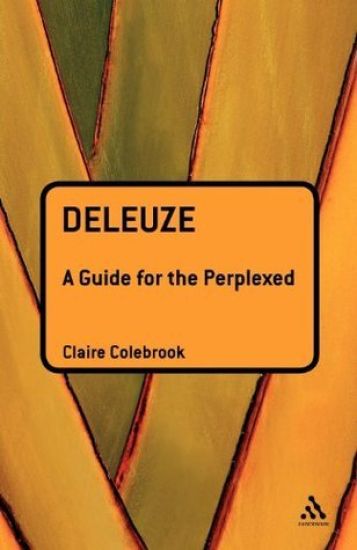
Deleuze: A Guide for the Perplexed

Deleuze: A Guide for the Perplexed

Claire Colebrook

Continuum International Publishing Group Ltd.
2006
nidottu
"Continuum's Guides for the Perplexed" are clear, concise and accessible introductions to thinkers, writers and subjects that students and readers can find especially challenging. Concentrating specifically on what it is that makes the subject difficult to fathom, these books explain and explore key themes and ideas, guiding the reader towards a thorough understanding of demanding material. Gilles Deleuze is undoubtedly one of the seminal figures in modern Continental thought. However, his philosophy makes considerable demands on the student; his major works make for challenging reading and require engagement with some difficult concepts and complex systems of thought. "Deleuze: A Guide for the Perplexed" is the ideal text for anyone who needs to get to grips with Deleuzian thought, offering a thorough, yet approachable account of the central themes in his work. The text is organised around major themes in Deleuze's oeuvre: sense; univocity; intuition; singularity; difference. His ideas related to language, politics, ethics and consciousness are explored in detail and - most importantly - clarified. The book also locates Deleuze in the context of his philosophical influences and antecedents and highlights the implications of his ideas for a range of disciplines from politics to film theory. Throughout, close attention is paid to Deleuze's most influential publications, including the landmark texts "The Logic of Sense and Difference and Repetition".
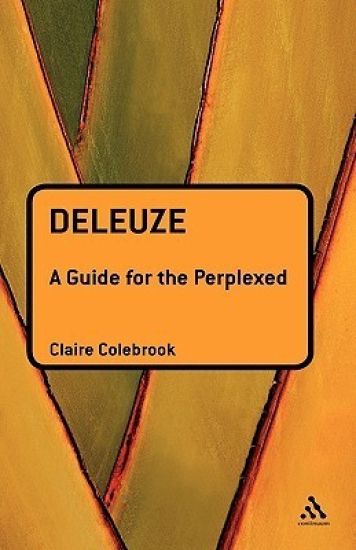
Deleuze: A Guide for the Perplexed

Deleuze: A Guide for the Perplexed

Claire Colebrook

Continuum International Publishing Group Ltd.
2006
sidottu
"Continuum's Guides for the Perplexed" are clear, concise and accessible introductions to thinkers, writers and subjects that students and readers can find especially challenging. Concentrating specifically on what it is that makes the subject difficult to fathom, these books explain and explore key themes and ideas, guiding the reader towards a thorough understanding of demanding material. Gilles Deleuze is undoubtedly one of the seminal figures in modern Continental thought. However, his philosophy makes considerable demands on the student; his major works make for challenging reading and require engagement with some difficult concepts and complex systems of thought. "Deleuze: A Guide for the Perplexed" is the ideal text for anyone who needs to get to grips with Deleuzian thought, offering a thorough, yet approachable account of the central themes in his work. The text is organised around major themes in Deleuze's oeuvre: sense; univocity; intuition; singularity; difference. His ideas related to language, politics, ethics and consciousness are explored in detail and - most importantly - clarified. The book also locates Deleuze in the context of his philosophical influences and antecedents and highlights the implications of his ideas for a range of disciplines from politics to film theory. Throughout, close attention is paid to Deleuze's most influential publications, including the landmark texts "The Logic of Sense and Difference and Repetition".
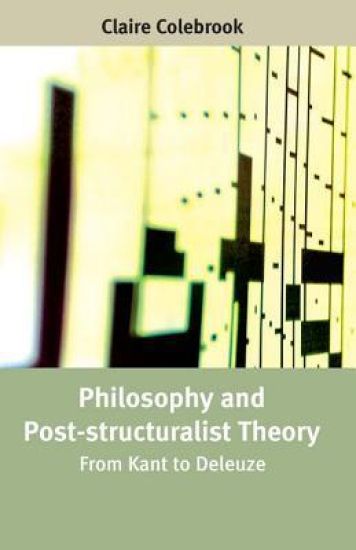
Philosophy and Post-structuralist Theory

Philosophy and Post-structuralist Theory

Claire Colebrook

Edinburgh University Press
2005
nidottu
A critique and overview of contemporary post-structuralist theory. Exploring the Kantian and phenomenological background of Derrida, Deleuze, Foucault and Irigaray, this book raises some key questions and issues in critical theory. Is it still possible to sustain a transcendental critical project? How do such projects fare in the current terrain of cultural studies and anti-representationalism? Key Features * Original contribution to ethical and critical theory. * Situates poststructuralism in its philosophical background, and in the sustained problematic of the enlightenment. * Offers a critique of various appeals made to a would-be post-metaphysical or post-human culture. First published in hardback as Ethics and Representation: From Kant to Post-Structuralism
Irony

Irony

Claire Colebrook

Routledge
2003
sidottu
In this handy volume, Claire Colebrook offers an overview of the history and structure of irony, from Socrates to the present. Students will welcome this clear, concise guide, which: *traces the use of the concept through history, from Greek times to the Romantic period and on to the postmodern era *looks closely at the work of Socrates and the more contemporary theorists Jacques Derrida and Gilles Deleuze *explores the philosophical, literary and political dimensions of irony *applies theories of irony to literary texts Making even the most difficult debates accessible and clear, this is the ideal student introduction to the many theories of irony.
Irony

Irony

Claire Colebrook

Routledge
2003
nidottu
In this handy volume, Claire Colebrook offers an overview of the history and structure of irony, from Socrates to the present. Students will welcome this clear, concise guide, which: *traces the use of the concept through history, from Greek times to the Romantic period and on to the postmodern era *looks closely at the work of Socrates and the more contemporary theorists Jacques Derrida and Gilles Deleuze *explores the philosophical, literary and political dimensions of irony *applies theories of irony to literary texts Making even the most difficult debates accessible and clear, this is the ideal student introduction to the many theories of irony.
Understanding Deleuze

Understanding Deleuze

Claire Colebrook

Allen Unwin
2002
nidottu

Halvin toimitettuna 38,00 €

'The best introduction to Deleuze, and to the collective writings of Deleuze and Guattari, available yet! Claire Colebrook has produced a truly accessible pathway into the labyrinthine enchantments offered for contemporary thought by Deleuzianism, making concepts clear, showing their political and theoretical complexity, elaborating their social and artistic relevance. A wonderful, lucid opening onto the new worlds of Deleuze.'Elizabeth Grosz, Rutgers University'A wonderfully clear introduction to key Deleuzian concepts and to their effectiveness in fields ranging from ethics and politics to cinema, literary and cultural studies. Claire Colebrook provides a series of effortless transitions from Deleuze's philosophical concerns (eg: difference, representation, desire and affect) to concrete problems in a variety of fields. This book is an excellent guide to an important body of critical thought.'Paul Patton, Professor of Philosophy, University of NSWA genuine attempt to think differently, Gilles Deleuze's work challenges, provokes and frustrates. Surprisingly practical as well as innovative, it is now being seen as a 'must read' for students and scholars across the humanities and social sciences. Claire Colebrook's Understanding Deleuze offers a comprehensive and very accessible introduction to his work. hink differently. It is built on the notion of an immanent ethics: how can we have a political and ethical theory without some external foundation such as the subject or morality? He argues that the only way we can do this is with a theory of the virtual, and he sees all life (not just cyberculture) as virtual. Deleuze goes further than Foucault or Derrida in questioning the boundaries of the subject and knowledge. For Deleuze perception extends beyond the human, to animals, machines and microorganisms. Deleuze's writing is challenging and hard to read, and so far there is no introduction to his work. Claire Colebrook's primer offers an accessible introduction to the whole Deleuzian oeuvre, including the work he did with Guattari.
Gilles Deleuze

Gilles Deleuze

Claire Colebrook

Routledge
2001
nidottu
Why think? Not, according to Gilles Deleuze, in order to be clever, but because thinking transforms life. Why read literature? Not for pure entertainment, Deleuze tells us, but because literature can recreate the boundaries of life. With his emphasis on creation, the future and the enhancement of life, along with his crusade against 'common sense', Deleuze offers some of the most liberating, exhilarating ideas in twentieth-century thought. This book offers a way in to Deleuzean thought through such topics as: * 'becoming' * time and the flow of life * the ethics of thinking * 'major' and 'minor' literature * difference and repetition * desire, the image and ideology. Written with literature students in mind, this is the ideal guide for students wishing to think differently about life and literature and in this way to create their own new readings of literary texts.
Gilles Deleuze

Gilles Deleuze

Claire Colebrook

Routledge
2001
sidottu
Why think? Not, according to Gilles Deleuze, in order to be clever, but because thinking transforms life. Why read literature? Not for pure entertainment, Deleuze tells us, but because literature can recreate the boundaries of life. With his emphasis on creation, the future and the enhancement of life, along with his crusade against 'common sense', Deleuze offers some of the most liberating, exhilarating ideas in twentieth-century thought. This book offers a way in to Deleuzean thought through such topics as: * 'becoming' * time and the flow of life * the ethics of thinking * 'major' and 'minor' literature * difference and repetition * desire, the image and ideology. Written with literature students in mind, this is the ideal guide for students wishing to think differently about life and literature and in this way to create their own new readings of literary texts.