Kirjojen hintavertailu – 12 859 829 kirjaa ja 27 kauppaa
Kirjailija
Claire Lamine
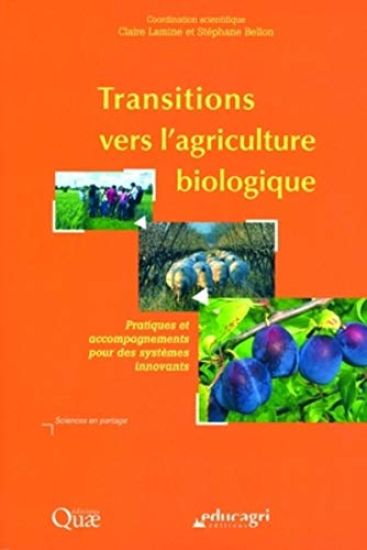
Kirjat ja teokset yhdessä paikassa: 5 kirjaa, julkaisuja vuosilta 2020–2024, suosituimpiin kuuluu Transitions vers l'agriculture biologique. Vertaile teosten hintoja ja tarkista saatavuus suomalaisista kirjakaupoista.
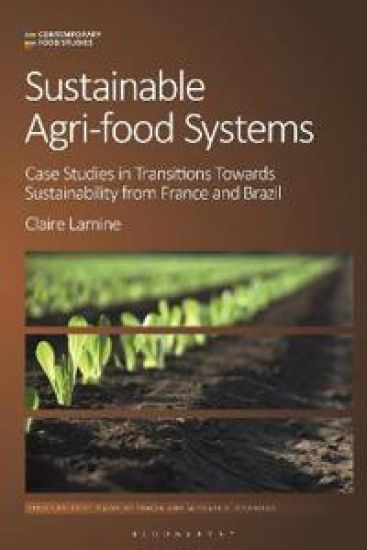
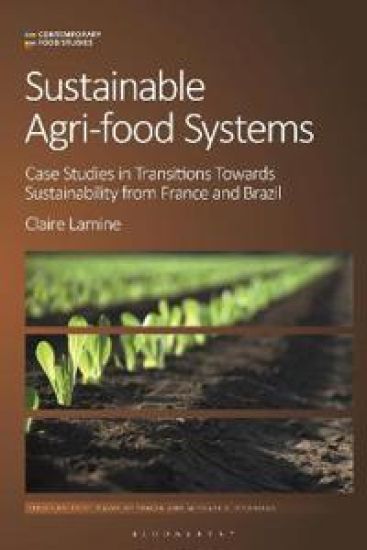
Building on recent scholarship in the sociology of food, Claire Lamine uses in-depth case studies from France and Brazil to compile a critical survey of social science approaches to sustainability transitions in agri-food systems. Lamine addresses the diverse pathways of transition encountered across multiple levels, from the farm through farmers' networks and food chains, to the territorial scale of regions. She also explores the efforts made by those involved in the agricultural world to create new connections between agriculture, food, environment and health, while also taking social equity issues into account. The book adopts a comparative perspective to explore the translation of agroecology into government programmes and the specific modes of governance involved in France and Brazil - two countries that pioneer in implementing agroecology yet which differ both in visions and context. Providing new options for understanding the complex issue of agri-food transitions, this book will make an impact for those studying food systems, geography, sociology, politics and agriculture.
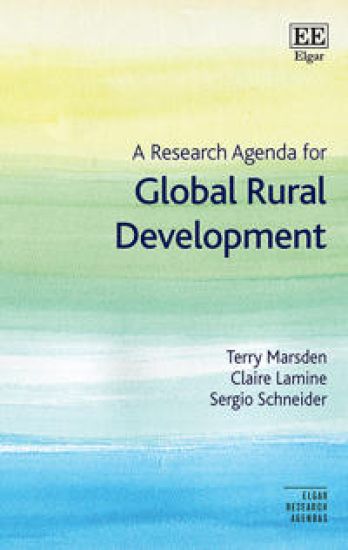
Elgar Research Agendas outline the future of research in a given area. Leading scholars are given the space to explore their subject in provocative ways, and map out the potential directions of travel. They are relevant but also visionary. Setting out a new, path-breaking research agenda for global rural development, this timely book offers an innovative and embedded rural social science capable of both understanding and enacting progress towards diverse and sustainable pathways. It relocates rural development at the heart of global trends associated with widespread but uneven urbanisation, climate change and severe resource depletion, rising population growth, density and inequality, and global political, economic and health crises. Chapters collapse traditional binary notions of development as north-south, rural-urban, global-local and traditional modern, embracing a revised conceptualisation of uneven development as a process dependent upon multiple theoretical and conceptual frameworks. It offers potential routes for substantive, interlinked research agendas, including new ruralities, governance, land rights, agro-ecology, financialisation, power relations, family farming, and the role of markets. Scholars of geography, planning, rural sociology and rural-urban studies looking for a broader understanding of the topic will find this book essential. It will also be beneficial for those engaged in rural development policy and practice.
Elgar Research Agendas outline the future of research in a given area. Leading scholars are given the space to explore their subject in provocative ways, and map out the potential directions of travel. They are relevant but also visionary. Setting out a new, path-breaking research agenda for global rural development, this timely book offers an innovative and embedded rural social science capable of both understanding and enacting progress towards diverse and sustainable pathways. It relocates rural development at the heart of global trends associated with widespread but uneven urbanisation, climate change and severe resource depletion, rising population growth, density and inequality, and global political, economic and health crises. Chapters collapse traditional binary notions of development as north-south, rural-urban, global-local and traditional modern, embracing a revised conceptualisation of uneven development as a process dependent upon multiple theoretical and conceptual frameworks. It offers potential routes for substantive, interlinked research agendas, including new ruralities, governance, land rights, agro-ecology, financialisation, power relations, family farming, and the role of markets. Scholars of geography, planning, rural sociology and rural-urban studies looking for a broader understanding of the topic will find this book essential. It will also be beneficial for those engaged in rural development policy and practice.
Building on recent scholarship in the sociology of food, Claire Lamine uses in-depth case studies from France and Brazil to compile a critical survey of social science approaches to sustainability transitions in agri-food systems. Lamine addresses the diverse pathways of transition encountered across multiple levels, from the farm through farmers' networks and food chains, to the territorial scale of regions. She also explores the efforts made by those involved in the agricultural world to create new connections between agriculture, food, environment and health, while also taking social equity issues into account. The book adopts a comparative perspective to explore the translation of agroecology into government programmes and the specific modes of governance involved in France and Brazil - two countries that pioneer in implementing agroecology yet which differ both in visions and context. Providing new options for understanding the complex issue of agri-food transitions, this book will make an impact for those studying food systems, geography, sociology, politics and agriculture.