
Kirjojen hintavertailu – 12 903 725 kirjaa ja 27 kauppaa

Kirjailija

Clara Mantini-Briggs

Kirjat ja teokset yhdessä paikassa: 2 kirjaa, julkaisuja vuodelta 2016, suosituimpiin kuuluu Tell Me Why My Children Died. Vertaile teosten hintoja ja tarkista saatavuus suomalaisista kirjakaupoista.

2 kirjaa

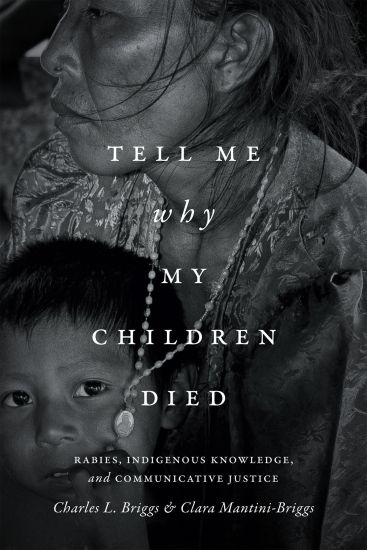
Tell Me Why My Children Died

Tell Me Why My Children Died

Charles L. Briggs; Clara Mantini-Briggs

Duke University Press
2016
pokkari
Tell Me Why My Children Died tells the gripping story of indigenous leaders' efforts to identify a strange disease that killed thirty-two children and six young adults in a Venezuelan rain forest between 2007 and 2008. In this pathbreaking book, Charles L. Briggs and Clara Mantini-Briggs relay the nightmarish and difficult experiences of doctors, patients, parents, local leaders, healers, and epidemiologists; detail how journalists first created a smoke screen, then projected the epidemic worldwide; discuss the Chávez government's hesitant and sometimes ambivalent reactions; and narrate the eventual diagnosis of bat-transmitted rabies. The book provides a new framework for analyzing how the uneven distribution of rights to produce and circulate knowledge about health are wedded at the hip with health inequities. By recounting residents' quest to learn why their children died and documenting their creative approaches to democratizing health, the authors open up new ways to address some of global health's most intractable problems.
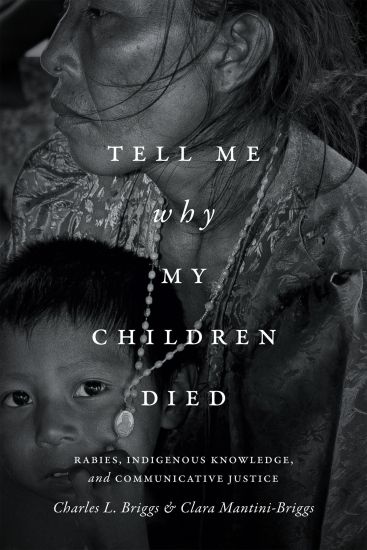
Tell Me Why My Children Died

Tell Me Why My Children Died

Charles L. Briggs; Clara Mantini-Briggs

Duke University Press
2016
sidottu
Tell Me Why My Children Died tells the gripping story of indigenous leaders' efforts to identify a strange disease that killed thirty-two children and six young adults in a Venezuelan rain forest between 2007 and 2008. In this pathbreaking book, Charles L. Briggs and Clara Mantini-Briggs relay the nightmarish and difficult experiences of doctors, patients, parents, local leaders, healers, and epidemiologists; detail how journalists first created a smoke screen, then projected the epidemic worldwide; discuss the Chávez government's hesitant and sometimes ambivalent reactions; and narrate the eventual diagnosis of bat-transmitted rabies. The book provides a new framework for analyzing how the uneven distribution of rights to produce and circulate knowledge about health are wedded at the hip with health inequities. By recounting residents' quest to learn why their children died and documenting their creative approaches to democratizing health, the authors open up new ways to address some of global health's most intractable problems.