Kirjojen hintavertailu – 12 859 828 kirjaa ja 27 kauppaa

Kirjailija

Clare Birchall

Kirjat ja teokset yhdessä paikassa: 7 kirjaa, julkaisuja vuosilta 2006–2022, suosituimpiin kuuluu Knowledge Goes Pop. Vertaile teosten hintoja ja tarkista saatavuus suomalaisista kirjakaupoista.

7 kirjaa

Kirjojen julkaisuvuodet: 2006–2022.

Conspiracy Theories in the Time of Covid-19

Conspiracy Theories in the Time of Covid-19

Clare Birchall; Peter Knight

TAYLOR FRANCIS LTD
2022
sidottu
Conspiracy Theories in the Time of Covid-19 provides a wide-ranging analysis of the emergence and development of conspiracy theories during the Covid-19 pandemic, with a focus on the US and the UK. The book combines digital methods analysis of large datasets assembled from social media with politically and culturally contextualised close readings informed by cultural studies. In contrast to other studies which often have an alarmist take on the "infodemic," it places Covid-19 conspiracy theories in a longer historical perspective. It also argues against the tendency to view conspiracy theories as merely evidence of a fringe or pathological way of thinking. Instead, the starting assumption is that conspiracy theories, including Covid-19 conspiracy theories, often reflect genuine and legitimate concerns, even if their factual claims are wide of the mark. The authors examine the nature and origins of the conspiracy theories that have emerged; the identity and rationale of those drawn to Covid-19 conspiracism; how these conspiracy theories fit within the wider political, economic and technological landscape of the online information environment; and proposed interventions from social media platforms and regulatory agencies. This book will appeal to anyone interested in conspiracy theories, misinformation, culture wars, social media and contemporary society. The Open Access version of this book, available at http://www.taylorfrancis.com, has been made available under a Creative Commons Attribution (CC-BY) 4.0 license.

Conspiracy Theories in the Time of Covid-19

Conspiracy Theories in the Time of Covid-19

Clare Birchall; Peter Knight

TAYLOR FRANCIS LTD
2022
nidottu
Conspiracy Theories in the Time of Covid-19 provides a wide-ranging analysis of the emergence and development of conspiracy theories during the Covid-19 pandemic, with a focus on the US and the UK. The book combines digital methods analysis of large datasets assembled from social media with politically and culturally contextualised close readings informed by cultural studies. In contrast to other studies which often have an alarmist take on the "infodemic," it places Covid-19 conspiracy theories in a longer historical perspective. It also argues against the tendency to view conspiracy theories as merely evidence of a fringe or pathological way of thinking. Instead, the starting assumption is that conspiracy theories, including Covid-19 conspiracy theories, often reflect genuine and legitimate concerns, even if their factual claims are wide of the mark. The authors examine the nature and origins of the conspiracy theories that have emerged; the identity and rationale of those drawn to Covid-19 conspiracism; how these conspiracy theories fit within the wider political, economic and technological landscape of the online information environment; and proposed interventions from social media platforms and regulatory agencies. This book will appeal to anyone interested in conspiracy theories, misinformation, culture wars, social media and contemporary society. The Open Access version of this book, available at http://www.taylorfrancis.com, has been made available under a Creative Commons Attribution (CC-BY) 4.0 license.

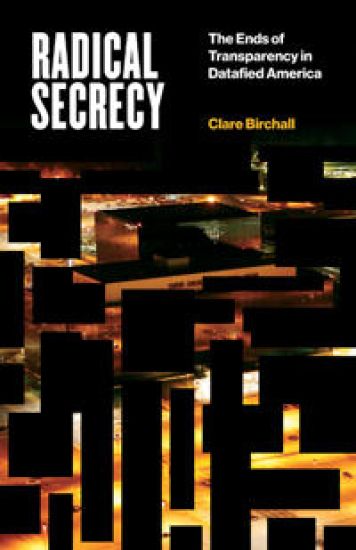
Radical Secrecy

Radical Secrecy

Clare Birchall

University of Minnesota Press
2021
nidottu
Reimagining transparency and secrecy in the era of digital data When total data surveillance delimits agency and revelations of political wrongdoing fail to have consequences, is transparency the social panacea liberal democracies purport it to be? This book sets forth the provocative argument that progressive social goals would be better served by a radical form of secrecy, at least while state and corporate forces hold an asymmetrical advantage over the less powerful in data control. Clare Birchall asks: How might transparency actually serve agendas that are far from transparent? Can we imagine a secrecy that could act in the service of, rather than against, a progressive politics? To move beyond atomizing calls for privacy and to interrupt the perennial tension between state security and the public’s right to know, Birchall adapts Édouard Glissant’s thinking to propose a digital “right to opacity.” As a crucial element of radical secrecy, she argues, this would eventually give rise to a “postsecret” society, offering an understanding and experience of the political that is free from the false choice between secrecy and transparency. She grounds her arresting story in case studies including the varied presidential styles of George W. Bush, Barack Obama, and Donald Trump; the Snowden revelations; conspiracy theories espoused or endorsed by Trump; WikiLeaks and guerrilla transparency; and the opening of the state through data portals. Postsecrecy is the necessary condition for imagining, finally, an alternative vision of “the good,” of equality, as neither shaped by neoliberal incarnations of transparency nor undermined by secret state surveillance. Not least, postsecrecy reimagines collective resistance in the era of digital data.
Radical Secrecy

Radical Secrecy

Clare Birchall

University of Minnesota Press
2021
sidottu
Reimagining transparency and secrecy in the era of digital data When total data surveillance delimits agency and revelations of political wrongdoing fail to have consequences, is transparency the social panacea liberal democracies purport it to be? This book sets forth the provocative argument that progressive social goals would be better served by a radical form of secrecy, at least while state and corporate forces hold an asymmetrical advantage over the less powerful in data control. Clare Birchall asks: How might transparency actually serve agendas that are far from transparent? Can we imagine a secrecy that could act in the service of, rather than against, a progressive politics? To move beyond atomizing calls for privacy and to interrupt the perennial tension between state security and the public’s right to know, Birchall adapts Édouard Glissant’s thinking to propose a digital “right to opacity.” As a crucial element of radical secrecy, she argues, this would eventually give rise to a “postsecret” society, offering an understanding and experience of the political that is free from the false choice between secrecy and transparency. She grounds her arresting story in case studies including the varied presidential styles of George W. Bush, Barack Obama, and Donald Trump; the Snowden revelations; conspiracy theories espoused or endorsed by Trump; WikiLeaks and guerrilla transparency; and the opening of the state through data portals. Postsecrecy is the necessary condition for imagining, finally, an alternative vision of “the good,” of equality, as neither shaped by neoliberal incarnations of transparency nor undermined by secret state surveillance. Not least, postsecrecy reimagines collective resistance in the era of digital data.
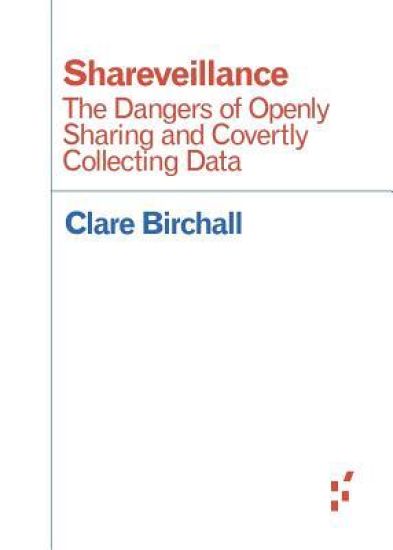
Shareveillance

Shareveillance

Clare Birchall

University of Minnesota Press
2017
pokkari
Cracking open the politics of transparency and secrecy In an era of open data and ubiquitous dataveillance, what does it mean to “share”? This book argues that we are all “shareveillant” subjects, called upon to be transparent and render data open at the same time as the security state invests in practices to keep data closed. Drawing on Jacques Rancière’s “distribution of the sensible,” Clare Birchall reimagines sharing in terms of a collective political relationality beyond the veillant expectations of the state.
Knowledge Goes Pop

Knowledge Goes Pop

Clare Birchall

Berg Publishers
2006
nidottu
A voice on late night radio tells you that a fast food joint injects its food with drugs that make men impotent. A colleague asks if you think the FBI was in on 9/11. An alien abductee on the Internet claims extra-terrestrials have planted a microchip in her left buttock. 'Julia Roberts in Porn Scandal' shouts the front page of a gossip mag. A spiritual healer claims he can cure chronic fatigue syndrome with the energizing power of crystals . . . What do you believe? Knowledge Goes Pop examines the popular knowledges that saturate our everyday experience. We make this information and then it shapes the way we see the world. How valid is it when compared to official knowledge and why does such (mis)information cause so much institutional anxiety? Knowledge Goes Pop examines the range of knowledge, from conspiracy theory to plain gossip, and its role and impact in our culture.
Knowledge Goes Pop

Knowledge Goes Pop

Clare Birchall

Berg Publishers
2006
sidottu
A voice on late night radio tells you that a fast food joint injects its food with drugs that make men impotent. A colleague asks if you think the FBI was in on 9/11. An alien abductee on the Internet claims extra-terrestrials have planted a microchip in her left buttock. 'Julia Roberts in Porn Scandal' shouts the front page of a gossip mag. A spiritual healer claims he can cure chronic fatigue syndrome with the energizing power of crystals . . . What do you believe? Knowledge Goes Pop examines the popular knowledges that saturate our everyday experience. We make this information and then it shapes the way we see the world. How valid is it when compared to official knowledge and why does such (mis)information cause so much institutional anxiety? Knowledge Goes Pop examines the range of knowledge, from conspiracy theory to plain gossip, and its role and impact in our culture.