Kirjojen hintavertailu – 12 859 826 kirjaa ja 27 kauppaa
Kirjailija
Clare McGlynn
Kirjat ja teokset yhdessä paikassa: 5 kirjaa, julkaisuja vuosilta 2006–2026, suosituimpiin kuuluu Exposed. Vertaile teosten hintoja ja tarkista saatavuus suomalaisista kirjakaupoista.
We’re watching it on the bus, the tube, on the plane instead of inflight entertainment. We’re watching it at the office, at home when we’re supposed to be working. We’re watching it at school. We’re even watching it in Parliament. And with minimal content moderation, mainstream porn sites proudly display ever more extreme content, whether you’re searching for it or not. The consequences are substantial. Non-consensual porn is ruining women’s lives – a threat only magnified by deepfakes and AI. It’s distorting our most intimate relationships. An entire generation’s sexual education is being delivered via Pornhub; fantasies moulded and manipulated by degrading, misogynistic and racist ideals, normalising sexual violence. This isn’t just any porn, it’s patriarchal porn. And it’s everywhere. If we want to reclaim our sexual freedom and achieve true gender equality, we have to confront this now.
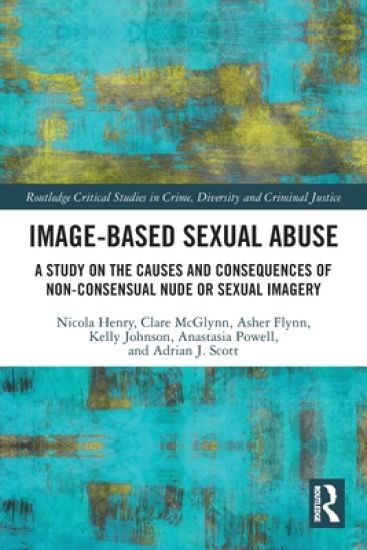
This book investigates the causes and consequences of image-based sexual abuse in a digital era. Image-based sexual abuse refers to the taking or sharing of nude or sexual photographs or videos of another person without their consent. It includes a diversity of behaviours beyond that of "revenge porn", such as the secret trading of nude or sexual images online; "upskirting", "downblousing" and other "creepshots"; blackmail or "sextortion" scams; the use of artificial intelligence to construct "deepfake" pornographic videos; threats to distribute photographs and videos without consent; and the taking or sharing of sexual assault imagery. This book investigates the pervasiveness and experiences of these harms, as well as the raft of legal and non-legal measures that have been introduced to better respond to and prevent image-based sexual abuse. The book draws on groundbreaking empirical research, including surveys in three countries with over 6,000 respondents and over 100 victim-survivor and stakeholder interviews. Guided by theoretical frameworks from gender studies, sociology, criminology, law and psychology, the authors argue that image-based sexual abuse is more commonly perpetrated by men than women, and that perpetration is higher among some groups, including younger and sexuality minority men. Although the motivations of perpetrators vary, a dominant theme to emerge was that of power and control. The gendered nature of the abuse means that it is best understood as a "continuum of sexual violence" because victim-survivors often experience it as part of a broader pattern of gendered harassment, violence and abuse. Written in a clear and direct style, this book will appeal to students and scholars of criminology, sociology, law and psychology. Image-based Sexual Abuse is also an essential resource for activists, legal and policy practitioners, technology companies and victim-survivors seeking to understand the deeply complex nature of intimate-image sharing in a digital era.
Cyberflashing has been on the rise since the Covid-19 pandemic. Yet, despite its prevalence and significant harms, cyberflashing is not a criminal offence in England and Wales. This crucial book provides new in-depth analysis, understanding and insight into the nature and harms of cyberflashing. The authors consider recently adopted laws in the US, Singapore and Scotland, and set out proposals to criminalise cyberflashing as a sexual offence in English law. This unique and timely study presents the first comprehensive examination of cyberflashing and the need to reform the criminal law.
This book investigates the causes and consequences of image-based sexual abuse in a digital era. Image-based sexual abuse refers to the taking or sharing of nude or sexual photographs or videos of another person without their consent. It includes a diversity of behaviours beyond that of "revenge porn", such as the secret trading of nude or sexual images online; "upskirting", "downblousing" and other "creepshots"; blackmail or "sextortion" scams; the use of artificial intelligence to construct "deepfake" pornographic videos; threats to distribute photographs and videos without consent; and the taking or sharing of sexual assault imagery. This book investigates the pervasiveness and experiences of these harms, as well as the raft of legal and non-legal measures that have been introduced to better respond to and prevent image-based sexual abuse. The book draws on groundbreaking empirical research, including surveys in three countries with over 6,000 respondents and over 100 victim-survivor and stakeholder interviews. Guided by theoretical frameworks from gender studies, sociology, criminology, law and psychology, the authors argue that image-based sexual abuse is more commonly perpetrated by men than women, and that perpetration is higher among some groups, including younger and sexuality minority men. Although the motivations of perpetrators vary, a dominant theme to emerge was that of power and control. The gendered nature of the abuse means that it is best understood as a "continuum of sexual violence" because victim-survivors often experience it as part of a broader pattern of gendered harassment, violence and abuse. Written in a clear and direct style, this book will appeal to students and scholars of criminology, sociology, law and psychology. Image-based Sexual Abuse is also an essential resource for activists, legal and policy practitioners, technology companies and victim-survivors seeking to understand the deeply complex nature of intimate-image sharing in a digital era.
In the first book to offer a comprehensive analysis of family law in the European Union, McGlynn argues that a traditional concept of 'family' which has many adverse effects - on individuals, on families (in all their diverse forms), and indeed on the economic ambitions of the EU is forming the basis for the little-recognised and under-researched field of EU family law. This book examines three different aspects of family life - childhood, parenthood and partnerships - and critically analyses existing EU law in relation to each. It examines the emerging field of EU family law, providing a highly sceptical account of recent developments and a robust challenge to the arguments in favour of the codification of European civil law, including family law.