Kirjojen hintavertailu – 12 903 735 kirjaa ja 27 kauppaa

Kirjailija

Clare Wood

Kirjat ja teokset yhdessä paikassa: 6 kirjaa, julkaisuja vuosilta 2010–2023, suosituimpiin kuuluu Text Messaging and Literacy - The Evidence. Vertaile teosten hintoja ja tarkista saatavuus suomalaisista kirjakaupoista.

6 kirjaa

Kirjojen julkaisuvuodet: 2010–2023.

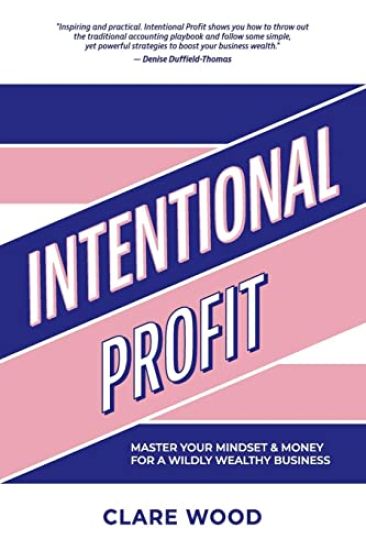
Intentional Profit

Intentional Profit

Clare Wood

Dean Publishing
2023
pokkari
"Inspiring and practical. Intentional Profit shows you how to throw out the traditional accounting playbook and follow some simple, yet powerful strategies to boost your business wealth." - Denise Duffield-Thomas The New Way of Building a Wildly Wealthy BusinessTerms like revenue, expenses, profit, and loss, are enough to overwhelm most business owners. If you're tired of crunching numbers and dealing with dry accounting terms, you're in luck. Money Mentor Clare Wood may be a qualified accountant, but she's not your typical bean counter. She understands that making money is about more than boring spreadsheets and budgets. It's also about mindset. Your money mindset is your beliefs and past experiences with money, which ultimately affects how you act in business... which translates straight into your bottom line. In this book, Clare shows you how to break down those limiting beliefs and add meaningful zeros to your balance sheet. Intentional Profit gives you the tools and know-how to: Generate intentional, long-term profit in your businessCreate a positive mindset around moneyProblem-solve like a pro (no one said running a business would be easy )Effectively invest in the future of your businessDesign the business - and life - of your dreamsIntentional Profit will help you create and smash your most audacious goals, transforming your business into a profit-making machine. Are you ready to bring some intentional profit into your business and your life? Your journey to money mastery starts now clarewood.com/intentionalprofit
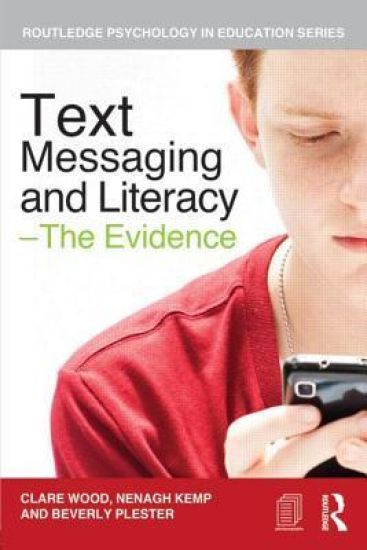
Text Messaging and Literacy - The Evidence

Text Messaging and Literacy - The Evidence

Clare Wood; Nenagh Kemp; Beverly Plester

Routledge
2013
sidottu
"Well thought out and timely. This is the leading group in the world working on texting and literacy, and they have a strong track record of publications. It would also be the first book, as they say, to deal with the subject at an academic level. The focus on education is important, as this is where most of the anxieties lie. It will be a major step forward in creating a new climate." Professor David Crystal, author of The Cambridge Encyclopaedia of Language and The Cambridge Encyclopaedia of the English Language, Television consultant and presenterAs children are given mobile phones at increasingly younger ages, there is considerable media coverage of claims that mobile phones, and text messaging in particular, are responsible for declining levels of literacy in children and young people. Such claims are often adopted wholesale by teachers and parents, despite the fact that there is an empirical literature which has failed to find a basis to these claims, and to the contrary has found that text messaging is supporting children’s literacy skills. Written by leading international researchers Text Messaging and Literacy presents an overview and discussion of the academic evidence for and against use of text messaging and mobile phones in supporting literate activity and discusses what conclusions we can and should draw about the impact of mobile phones, and their potential role in education. Areas covered include: the rise of texting and media reactions; children’s reading, spelling and texting; text messaging of children with language difficulties; using mobile phones for literacy development; texting and literacy skills in adolescents and adults; spelling and grammar in texting and beyond; the future of texting. In challenging existing assumptions the authors present the cutting edge of international research, highlighting their own studies involving children of all ages, adolescents and adults. This ground breaking book is essential reading for both researchers and students in education, educational psychology, literacy and new media and it’s impact on learning.
Text Messaging and Literacy - The Evidence

Text Messaging and Literacy - The Evidence

Clare Wood; Nenagh Kemp; Beverly Plester

Routledge
2013
nidottu
"Well thought out and timely. This is the leading group in the world working on texting and literacy, and they have a strong track record of publications. It would also be the first book, as they say, to deal with the subject at an academic level. The focus on education is important, as this is where most of the anxieties lie. It will be a major step forward in creating a new climate." Professor David Crystal, author of The Cambridge Encyclopaedia of Language and The Cambridge Encyclopaedia of the English Language, Television consultant and presenterAs children are given mobile phones at increasingly younger ages, there is considerable media coverage of claims that mobile phones, and text messaging in particular, are responsible for declining levels of literacy in children and young people. Such claims are often adopted wholesale by teachers and parents, despite the fact that there is an empirical literature which has failed to find a basis to these claims, and to the contrary has found that text messaging is supporting children’s literacy skills. Written by leading international researchers Text Messaging and Literacy presents an overview and discussion of the academic evidence for and against use of text messaging and mobile phones in supporting literate activity and discusses what conclusions we can and should draw about the impact of mobile phones, and their potential role in education. Areas covered include: the rise of texting and media reactions; children’s reading, spelling and texting; text messaging of children with language difficulties; using mobile phones for literacy development; texting and literacy skills in adolescents and adults; spelling and grammar in texting and beyond; the future of texting. In challenging existing assumptions the authors present the cutting edge of international research, highlighting their own studies involving children of all ages, adolescents and adults. This ground breaking book is essential reading for both researchers and students in education, educational psychology, literacy and new media and it’s impact on learning.
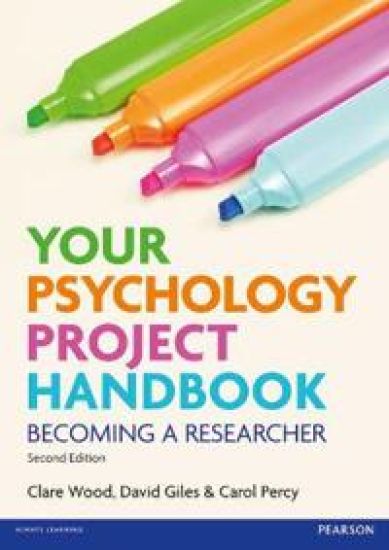
Your Psychology Project Handbook

Your Psychology Project Handbook

Clare Wood; Carol Percy; David Giles

Pearson Education Limited
2012
pokkari
This is a comprehensive guide to completing your psychology research project or dissertation. The text is organised to reflect the natural progression through the project process, from developing the initial idea, managing your supervisor and ethical issues, through carrying out the research and finally writing it up.
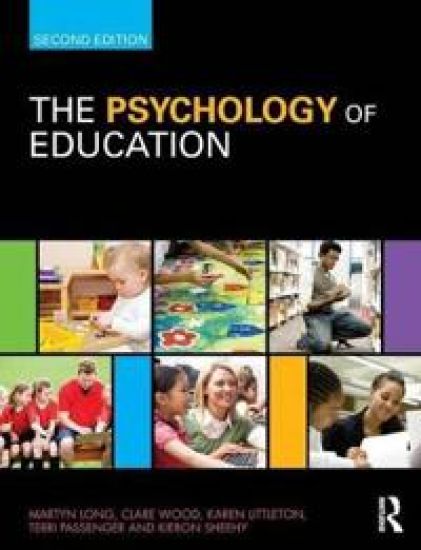
The Psychology of Education

The Psychology of Education

Martyn Long; Clare Wood; Karen Littleton; Terri Passenger; Kieron Sheehy

Routledge
2010
nidottu
Written in an accessible and engaging style, this second edition of The Psychology of Education addresses key concepts from psychology which relate to education. Throughout the text the author team emphasise an evidence-based approach, providing practical suggestions to improve learning outcomes, while fictional case studies are used in this new edition to provide students with a sense of what psychological issues can look like in the classroom. Activities around these case studies give students the chance to think about how to apply their theoretical knowledge to these real-world contexts.‘Key implications’ are drawn out at appropriate points, and throughout the book students are provided with strategies for interrogating evidence. Key terms are glossed throughout the book and chapters are summarised and followed by suggestions for further reading. A chapter on Learning interactions and social worlds is new to this edition. The following chapters have all been extensively updated:LearningAssessmentIndividual differences and achievementStudent engagement and motivationThe educational contextSociety and cultureLanguageLiteracyInclusive education and special educational needsBehaviour problemsDealing with behaviour problems. This book is essential reading for undergraduate students of Education Studies and Psychology as well as trainee teachers on BA, BEd and PGCE courses. It will also be of use to postgraduates training to be educational psychologists.
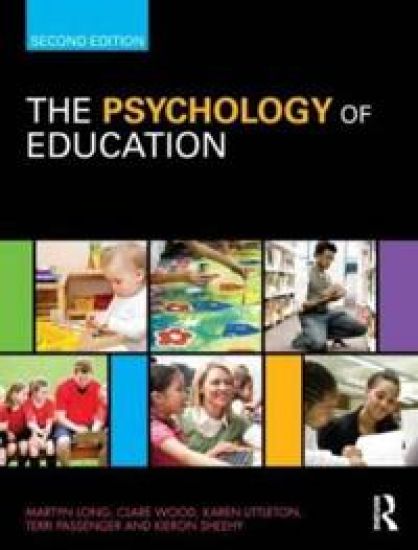
The Psychology of Education

The Psychology of Education

Martyn Long; Clare Wood; Karen Littleton; Terri Passenger; Kieron Sheehy

Routledge
2010
sidottu
Written in an accessible and engaging style, this second edition of The Psychology of Education addresses key concepts from psychology which relate to education. Throughout the text the author team emphasise an evidence-based approach, providing practical suggestions to improve learning outcomes, while fictional case studies are used in this new edition to provide students with a sense of what psychological issues can look like in the classroom. Activities around these case studies give students the chance to think about how to apply their theoretical knowledge to these real-world contexts.‘Key implications’ are drawn out at appropriate points, and throughout the book students are provided with strategies for interrogating evidence. Key terms are glossed throughout the book and chapters are summarised and followed by suggestions for further reading. A chapter on Learning interactions and social worlds is new to this edition. The following chapters have all been extensively updated:LearningAssessmentIndividual differences and achievementStudent engagement and motivationThe educational contextSociety and cultureLanguageLiteracyInclusive education and special educational needsBehaviour problemsDealing with behaviour problems. This book is essential reading for undergraduate students of Education Studies and Psychology as well as trainee teachers on BA, BEd and PGCE courses. It will also be of use to postgraduates training to be educational psychologists.