
Kirjailija
Clarence Morris
Kirjat ja teokset yhdessä paikassa: 8 kirjaa, julkaisuja vuosilta 1967–2013, suosituimpiin kuuluu Law in Imperial China. Vertaile teosten hintoja ja tarkista saatavuus suomalaisista kirjakaupoista.
8 kirjaa
Kirjojen julkaisuvuodet: 1967–2013.
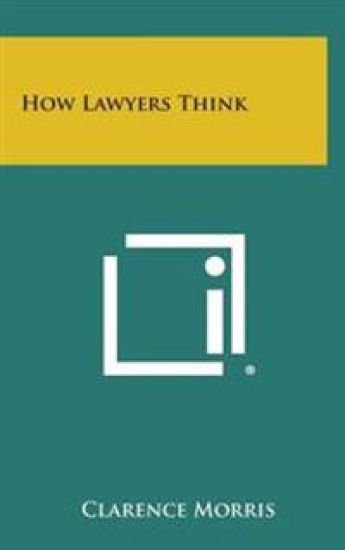
How Lawyers Think by Clarence Morris is a comprehensive guide that explores the thought processes of lawyers and how they approach legal problems. The book delves into the various ways in which lawyers think, including their analytical and creative thinking skills, their ability to reason logically, and their capacity to communicate effectively. Morris also examines the impact of legal education on the way lawyers think and how they approach legal issues. The book provides insights into the role of legal precedent, the importance of legal language and terminology, and the ethical considerations that lawyers must take into account in their work. The author draws on his extensive experience as a lawyer and law professor to provide readers with a clear and engaging overview of the legal profession and the way lawyers think. Whether you are a law student, a practicing lawyer, or simply interested in the legal profession, How Lawyers Think is an informative and thought-provoking read. This is a new release of the original 1937 edition. This scarce antiquarian book is a facsimile reprint of the old original and may contain some imperfections such as library marks and notations. Because we believe this work is culturally important, we have made it available as part of our commitment for protecting, preserving, and promoting the world's literature in affordable, high quality, modern editions, that are true to their original work.
Trends in Modern American Society: The Benjamin Franklin Lectures
Clarence Morris
Literary Licensing, LLC
2012
nidottu



American culture is in a state of transition. What is the nature of this change? To what degree is it desirable? What are its implications? It is to these questions in relation to various aspects of our culture that eight distinguished scholars here address themselves.
"Men enjoy justice steadily and by design only when they live in a society that affords opportunities to all . . . to form aspirations for their society."-From the Introduction "The crux about which this book revolves is theory of justice," writes Clarence Morris. In its simplest form, his theory is this: the more the law implements the public's genuine and important aspirations-not its desires for individual gratification but the social, deep-seated unselfish, nonexploitable aspirations-the more just the legal system becomes. "Man's capacity for justice does not flow from divine reason or divine revelation. Men enjoy justice steadily and by design only when they live in a society that affords opportunities in all its inhabitants to develop their capacity to form aspirations for their society." Up to now the world's capacity for justice, so defined, has been small. Some believe that the Western world is still too suppressed for such aspirations and that true justice will emerge only after its liberation. Herbert Marcuse calls for liberation through revolution; John Stuart Mill, relying on man's reason, urged peaceful nonconformity. Both, says Morris, are wrong-but we should learn from Marcuse that every aspiration has an emotional dimension, and we should not allow Mill to persuade us that justice is only a matter of factual discovery. And, since justices are always in flux, the justice of one time or place can become the clumsy legalistics of another. In the light of this theory of justice the author examines the complex logic with which the law must tread its way through the maze of human existence; the need for general rules ("enacted law" and judicial precedents); the function of sociological insights in the development of common law; and the role of statutory penal law, strikingly illustrated from the Chinese Imperial Code.