Kirjojen hintavertailu – 12 859 828 kirjaa ja 27 kauppaa

Kirjailija

Claude Lefort

Kirjat ja teokset yhdessä paikassa: 12 kirjaa, julkaisuja vuosilta 1986–2022, suosituimpiin kuuluu The Political Forms of Modern Society. Vertaile teosten hintoja ja tarkista saatavuus suomalaisista kirjakaupoista.

12 kirjaa

Kirjojen julkaisuvuodet: 1986–2022.

Demokrati

Demokrati

Karl Marx; Claude Lefort; Mario Tronti; Mikkel Bolt og Dominique Routhier

Antipyrine, Forlaget
2022
nidottu
Demokratiet er en politisk fiktion. Som stormen på Kongressen i USA understregede, befinder det moderne demokrati—uløseligt knyttet til staten, nationen, folket og markedet—sig i en dyb krise. I et slags væbnet karneval sætter en broget flok US-amerikanske patrioter sig for at redde demokratiet fra sig selv. Men hvad er det for et demokrati, der skal reddes? Og hvorfor? For Marx og den revolutionære bevægelse var det borgerlige demokrati først og fremmest en strategisk kampplads, ikke et politisk mål i sig selv. Trods vigtige sejre viste demokratiet sig hurtigt som en slags politisk fælde, som hver gang kanaliserede den ‘socialistiske’ massevækkelse ind i forbrug for de heldige og for evigt udsatte verdensrevolutionen. I stedet fik vi det liberale markedsdemokrati, hvor venstre- og højrepopulister rituelt slås om definitionsretten på det virkelige demokrati. Andet bind i forlaget Antipyrines serie om “repræsentationskritik” rummer tre nøgletekster om demokrati af hhv. Karl Marx, Claude Lefort og Mario Tronti. Bogen er redigeret og forsynet med forord af Mikkel Bolt og Dominique Routhier.
The Possibility of Philosophy

The Possibility of Philosophy

Maurice Merleau-Ponty; Claude Lefort

Northwestern University Press
2022
nidottu
The Possibility of Philosophy presents the notes that Maurice Merleau-Ponty prepared for three courses he taught at the CollÈge de France: “The Possibility of Philosophy Today,” given in the spring semester of 1959; and “Cartesian Ontology and Ontology Today” and “Philosophy and Nonphilosophy since Hegel,” both given in the spring semester of 1961. The last two courses remain incomplete due to Merleau-Ponty’s unexpected death on May 3, 1961. Nonetheless, they provide indications of the new ontology that informed The Visible and the Invisible, a posthumously published work that was under way at the same time. These courses offer readers of Merleau-Ponty’s late thought a wealth of references—to painting, literature, and psychoanalysis, and to the works of Husserl, Heidegger, Descartes, Hegel, and Marx—that fill in some of the missing pieces of The Visible and the Invisible, especially its often terse and sometimes cryptic working notes. We see more clearly how Merleau-Ponty’s attempt to bring forth a new ontology indicates a fundamental revision in what it means to think, an attempt to reimagine the possibility of philosophy.
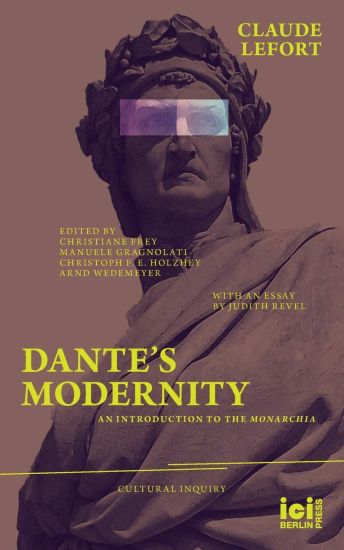
Dante's Modernity

Dante's Modernity

Claude Lefort

ICI Berlin
2020
pokkari
Claude Lefort, one of the most prominent political philosophers of the twentieth century, reads Dante's Monarchia and demonstrates the surprising relevance of this radical fourteenth-century treatise defending the necessity of a universal monarchy independent from the Church. Written to accompany a new French translation of Dante's treatise in 1993 and appearing here for the first time in English, Lefort's essay exemplifies his signature method of taking political philosophy in new directions by reframing key works from the history of political thought. Dante's Monarchia was attacked early on by the Church, burned as heretical in 1329, and remained on the Vatican's index of prohibited works until 1881. With trenchant insight and his characteristic attention to detail, Lefort pursues the often hidden influence of Dante's long suppressed treatise on the politics and political thought of subsequent centuries. He also challenges us to explore its still unrealized potential by disentangling Dante's notion of universal sovereignty from its historical links to imperialism and nationalism. Drawing out the provocation of Dante's treatise for contemporary debates, Lefort's essay presents readers of Dante with a remarkably fresh account of an oft-neglected yet crucial part of the author's oeuvre. In her extensive interpretive essay, Judith Revel submits Lefort's encounter with Dante to a transformative mis/reading and shows the importance of Dante's text for Lefort's conception of political philosophy. She carefully reconstructs its radical legacy, all too frequently reduced to a postmarxist turn or even mistaken for an affirmation of liberal democracy. The two essays are accompanied by a note from their translator, Jennifer Rushworth, and a preface by Christiane Frey.
A Socialisme ou Barbarie Anthology

A Socialisme ou Barbarie Anthology

Cornelius Castoriadis; Jean-Francois Lyotard; Claude Lefort

Eris
2019
nidottu
Socialisme ou Barbarie (1948–67) was a revolutionary group whose members included such major figures such as Cornelius Castoriadis, Claude Lefort and Jean-François Lyotard. Its journal of the same name helped inspire France’s May ’68 student-worker rebellion and influenced generations of radicals worldwide. This Anthology, for the first time in print in the English language, restores the collective nature of the group’s adventure, where manual and intellectual workers creatively, and not without profound disagreements, reflected and acted together in anticipation of a non-hierarchical, self-governing society. The group radically reoriented critical revolutionary theory by affirming how social change emerges through ordinary people’s everyday lives and struggles. In a world divided into two competing bureaucratic-capitalist camps, the autonomous grassroots response to rationalized forms of outside control (State-corporation-trade union-political party) would be workers’ management—a conclusion stunningly confirmed, against traditional Left expectations, by the workers’ revolts of 1953 and 1956 in the East, and by increasingly widespread challenges to established organizational forms in the 1960s in the West. These texts not only examine the overall crisis of systems of domination, but explore their creative contestation in the workplace, in changing relations between the sexes and between generations, and in movements for national liberation (China, Algeria), to bring out “the positive content of socialism” while remaining clear-eyed about how bureaucratization may be reintroduced into emancipatory struggles.
Machiavelli in the Making

Machiavelli in the Making

Claude Lefort

Northwestern University Press
2012
nidottu
Machiavelli in the Making is both a novel interpretation of the Florentine’s work and a critical document for understanding influential French scholar and public intellectual Claude Lefort’s later writings on democracy and totalitarianism. Lefort extricates Machiavelli’s thought from the dominant interpretations of him as the founder of “objective” political science, which, having liberated itself from the religious and moralising tendencies of medieval political reflection, attempts to arrive at a realistic discourse on the operations of raw power. Lefort ultimately finds that Machiavelli’s discourse opens the “place of the political” which had previously been occupied by theology and morality.
Machiavelli in the Making

Machiavelli in the Making

Claude Lefort

Northwestern University Press
2012
sidottu
Machiavelli in the Making is both a novel interpretation of the Florentine’s work and a critical document for understanding influential French scholar and public intellectual Claude Lefort’s later writings on democracy and totalitarianism. Lefort extricates Machiavelli’s thought from the dominant interpretations of him as the founder of “objective” political science, which, having liberated itself from the religious and moralizing tendencies of medieval political reflection, attempts to arrive at a realistic discourse on the operations of raw power. Lefort ultimately finds that Machiavelli’s discourse opens the “place of the political” which had previously been occupied by theology and morality.
Complications

Complications

Claude Lefort

Columbia University Press
2007
sidottu
"Complications: Communism and the Dilemmas of Democracy" ties together the central concerns of the work of Claude Lefort over the past half-century. A pivotal figure in French thought, Lefort studied under Maurice Merleau-Ponty, cofounded with Cornelius Castoriadis the influential journal "Socialisme ou Barbarie", and famously engaged in a heated debate with Jean-Paul Sartre over the Soviet Union and Communist parties in the West. He has influenced generations of political thinkers and throughout his career has offered invaluable leftist, non-communist critiques of both liberalism and Communism. It is the prevailing belief that the death of communism was a victory for liberal democracy. In "Complications", however, Lefort challenges this interpretation and provides new ways of understanding the rise and fall of the Soviet Union and the Communist phenomenon. Lefort engages the work of prominent historians Martin Malia and Francois Furet and shows how their emphasis on 'illusion' and ideology led to their failure to understand the logic and workings of the Communist Party, and its impact on Soviet society, and the reasons why so many in the West had Communist sympathies. He also maintains that those who regard the end of Communism as the triumph of markets and 'freedom' restrict the scope of democratic thought and the possibility of greater social equality. Lefort contends that Communism must be seen as part of a larger history of modernity and believes that the diagnosis of its death is dangerous to the future of democracy. In the tradition of Hannah Arendt and Raymond Aron, Lefort complicates the pieties of historical understanding and offers a new approach to thinking about totalitarianism and a more vital democracy.
Writing

Writing

Claude Lefort

Duke University Press
2000
pokkari
Writing involves risks-the risk that one will be misunderstood, the risk of being persecuted, the risks of being made a champion for causes in which one does not believe, this risk of inadvertently supporting a reader’s prejudices, to name a few. In trying to give expression to what is true, the writer must “clear a passage within the agitated world of passions,” an undertaking that always to some extent fails: writers are never the master of their own speech. In Writing: The Political Test, France’s leading political philosopher, Claude Lefort, illuminates the process by which writers negotiate difficult path to free themselves from the ideological and contextual traps that would doom their attempts to articulate a new vision. Lefort examines writers whose works provide special insights into this problem of risk, both literary artists and political philosophers. Among them are Salman Rushdie, Sade, Tocqueville,m Machiavelli, Leo Strauss, Orwell, Kant, Robespierre, Guizot, and Pierre Clastres. In Tocqueville, for example, Lefort finds that the author’s improvisatory and open-ended expression represents the character of the democratic experience. Orwell’s work on totalitarianism shows up the totalitarian subject’s complicity in this political regime. And Rushdie is remarkable for his solid attack on relativism. With the character and fate of the political forms of modernity, democracy, and totalitarianism a central theme, Lefort concludes with some reflections on the collapse of the Soviet Union. This intriguing and accessible exploration of literature’s political aspects and political philosophy’s literary ones will be welcomed by those who have been stymied by current efforts to bridge these two fields. Taken together, the essays in this volume also stand as an intellectual autobiography of Lefort, making it an excellent introduction to his work for less experience students of political theory or philosophy.
Writing

Writing

Claude Lefort

Duke University Press
2000
sidottu
Writing involves risks-the risk that one will be misunderstood, the risk of being persecuted, the risks of being made a champion for causes in which one does not believe, this risk of inadvertently supporting a reader’s prejudices, to name a few. In trying to give expression to what is true, the writer must “clear a passage within the agitated world of passions,” an undertaking that always to some extent fails: writers are never the master of their own speech. In Writing: The Political Test, France’s leading political philosopher, Claude Lefort, illuminates the process by which writers negotiate difficult path to free themselves from the ideological and contextual traps that would doom their attempts to articulate a new vision. Lefort examines writers whose works provide special insights into this problem of risk, both literary artists and political philosophers. Among them are Salman Rushdie, Sade, Tocqueville,m Machiavelli, Leo Strauss, Orwell, Kant, Robespierre, Guizot, and Pierre Clastres. In Tocqueville, for example, Lefort finds that the author’s improvisatory and open-ended expression represents the character of the democratic experience. Orwell’s work on totalitarianism shows up the totalitarian subject’s complicity in this political regime. And Rushdie is remarkable for his solid attack on relativism. With the character and fate of the political forms of modernity, democracy, and totalitarianism a central theme, Lefort concludes with some reflections on the collapse of the Soviet Union. This intriguing and accessible exploration of literature’s political aspects and political philosophy’s literary ones will be welcomed by those who have been stymied by current efforts to bridge these two fields. Taken together, the essays in this volume also stand as an intellectual autobiography of Lefort, making it an excellent introduction to his work for less experience students of political theory or philosophy.
Democracy and Political Theory

Democracy and Political Theory

Claude Lefort

Polity Press
1988
sidottu

Halvin toimitettuna 67,10 €

This book examines the central questions of democracy and politics in modern societies. Through an analysis of some of the key texts of 19th and 20th century thought - from Marx, Michelet and de Tocqueville to Hannah Arendt - the author explores the ambiguities of democracy, the nature of human rights, the idea and the reality of revolution, the emergence of totalitarianism and the changing relations between politics, religion and the image of the body. While developing a highly original account of the nature of politics and power in modern societies, he links political reflection to the interpretation of history as an open, indeterminate process of which we are part. This work should interest specialists in social and political theory and philosophers.
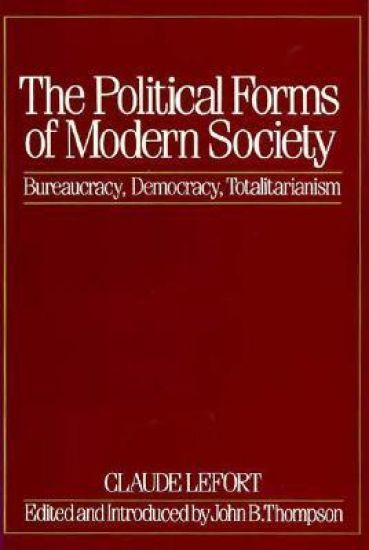
The Political Forms of Modern Society
Claude Lefort is one of the leading social and political theorists in France today. This anthology of his most important work published over the last four decades makes his writing widely accessible to an English-speaking audience for the first time. With exceptional skill Lefort combines the analysis of contemporary political events with a sensitivity to the history of political thought. His critical account of the development of bureaucracy and totalitarianism in the Soviet Union and Eastern Europe is a timely contribution to current debates about the nature and shortcomings of these societies. His incisive analyses of Marx's theory of history and concept of ideology provide the backdrop for a highly original account of the role of symbolism in modern societies. While critical of many traditional assumptions and doctrines, Lefort develops a political position based on a reappraisal of the idea of human rights and a reconsideration of what "democracy" means today. The Political Forms of Modern Society is a major contribution to contemporary social and political theory. The volume includes a substantial introduction that describes the context of Lefort's writings and highlights the central themes of his work.