Kirjojen hintavertailu – 12 903 725 kirjaa ja 27 kauppaa

Kirjailija

Claudia Bolgia

Kirjat ja teokset yhdessä paikassa: 3 kirjaa, julkaisuja vuosilta 2017–2023, suosituimpiin kuuluu Writing on Tombs in Medieval and Early Modern Times. Vertaile teosten hintoja ja tarkista saatavuus suomalaisista kirjakaupoista.

3 kirjaa

Kirjojen julkaisuvuodet: 2017–2023.

Writing on Tombs in Medieval and Early Modern Times

Writing on Tombs in Medieval and Early Modern Times

Claudia Bolgia; Ondrej Jakubec; Pal Lovei

Viella Editrice
2023
nidottu
The expression Writing on Tombs used in the title of this book refers to all kind of texts involved in the making of a tomb during the Middle Ages and the Early Modern period: not only the inscriptions engraved in stone or marble, a constituent of the tomb and never an accessory element, but also the documentary, narrative or poetical sources concerning its form and iconography, its spiritual, symbolic, or political meaning, its perception or its "historicization". Along with tombs of great prestige, such as those of Frederick II and Boniface VIII, the papers collected in this volume deal with a huge variety of little-known burials, for patrons belonging to different social status and cultures across many regions of Europe over more than a millennium. The authors analyse how texts contributed to shaping the object-tomb through the reading or the re-reading of medieval textual sources, the function of the epitaphs and their manuscript tradition, the written and material reuse of the past, the epigraphical practices of writing, and the funerary customs in Modern Europe.
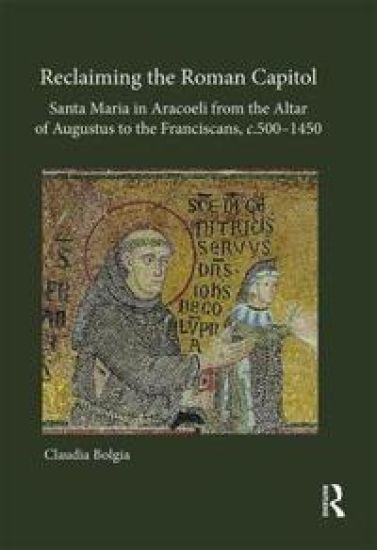
Reclaiming the Roman Capitol: Santa Maria in Aracoeli from the Altar of Augustus to the Franciscans, c. 500–1450
Prominently located on the Arx, the northern summit of the Capitoline hill, S. Maria in Aracoeli is the most significant medieval church of Rome to survive to the present day. Second major church of the Lesser Brothers or fratres minores in the Italian peninsula, and Roman headquarters of the Order, the Aracoeli played a vital role in the interaction between the Franciscans and the papacy, the friars and the laity, and the religious and civic authorities, as reflected in its art and architecture. On the basis of an interdisciplinary approach combining archaeological analysis with the finding of new archival evidence, reinterpretation of documents and literary and epigraphic sources, this book offers a reconstruction of the original church, its monuments and its Benedictine as well as eighth/ninth-century predecessors, which differs radically from earlier hypotheses. This reassessment in turn allows the author to revisit a number of major questions, including the Franciscans’ physical and theoretical appropriation of the past, the adaptation of an ancient site by a ‘modern’ religious order, the use and functions of space, the interaction between friars, laity and artists, and the contribution of the Roman Franciscans to the development of Marian devotion, thus shedding new light on the social, political and religious history of late-medieval Italy and its impact beyond the peninsula, from England to Bohemia and the Holy Land.
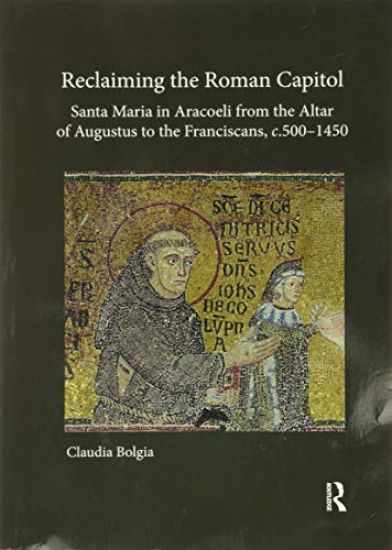
Reclaiming the Roman Capitol: Santa Maria in Aracoeli from the Altar of Augustus to the Franciscans, c. 500–1450
Prominently located on the Arx, the northern summit of the Capitoline hill, S. Maria in Aracoeli is the most significant medieval church of Rome to survive to the present day. Second major church of the Lesser Brothers or fratres minores in the Italian peninsula, and Roman headquarters of the Order, the Aracoeli played a vital role in the interaction between the Franciscans and the papacy, the friars and the laity, and the religious and civic authorities, as reflected in its art and architecture. On the basis of an interdisciplinary approach combining archaeological analysis with the finding of new archival evidence, reinterpretation of documents and literary and epigraphic sources, this book offers a reconstruction of the original church, its monuments and its Benedictine as well as eighth/ninth-century predecessors, which differs radically from earlier hypotheses. This reassessment in turn allows the author to revisit a number of major questions, including the Franciscans’ physical and theoretical appropriation of the past, the adaptation of an ancient site by a ‘modern’ religious order, the use and functions of space, the interaction between friars, laity and artists, and the contribution of the Roman Franciscans to the development of Marian devotion, thus shedding new light on the social, political and religious history of late-medieval Italy and its impact beyond the peninsula, from England to Bohemia and the Holy Land.