Kirjojen hintavertailu – 12 903 735 kirjaa ja 27 kauppaa

Kirjailija

Claudia Brittenham

Kirjat ja teokset yhdessä paikassa: 3 kirjaa, julkaisuja vuosilta 2009–2023, suosituimpiin kuuluu Unseen Art. Vertaile teosten hintoja ja tarkista saatavuus suomalaisista kirjakaupoista.

3 kirjaa

Kirjojen julkaisuvuodet: 2009–2023.

Unseen Art

Unseen Art

Claudia Brittenham

UNIVERSITY OF TEXAS PRESS
2023
sidottu
In Unseen Art, Claudia Brittenham unravels one of the most puzzling phenomena in Mesoamerican art history: why many of the objects that we view in museums today were once so difficult to see. She examines the importance that ancient Mesoamerican people assigned to the process of making and enlivening the things we now call art, as well as Mesoamerican understandings of sight as an especially godlike and elite power, in order to trace a gradual evolution in the uses of secrecy and concealment, from a communal practice that fostered social memory to a tool of imperial power. Addressing some of the most charismatic of all Mesoamerican sculptures, such as Olmec buried offerings, Maya lintels, and carvings on the undersides of Aztec sculptures, Brittenham shows that the creation of unseen art has important implications both for understanding status in ancient Mesoamerica and for analyzing art in the present. Spanning nearly three thousand years of the Indigenous art of Mexico, Guatemala, Honduras, and Belize, Unseen Art connects the dots between vision, power, and inequality, providing a critical perspective on our own way of looking.
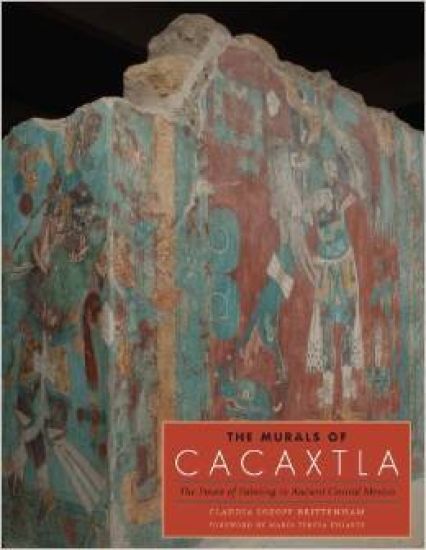
The Murals of Cacaxtla

The Murals of Cacaxtla

Claudia Brittenham; María Teresa Uriarte

University of Texas Press
2015
sidottu
Presenting the first comprehensive art historical study of some magnificent Mesoamerican murals, this book demonstrates how generations of ancient Mexican artists, patrons, and audiences created a powerful statement of communal identity that still captures the imagination. Honorable Mention, ALAA Book Award, Association for Latin American Art/Arvey Foundation, 2016Between AD 650 and 950, artists at the small Central Mexican city-state of Cacaxtla covered the walls of their most important sacred and public spaces with dazzling murals of gods, historical figures, and supernatural creatures. Testimonies of a richly interconnected ancient world, the Cacaxtla paintings present an unexpectedly deep knowledge of the art and religion of the Maya, Zapotec, and other distant Mesoamerican peoples. Painted during a period of war and shifting alliances after the fall of Teotihuacan, the murals’ distinctive fusion of cosmopolitan styles and subjects claimed a powerful identity for the beleaguered city-state. Presenting the first cohesive, art historical study of the entire painting corpus, The Murals of Cacaxtla demonstrates that these magnificent works of art constitute a sustained and local painting tradition, treasured by generations of patrons and painters. Exhaustive chapters on each of the mural programs make it possible to see how the Cacaxtla painting tradition developed over time, responding to political and artistic challenges. Lavishly illustrated, The Murals of Cacaxtla illuminates the agency of ancient artists and the dynamics of artistic synthesis in a Mesoamerican context, offering a valuable counterpoint to studies of colonial and modern art operating at the intersection of cultural traditions.
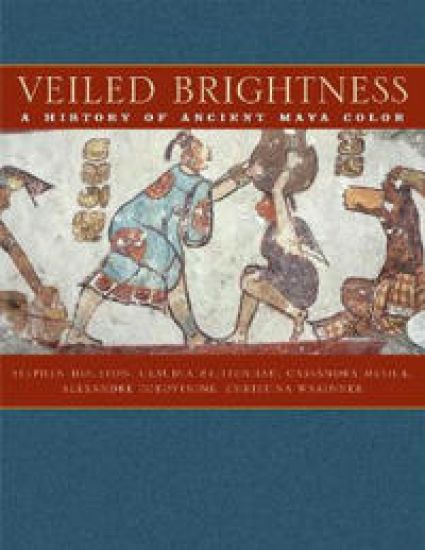
Veiled Brightness

Veiled Brightness

Stephen D. Houston; Claudia Brittenham; Cassandra Mesick; Alexandre Tokovinine; Christina Warinner

University of Texas Press
2009
sidottu
Color is an integral part of human experience, so common as to be overlooked or treated as unimportant. Yet color is both unavoidable and varied. Each culture classifies, understands, and uses it in different and often surprising ways, posing particular challenges to those who study color from long-ago times and places far distant. Veiled Brightness reconstructs what color meant to the ancient Maya, a set of linked peoples and societies who flourished in and around the Yucatan Peninsula of Mexico and Central America. By using insights from archaeology, linguistics, art history, and conservation, the book charts over two millennia of color use in a region celebrated for its aesthetic refinement and high degree of craftsmanship. The authors open with a survey of approaches to color perception, looking at Aristotelian color theory, recent discoveries in neurophysiology, and anthropological research on color. Maya color terminology receives new attention here, clarifying not just basic color terms, but also the extensional or associated meanings that enriched ancient Maya perception of color. The materials and technologies of Maya color production are assembled in one place as never before, providing an invaluable reference for future research. From these investigations, the authors demonstrate that Maya use of color changed over time, through a sequence of historical and artistic developments that drove the elaboration of new pigments and coloristic effects. These findings open fresh avenues for investigation of ancient Maya aesthetics and worldview and provide a model for how to study the meaning and making of color in other ancient civilizations.