Kirjojen hintavertailu – 12 903 725 kirjaa ja 27 kauppaa

Kirjailija

Claudia Brodsky

Kirjat ja teokset yhdessä paikassa: 6 kirjaa, julkaisuja vuosilta 2009–2022, suosituimpiin kuuluu The Linguistic Condition. Vertaile teosten hintoja ja tarkista saatavuus suomalaisista kirjakaupoista.

6 kirjaa

Kirjojen julkaisuvuodet: 2009–2022.

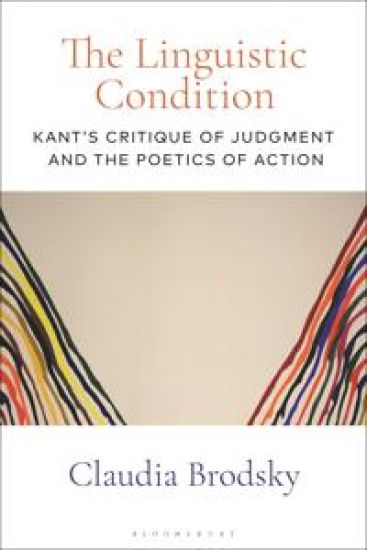
The Linguistic Condition

The Linguistic Condition

Claudia Brodsky

BLOOMSBURY PUBLISHING PLC
2022
nidottu
Providing a unique interpretation of Kant’s theory of judgement as integral to his overall project, Claudia Brodsky explores his continued relevance to contemporary theoretical concerns. The Linguistic Condition traces how Kant combined sensus communis, or common sense with the communicative nature of judgement to reveal that, for him, acts of judgement are dependent on their linguistic articulation, so that in Kantian philosophy language and judgement are inextricably linked. In this first in-depth analysis of language in the Critique of Judgement, Brodsky forms creative connections between literature and philosophy.
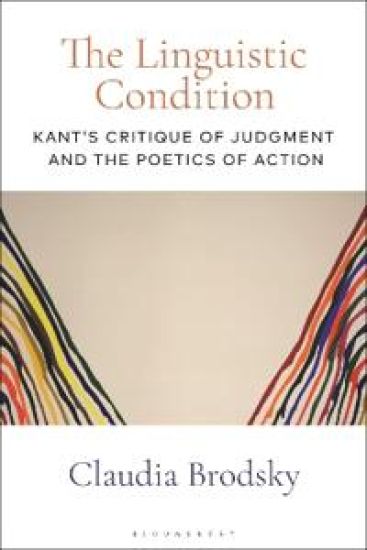
The Linguistic Condition

The Linguistic Condition

Claudia Brodsky

Bloomsbury Academic
2021
sidottu
Providing a unique interpretation of Kant’s theory of judgement as integral to his overall project, Claudia Brodsky explores his continued relevance to contemporary theoretical concerns. The Linguistic Condition traces how Kant combined sensus communis, or common sense with the communicative nature of judgement to reveal that, for him, acts of judgement are dependent on their linguistic articulation, so that in Kantian philosophy language and judgement are inextricably linked. In this first in-depth analysis of language in the Critique of Judgement, Brodsky forms creative connections between literature and philosophy.
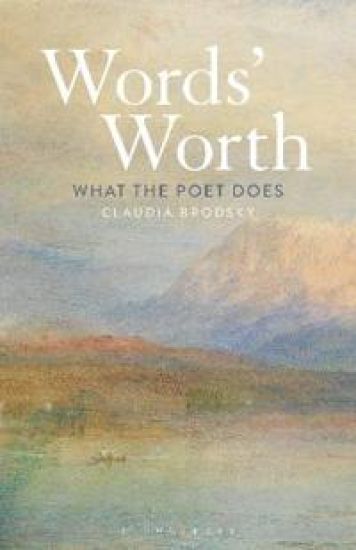
Words' Worth

Words' Worth

Claudia Brodsky

Bloomsbury Academic USA
2020
nidottu
Claudia Brodsky marshals her equal expertise in literature and philosophy to redefine the terms and trajectory of the theory and interpretation of modern poetry. Taking her cue from Wordsworth’s revolutionary understanding of “real language,” Brodsky unfolds a provocative new theory of poetry, a way of looking at poetry that challenges traditional assumptions. Analyzing both theory and practice, and taking in a broad swathe of writers and thinkers from Wordsworth to Rousseau to Hegel to Proust, Brodsky is at pains to draw out the transformative, active, and effective power of literature. Poetry, she says, is only worthy of the name when it is not the property of the poet but of society, when it is valued for what it does. Words' Worth is a bold new work, by a leading scholar of literature, which demands a response from all students and scholars of modern poetry.
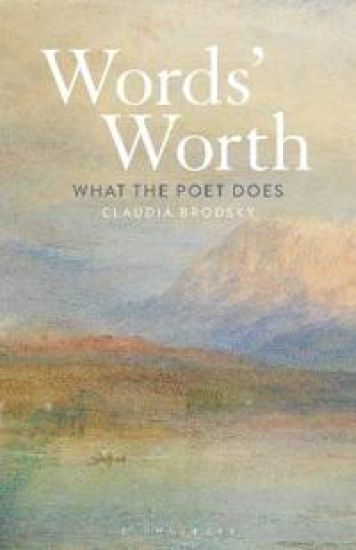
Words' Worth

Words' Worth

Claudia Brodsky

Bloomsbury Academic USA
2020
sidottu
Claudia Brodsky marshals her equal expertise in literature and philosophy to redefine the terms and trajectory of the theory and interpretation of modern poetry. Taking her cue from Wordsworth’s revolutionary understanding of “real language,” Brodsky unfolds a provocative new theory of poetry, a way of looking at poetry that challenges traditional assumptions. Analyzing both theory and practice, and taking in a broad swathe of writers and thinkers from Wordsworth to Rousseau to Hegel to Proust, Brodsky is at pains to draw out the transformative, active, and effective power of literature. Poetry, she says, is only worthy of the name when it is not the property of the poet but of society, when it is valued for what it does. Words' Worth is a bold new work, by a leading scholar of literature, which demands a response from all students and scholars of modern poetry.
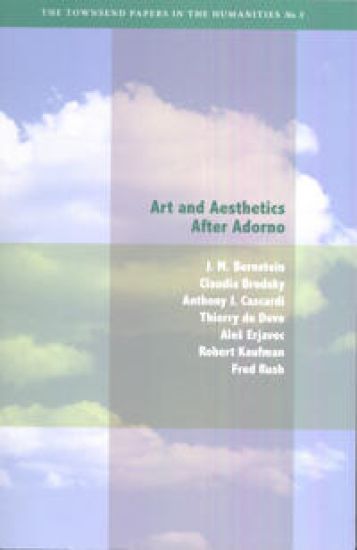
Art and Aesthetics After Adorno

Art and Aesthetics After Adorno

J. M. Bernstein; Claudia Brodsky; Anthony J. Cascardi; Thierry de Duve; Ales Erjavec; Robert Kaufman; Fred Rush

Fordham University Press
2013
pokkari
Theodor Adorno's Aesthetic Theory (1970) offers one of the most powerful and comprehensive critiques of art and of the discipline of aesthetics ever written. The work offers a deeply critical engagement with the history and philosophy of aesthetics and with the traditions of European art through the middle of the 20th century. It is coupled with ambitious claims about what aesthetic theory ought to be. But the cultural horizon of Adorno's Aesthetic Theory was the world of high modernism, and much has happened since then both in theory and in practice. Adorno's powerful vision of aesthetics calls for reconsideration in this light. Must his work be defended, updated, resisted, or simply left behind? This volume gathers new essays by leading philosophers, critics, and theorists writing in the wake of Adorno in order to address these questions. They hold in common a deep respect for the power of Adorno's aesthetic critique and a concern for the future of aesthetic theory in response to recent developments in aesthetics and its contexts.
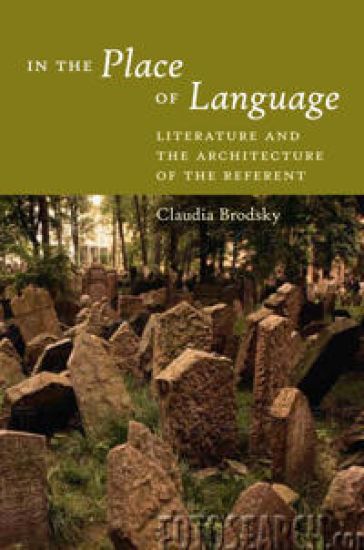
In the Place of Language

In the Place of Language

Claudia Brodsky

Fordham University Press
2009
sidottu
The "place" in the title of Claudia Brodsky's remarkable new book is the intersection of language with building, the marking, for future reference, of material constructions in the world. The "referent" Brodsky describes is not something first found in nature and then named but a thing whose own origin joins language with materiality, a thing marked as it is made to begin with. In the Place of Language: Literature and the Architecture of the Referent develops a theory of the "referent" that is thus also a theory of the possibility of historical knowledge, one that undermines the conventional opposition of language to the real by theories of nominalism and materialism alike, no less than it confronts the mystical conflation of language with matter, whether under the aegis of the infinite reproducibility of the image or the identification of language with "Being." Challenging these equally naive views of language - as essentially immaterial or the only essential matter - Brodsky investigates the interaction of language with the material that literature represents. For literature, Brodsky argues, seeks no refuge from its own inherently iterable, discursive medium in dreams of a technologically-induced freedom from history or an ontological history of language-being. Instead it tells the complex story of historical referents constructed and forgotten, things built into the earth upon which history "takes place" and of which, in the course of history, all visible trace is temporarily effaced. Literature represents the making of history, the building and burial of the referent, the present world of its oblivion and the future of its unearthing, and it can do this because, unlike the historical referent, it literally takes no place, is not tied to any building or performance in space. For the same reason literature can reveal the historical nature of the making of meaning, demonstrating that the shaping and experience of the real, the marking of matter that constitutes historical referents, also defers knowledge of the real to a later date. Through close readings of central texts by Goethe, Plato, Kant, Heidegger, and Benjamin, redefined by the interrelationship of building and language they represent, In the Place of Language analyzes what remains of actions that attempt to take the place of language: the enduring, if intermittently obscured bases, of theoretical reflection itself.